



Stainless Iron Forging
Forging method After hot working deformation, due to the deformation and recrystallization of stainless steel, the coarse dendrites and columnar grains become equiaxed recrystallized structures with finer grains and uniform size, so that the original segregation, looseness, slag inclusion, etc.
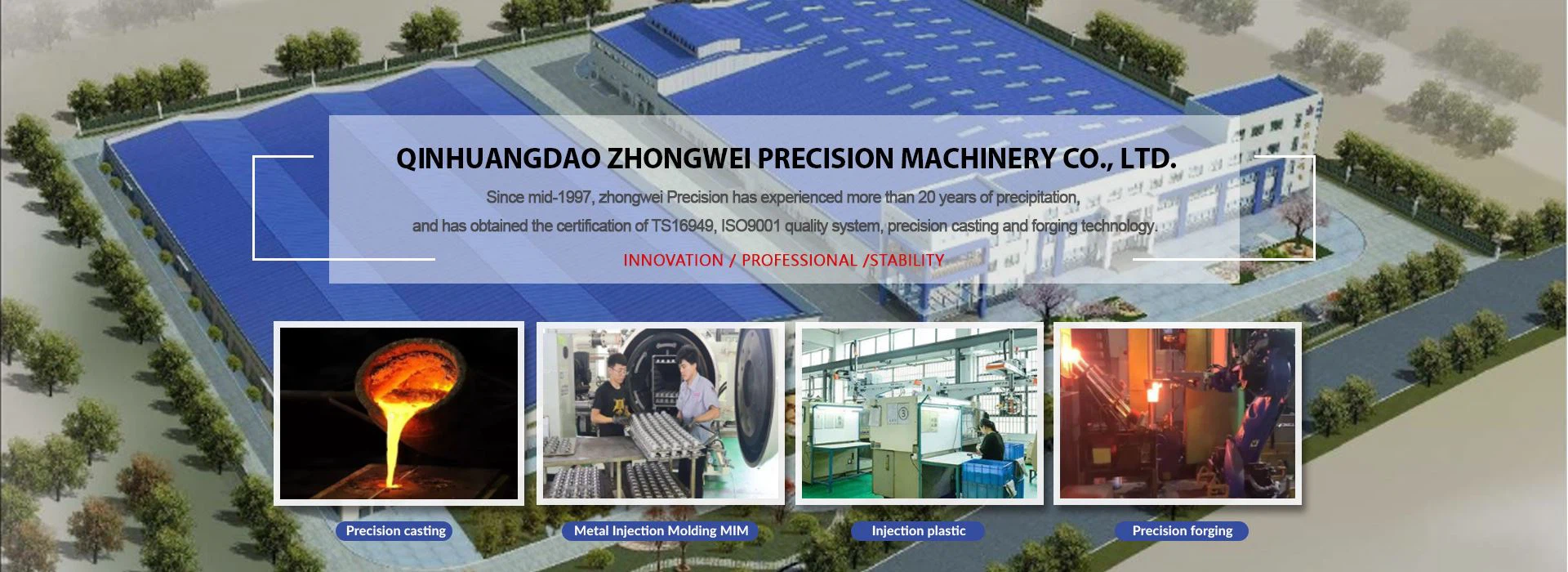
Forging method After hot working deformation, due to the deformation and recrystallization of stainless steel, the coarse dendrites and columnar grains become equiaxed recrystallized structures with finer grains and uniform size, so that the original segregation, looseness, slag inclusion, etc. Compaction and welding improve the mechanical properties, which can ensure the mechanical properties and long service life of the parts. Die forging is unmatched by castings. Qinhuangdao Zhongwei Precision Machinery Co., Ltd. is an enterprise specializing in forging, processing and production of forgings. Products can be produced according to drawings and chemical compositions, and the integration of free forging, die forging, rough machining, heat treatment and finishing is completed. Long-term cooperation with crane, petroleum, chemical, mining, metallurgy, hydraulic, coking, train, construction machinery and other enterprises.
Product Dsecription
1. Implementation standards: the company strictly implements ISO9001, ISO14001, IATF16949 certification
The products have passed the certification of ROHS, FDA EU, etc.
2. Product material standards: ISO, GB, ASTM, SAE, EN, DIN, BS, AMS, JIS, ASME, DMS, TOCT, GB
3. Main process: cold forging, hot forging, free forging, fetal membrane forging, die forging and special die forging. And has die casting process, investment casting, shell casting, deburring, sand blasting, machining, heat treatment, leak testing, surface treatment, etc.
4. Stainless iron forging Available materials:
Copper, titanium alloy, high manganese steel, high chromium steel, high nickel steel, carbon steel, aluminum alloy, alloy steel, stainless steel, gray iron, cast iron, cast steel, etc. are customized according to customer requirements.
Product Category
Stainless steel with body-centered cubic lattice ferrite as the base with a chromium content of 12% to 30% at high temperature and room temperature. This steel generally does not contain nickel, and some contain a small amount of elements such as molybdenum, titanium or niobium. Has good oxidation resistance, corrosion resistance and resistance to chloride corrosion cracking. Ferritic stainless steel can be divided into low-chromium, medium-chromium and high-chromium according to the chromium content. According to the purity of the steel, especially the carbon and nitrogen impurity content, it can be divided into ordinary ferritic stainless steel and ultra-pure ferritic stainless steel. Ordinary ferritic stainless steels have some disadvantages such as low temperature and room temperature brittleness, notch sensitivity, high tendency to intergranular corrosion and poor weldability. Although this kind of steel developed earlier, its industrial application has been greatly limited. These shortcomings of ordinary ferritic stainless steel are related to the purity of the steel, especially the high content of interstitial elements such as carbon and nitrogen in the steel. As long as the carbon and nitrogen in the steel are low enough, such as not more than 150×10 ~ 250×10, the above shortcomings can be basically overcome. Since the 1970s, due to the development of smelting technology, especially vacuum metallurgy and secondary refining technology, high-purity ferritic stainless steel with carbon + nitrogen ≤ 150 ~ 250 × 10 has been produced, making this type of steel widely used in industry.
It can generally be divided into ordinary ferritic stainless steel and high-purity ferritic stainless steel.
Common ferritic stainless steels include low, medium and high chromium content. Low chromium ferritic stainless steel contains about 11% to 14% chromium, such as 00cr12 and 0cr13al in my country. American AISI400, 405, 406MF-2. This steel has good toughness, plasticity, cold deformability and weldability. Because steel contains a certain amount of chromium and aluminum, it has good oxidation resistance and rust resistance. 05 can be used as oil refining tower, storage tank lining, steam turbine blade, high temperature sulfur corrosion resistance device, etc. 400 is used as household and office appliances, etc. 49 is used in automobile exhaust muffler system and cold and warm water pipes, etc. Medium chromium ferritic stainless steel with chromium content of 14% to 19%, such as domestic 1Cr17, 1Cr17Mo. US AISI 429, 430, 433, 434, 435, 436, 439. This steel has good rust and corrosion resistance. Its work hardening coefficient is small (n≈2), and its deep drawing performance is good, but its ductility is poor.
High-purity ferritic stainless steel contains very low carbon and nitrogen; high chromium, molybdenum, titanium, niobium and other elements. Such as domestic 00Cr17Mo, 00Cr18Mo2, 00Cr26Mol, 00Cr30Mo2 and foreign 18-2, Cr26Mol, 25Cr-5Ni-4Mo-Nb, MoNiT, Al29-4, Al29-4-2. This steel has good mechanical properties (especially toughness), weldability, resistance to intergranular corrosion, pitting and crevice corrosion, and excellent resistance to stress corrosion cracking. For example, 18-2 has good corrosion resistance in nitric acid, acetic acid and NaOH, pitting corrosion resistance in 3%NaCl and FeCl3 is equal to or higher than 18-8 austenitic steel, and SCC resistance is much higher than 18 -8 Steel. 26CrMo steel is resistant to corrosion in many media, especially in organic acids, oxidizing acids and strong alkalis. Good pitting resistance in strong chloride media.
Post Casting Process
1. Heat treatment: annealing, carbonization, tempering, quenching, normalizing, surface tempering
2. Processing equipment: CNC, WEDM, lathe, milling machine, drilling machine, grinder, etc.;
3. Surface treatment: powder spraying, chrome plating, painting, sandblasting, nickel plating, galvanizing, blackening, polishing, bluing, etc.

Moulds and Inspection Fixtures
1. Mold service life: usually semi-permanent. (except for lost foam)
2. Mold delivery time: 10-25 days, (according to product structure and product size).
3. Tooling and mold maintenance: Zhongwei is responsible for precision parts.

Quality Control
1. Quality control: the defective rate is less than 0.1%.
2. Samples and trial run will be 100% inspected during production and before shipment, sample inspection for mass production according to ISDO standards or customer requirements
3. Testing equipment: flaw detection, spectrum analyzer, golden image analyzer, three-coordinate measuring machine, hardness testing equipment, tensile testing machine;
4. Provide after-sales service.

Application
The first application is in the exhaust system of automobile engine. In the past ten years, the nb-containing ferritic stainless steel used in Europe and the United States has grown rapidly, especially for automobile exhaust systems. This is because the technological development of the automobile industry is facing price reduction, safety and environmental protection. Since the adoption of mandatory measures for the control of automobile exhaust in the 1970s, the use of stainless steel has risen sharply. Each vehicle uses about 23-25kg of stainless steel. According to the calculation of the annual sales of 15.02 million vehicles at that time, it is necessary to use more than 40,000 tons. Stainless steel.
Secondly, it is used for supercritical temperature ferritic heat-resistant stainless steel for power stations. The boilers used for power generation in the world are developing towards high temperature and high pressure and large capacity of steam, which requires better high temperature strength of boiler steel. Improve overall properties.
There are also stainless steels that are resistant to atmospheric corrosion in architectural decoration. Stainless iron forging is characterized by its structural damage and can withstand high temperatures above 700°C. Therefore, the gas has good high temperature fire resistance and atmospheric corrosion resistance. These advantages make the application of stainless steel in the construction field develop rapidly. For example, some exhibition halls, airport buildings in Japan and the roof of the large stadium for the 2002 World Cup football match are made of ferritic stainless steel.
Finally, there is stainless steel for household appliances. Stainless steel is widely used in household appliances, gradually replacing plastic and plain carbon steel.


Send Inquiry
