



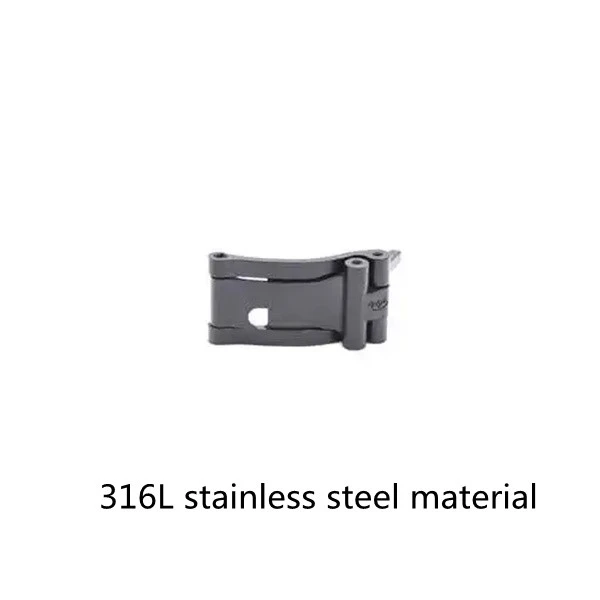
Metal Injection Molding Process
Metal Injection Molding Process (Metal Powder Injection Molding Technology, MIM for short) is a new type of powder metallurgy near-net-shape molding technology formed by introducing modern plastic injection molding technology into the field of powder metallurgy.
Metal Injection Molding Process (Metal Powder Injection Molding Technology, MIM for short) is a new type of powder metallurgy near-net-shape molding technology formed by introducing modern plastic injection molding technology into the field of powder metallurgy.
Qinhuangdao Zhongwei Precision Machinery Co., Ltd. is a collection of copper alloy metal injection molding, iron-based metal injection molding, stainless steel-based metal injection molding, aluminum alloy metal injection molding, nickel alloy metal injection molding, cobalt alloy metal injection molding, tungsten alloy metal injection molding A comprehensive high-tech enterprise integrating R&D, production and sales of injection molding, cemented carbide metal injection molding, and powder metallurgy structural parts.
Product Description
1. Implementation standards: the company strictly implements ISO9001, ISO14001, IATF16949 certification
The products have passed the certification of ROHS, FDA EU, etc.
2. Product material standards: ISO, GB, ASTM, SAE, EN, DIN, BS, AMS, JIS, ASME, DMS, TOCT, GB
3. Main processes: metal injection molding MIM, powder metallurgy PM, investment casting, die-casting aluminum,
4. Available materials for powder metallurgy:
Copper alloys, iron bases, titanium alloys, stainless steel bases, aluminum alloys, nickel alloys, cobalt alloys, tungsten alloys, cemented carbides, hydroxy alloys, soft magnetic materials and 3D printing can be customized according to customer requirements.
Technology of Craftsmanship
The basic process of Metal Injection Molding Process is as follows: first, the solid powder and organic binder are uniformly mixed, and after granulation, they are injected into the mold cavity by an injection molding machine under the heating and plasticizing state (~150 ° C) to solidify and form, and then use The binder in the formed blank is removed by chemical or thermal decomposition, and finally the final product is obtained by sintering and densification. Compared with traditional processes, it has the characteristics of high precision, uniform organization, excellent performance and low production cost. Its products are widely used in electronic information engineering, biomedical equipment, office equipment, automobiles, machinery, hardware, sports equipment, watch industry, weapons and aerospace industries. Therefore, it is generally believed that the development of this technology will lead to a revolution in parts forming and processing technology, and is known as "the most popular part forming technology today" and "forming technology in the 21st century"
History and Current Situation
It was invented by Parmatech in California in 1973. In the early 1980s, many countries in Europe and Japan also invested a lot of energy to study this technology, and it was rapidly promoted. Especially in the mid-1980s, this technology has developed by leaps and bounds since its industrialization, and it increases at an astonishing rate every year. So far, there are more than 100 companies in more than 10 countries and regions such as the United States, Western Europe and Japan, which are engaged in product development, research and sales of this technology. Japan is very active in competition and has outstanding performance. Many large corporations have participated in the promotion of MIM industry, including Pacific Metals, Mitsubishi Steel, Kawasaki Steel, Kobe Steel, Sumitomo Mining, Seiko-Epson, Datong special steel, etc. At present, there are more than 40 companies specializing in the MIM industry in Japan, and the total sales value of their MIM industrial products has already surpassed that of Europe and is catching up with the United States. So far, more than 100 companies around the world have been engaged in the product development, research and sales of this technology. MIM technology has therefore become the most active frontier technology field in the new manufacturing industry. It is represented by the pioneering technology of the world metallurgical industry. MIM technology is the main direction of powder metallurgy technology development.
Process Characteristics

Metal Injection Molding Process technology is a product that integrates plastic molding technology, polymer chemistry, powder metallurgy technology and metal materials science and other disciplines. , Three-dimensional complex-shaped structural parts can quickly and accurately materialize design ideas into products with certain structural and functional characteristics, and can directly mass-produce parts, which is a new revolution in the manufacturing technology industry. This process technology not only has the advantages of less conventional powder metallurgy process, no cutting or less cutting, high economic benefits, but also overcomes the shortcomings of traditional powder metallurgy products, uneven materials, low mechanical properties, difficult to form thin walls, and complex structures. Especially suitable for mass production of small, complex and metal parts with special requirements. The technological process is binder → mixing → injection molding → degreasing → sintering → post-processing.
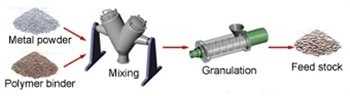
Raw material preparation: The first step is to prepare a powder mixture of metal and polymer. The powder metal used here is much better than the powder metal used in traditional powder metallurgy processes (usually below 20 microns). Powder metal is mixed with a hot thermoplastic binder, cooled, and then pelletized into a homogeneous feedstock in granular form. The resulting feedstock is typically 60% metal and 40% polymer by volume.
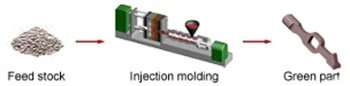
Injection Molding: Powder raw materials are molded using the same equipment and molds as plastic injection molding. However, the mold cavity is designed to be approximately 20% higher to account for part shrinkage during sintering. In an injection molding cycle, raw material is melted and injected into a mold cavity where it cools and solidifies into the shape of the part. The molded "green" part is popped and then cleaned to remove all glitter.
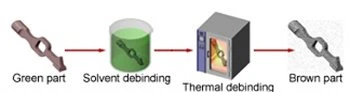
Solvent Degreasing: This step removes the polymeric binder from the metal. In some cases, solvent degreasing is performed first, where the "green" part is placed in a water or chemical bath to dissolve most of the adhesive. After (in place of) this step, thermal debinding or pre-sintering is performed. The "green" part was heated in a low temperature oven to remove the polymer binder by evaporation. As a result, the remaining "brown" metal parts will contain about 40% of the space.
• Sintering: The final step is to sinter the "brown" part in a high temperature furnace (up to 2500*F) to reduce the empty space to about 1-5%, resulting in a high density (95-99%) metal part. The furnace uses an inert gas at a temperature close to 85% of the melting point of the metal. This method removes pores from the material, shrinking the part to 75-85% of its as-molded size. However, this shrinkage occurs uniformly and can be accurately predicted. The resulting part maintains the original molded shape with high tolerances, but is now denser.
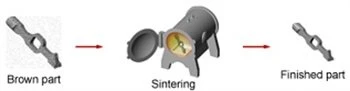
After the sintering process, no secondary operations are required to improve tolerances or surface finish. However, just like cast metal parts, multiple secondary operations can be performed to add features, improve material properties, or assemble other parts. For example, metal injection molded parts can be machined, heat treated or welded.
Most of the injection molding design rules still apply when designing parts to be manufactured using metal injection molding. However, there are some exceptions or additions, such as:
Wall Thickness: As with plastic injection molding, wall thickness should be minimized and kept uniform throughout. Notably, in the metal injection molding process, minimizing wall thickness not only reduces material volume and cycle time, but also reduces degumming and sintering time.
Unlike plastic injection molding, many metal injection molded parts use polymer binders for powdered materials that are easier to release than molds. Additionally, metal injection molded parts are ejected before they fully cool and shrink mold features because the metal powder in the mix takes longer to cool.
• Sintering Support: During the sintering process, metal injection molded parts must be properly supported, or they can twist as they shrink. Standard flat trays can be used by designing parts with flat surfaces on the same plane. Otherwise, more expensive custom support may be required.
• Post-processing: For parts with more precise size requirements, necessary post-processing is required. This process is the same as the heat treatment process of conventional metal products.
• Features of MIM process:
Comparison of MIM Process and Other Processing Processes
The particle size of the raw powder used in MIM is 2-15 μm, while the particle size of the raw powder of traditional powder metallurgy is mostly 50-100 μm. The finished product of the MIM process has a high density due to the use of fine powders. The MIM process has the advantages of the traditional powder metallurgy process, and the high degree of freedom in shape cannot be achieved by the traditional powder metallurgy process. Traditional powder metallurgy is limited to the strength and filling density of the mold, and the shape is mostly two-dimensional cylindrical.
The traditional precision casting de-drying process is an extremely effective technology for making products with complex shapes. In recent years, the use of ceramic cores can be used to complete finished products with slits and deep holes. However, due to the strength of the ceramic core and the limitation of the fluidity of the casting solution , the process still has some technical difficulties. Generally speaking, this process is more suitable for the manufacture of large and medium-sized parts, and the MIM process is more suitable for small and complex-shaped parts. Comparison Items Manufacturing Process MIM Process Traditional Powder Metallurgy Process Powder Particle Size (μm) 2-1550-100 Relative Density (%) 95-9880-85 Product Weight (g) Less than or equal to 400 grams 10-hundreds Product shape Three-dimensional complex shape Two-dimensional simple shape mechanical properties pros and cons.
The comparison of MIM process and traditional powder metallurgy die casting process is used for materials with low melting point and good fluidity of casting liquid such as aluminum and zinc alloys. The products of this process have limited strength, wear resistance and corrosion resistance due to material limitations. The MIM process can process more raw materials.
The precision casting process, although the precision and complexity of its products have improved in recent years, is still inferior to the dewaxing process and the MIM process. Powder forging is an important development and has been applied to the mass production of connecting rods. However, in general, the cost of heat treatment and the life of the die in the forging project are still problematic, which still need to be further solved.
The traditional machining method and the recent improvement of its processing capacity by automation have made great progress in effect and accuracy, but the basic procedures are still inseparable from step-by-step processing (turning, planing, milling, grinding, drilling, polishing, etc. ) to complete the part shape. The machining accuracy of the machining method is much better than other machining methods, but because the effective utilization of materials is low, and the completion of its shape is limited by equipment and tools, some parts cannot be machined. On the contrary, MIM can effectively use materials without limitation. For the manufacture of small, difficult-shaped precision parts, the MIM process has lower cost and higher efficiency than mechanical processing, and is highly competitive.
MIM technology is not to compete with traditional processing methods, but to make up for the technical deficiencies of traditional processing methods or the defects that cannot be produced. MIM technology can play its strengths in the field of parts made by traditional machining methods. The technical advantages of the MIM process in parts manufacturing can form structural parts with highly complex structures.
The injection molding technology uses the injection machine to inject the product blank to ensure that the material is fully filled with the mold cavity, which also ensures the realization of the highly complex structure of the part. In the past, in the traditional processing technology, individual components were first made and then assembled into components. When using MIM technology, it can be considered to integrate into a complete single part, which greatly reduces the steps and simplifies the processing procedure. Compared with other metalworking methods, MIM has high dimensional accuracy and does not require secondary machining or only a small amount of finishing.
The injection molding process can directly form thin-walled and complex structural parts, the shape of the product is close to the requirements of the final product, and the dimensional tolerance of the parts is generally maintained at about ±0.1-±0.3. Especially for reducing the processing cost of hard alloys which are difficult to be machined, it is of great significance to reduce the processing loss of precious metals. The product has uniform microstructure, high density and good performance.
During the pressing process, due to the friction between the die wall and the powder and between the powder and the powder, the pressing pressure distribution is very uneven, which leads to the uneven microstructure of the pressed blank, which will cause the pressed powder metallurgy parts to be The shrinkage is uneven during the sintering process, so the sintering temperature has to be lowered to reduce this effect, resulting in large porosity, poor material compactness and low density, which seriously affect the mechanical properties of the product. On the contrary, the injection molding process is a fluid molding process. The existence of the binder ensures the uniform distribution of the powder, which can eliminate the unevenness of the microstructure of the blank, and then make the density of the sintered product reach the theoretical density of the material. In general, the density of the pressed product can only reach 85% of the theoretical density. The high density of the product can increase the strength, strengthen the toughness, improve the ductility, electrical and thermal conductivity, and improve the magnetic properties. High efficiency, easy to achieve large-scale and large-scale production.
The metal mold used in MIM technology has a lifespan comparable to that of engineering plastic injection molding molds. MIM is suitable for mass production of parts due to the use of metal molds. Since the product blank is formed by the injection machine, the production efficiency is greatly improved, the production cost is reduced, and the consistency and repeatability of the injection molded product are good, thus providing a guarantee for large-scale and large-scale industrial production. Wide range of applicable materials and wide application fields (iron-based, low-alloy, high-speed steel, stainless steel, gram valve alloy, cemented carbide).
The materials that can be used for injection molding are very wide. In principle, any powder material that can be poured at high temperature can be formed into parts by the MIM process, including difficult-to-machine materials and high-melting materials in traditional manufacturing processes. In addition, MIM can also conduct material formulation research according to user requirements, manufacture alloy materials in any combination, and form composite materials into parts. The application fields of injection molding products have spread to all fields of the national economy and have broad market prospects.
Post Casting Process
1. Heat treatment: annealing, carbonization, tempering, quenching, normalizing, surface tempering
2. Processing equipment: CNC, WEDM, lathe, milling machine, drilling machine, grinder, etc.;
3. Surface treatment: powder spraying, chrome plating, painting, sandblasting, nickel plating, galvanizing, blackening, polishing, bluing, etc.
Moulds and Inspection Fixtures
1. Mold service life: usually semi-permanent. (except for lost foam)
2. Mold delivery time: 10-25 days, (according to product structure and product size).
3. Tooling and mold maintenance: Zhongwei is responsible for precision parts.

Quality Control
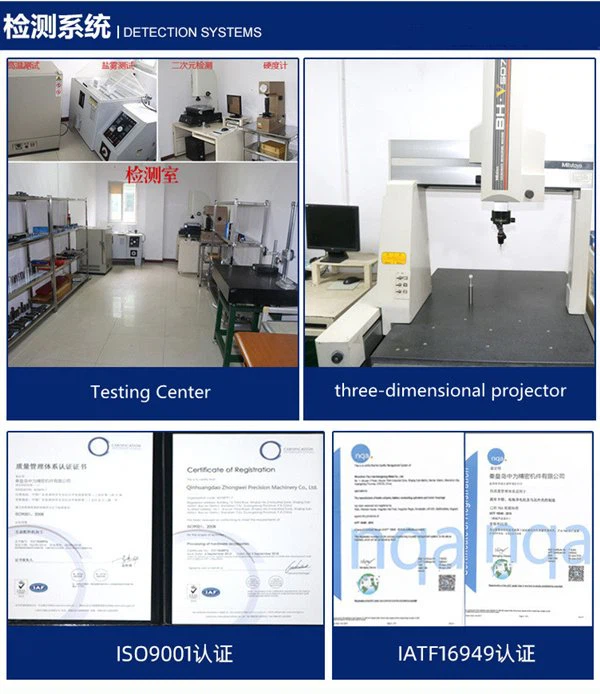
1. Quality control: the defective rate is less than 0.1%.
2. Samples and trial run will be 100% inspected during production and before shipment, sample inspection for mass production according to ISDO standards or customer requirements
3. Testing equipment: flaw detection, spectrum analyzer, golden image analyzer, three-coordinate measuring machine, hardness testing equipment, tensile testing machine.
Application
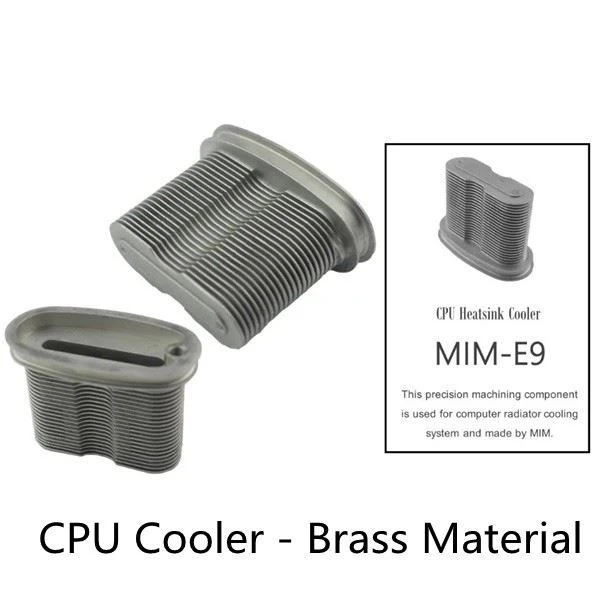
(1) Computer and its auxiliary facilities: such as printer parts, magnetic cores, striker pins, drive parts, etc.;
(2) Tools: such as drill bits, cutter heads, nozzles, gun drills, spiral milling cutters, punches, sockets, wrenches, electrical tools, hand tools, etc.;
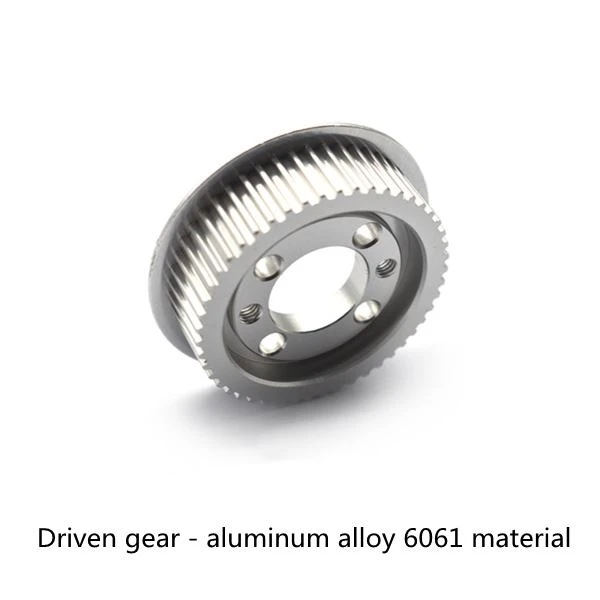
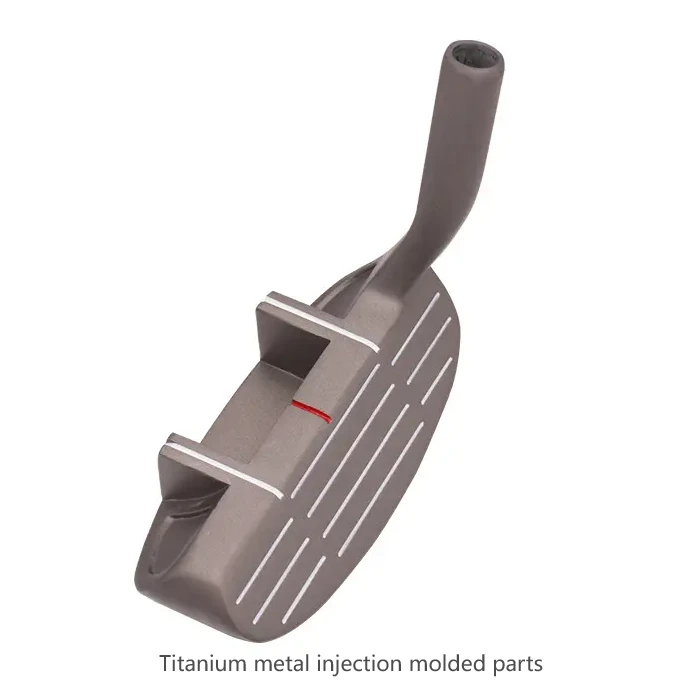
(3) Household appliances: such as watch cases, watch chains, electric toothbrushes, scissors, fans, golf heads, jewelry links, ballpoint pen clamps, cutting tool bits and other parts;
(4) Parts for medical machinery: such as orthodontic frame, scissors, tweezers, etc.;
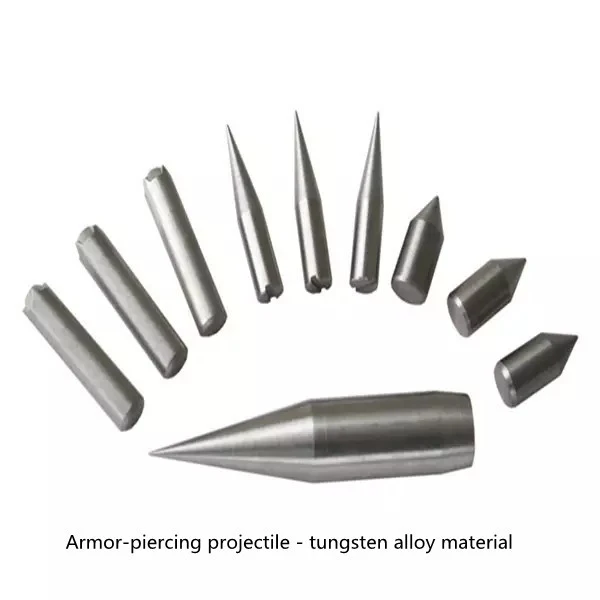
(5) Military parts: missile tail, gun parts, warheads, drug cover, fuze parts, etc.;
(6) Electrical parts: electronic packaging, micro motors, electronic parts, sensor devices, etc.;
(7) Mechanical parts: such as cotton loosening machine, textile machine, crimping machine, office machinery, etc.;
(8) Automobile and marine parts: such as clutch inner ring, fork sleeve, distributor sleeve, valve guide, synchronous hub, airbag parts, etc.
In the application of plastic gears for electric foot grinders, Suzhou Wintone Engineering Plastics WintoneZ33 special engineering plastics for wear-resistant and silent gears can help you solve the problems of insufficient wear-resistance and fatigue-resistance and relatively loud noise of conventional POM and nylon gear materials.
As a tough and wear-resistant engineering plastic, WintoneZ33 has the most notable features in gear applications: wear-resistant, silent, corrosion-resistant, tough and not affected by moisture.
Compared with traditional POM and PA66, WintoneZ33 has the advantages of miniature reduction gearbox, electric push rod, EPS gear of automobile steering system, massager gear, gasoline engine cam, electric bicycle mid-mounted motor gear, etc. Better wear resistance, quietness, elasticity, fatigue resistance and deformation resistance, Z33 further improves elasticity and toughness while maintaining good rigidity (this excellent mechanical performance is at -40 degrees Celsius, 0 degrees and It can be maintained and reflected at 80 degrees), which can help solve the problem of gear broken teeth, and at the same time greatly reduce friction noise. After application, WintoneZ33 is also better than many wear-resistant modified POM and PA66 (such as PTFE). , silicone or molybdenum disulfide modified).
In the application of wear-resistant and silent gears of miniature reduction gearboxes, Z33 has better wear-resistance and fatigue resistance than traditional PA12 and TPEE (Hai Cui material), and can also help solve the problem of sometimes insufficient torque of PA12 and TPEE. And the Z33 has a better cost advantage.
In addition, Z33 has good corrosion resistance and can be used in harsh environments exposed to various chemicals in many scenarios, such as PCB equipment gears, gears on printing and dyeing textile machinery, retaining rings and sealing rings for hydraulic systems, etc. , successfully replace the expensive PEEK, PA12, PVDF, PTFE, PA46, some application areas of TPEE. In addition, Z33 has little moisture absorption, and the overall performance is little affected by moisture. The whole package of Wintone Z33 does not need to be baked in advance before injection molding, and can be directly injected, and no water treatment is required after injection molding.


Send Inquiry
