



Polypropylene Injection Molded Parts
Polypropylene (PP) is currently the second largest general-purpose plastic. With the development of industries such as construction, automobiles, home appliances and packaging, waste PP has become one of the largest waste polymer materials in recent years.
Polypropylene (PP) is currently the second largest general-purpose plastic. With the development of industries such as construction, automobiles, home appliances and packaging, waste PP has become one of the largest waste polymer materials in recent years. At present, the main ways to deal with waste PP are: incineration for energy supply, catalytic cracking to prepare fuel, direct utilization and recycling. Considering factors such as technical feasibility, cost, energy consumption and environmental protection in the process of processing waste PP, recycling is the most commonly used, effective and most advocated way to deal with waste PP.
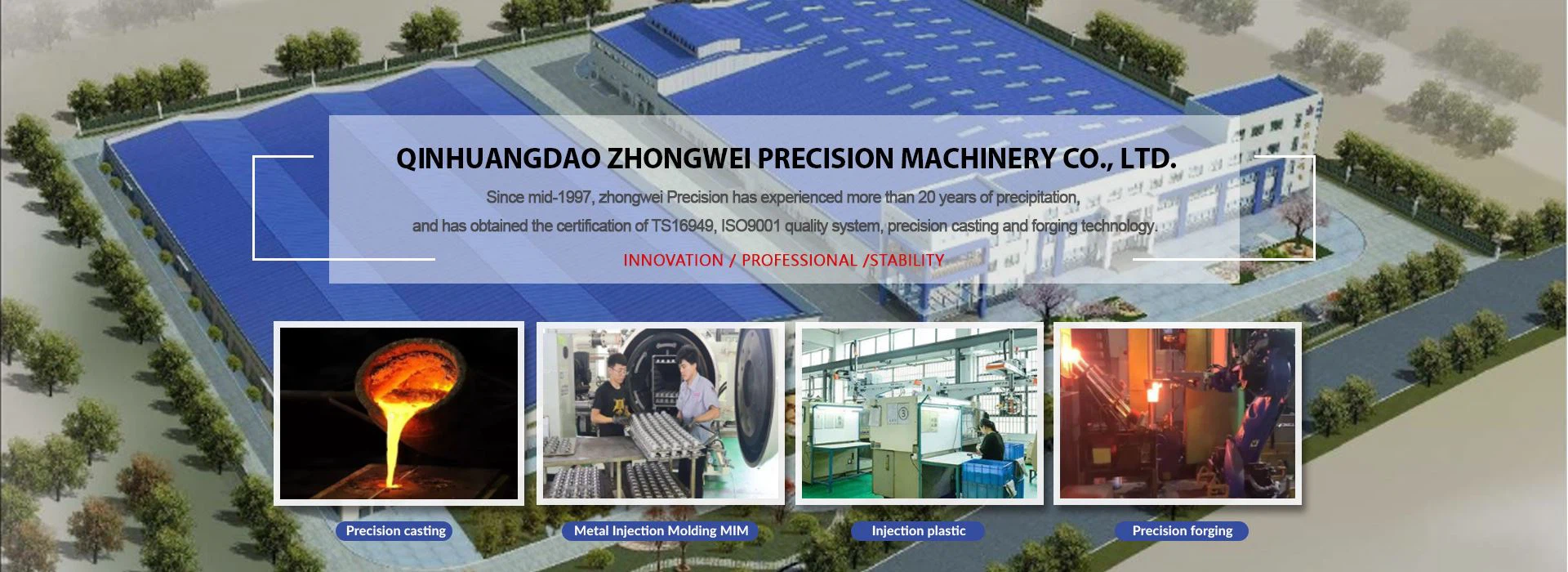
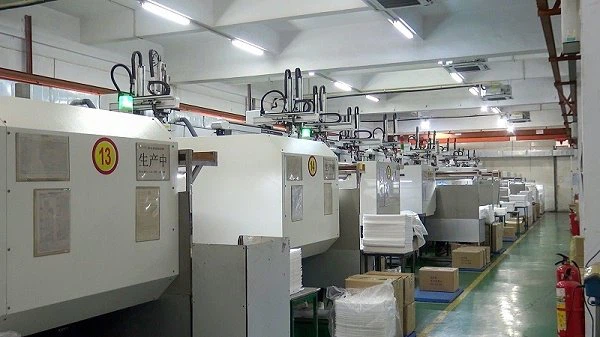
The main products of Zhongwei Precision Machinery Co., Ltd. are nylon products, plastic products, ABS series, rubber products, etc. Types of injection molding materials that can be processed: polyethylene (PE), polypropylene (PP), nylon (PA, PA6, PA66), polyoxymethylene (POM), ABS, polyurethane (TPU), polyphenylene sulfide (PPS), polystyrene Carbonate (PC), Polyetheretherketone (PEEK), etc.
Product Description
1. Implementation standards: the company strictly implements ISO9001, ISO14001, IATF16949, VDA6.3 certification, and products have passed ROHS, FDA EU certification, etc.
2. Product material standards: ISO, GB, ASTM, SAE, EN, DIN, BS, AMS, JIS, ASME, DMS, TOCT, GB
3. Main processes: plastic injection molding, metal insert injection molding, investment casting, die-casting aluminum,
4. Available materials for injection molding:
Processable nylon products, plastic products, ABS series; injection molding material types: polyethylene (PE), polypropylene (PP), nylon (PA, PA6, PA66), polyoxymethylene (POM), ABS, polyurethane (TPU), poly Phenyl sulfide (PPS), polycarbonate (PC), polyether ether ketone (PEEK) and 3D printing can be customized according to customer requirements.

Recycling Technology of Polypropylene Injection Molded Parts
Polypropylene (PP) is currently the second largest general-purpose plastic. With the development of industries such as construction, automobiles, home appliances and packaging, waste PP has become one of the largest waste polymer materials in recent years. At present, the main ways to deal with waste PP are: incineration for energy supply, catalytic cracking to prepare fuel, direct utilization and recycling. Considering factors such as technical feasibility, cost, energy consumption and environmental protection in the process of processing waste PP, recycling is the most commonly used, effective and most advocated way to deal with waste PP.
Due to the influence of factors such as light, heat, oxygen and external force during use, the molecular structure of PP will change, and the product will become yellow, brittle, or even cracked, resulting in PP toughness, dimensional stability, thermo-oxidative stability and workability. It is obviously worse, and it is difficult to directly use waste PP to manufacture products to meet the requirements of processing and use. Therefore, the recycling technology of waste PP continues to develop. Alloying with other polymers or compounding with fillers can significantly improve the processing performance, thermal properties, physical and mechanical properties of waste PP, and realize the high performance of waste PP.
• Alloying
Alloying is the process of mixing waste PP with other polymer materials to prepare macroscopically homogeneous materials. By selecting different polymer materials for alloying, the processing properties, physical and mechanical properties of waste PP can be improved. For example, the use of elastomers can significantly improve the impact toughness of waste PP.
There are studies on the mechanical properties and thermal deformation behavior of waste PP/RU composite rubber (natural rubber and styrene-butadiene rubber each account for 50%). The continuous phase of waste PP can significantly improve the impact strength and elongation at break of waste PP, but it will reduce the rigidity and thermal deformation resistance of PP.
Because most elastomers are incompatible with waste PP, the interface bonding is poor, and there is phase separation during processing and use, which affects its performance. In order to improve the interfacial compatibility of waste PP alloys and enhance the interfacial adhesion, many scholars have carried out extensive research and found two kinds of materials that can enhance the interfacial adhesion of the blended materials and improve the storage modulus, loss modulus and system viscosity of the blended materials. compatibilizer.
The vulcanizing agent can improve the impact and tensile strength, melt viscosity, elongation at break and ductility of the blended material; the addition of the peroxide crosslinking agent can further improve the compatibility of the blended material and improve the blended material. impact and tensile strength, but resulted in a slight decrease in elongation at break.
• Compounding
Compounding is the process of mixing waste PP and non-polymer materials to prepare composite materials, and it is the main way to achieve high performance and functionalization of waste PP. Composite waste PP can improve its rigidity, strength, thermal, electrical and other physical and mechanical properties, and reduce costs. According to the filler composition, it can be divided into inorganic fillers and organic fillers.
• Compounding of inorganic fillers
Inorganic fillers commonly used in PP compounding can be used to compound waste PP, such as calcium carbonate, talc, montmorillonite, metal oxides, fly ash and glass fibers. The study found that although these inorganic fillers can significantly improve the rigidity of waste PP and reduce the cost, but the polarity of waste PP is quite different, the surface energy is high, and the compatibility is poor, which leads to the decrease of elongation at break and impact toughness of composite materials.
• Compounding of organic fillers
Common organic fillers include wood flour and wood fiber, starch, wheat straw, hemp fiber and discarded newspapers. There is research on the microcellular foaming technology of wood fiber filling waste PP. The results show that when the melting temperature is 180 ° C and the holding pressure is 12.5 MPa, the microcellular structure is uniformly distributed. The microporous structure can extend the propagation path of cracks and absorb external impact energy, thereby improving impact strength.
Natural fiber is an emerging waste PP filling material. In view of its high water absorption and incompatibility with waste PP, surface treatment is the main method to achieve high performance of natural fiber filled waste PP composites. In addition, waste polyester can also be used to modify waste PP. Some scholars have studied the crystallization behavior of β-nucleated waste PP/waste polyester fabric composites. The results show that waste polyester and β-nucleating agent have different phases on waste PP crystallization. Nucleation increases the crystallization temperature of waste PP and induces the formation of β crystals.
• Hybrid compounding
Hybrid compounding is a process in which two or more filler-filled polymers are used to prepare composite materials. Due to the limitations of a single filler, hybrid compounding can better improve the comprehensive properties of polymers through the complementary and synergistic effects of different fillers. Therefore, research on the preparation and related properties of waste PP composites filled with mixed fillers has attracted attention, and the fillers involved mainly include mixed inorganic fillers and inorganic/organic fillers.
• Alloy compounding
In order to give full play to the advantages of alloying and compounding, some researchers began to combine alloying and compounding to further improve and improve the physical and mechanical properties of waste PP, and realize the high performance and industrialization of waste PP, such as organic fillers and elastomers, inorganic materials. Fillers and elastomers are combined with modified waste PP, etc.
The research results in this regard show that the fractures of waste PP and talc-filled waste PP composites are both brittle behaviors at low temperature, and the addition of EOC (ethylene-octene copolymer) can significantly improve the impact resistance of composites; EOC increases The dynamic mechanical behavior of ductile talc-filled waste PP composites did not change with the increase of recycling times.
Post Injection Molding Process
1. Processing equipment: CNC, WEDM, lathe, milling machine, drilling machine, grinder, etc.;
2. Surface treatment: For some products that require subsequent processing, we can provide surface treatment services to achieve the special purpose of customers. At present, we can provide degreasing, polishing, electroplating (gold, silver, nickel, tin, galvanized, etc.), anodizing, electrophoresis and other surface treatment services for precision parts.

Moulds and Inspection Fixtures
1. Mold service life: usually semi-permanent. (except for lost foam)
2. Mold delivery time: 10-25 days, (according to product structure and product size).
3. Tooling and mold maintenance: Zhongwei is responsible for precision parts.
Quality Control
1. Quality control: the defective rate is less than 0.1%.
2. Samples and trial run will be 100% inspected during production and before shipment, sample inspection for mass production according to ISDO standards or customer requirements
3. Testing equipment: automated visual inspection equipment can carry out 100% inspection of products, spectrum analyzer, golden elephant analyzer, three-coordinate measuring machine, hardness testing equipment, tensile testing machine.


Send Inquiry
