




Copper Alloy Metal Injection Molded Parts
Qinhuangdao Zhongwei Precision Machinery Co., Ltd. is a company integrating Copper Alloy Metal Injection Molded Parts, Iron-based Metal Injection Molding, Stainless Steel-based Metal Injection Molding, Aluminum Alloy Metal Injection Molding, Nickel Alloy Metal Injection Molding, Cobalt Alloy Metal Injection Molding, Tungsten Alloy Metal Injection Molding.
Qinhuangdao Zhongwei Precision Machinery Co., Ltd. is a company integrating Copper Alloy Metal Injection Molded Parts, Iron-based Metal Injection Molding, Stainless Steel-based Metal Injection Molding, Aluminum Alloy Metal Injection Molding, Nickel Alloy Metal Injection Molding, Cobalt Alloy Metal Injection Molding, Tungsten Alloy Metal Injection Molding. A comprehensive high-tech enterprise integrating R&D, production and sales of metal injection molding, cemented carbide metal injection molding, and powder metallurgy structural parts. It can produce American brand 6061 aluminum alloy metal injection molding parts, 6063 aluminum alloy metal injection molding parts, Japanese brand A6061 aluminum alloy metal injection molding parts, A6063 aluminum alloy metal injection molding parts, German brand AlMg1Si0.5 German brand AlMg1Sicu aluminum alloy metal injection molding moldings, etc.
Product Description
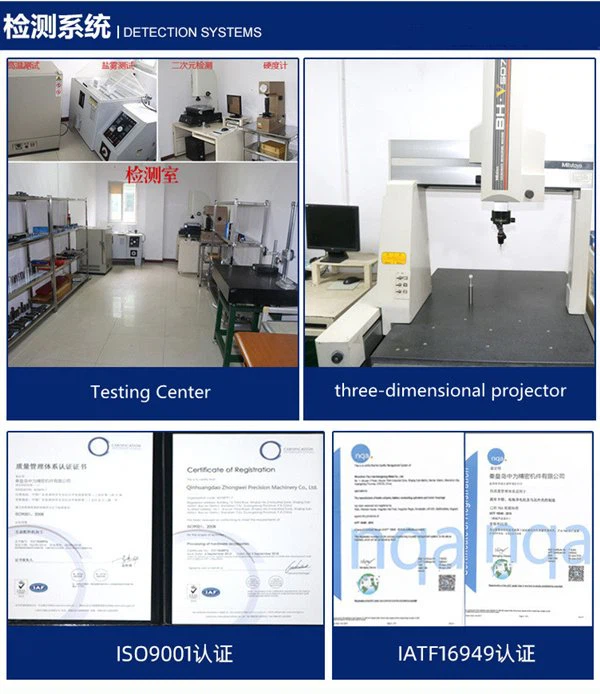
1. Implementation standards: the company strictly implements ISO9001, ISO14001, IATF16949 certification
The products have passed the certification of ROHS, FDA EU, etc.
2. Product material standards: ISO, GB, ASTM, SAE, EN, DIN, BS, AMS, JIS, ASME, DMS, TOCT, GB
3. Main processes: metal injection molding MIM, powder metallurgy PM, investment casting, die-casting aluminum,
4. Available materials for powder metallurgy:
Copper alloys, iron bases, titanium alloys, stainless steel bases, aluminum alloys, nickel alloys, cobalt alloys, tungsten alloys, cemented carbides, hydroxy alloys, soft magnetic materials and 3D printing can be customized according to customer requirements.
Production Process
1.Copper Alloy Metal Injection Molded Parts, is characterized in that, comprises following preparation step:
a. Mixing: the copper alloy powder and the binder are uniformly mixed together to make a feed for injection;
b. Injection molding: The feed is injected into the injection machine, and the feed is injected into the barrel of the injection machine with appropriate pressure and heated to form a plastic material with rheological properties, and then injected into the mold by a certain injection pressure from the nozzle of the injection machine. In the cavity, it is melted and cooled again and kept under pressure for a period of time, and finally a blank is formed;
c. Degreasing extraction: adopt solvent degreasing process to degreasing and remove the binder contained in the forming blank, put the blank piece in step (b) into trichloroethylene solvent and soak it for a period of time, take out and weigh and observe, in the degreasing rate After meeting the requirements, take it out for drying and wait for sintering;
d. Sintering: the sintering process is carried out under the protection of the atmosphere, and the injection blank after degreasing in the step (c) is placed in a high-temperature sintering furnace, and the temperature is gradually increased to complete the sintering.
2. copper alloy injection molding process according to claim 1, is characterized in that, in described step (a), the mass percentage of chemical composition in copper alloy powder is: copper 98.8~99.2%, chromium 0.8~1.2%.
3. copper alloy injection molding technology according to claim 1, is characterized in that, in described step (b), the injection pressure that feed material is injected in barrel is 115~135Mpa, and injection speed is 50~60g/s, barrel The temperature range of each temperature interval in the inner barrel is: 1st barrel: 155~180°C, 2nd barrel: 145~180°C, 3rd barrel: 135~170°C, 4th barrel: 120~160°C C, five sections of barrel: 115~160 ℃.
4. copper alloy injection molding process according to claim 1, is characterized in that, in described step (b), the injection pressure that feed is injected into mold cavity by nozzle is 85~110 Mpa, and injection speed is 50~60g/ s, the temperature range in the mold cavity is 30 ~ 50 °C.
5. copper alloy injection molding process according to claim 1, is characterized in that, the whole injection molding cycle of described step (b) is 19~25s, the material cooling time after melting is 9~15s, the setting of holding pressure The range is 40~60Mpa.
6. copper alloy injection molding process according to claim 1, is characterized in that, in described step (c), degreasing extraction time is 12~24h, and the degreasing rate of degreased hair after the extraction and degreasing of Luo agent is 3.7~4.0 %.
7. copper alloy injection molding process according to claim 6, is characterized in that, in described step (c), degreasing extraction time is 15h.
8. copper alloy injection molding process according to claim 1, is characterized in that, in the described step (d), the sintering temperature range in the sintering furnace is 100~1000 ℃, and the injection blank after degreasing is respectively 400 ℃. Under the ℃ condition, be incubated for 10 minutes, then gradually be warming up to 480 DEG C and be incubated for 20 minutes, then be gradually warming up to 900 DEG C and be incubated for 240 minutes, and finally complete the sintering.
9. The copper alloy injection molding process according to any one of claims 1 to 8, characterized in that it also includes a post-processing operation, which comprises the steps: a, heat treatment: according to the phase transformation and the dissolution curve of the copper alloy, carry out Solution treatment and aging treatment: Wherein solution treatment process is: carry out under the protection of hydrogen or nitrogen atmosphere, the blank after sintering is placed in the heating furnace, be warming up to 960~980 ℃, be kept warm for 1~2h, stop heating up, Then adopt hydrogen or nitrogen to blow and cool to realize cooling; the aging treatment process is: carry out under the protection of hydrogen atmosphere, place the sintered blank in a heating furnace, heat up to 450~480 ℃, keep warm for 4~6h, stop heating, then Cooling with the furnace; b. Product inspection after solution and aging: The product after solution and aging is inspected. After hot inlay and polishing, the surface micro-hardness is measured by a micro-Vickers hardness tester. The copper alloy material is heat-treated. The hardness can reach above 70HV0.3; c. Anti-oxidation treatment: Magnetic polishing: Magnetic polishing is performed on the products after solid solution and aging; The first cleaning: The fingerprints and oil stains on the surface of copper alloy parts are removed by overflowing water; Secondary cleaning: Pickling is used to remove the oxide film on the surface of the copper alloy; Antioxidation treatment: A protective layer is formed on the surface of the copper alloy to prevent oxidation of the copper alloy; The second cleaning: The surface impurities and dust are removed with continuous water flow; Drying: Use hot air to dry the moisture on the surface of the copper alloy; Inspection: The surface of the copper alloy sample after anti-oxidation treatment is uniform, without water stains and corrosion on the surface, and does not change color after standing, and can withstand the smoke test for more than 8 hours; Packaging : Pack the qualified products after inspection into Yuding and put them into storage.
Post Casting Process
1. Heat treatment: annealing, carbonization, tempering, quenching, normalizing, surface tempering
2. Processing equipment: CNC, WEDM, lathe, milling machine, drilling machine, grinder, etc.;
3. Surface treatment: powder spraying, chrome plating, painting, sandblasting, nickel plating, galvanizing, blackening, polishing, bluing, etc.

Moulds and Inspection Fixtures
1. Mold service life: usually semi-permanent. (except for lost foam)
2. Mold delivery time: 10-25 days, (according to product structure and product size).
3. Tooling and mold maintenance: Zhongwei is responsible for precision parts.

Quality Control
1. Quality control: the defective rate is less than 0.1%.
2. Samples and trial run will be 100% inspected during production and before shipment, sample inspection for mass production according to ISDO standards or customer requirements
3. Testing equipment: flaw detection, spectrum analyzer, golden image analyzer, three-coordinate measuring machine, hardness testing equipment, tensile testing machine.


Send Inquiry
