




Shuttle Metal Injection Molding
Metal Powder Injection Molding Technology (MIM) is a new type of powder metallurgy near-net-shape molding technology formed by introducing modern plastic injection molding technology into the field of powder metallurgy.
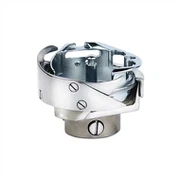
Metal Powder Injection Molding Technology (MIM) is a new type of powder metallurgy near-net-shape molding technology formed by introducing modern plastic injection molding technology into the field of powder metallurgy. The shuttle products currently produced by Qinhuangdao Zhongwei Precision Machinery Co., Ltd. are: metal injection molding embroidery machine 2S shuttle parts, metal injection molding embroidery machine F7 shuttle parts, metal injection molding embroidery machine HQ7 shuttle parts, metal injection molding embroidery Machine K10 Shuttle Pieces, Metal Injection Molding Embroidery Machine Hiraoka P10 Shuttle Pieces, Metal Injection Molding Embroidery Machine P72-1 Shuttle Pieces, Metal Injection Molding Embroidery Machine P10 Shuttle Pieces, Metal Injection Molding Embroidery Machine SY10 Shuttle Pieces, Metal Cast-steel P10 shuttle for injection molding embroidery machine, SY10 shuttle for metal injection molding embroidery machine, TE-7 shuttle for metal injection molding embroidery machine, USA10#Shuttle metal injection molding for metal injection molding embroidery machine, etc.
Product Description
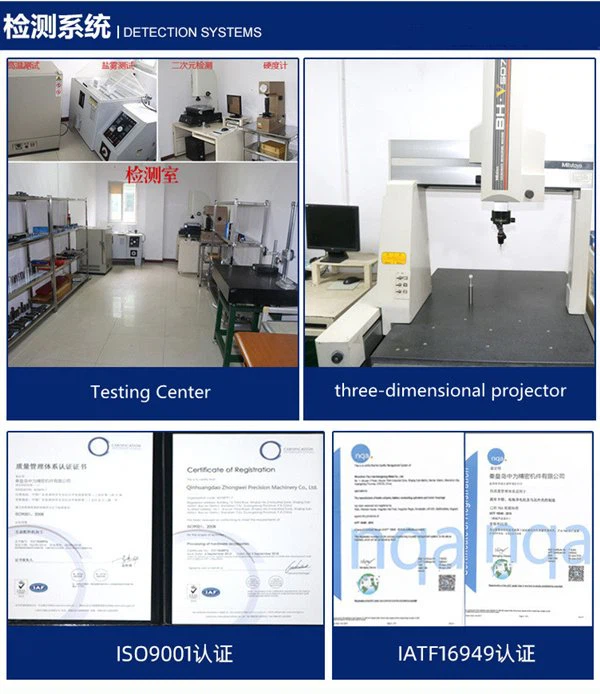
1. Implementation standards: the company strictly implements ISO9001, ISO14001, IATF16949 certification
The products have passed the certification of ROHS, FDA EU, etc.
2. Product material standards: ISO, GB, ASTM, SAE, EN, DIN, BS, AMS, JIS, ASME, DMS, TOCT, GB
3. Main processes: metal injection molding MIM, powder metallurgy PM, investment casting, die-casting aluminum,
4. Available materials for powder metallurgy:
Copper alloys, iron bases, titanium alloys, stainless steel bases, aluminum alloys, nickel alloys, cobalt alloys, tungsten alloys, cemented carbides, hydroxy alloys, soft magnetic materials and 3D printing can be customized according to customer requirements.
Production Process
The use of mold injection molding blanks and rapid manufacturing of high-density, high-precision, three-dimensional complex-shaped structural parts through sintering can quickly and accurately materialize design ideas into products with certain structural and functional characteristics, and directly mass-produce parts. It is a new revolution in the manufacturing technology industry.
Equipment required for MIM injection molding: granulator, MIM special injection molding machine, degreasing furnace, sintering furnace, testing equipment, secondary processing equipment, etc.
In the future, the development of powder injection molding will mainly focus on materials and design, and use the advantages of this process to help customers improve the design of Shuttle metal injection molding and reduce costs, thereby expanding the application field of powder injection molding.
1. The process of metal powder injection molding (MIM) products is:
Powder + binder → mixing → granulation → injection molding → degreasing (MIM degreasing furnace) → sintering (MIM sintering furnace) → subsequent processing → forming products. In the process of producing MIM cemented carbide parts, improper material selection and operation control in any link may cause defects in cemented carbide parts, so how to avoid such defects?
(1) Powder selection link. In addition to meeting the basic requirements of particle size distribution and particle size, MIM cemented carbide powder metallurgy also requires high purity of powder, and powder containing impurities cannot be selected. If the powder contains sulfur, phosphorus, silicon and other elements, These substances will form pores during the sintering process, resulting in product defects.
(2) The production link of feeding. The cemented carbide powder needs a suitable binder during mixing. The cemented carbide powder and the binder are fully mixed during mixing. The temperature must be strictly controlled during the mixing process to avoid the volatilization and uneven distribution of the binder. , so that the mixture has good rheological properties and viscosity value after feeding, and avoids defects in the following links.
(3) The link of forming the green body. This is also a key link in the production of cemented carbide parts. To avoid product defects, it is necessary to pay attention to reasonably control the temperature, feeding amount, injection pressure, holding pressure, holding time, injection speed, etc. of the mold during the injection process, which can effectively Avoid the defects of injection green body.
(4) Degreasing link. In the degreasing of the cemented carbide green body, during the degreasing process, if the heating rate of the degreasing furnace is too fast, it will cause crack defects of the cemented carbide parts. The method of gradual heating can be used for degreasing.
(5) Sintering link. The density of cemented carbide is high, and the product is easily deformed due to its own gravity during liquid phase sintering. Appropriate support devices can be used. For larger-sized products, materials with comparable shrinkage rates can be selected as support plates. In addition, the liquid phase sintering time should be shortened as much as possible.

2. Common defects of metal powder injection parts are as follows:
(1) Under injection: Under injection refers to the incomplete injection product caused by the insufficient pressure of the injection molding machine or the poor fluidity of the injection material used. The reasons for under-injection are poor material fluidity, too small wall thickness of the product, too low mold temperature and too short injection time, and corresponding measures can be taken to improve material fluidity or replace materials, increase wall thickness, increase mold temperature, increase injection pressure and Measures such as extending the injection time can be solved.
(2) Weld line: The material is divided into several streams in the cavity during the injection process and then merged together. There may be linear traces at the junction, that is, the weld line, which affects the appearance quality and even the mechanical strength of the product. The reasons for the formation of weld lines are that the injection pressure is too low, the injection speed is too slow, the material temperature and the mold temperature are too low, and the number of material streams is too large. The injection pressure can be increased, the injection speed can be increased, the material temperature and the mold temperature can be increased accordingly. Diversion and other measures to solve.
(3) Air pockets: During the injection process, the air in the mold cavity is too late to be discharged, and it is encapsulated by the material or compressed to the inner wall of the mold to form air pockets, causing insufficient injection on the surface of the product, affecting the appearance quality and even the mechanical strength of the product. The original cavities that form air pockets are due to poor exhaust, inappropriate gate position, too fast injection speed, and too much change in product thickness. Correspondingly, adding vent holes or deepening vent holes, changing gate position, and appropriately slowing down the injection can be adopted. Measures such as speed, prolonging the holding time and avoiding sharp changes in product thickness can be solved.
(4) Deformation: Deformation refers to the bending or twisting of the molded product after cooling, which directly affects the appearance and dimensional accuracy of the product, and even causes the product to be scrapped. The reasons for the deformation are uneven cooling of the product, too hot and premature topping of the product, too thin and unreasonable structure of the product, and residual stress inside the product. Correspondingly, the mold water channel can be uniformly cooled, the pressure holding time can be extended, the product can be ejected in time, and the product can be improved. Wall thickness and structural design and measures such as improving molding conditions can be solved.
3. Summary
Metal powder injection molding (MIM) can form cemented carbide products with complex shapes. With the problem of defect control and the gradual improvement of MIM technology, the application scope of cemented carbide has gradually expanded, which has greatly promoted the development of the entire cemented carbide industry. develop.
The cemented carbide powder needs a suitable binder during mixing. The cemented carbide powder and the binder are fully mixed during mixing. The temperature must be strictly controlled during the mixing process to avoid the volatilization and uneven distribution of the binder. , so that the mixture has good rheological properties and viscosity value after feeding, and avoids defects in the following links.
Post Casting Process
1. Heat treatment: annealing, carbonization, tempering, quenching, normalizing, surface tempering
2. Processing equipment: CNC, WEDM, lathe, milling machine, drilling machine, grinder, etc.;
3. Surface treatment: powder spraying, chrome plating, painting, sandblasting, nickel plating, galvanizing, blackening, polishing, bluing, etc.
Moulds and Inspection Fixtures
1. Mold service life: usually semi-permanent. (except for lost foam)
2. Mold delivery time: 10-25 days, (according to product structure and product size).
3. Tooling and mold maintenance: Zhongwei is responsible for precision parts.

Quality Control
1. Quality control: the defective rate is less than 0.1%.
2. Samples and trial run will be 100% inspected during production and before shipment, sample inspection for mass production according to ISDO standards or customer requirements
3. Testing equipment: flaw detection, spectrum analyzer, golden image analyzer, three-coordinate measuring machine, hardness testing equipment, tensile testing machine.


Send Inquiry
