



Aluminum Alloy Powder Metallurgy Pressed Parts
Aluminum alloy powder metallurgy pressed parts formed by powder metallurgy process. It is divided into four kinds of powder high-strength, ultra-high-strength, high-temperature and low-density aluminum alloys: commonly used rapid solidification processes include gas atomization and flow casting, thin strip crushing, etc.
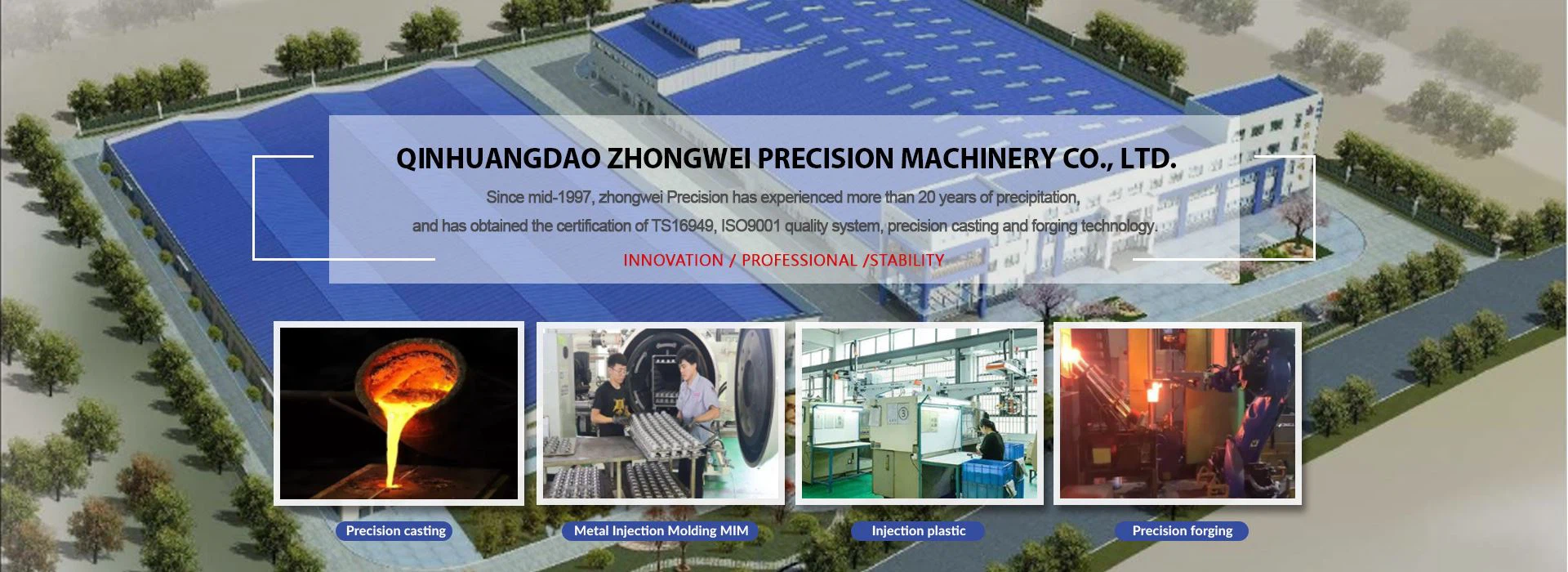
Qinhuangdao Zhongwei Precision Machinery Co., Ltd. is committed to the technical research and development of aluminum alloy powder metallurgy pressed parts, and can now produce American grades: 6061 powder metallurgy parts, 6063 powder metallurgy parts, Japanese grades: A6061 powder metallurgy parts, A6063 powder metallurgy parts, Germany Brand: AlMg1Si0.5 powder metallurgy parts, AlMg1Sicu powder metallurgy parts.
Qinhuangdao Zhongwei Precision Machinery Co., Ltd. Powder Metallurgy Division was established in 2007 and is located in Qinhuangdao City, Hebei Province. There are two production lines for metal injection molding MIM process and powder metallurgy PM. The company's existing self-developed products: German Maya warp knitting machine Sensing chain blocks, electric actuator gears, automobile oil pump rotors, washing machine transmission gears and other products, the powder metallurgy products produced cover automobiles, motorcycles, power tools, home appliances, textile machinery parts and other fields. Our company is a comprehensive high-tech enterprise integrating R&D, production and sales of copper alloy, iron base, stainless steel base, aluminum alloy, nickel alloy, cobalt alloy, tungsten alloy, cemented carbide and powder metallurgy structural parts.
Product Description
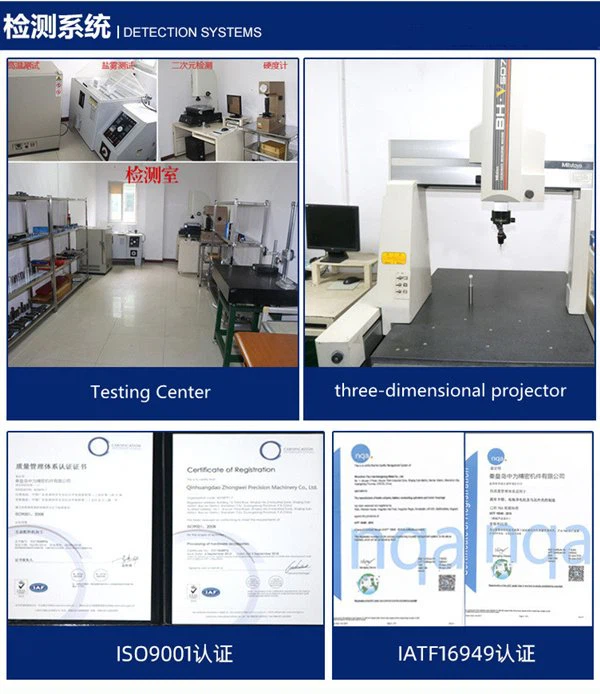
1. Implementation standards: the company strictly implements ISO9001, ISO14001, IATF16949 certification
The products have passed the certification of ROHS, FDA EU, etc.
2. Product material standards: ISO, GB, ASTM, SAE, EN, DIN, BS, AMS, JIS, ASME, DMS, TOCT, GB
3. Main processes: metal injection molding MIM, powder metallurgy PM, investment casting, die-casting aluminum,
4. Available materials for powder metallurgy:
Copper alloy, iron base, titanium alloy, stainless steel base, aluminum alloy, nickel alloy, cobalt alloy, tungsten alloy, cemented carbide, hydroxy alloy, soft magnetic material and 3D printing can be customized according to customer requirements.
Process Classification
Aluminum alloy powder metallurgy pressed parts formed by powder metallurgy process. It is divided into four kinds of powder high-strength, ultra-high-strength, high-temperature and low-density aluminum alloys: commonly used rapid solidification processes include gas atomization and flow casting, thin strip crushing, etc. Due to the rapid solidification/powder metallurgy full-process rapid solidification process, the alloy has the characteristics of fine structure and small composition segregation, and its mechanical properties are often better than those of aluminum alloys produced by traditional ingot metallurgy. However, the powder high-strength and low-density aluminum alloys are subject to continuous improvement competition from traditional high-strength and low-density aluminum alloys, and their application prospects are unclear. The mechanical properties of powder high-temperature, ultra-high-strength aluminum alloys are obviously better than those of traditional aluminum alloys, and they cannot be produced by traditional processes, thus showing good application prospects. High-temperature powder, ultra-high-strength aluminum alloys can be used to replace titanium alloys or steels used in the aviation and aerospace fields below 315 °C to achieve weight reduction and cost reduction.
1. Rapid solidification powder and aluminum alloy
Rapid solidification of powdered aluminum alloys is one of the most important achievements of rapid solidification. The National Materials Advisory Bureau (NMAB) conducted a comprehensive evaluation of research on advanced rapid solidification aluminum alloys and concluded that: (1) the performance of rapid solidification powder aluminum alloys is much superior to that of traditional ingot metallurgy; (2) Rapidly solidified powder metallurgy aluminum alloys are mainly used in the aviation industry; (3) the current knowledge about phase relationships, microstructures and structural properties is not applicable to rapidly solidified aluminum alloys. The Advisory Bureau's assessment is a strong support for the research, development, testing and production of rapidly solidifying aluminum alloys, and the report specifically points out that long-term, extensive basic research and development plans should be developed.
Rapidly solidified aluminum alloys have achieved many achievements in powder high specific strength alloys, powder heat-resistant aluminum alloys, powder high-strength aluminum alloys, and powder wear-resistant aluminum alloys, especially the achievements of powder heat-resistant aluminum alloys.
2. Powder aluminum alloy forging
The general process of powder metallurgy process is: powder milling, compaction, sintering (including hot isostatic pressing, cold isostatic pressing, etc.), forging, finishing. Aluminum powder metallurgy preforms are suitable for the production of structural parts by forging methods. When forging aluminum preforms, either hot or cold, a graphite lubricant is applied to the sintered aluminum billet to allow for proper metal flow during forging. For parts that require strict filling of the die cavity, hot forging at 300-400°C is recommended. Forging pressure is usually not higher than 345MPa. Forging is generally carried out with a closed die, therefore, no flash is produced, and only compaction and lateral flow are produced during forging. The chip loss of ordinary forgings is close to 50%, while that of powder metallurgy forgings is less than 10%. The density of forged powder metallurgy parts is 99.5% of the theoretical density, the strength is 40%-60% higher than that of non-forged powder metallurgy parts, and the fatigue durability limit is more than doubled. In other respects, it is similar to ordinary forgings.
3. High-strength pre-alloyed powder aluminum alloy
High-strength pre-alloyed powder aluminum alloys 7090, 7091, X7064, CW67 and IN9021, etc., can be forged with all existing forging techniques, and can be processed into various types of open-die forgings and closed-die forgings. The flow stress and deformation behavior of these alloys are similar to those of alloy 7075, and the recommended forging temperatures are the same as those of alloy 7010, 7049, 7050 or 7075.
Rapidly solidified or alloyed powders can be made into ingots of various sizes by some consolidation techniques, such as vacuum hot pressing or hot isostatic pressing, with masses ranging from about 45kg to 1360kg. In this ingot form, high-strength pre-alloyed powder metallurgy alloys can often be made directly into forgings, or by other processing techniques, such as rolling or extrusion, into bars or sheets for forging. Aluminum-lithium alloys made by pre-alloyed powder metallurgy technology are much more expensive than industrial ingot metallurgy 7XXX series alloys, so precision forging is the most economical and effective forging method.
High strength pre-alloyed powder metallurgy aluminum alloys are generally heat treated to the T7XXX temper (solution treated and stabilized) to obtain the best combination of strength and fracture toughness, as well as resistance to peeling and stress corrosion cracking. The corrosion resistance of pre-alloyed powder metallurgy aluminum alloys at high strength levels is far better than that of ingot metallurgy. As for the high-strength IN9021 alloy, its forgings are usually treated to the T4 temper (solution treated and naturally aged). Some of the above alloys, in view of their excellent comprehensive properties, their forgings have been partially industrially used in aerospace.
4. Anti-corrosion pre-alloyed powder metallurgy aluminum alloy forgings
IN9052 alloy is a medium strength pre-alloyed aluminum alloy with mechanical properties similar to those of ingot metallurgy (I/M) 5083 alloy, but with excellent corrosion resistance. This alloy is forged at lower temperature (less than 370 ℃), and its flow stress and deformation characteristics are similar to 5083 alloy. Like high-strength powder metallurgy aluminum alloys, IN9052 alloys are consolidated into ingots that are extruded and then forged. Due to the price of the material, the method of precision forging is still applicable.
5. High temperature resistant pre-alloyed powder metallurgy aluminum alloy forgings
Several rapid solidification techniques, including atomization, centrifugal melting, and planar melting have been used to develop a series of pre-alloyed aluminum alloys that have greatly improved high temperature properties over existing ingot metallurgical wrought aluminum alloys, Such as 2219 and 2618 alloys, and A201 cast aluminum alloy. These alloys were developed to provide forgings with enhanced properties in the temperature range of 205~345°C, which are not achieved by existing aluminum alloys.
Due to the high temperature properties of these alloys, it has been found difficult to machine them into forgings, which have twice the flow stress of the 7075 alloy. The recommended forging temperatures for these alloys have not been fully determined, but are generally forged at temperatures below 370°C in order to preserve the alloy's microstructural characteristics. All of these high temperature aluminum alloys are non-heat treatable, and their mechanical properties can be improved by dispersion strengthening, intermediate compounds, and work hardening.
Post Casting Process
1. Heat treatment: annealing, carbonization, tempering, quenching, normalizing, surface tempering
2. Processing equipment: CNC, WEDM, lathe, milling machine, drilling machine, grinder, etc.;
3. Surface treatment: powder spraying, chrome plating, painting, sandblasting, nickel plating, galvanizing, blackening, polishing, bluing, etc.

Moulds and Inspection Fixtures
1. Mold service life: usually semi-permanent. (except for lost foam)
2. Mold delivery time: 10-25 days, (according to product structure and product size).
3. Tooling and mold maintenance: Zhongwei is responsible for precision parts.

Quality Control
1. Quality control: the defective rate is less than 0.1%.
2. Samples and trial run will be 100% inspected during production and before shipment, sample inspection for mass production according to ISDO standards or customer requirements
3. Testing equipment: flaw detection, spectrum analyzer, golden image analyzer, three-coordinate measuring machine, hardness testing equipment, tensile testing machine;
4. Provide after-sales service.


Send Inquiry
