



Copper Alloy Powder Metallurgy Pressed Parts
In the field of powder metallurgy, pure copper powder is used to produce Copper alloy powder metallurgy pressed parts with zero thermal conductivity and electronics. Copper alloys containing tin, zinc, nickel, or iron are widely used in the automotive, lawn park equipment, tool and electronics industries.
In the field of powder metallurgy, pure copper powder is used to produce Copper alloy powder metallurgy pressed parts with zero thermal conductivity and electronics. Copper alloys containing tin, zinc, nickel, or iron are widely used in the automotive, lawn park equipment, tool and electronics industries. Copper powder is most used in self-lubricating bearings, in addition to Fe-Cu premix, dialysis and friction material components in the chemical industry.
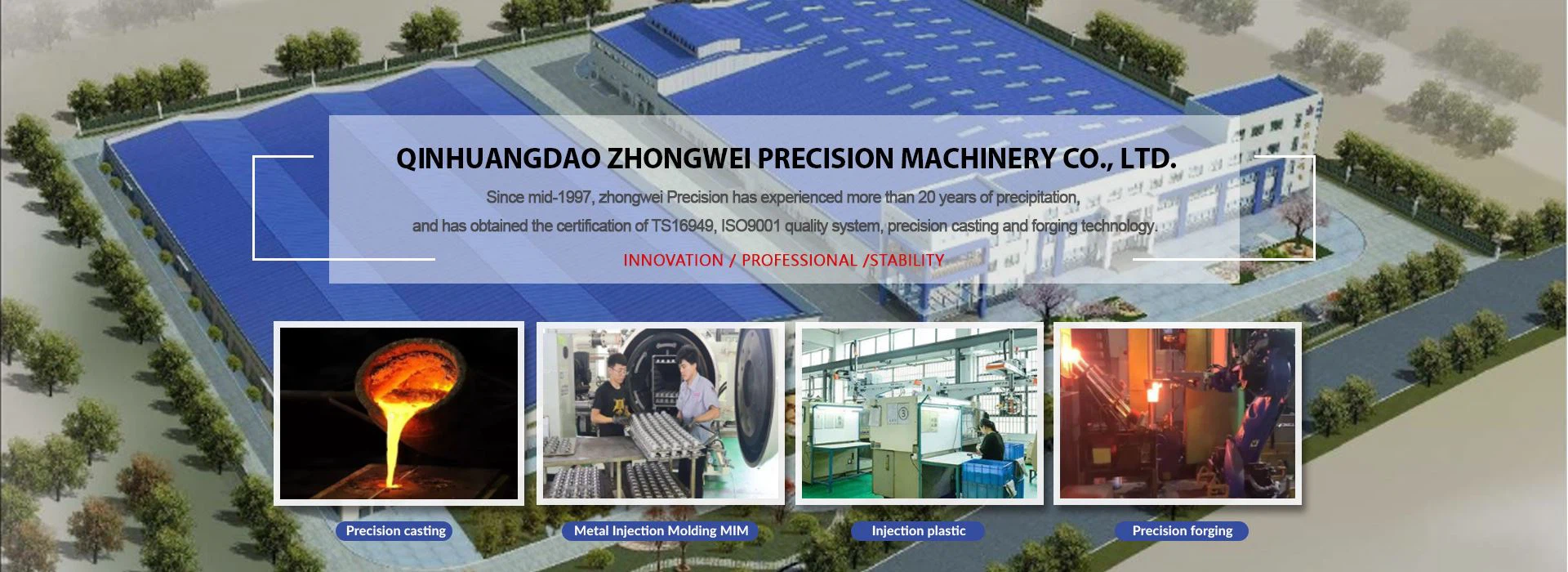
Qinhuangdao Zhongwei Precision Machinery Co., Ltd. Powder Metallurgy Division was established in 2007 and is located in Qinhuangdao City, Hebei Province. There are two production lines for metal injection molding MIM process and powder metallurgy PM. The company's existing self-developed products: German Maya warp knitting machine Sensing chain blocks, electric actuator gears, automobile oil pump rotors, washing machine transmission gears and other products, the powder metallurgy products produced cover automobiles, motorcycles, power tools, home appliances, textile machinery parts and other fields. Our company is a comprehensive high-tech enterprise integrating R&D, production and sales of copper alloy, iron base, stainless steel base, aluminum alloy, nickel alloy, cobalt alloy, tungsten alloy, cemented carbide and powder metallurgy structural parts.
Product Description
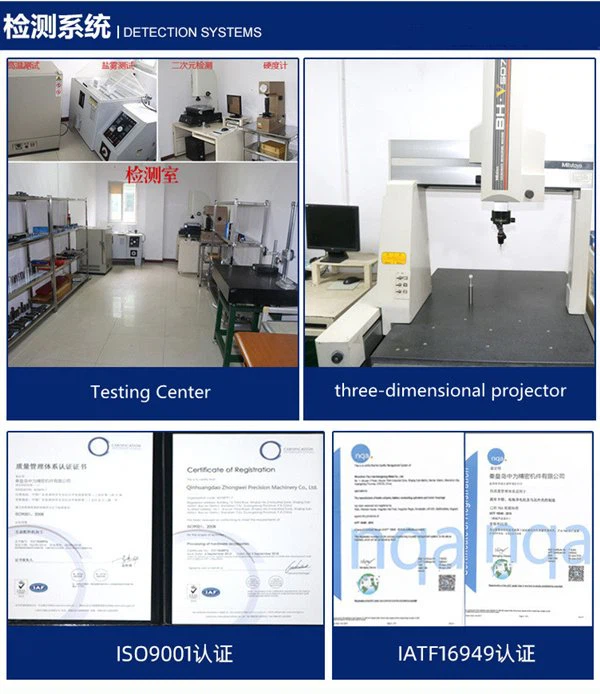
1. Implementation standards: the company strictly implements ISO9001, ISO14001, IATF16949 certification
The products have passed the certification of ROHS, FDA EU, etc.
2. Product material standards: ISO, GB, ASTM, SAE, EN, DIN, BS, AMS, JIS, ASME, DMS, TOCT, GB
3. Main processes: metal injection molding MIM, powder metallurgy PM, investment casting, die-casting aluminum,
4. Available materials for powder metallurgy:
Copper alloy, iron base, titanium alloy, stainless steel base, aluminum alloy, nickel alloy, cobalt alloy, tungsten alloy, cemented carbide, hydroxy alloy, soft magnetic material and 3D printing can be customized according to customer requirements.
Product Origin
1. Powder metallurgy products
The primary application of Copper alloy powder metallurgy pressed parts is copper-tin powder mixing to make bronze parts. In the early 1920s, Metal Refining (USMR), located in Cartwright, New Jersey, USA, began producing electrolytic copper powder. The plant is small in size and has a large cathode tank. At peak production, the powder factory has about 455 tons of copper powder per month. In the mid-1980s, smelting and electrolytic refining businesses were forced to close, and due to the closure of the Cartwright plant, although some businesses attempted to produce electrolytic copper powder, there was no more electrolytic copper powder product production in the United States. Today, electrolytic copper powder is produced in Europe, Japan, Russia, India and South Korea.
The electrolytic copper powder particles have dendritic characteristics, the bulk density is less than 1 g/cm3 by adjusting the process, and the green strength is greater than 35MP. By adjusting the settling process and post-processing of the powder, the bulk density can be increased.
In the United States, copper powder can be produced by water atomization and gas atomization process plus redox method, and its shape is spherical or irregular. The physical properties of atomized powders (eg: bulk density, flowability, particle size and green strength) are related to process conditions such as: specific additives, melting temperature, atomization pressure, reduction temperature and post-processing of the powder. The powder that has passed the redox test has a median diameter of 10 microns, a bulk density of less than 1.5 g/cm3, and a green density of more than 20 MP. The particle size of the powder after atomization and the reduction temperature are the key factors in determining the powder product.
The properties of atomized and redox powders are basically the same as for electrolytic copper powders, with the exception of applications requiring dendritic powders and very low bulk density.
The machining of self-lubricating copper-tin-based oil-impregnated bearings (with internal pores) is a unique feature of powder metallurgy. Such bearings are sintered to a certain density, and the pore oil content can reach 10-30%. These bearings require regular lubrication to ensure safe operation over the life of the equipment. Self-lubricating bearings were first used in the Buick automobile industry in 1920. Use in other industries is considerable, changing the household equipment industry. The manufacture of self-lubricating bearings consumes approximately 55% of copper powder production.
Cu-Pb and Cu-Pb-Sn bearings are used in automotive, turbine, thrust washers and industrial pump equipment. The steel backing material has replaced cast and forged bronze bearings, the powder is coated on the steel matrix, and a certain density is achieved by sintering and rolling, and the porosity of the final product is less than 0.25%.
Brass powder and nickel-silver alloy powder are produced by atomization. The zinc content in the brass powder is 10% to 30%, and sometimes lead is added to improve the mechanical properties. It is used in locks, instrument pointers and driving equipment. Due to its beautiful color, brass is used for decorative metal medals. Brass powder metallurgy components weighing 2.6 kg were recently used for the robotic arm. The sintered part with a sintered density of 7.7 g/cm3 has a tensile strength of 193 MPa and an elongation of 14%. A large number of powder metallurgy parts show that the powder metallurgy process is very potential and creative for the use of copper-based materials.
In 2002, the consumption of copper powder in the world is estimated to be 59,000 to 64,000 tons, 22,000 tons in North America, 18,000 tons in Europe, and 4,500 tons in other countries. About 55% copper powder is used for bronze parts, 13% is mixed with iron powder to produce powder metallurgy parts, 12% is used for infiltration sintering powder, 10% is used for brass, 10% is used for other applications such as: friction materials, chemical, W-Cu and Mo-Cu heavy metals, coatings, paints, pastes and inks.
Merger and reorganization of powder manufacturing companies in North America and worldwide. Twenty years ago, there were mainly eight copper powder manufacturers in North America. Today, it has been reduced to four and may shrink further.
2. Current development
Powders with a particle size of less than 10 microns are suitable for the production of injection moulded parts. The injection molding process can be used in the electrical and electronics industries to produce complex-shaped parts, which have high electrical and thermal conductivity. Since the electrical conductivity of high-purity materials is related to the sintered density, the injection molding process can make the density of the parts close to that of the original material and have complex shapes, and the application of copper powder in thermal management devices is proposed.
Post Casting Process
1. Heat treatment: annealing, carbonization, tempering, quenching, normalizing, surface tempering
2. Processing equipment: CNC, WEDM, lathe, milling machine, drilling machine, grinder, etc.;
3. Surface treatment: powder spraying, chrome plating, painting, sandblasting, nickel plating, galvanizing, blackening, polishing, bluing, etc.

Moulds and Inspection Fixtures
1. Mold service life: usually semi-permanent. (except for lost foam)
2. Mold delivery time: 10-25 days, (according to product structure and product size).
3. Tooling and mold maintenance: Zhongwei is responsible for precision parts.

Quality Control
1. Quality control: the defective rate is less than 0.1%.
2. Samples and trial run will be 100% inspected during production and before shipment, sample inspection for mass production according to ISDO standards or customer requirements
3. Testing equipment: flaw detection, spectrum analyzer, golden image analyzer, three-coordinate measuring machine, hardness testing equipment, tensile testing machine;
4. Provide after-sales service.


Send Inquiry
