



Powder Metallurgy Sintered Parts
In order to improve fuel economy and control emissions, the operating conditions of automobile engines have become more severe. Using powder metallurgy valve seat, valve guide, VCT and sprocket, etc., can have high strength, high wear resistance and excellent heat resistance.
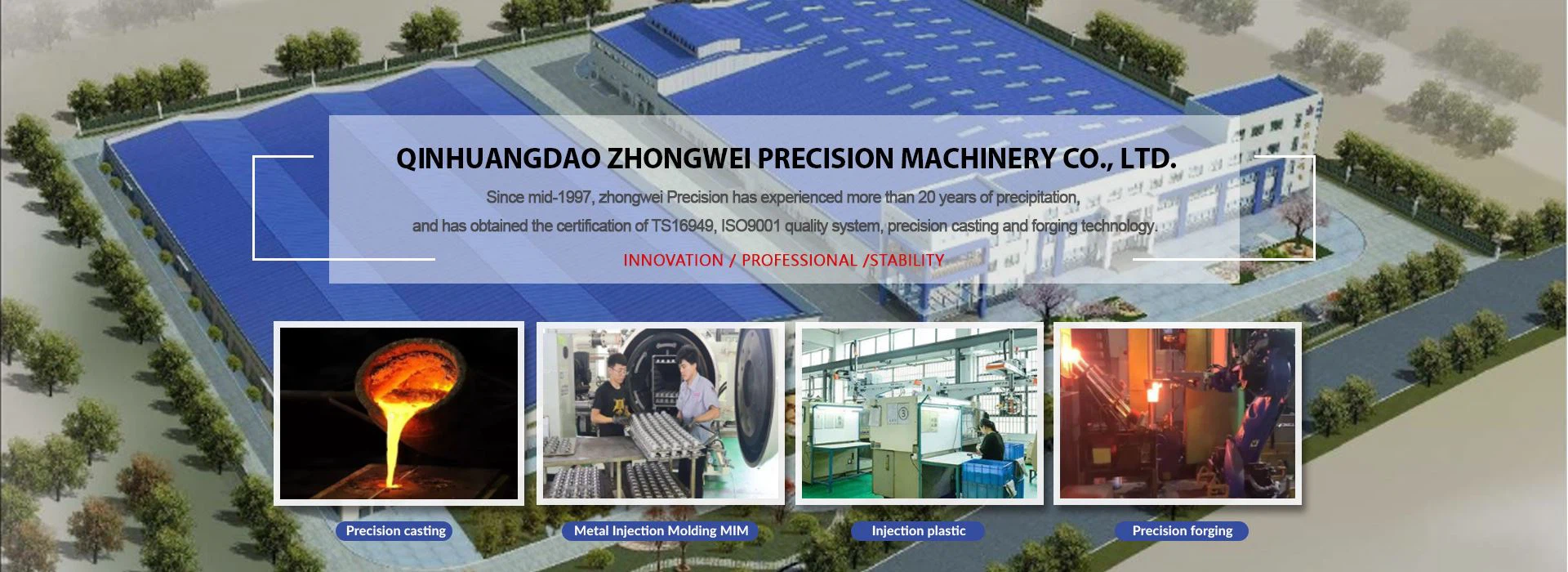
Powder metallurgy sintered parts is a high temperature treatment process that further combines compacted or loose powder bodies to improve strength and other properties. Qinhuangdao Zhongwei Precision Machinery Co., Ltd. Powder Metallurgy Division was established in 2007 and is located in Qinhuangdao City, Hebei Province. There are two production lines for metal injection molding MIM process and powder metallurgy PM. The company's existing self-developed products: German Maya warp knitting machine Sensing chain blocks, electric actuator gears, automobile oil pump rotors, washing machine transmission gears and other products, the powder metallurgy products produced cover automobiles, motorcycles, power tools, home appliances, textile machinery parts and other fields. Our company is a comprehensive high-tech enterprise integrating R&D, production and sales of copper alloy, iron base, stainless steel base, aluminum alloy, nickel alloy, cobalt alloy, tungsten alloy, cemented carbide and powder metallurgy structural parts.
Product Description
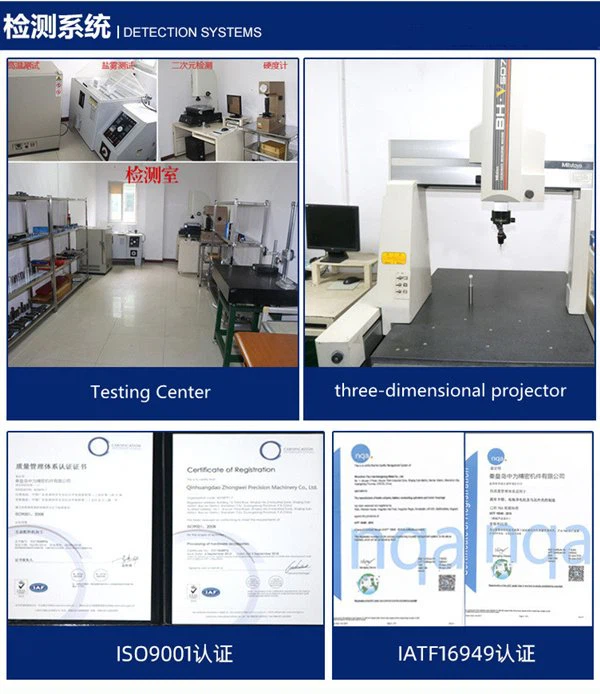
1. Implementation standards: the company strictly implements ISO9001, ISO14001, IATF16949 certification
The products have passed the certification of ROHS, FDA EU, etc.
2. Product material standards: ISO, GB, ASTM, SAE, EN, DIN, BS, AMS, JIS, ASME, DMS, TOCT, GB
3. Main processes: metal injection molding MIM, powder metallurgy PM, investment casting, die-casting aluminum,
4. Available materials for powder metallurgy:
Copper alloy, iron base, titanium alloy, stainless steel base, aluminum alloy, nickel alloy, cobalt alloy, tungsten alloy, cemented carbide, hydroxy alloy, soft magnetic material and 3D printing can be customized according to customer requirements.
Production Process
Powder metallurgy sintering is a high-temperature treatment process that further combines compacts or loose powders to improve strength and other properties.
It is one of the important processes of powder metallurgy. During the sintering process, the powder particles undergo physical and chemical processes such as mutual flow, diffusion, melting, and recrystallization, so that the powder body is further densified and some or all of the pores are eliminated.
Sintering methods usually fall into the following categories:
(1) Solid phase sintering
The sintering temperature is below the melting point of each component in the powder, generally 0.7 to 0.8 Tm (Tm is the absolute melting point, in K).
(2) Liquid phase sintering
If there are two or more components in the powder compact, the sintering may be performed above the melting point of a certain component, so a small amount of liquid phase appears in the powder compact during sintering.
(3) Pressure sintering
During sintering, pressure is applied to the powder body to promote its densification process. Pressure sintering is sometimes synonymous with hot pressing, which is a process that combines the forming and sintering of powders to directly obtain products.
(4) Activation sintering
In the sintering process, some physical or chemical measures are adopted to greatly reduce the sintering temperature and shorten the sintering time, while the performance of the sintered body is improved and improved.
(5) EDM sintering
When the powder body is formed and pressed, direct current and pulse electricity are applied to generate an arc between the powder particles for sintering; during sintering, pressure is gradually applied to the workpiece, and the two processes of forming and sintering are combined.
(6) Infiltration, also known as infiltration
In order to improve the strength and other properties of the porous blank, the porous blank is contacted at high temperature with a liquid metal or alloy that can wet its solid surface. Due to the capillary force, the liquid metal will fill the pores in the blank. This process is suitable for manufacturing tungsten silver, tungsten copper, iron copper and other alloy materials or products.
Post Casting Process
1. Heat treatment: annealing, carbonization, tempering, quenching, normalizing, surface tempering
2. Processing equipment: CNC, WEDM, lathe, milling machine, drilling machine, grinder, etc.;
3. Surface treatment: powder spraying, chrome plating, painting, sandblasting, nickel plating, galvanizing, blackening, polishing, bluing, etc.

Moulds and Inspection Fixtures
1. Mold service life: usually semi-permanent. (except for lost foam)
2. Mold delivery time: 10-25 days, (according to product structure and product size).
3. Tooling and mold maintenance: Zhongwei is responsible for precision parts.

Quality Control
1. Quality control: the defective rate is less than 0.1%.
2. Samples and trial run will be 100% inspected during production and before shipment, sample inspection for mass production according to ISDO standards or customer requirements
3. Testing equipment: flaw detection, spectrum analyzer, golden image analyzer, three-coordinate measuring machine, hardness testing equipment, tensile testing machine;
4. Provide after-sales service.
Application
Typical Application - Automotive Industry
1. Engine parts
In order to improve fuel economy and control emissions, the operating conditions of automobile engines have become more severe. Using powder metallurgy valve seat, valve guide, VCT and sprocket, etc., can have high strength, high wear resistance and excellent heat resistance.
2. Transmission parts
A near-net shaped synchronizer ring is combined with dual friction and high strength materials to create the world's first clutch hub. In addition, high-strength components, such as lever-type shift gears and shift forks, are fabricated by high-temperature sintering.
The powder metallurgy transmission components in automobiles mainly include: synchronizer hubs, synchronizer rings, parking components, column shift components and control rods.
3. Shock absorber parts
In shock absorbers of automobiles and motorcycles, piston rods and piston guide valves are important parts. Taking into account the stable damping force of the shock absorber, powder metallurgy parts are used, which have a high-precision thin plate surface, which can reduce friction, ensure the stability of handling, and improve ride comfort.
Powder metallurgy sintered parts are not only used in the automotive industry and aviation, but also widely used in the production and research of spare parts in the fields of equipment manufacturing, metal industry, military industry, instrumentation, hardware tools, electronic appliances, etc., related raw materials, auxiliary materials production, Various types of powder preparation equipment, sintering equipment manufacturing.

Send Inquiry
