




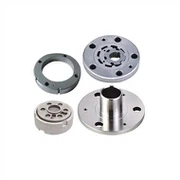
Superalloy Powder Metallurgy Sintered Parts
Superalloy refers to a class of metal materials with nickel, iron and cobalt as the matrix, which can work for a long time under the action of high temperature above 600 ℃ and certain stress, can withstand large and complex stress, and have surface stability.
Superalloy refers to a class of metal materials with nickel, iron and cobalt as the matrix, which can work for a long time under the action of high temperature above 600 ℃ and certain stress, can withstand large and complex stress, and have surface stability. According to the material forming method, superalloys can be classified into cast superalloys, deformed superalloys and new superalloys. As a new type of superalloy, powder superalloy has the advantages of uniform composition, fine grain size, high yield strength and strong fatigue resistance compared with traditional casting and deformed superalloy. Therefore, Superalloy powder metallurgy sintered parts has become a new type of high temperature recognized in the industry. Alloy material of choice. The Powder Metallurgy Division of Qinhuangdao Zhongwei Precision Machinery Co., Ltd. was established in 2007. The powder metallurgy products produced cover automobiles, motorcycles, power tools, home appliances, textile machinery parts and other fields. Our company is a comprehensive high-tech enterprise integrating R&D, production and sales of copper alloys, iron bases, stainless steel bases, aluminum alloys, nickel alloys, cobalt alloys, tungsten alloys, superalloys, cemented carbides, and powder metallurgy structural parts.
Product Description
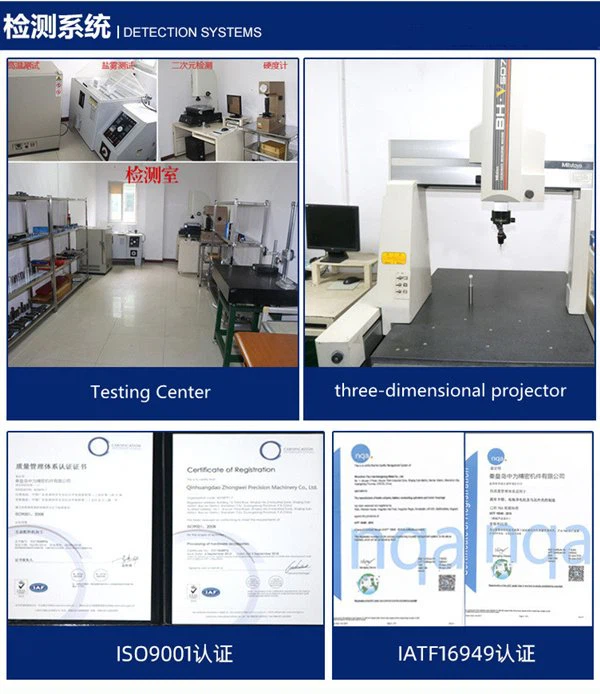
1. Implementation standards: the company strictly implements ISO9001, ISO14001, IATF16949 certification
The products have passed the certification of ROHS, FDA EU, etc.
2. Product material standards: ISO, GB, ASTM, SAE, EN, DIN, BS, AMS, JIS, ASME, DMS, TOCT, GB
3. Main processes: metal injection molding MIM, powder metallurgy PM, investment casting, die-casting aluminum,
4. Available materials for powder metallurgy:
Copper alloy, iron base, titanium alloy, stainless steel base, aluminum alloy, nickel alloy, cobalt alloy, tungsten alloy, cemented carbide, hydroxy alloy, soft magnetic material and 3D printing can be customized according to customer requirements.
Consolidation Molding Process
Since superalloys often contain difficult sintering elements such as Cr, Ti, and Al, sintering of superalloys is usually carried out after vacuum packaging in a high temperature and high pressure environment. The currently used superalloy powder consolidation processes include vacuum hot pressing, hot isostatic pressing, hot extrusion, and isothermal forging. Among them, hot isostatic pressing and hot extrusion are the most widely used. Hot isostatic pressing technology The basic principle of hot isostatic pressing is to use gas or liquid as the pressure medium, so that the material is subjected to isotropic equilibrium pressure during the heating process, and the densification of the material and the diffusion of elements are promoted by the joint action of high temperature and high pressure . The hot isostatic pressing process closes internal defects such as pores and micro-cracks, and improves the overall mechanical properties of the casting.
| ||||
HIP front cover | HIP back cover | Remove wrap | Remove core | Finished Parts |
Hot isostatic pressing process | ||||

(2) Hot extrusion technology: Hot extrusion refers to heating the billet to above the recrystallization temperature, so that it flows out of the extrusion die or into the small cavity under the action of a strong extrusion force, and finally obtains the desired result. The pressure processing method of the workpiece to be processed. The usual hot extrusion process is: first heat the billet to the required temperature, if there is oxide scale on the surface of the billet, it should be removed immediately, and then the billet is immediately filled into the cavity for extrusion, after a single pass The desired workpiece can be obtained by extrusion. Its technological process is shown in Figure 5.

Compared with other pressure processing methods, extrusion parts processed by hot extrusion method have small machining allowance and high surface accuracy. The parts processed by the hot extrusion process have significantly stronger mechanical properties than other processing processes. However, the working environment and deformation methods of hot extrusion also have their own limitations, which are mainly manifested in the serious oxidation of the surface of the extrusion parts and the poor quality; the production conditions are harsh, the requirements for the mold are harsh, and the service life of the mold is low.
Post Casting Process
1. Heat treatment: annealing, carbonization, tempering, quenching, normalizing, surface tempering
2. Processing equipment: CNC, WEDM, lathe, milling machine, drilling machine, grinder, etc.;
3. Surface treatment: powder spraying, chrome plating, painting, sandblasting, nickel plating, galvanizing, blackening, polishing, bluing, etc.

Moulds and Inspection Fixtures
1. Mold service life: usually semi-permanent. (except for lost foam)
2. Mold delivery time: 10-25 days, (according to product structure and product size).
3. Tooling and mold maintenance: Zhongwei is responsible for precision parts.

Quality Control
1. Quality control: the defective rate is less than 0.1%.
2. Samples and trial run will be 100% inspected during production and before shipment, sample inspection for mass production according to ISDO standards or customer requirements
3. Testing equipment: flaw detection, spectrum analyzer, golden image analyzer, three-coordinate measuring machine, hardness testing equipment, tensile testing machine;
4. Provide after-sales service.
Application
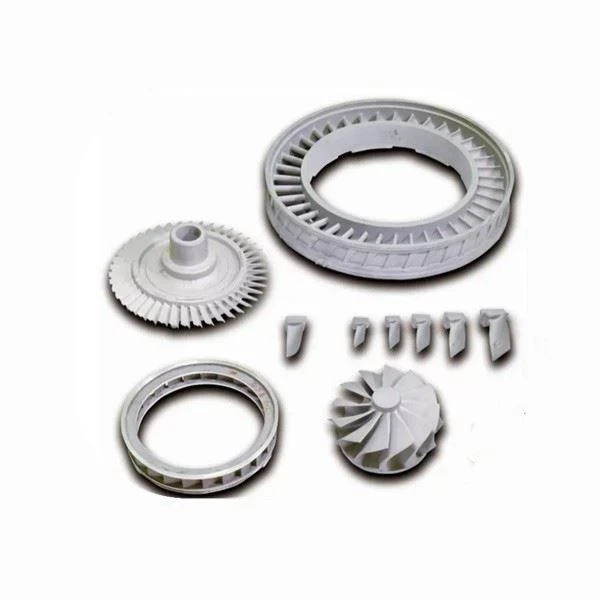
Superalloy powder metallurgy sintered parts are mainly used in gas turbines, high temperature resistant zero-sintered parts used in drilling, marine engineering, diesel engine chemical industry, internal combustion engine, etc. Such as turbine disks, turbine blades, condensers, superheater tubes and machine parts used in corrosive conditions, cast superalloys can be used in gas turbines, chemical, and textile industries. Guide vanes, precision cast impellers, molds and anti-oxidation, corrosion-resistant Machine parts used under high temperature conditions.
What is a superalloy material? Superalloy refers to a kind of metal material based on iron, nickel and cobalt, which can work for a long time at high temperature above 600℃ and under certain stress. It has excellent high temperature strength, good oxidation resistance and thermal corrosion resistance, good Fatigue properties, fracture toughness and other comprehensive properties, also known as "super alloys," are mainly used in aerospace and energy fields.




Send Inquiry
