




Aluminum Alloy Powder Metallurgy Sintered Parts
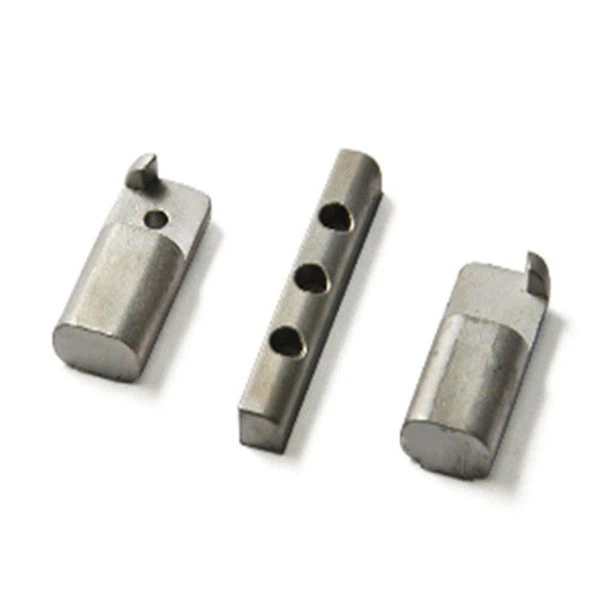
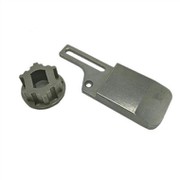
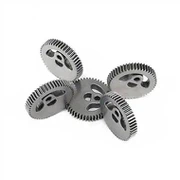
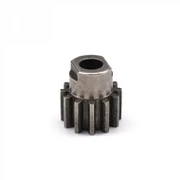
Aluminum alloy powder metallurgy sintered parts. Deformed (Lv Daming) aluminum alloys are made of ingots through milling, compaction, degassing, sintering and hot pressing and other processes, and then processed by plastic deformation processing.
Aluminum alloy powder metallurgy sintered parts. Deformed (Lv Daming) aluminum alloys are made of ingots through milling, compaction, degassing, sintering and hot pressing and other processes, and then processed by plastic deformation processing. Zhongwei is committed to the technology research and development of aluminum alloy powder metallurgy, and can now produce American grades: 6061 powder metallurgy parts, 6063 powder metallurgy parts, Japanese grades: A6061 powder metallurgy parts, A6063 powder metallurgy parts, German grades: AlMg1Si0.5 powder metallurgy parts , AlMg1Sicu powder metallurgy parts.
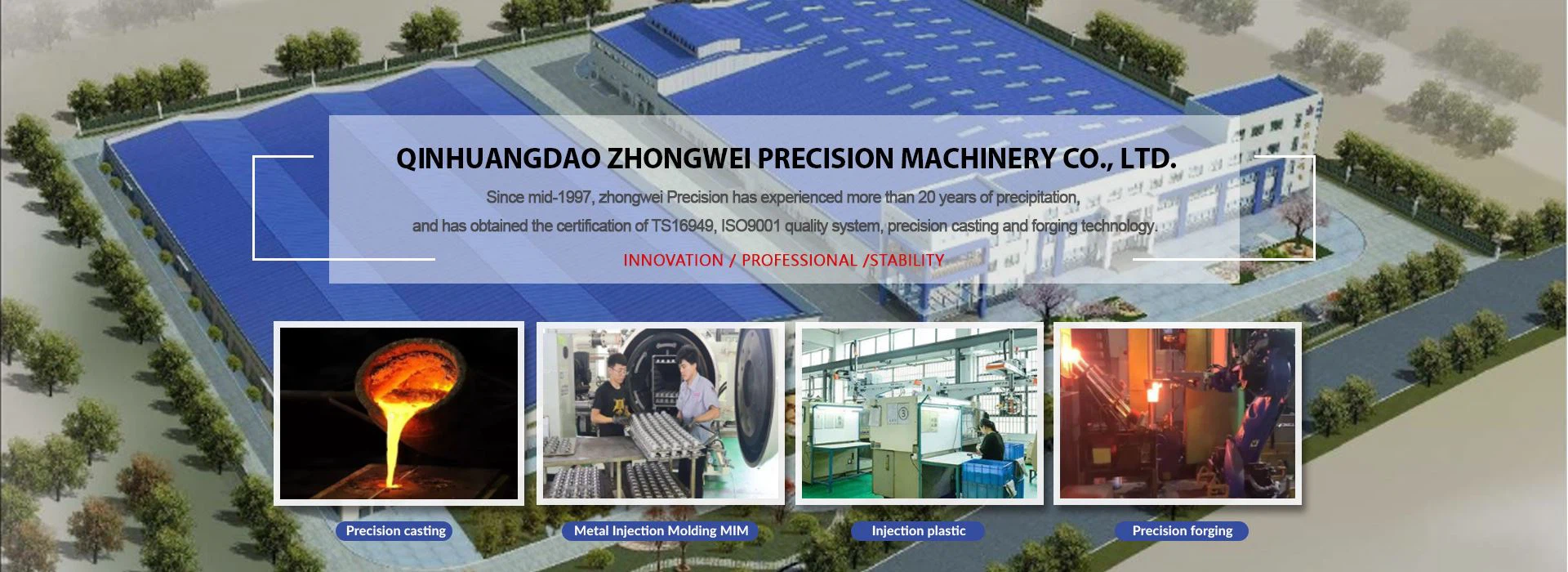
Qinhuangdao Zhongwei Precision Machinery Co., Ltd. Powder Metallurgy Division was established in 2007 and is located in Qinhuangdao City, Hebei Province. There are two production lines for metal injection molding MIM process and powder metallurgy PM. The company's existing self-developed products: German Maya warp knitting machine Sensing chain blocks, electric actuator gears, automobile oil pump rotors, washing machine transmission gears and other products, the powder metallurgy products produced cover automobiles, motorcycles, power tools, home appliances, textile machinery parts and other fields. Our company is a comprehensive high-tech enterprise integrating R&D, production and sales of copper alloy, iron base, stainless steel base, aluminum alloy, nickel alloy, cobalt alloy, tungsten alloy, cemented carbide and powder metallurgy structural parts.
Product Description
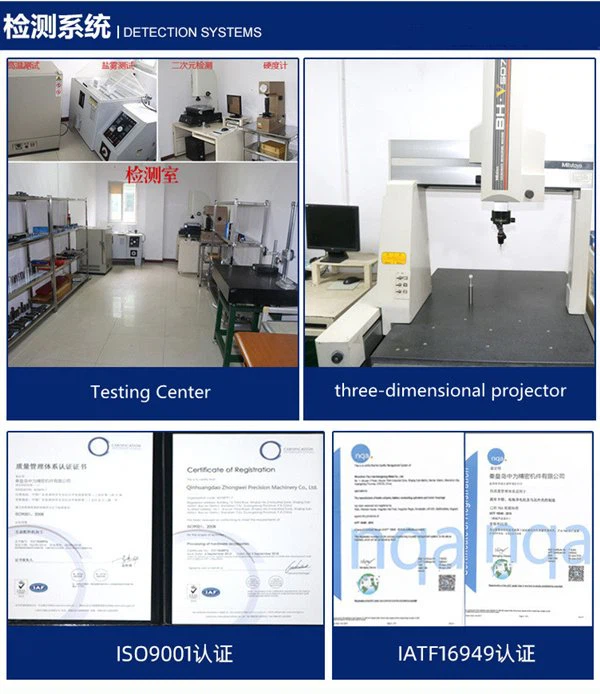
1. Implementation standards: the company strictly implements ISO9001, ISO14001, IATF16949 certification
The products have passed the certification of ROHS, FDA EU, etc.
2. Product material standards: ISO, GB, ASTM, SAE, EN, DIN, BS, AMS, JIS, ASME, DMS, TOCT, GB
3. Main processes: metal injection molding MIM, powder metallurgy PM, investment casting, die-casting aluminum,
4. Available materials for powder metallurgy:
Copper alloy, iron base, titanium alloy, stainless steel base, aluminum alloy, nickel alloy, cobalt alloy, tungsten alloy, cemented carbide, hydroxy alloy, soft magnetic material and 3D printing can be customized according to customer requirements.
Production Process
They have good comprehensive properties and are new aluminum alloys with broad development prospects.
Brief History In the 1940s, the Swiss R. Irmann and others used a ball mill to grind aluminum powder in a protective medium with controlled oxygen content, so that a very thin oxide film was formed on the surface, and the aluminum powder was compacted, sintered and sintered. Hot worked into sintered aluminium (SAP), the original powder metallurgy aluminium. In the 1970s, two methods for preparing aluminum alloy powder were developed. One is the rapid solidification method, that is, the pre-alloyed melt is atomized and quenched to make aluminum alloy powder; the other is the mechanical alloying method, which is The high-energy ball mill pulverizes and mixes the metal particles used for alloying to make aluminum alloy powder. The aluminum alloy powder is compacted, degassed, sintered and hot pressed into billets, and then processed into various powder metallurgy (PM) aluminum alloy products by conventional extrusion, rolling or forging methods. By the end of the 1980s, the United States, the former Soviet Union, Japan and other countries have successfully developed more than 10 grades of powder metallurgy structural aluminum alloys and powder metallurgy wear-resistant aluminum alloys, which have been put into small batch production and began to be used in the aerospace industry and the automotive industry. application.
Intrinsic rapid solidification and mechanical alloying powders endow powder metallurgy aluminum alloys with excellent microstructures, giving them high performance that cannot be obtained with conventional ingot metallurgy (IM) processes.
(1) When the N rapid solidification method is used to make powder, the cooling rate is 10-10c/s, which is several orders of magnitude higher than the cooling rate of conventional casting ingots, which greatly refines the grains and increases the supersaturated solidification of alloying elements. Solubility, refining the intermetallic compound particles and increasing the uniformity of the alloy composition. The aluminum alloy made from such powder comprehensively utilizes the mechanisms of solid solution strengthening, aging strengthening and dispersion strengthening, so that the strength, corrosion resistance and heat resistance of the alloy exceed that of any IM aluminum alloy, and at the same time, it has better performance. Toughness and fatigue resistance.
(2) When making powder by mechanical alloying method, various metal powders are ground and mixed in a high-energy ball mill, and are repeatedly broken, welded and interdiffused under the strong impact of the sphere to achieve alloying. The added grinding aid produces fine, dispersed spots of carbides and oxides. Aluminum alloys made from such powders comprehensively utilize solid solution strengthening, fine grain strengthening, high-density dislocation and substructure strengthening, and point dispersion strengthening mechanisms of carbides and oxides, so they have high mechanical properties.
Development trend Since some aluminum alloys that cannot be produced by conventional ingot metallurgy can be obtained by powder metallurgy, and the physical, chemical and mechanical properties of almost every PM aluminum alloy are higher than those of IM aluminum alloys with similar compositions. Powder metallurgy has become one of the important ways to develop new aluminum alloy materials. Some industrialized countries have invested a lot of manpower, material resources and funds to develop aluminum alloy powder metallurgy sintered parts. The problem is that because the powder metallurgy process includes pulverizing, degassing and compacting processes, the process is relatively complicated, so the production cost is relatively high, which hinders its large-scale production and wide application.
Its development trend is:
(1) Research a new process that simplifies the existing powder metallurgy aluminum alloy production process, so as to be suitable for large-scale industrial production and reduce costs;
(2) Continue to develop new high-strength powder metallurgy aluminum alloys with good comprehensive properties, new powder metallurgy aluminum alloys with good heat resistance, new low-density and high-elasticity powder metallurgy aluminum alloys, and new wear-resistant aluminum alloys with small bulk expansion coefficients Powder metallurgy aluminum alloy.
Post Casting Process
1. Heat treatment: annealing, carbonization, tempering, quenching, normalizing, surface tempering
2. Processing equipment: CNC, WEDM, lathe, milling machine, drilling machine, grinder, etc.;
3. Surface treatment: powder spraying, chrome plating, painting, sandblasting, nickel plating, galvanizing, blackening, polishing, bluing, etc.

Moulds and Inspection Fixtures
1. Mold service life: usually semi-permanent. (except for lost foam)
2. Mold delivery time: 10-25 days, (according to product structure and product size).
3. Tooling and mold maintenance: Zhongwei is responsible for precision parts.

Quality Control
1. Quality control: the defective rate is less than 0.1%.
2. Samples and trial run will be 100% inspected during production and before shipment, sample inspection for mass production according to ISDO standards or customer requirements
3. Testing equipment: flaw detection, spectrum analyzer, golden image analyzer, three-coordinate measuring machine, hardness testing equipment, tensile testing machine;
4. Provide after-sales service.


Send Inquiry
