




Teflon Injection Molding Parts
Polytetrafluoroethylene (Poly tetrafluoroethylene, abbreviated as PTFE), commonly known as "Plastic King", is a high molecular polymer obtained by polymerizing tetrafluoroethylene as a monomer. White waxy, translucent, excellent heat and cold resistance, can be used for a long time at -180 ~ 260ºC. This material has the characteristics of acid and alkali resistance and resistance to various organic solvents, and is almost insoluble in all solvents.
Polytetrafluoroethylene (Poly tetrafluoroethylene, abbreviated as PTFE), commonly known as "Plastic King", is a high molecular polymer obtained by polymerizing tetrafluoroethylene as a monomer. White waxy, translucent, excellent heat and cold resistance, can be used for a long time at -180 ~ 260ºC. This material has the characteristics of acid and alkali resistance and resistance to various organic solvents, and is almost insoluble in all solvents. At the same time, polytetrafluoroethylene has the characteristics of high temperature resistance, and its friction coefficient is extremely low, so it can be used for lubrication, and it has also become an ideal coating for easy cleaning of the inner layer of water pipes.
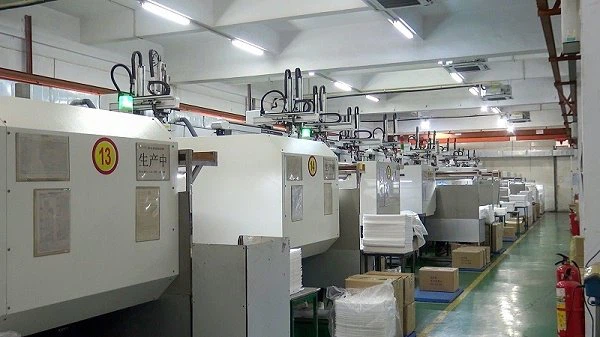
The main products of Zhongwei Precision Machinery Co., Ltd. are nylon products, plastic products, ABS series, rubber products, etc. Types of injection molding materials that can be processed: polyethylene (PE), polypropylene (PP), nylon (PA, PA6, PA66), polyoxymethylene (POM), ABS, polyurethane (TPU), polyphenylene sulfide (PPS), polystyrene Carbonate (PC), Polyetheretherketone (PEEK), etc.
Product Description
1. Implementation standards: the company strictly implements ISO9001, ISO14001, IATF16949, VDA6.3 certification, and products have passed ROHS, FDA EU certification, etc.
2. Product material standards: ISO, GB, ASTM, SAE, EN, DIN, BS, AMS, JIS, ASME, DMS, TOCT, GB
3. Main processes: plastic injection molding, metal insert injection molding, investment casting, die-casting aluminum,
4. Available materials for injection molding:
Processable nylon products, plastic products, ABS series; injection molding material types: polyethylene (PE), polypropylene (PP), nylon (PA, PA6, PA66), polyoxymethylene (POM), ABS, polyurethane (TPU), poly Phenyl sulfide (PPS), polycarbonate (PC), polyether ether ketone (PEEK) and 3D printing can be customized according to customer requirements.
Product Performance
●Properties and stability
1. Stable under normal temperature and pressure, avoid humidity, heat and high temperature
There is no real melting point, and it decomposes slowly above 450 ° C and directly turns into a gas. At 327°C, the mechanical strength suddenly disappeared. Insoluble in any solvent. In addition to being able to react with molten alkali metals, it is not attacked by any substances, even if it is boiled in hydrofluoric acid, aqua regia or oleum, and sodium hydroxide, it will not change.
2. White, odorless, tasteless, non-toxic powder, commonly known as "Plastic King". Has excellent chemical stability, corrosion resistance, sealing, high lubricating non-stick properties, electrical insulation and good aging resistance. High temperature resistance, working temperature up to 250 ℃. Low temperature resistance, good mechanical toughness at low temperature, can maintain 5% elongation even if the temperature drops to -196 ℃. Corrosion resistant, inert to most chemicals and solvents, resistant to strong acids and alkalis, water and various organic solvents. Good weather resistance and the best aging life in plastics. High lubrication, the lowest coefficient of friction among solid materials. Non-adhesion is the smallest surface tension of solid materials, and does not adhere to any substances. Non-toxic, physiologically inert, long-term implantation into the body as artificial blood vessels and organs without adverse reactions
●Resolve resolution
Industrially, it is produced by suspension polymerization or emulsion polymerization.
1. Preparation of monomeric tetrafluoroethylene
In industry, chloroform is used as raw material, and chloroform is fluorinated with anhydrous hydrofluoric acid, the reaction temperature is above 65ºC, antimony pentachloride is used as catalyst, and finally tetrafluoroethylene is prepared by thermal cracking method. Tetrafluoroethylene can also be obtained by reacting zinc with tetrafluorodichloroethane at high temperature.
1. Preparation of PTFE
2. In an enamel or stainless steel polymerization kettle, water is used as a medium, potassium persulfate is used as an initiator, ammonium perfluorocarboxylate is used as a dispersant, fluorocarbon is used as a stabilizer, and tetrafluoroethylene is prepared by redox polymerization. Tetrafluoroethylene.
Add various additives into the reaction kettle, the tetrafluoroethylene monomer enters the polymerization kettle in the gas phase, adjust the temperature in the kettle to 25℃, then add a certain amount of activator (sodium metabisulfite), and initiate the polymerization through the redox system. During the polymerization process, the monomer was continuously added to maintain the polymerization pressure of 0.49-0.78MPa. The dispersion obtained after polymerization was diluted with water to a certain concentration, and the temperature was adjusted to 15-20ºC. After coagulation with mechanical stirring, washed with water and dried, namely This product is a fine granular resin.

●Toxicological data
Tumor:
Rat infusion test: TDLo: 80 mg/kg;
Mice infusion test: TCLo: 1140 mg/kg.
●Ecological data
The substance may be hazardous to the environment and special attention should be given to water bodies.
Post Injection Molding Process
1. Processing equipment: CNC, WEDM, lathe, milling machine, drilling machine, grinder, etc.;
2. Surface treatment: For some products that require subsequent processing, we can provide surface treatment services to achieve the special purpose of customers. At present, we can provide degreasing, polishing, electroplating (gold, silver, nickel, tin, galvanized, etc.), anodizing, electrophoresis and other surface treatment services for precision parts.

Moulds and Inspection Fixtures
1. Mold service life: usually semi-permanent. (except for lost foam)
2. Mold delivery time: 10-25 days, (according to product structure and product size).
3. Tooling and mold maintenance: Zhongwei is responsible for precision parts.
Quality Control
1. Quality control: the defective rate is less than 0.1%.
2. Samples and trial run will be 100% inspected during production and before shipment, sample inspection for mass production according to ISDO standards or customer requirements
3. Testing equipment: automated visual inspection equipment can carry out 100% inspection of products, spectrum analyzer, golden elephant analyzer, three-coordinate measuring machine, hardness testing equipment, tensile testing machine.
Application
1. Teflon injection molding parts are used in the electrical industry, and are used as insulation layers for power and signal lines in aerospace, aviation, electronics, instrumentation, computers and other industries. Gaskets, valves and chemical pipelines, pipe fittings, equipment container linings, etc.
2. It is used in electrical appliances, chemical industry, aviation, machinery and other fields to replace quartz glassware for ultra-pure chemical analysis and storage in atomic energy, medicine, semiconductor and other industries. Various acids, alkalis and organic solvents can be made into high-insulation electrical parts, High-frequency wire and cable sheathing, corrosion-resistant chemical utensils, high-cold-resistant oil pipelines, artificial organs, etc. can be used as additives for plastics, rubber, coatings, inks, lubricating oils, greases, etc.
3. This product has high temperature resistance, corrosion resistance, excellent electrical insulation, aging resistance, low water absorption, and excellent self-lubricating performance. It is a general-purpose lubricating powder suitable for various media. It can be quickly applied to form a dry film , as a substitute for graphite, molybdenum and other inorganic lubricants. Mold release agent for thermoplastic and thermoset polymers with excellent load-carrying capacity. Widely used in the elastomer and rubber industries and in anticorrosion.
4. Used as a filler for epoxy resins to improve the wear resistance, heat resistance and corrosion resistance of epoxy adhesives.
5. Mainly used as a binder and filler for powder cakes.


Send Inquiry
