




PES Injection Molded Parts
Elongation: 40%~80%
Density: 1.37~1.51g/cm3
Bending strength: >130MPa
Intrinsic viscosity: 0.6dL/g
Impact strength (notch): >78.0J/m
Water absorption (23℃, 4h): <0.40%
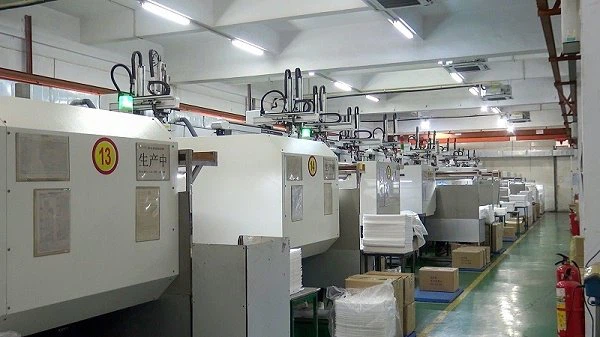
Polyethersulfone is a thermoplastic polymer material with excellent comprehensive properties developed by British ICI Company in 1972. It is one of the few special engineering plastics that has been applied. It has excellent heat resistance, physical and mechanical properties, insulation properties, etc., especially with outstanding advantages such as continuous use at high temperatures and stable performance in environments with rapid temperature changes. In many fields, PES injection molded parts have been widely used. The main products of Zhongwei Precision Machinery Co., Ltd. are nylon products, plastic products, ABS series, rubber products, etc. Types of injection molding materials that can be processed: polyethylene (PE), polypropylene (PP), nylon (PA, PA6, PA66), polyoxymethylene (POM), ABS, polyurethane (TPU), polyphenylene sulfide (PPS), polystyrene Carbonate (PC), Polyetheretherketone (PEEK), etc.
Product Description
1. Implementation standards: the company strictly implements ISO9001, ISO14001, IATF16949, VDA6.3 certification, and products have passed ROHS, FDA EU certification, etc.
2. Product material standards: ISO, GB, ASTM, SAE, EN, DIN, BS, AMS, JIS, ASME, DMS, TOCT, GB
3. Main processes: plastic injection molding, metal insert injection molding, investment casting, die-casting aluminum,
4. Available materials for injection molding:
Processable nylon products, plastic products, ABS series; injection molding material types: polyethylene (PE), polypropylene (PP), nylon (PA, PA6, PA66), polyoxymethylene (POM), ABS, polyurethane (TPU), poly Phenyl sulfide (PPS), polycarbonate (PC), polyether ether ketone (PEEK) and 3D printing can be customized according to customer requirements.
Use of PES injection molding parts
Polyethersulfone (PES), usually an amorphous polymer. Compared with polysulfone, polyethersulfone has higher heat resistance and rigidity, its Tg is 225℃, and its heat distortion temperature is 203℃. The mechanical properties are basically unchanged at 200 °C. Polyethersulfone has excellent creep resistance and dimensional stability at high temperatures. After adding 30% glass fiber reinforcement, the deformation under high load at 200℃ for 4 months is less than 0.005%. If the tensile strength is reduced by half as the continuous service life, the polyethersulfone can be used for 20 years at 180°C and 5 years at 200°C. Therefore, the long-term use temperature of polyethersulfone is 180 °C, and if 30% glass fiber is added, it is 200 °C.
The mechanical properties of polyethersulfone are among the highest among thermoplastics. For example, the tensile strength is 84.3MPa, the flexural modulus is 2.65GPa, the elongation at break is 5-6%, and the notched impact strength is 91J/m.
Polyethersulfone has excellent chemical resistance to inorganic drugs and solvents such as acids and alkalis, but it cannot withstand highly polar organic solvents such as ketones, esters, halogenated hydrocarbons, dimethyl sulfoxide, etc. At high temperature, these organic solvents can promote residual stress to induce stress cracking, so glass fiber reinforced polyethersulfone should be used in this environment.
The impact strength of polyethersulfone is equivalent to that of polycarbonate without notch. But in the case of a notch, the notch radius has a great influence on the impact strength. The smaller the notch radius, the lower the impact strength.
Polyethersulfone has excellent electrical properties and stable insulating properties at 200°C.
Compared with polysulfone, PES injection molded parts have better melt processability and lower melt viscosity, low molding shrinkage (only about 0.6%), and good dimensional stability. However, the water absorption of polyethersulfone is greater than that of polysulfone, so drying before molding is more important.
1、Quality Index
Appearance: light yellow to gray-brown granular
Elongation: 40%~80%
Density: 1.37~1.51g/cm3
Bending strength: >130MPa
Intrinsic viscosity: 0.6dL/g
Impact strength (notch): >78.0J/m
Water absorption (23℃, 4h): <0.40%
Tensile strength: >85.0MPa
Volume resistivity: 1016~1017Ω.cm
2. Character use
Polyethersulfone resin (PES) is a thermoplastic polymer material with excellent comprehensive properties developed by British ICI Company in 1972. It is one of the few special engineering plastics that has been applied. It has excellent heat resistance, physical and mechanical properties, insulation properties, etc., especially with outstanding advantages such as continuous use at high temperatures and stable performance in environments with sharp temperature changes. PES injection molded parts have been used in many fields. widely used.
●Heat resistance
The thermal deformation temperature is 200-220°C, the continuous use temperature is 180-200°C, and the UL temperature index is 180°C.
●Hydrolysis resistance
It can withstand 150-160 ℃ hot water or steam, and is not attacked by acid and alkali at high temperature.
●Temperature Consularity
The basic modulus is almost unchanged from -100°C to 200°C, especially better than any thermoplastic resin above 100°C.
●Creep resistance
It is characterized by a small coefficient of linear expansion and low temperature reliability. It is characterized by 30% glass fiber reinforced PES resin, and can still maintain a value similar to that of aluminum until 200 ° C.
●Impact resistance
Has the same impact resistance as polycarbonate. Non-reinforced resin can be riveted, but is more sensitive to sharp cuts, so pay attention to the design.
●Non-toxic
In terms of hygiene standards, it is recognized by the US FDA and also meets the requirements of the Japanese Ministry of Health and Welfare No. 434 and No. 178 announcements.
●Flame retardancy
With self-extinguishing property, it has excellent flame retardancy without adding any flame retardant, up to UL94V-0 level (0.46mm)
●Chemical resistance
PES is resistant to gasoline, engine oil, lubricating oil and other oils and cleaning agents such as Freon, and its solvent cracking resistance is the best among amorphous resins. However, it is soluble in polar solvents such as chloroform and acetone, so care should be taken when using it.
Post Injection Molding Process
1. Processing equipment: CNC, WEDM, lathe, milling machine, drilling machine, grinder, etc.;
2. Surface treatment: For some products that require subsequent processing, we can provide surface treatment services to achieve the special purpose of customers. At present, we can provide degreasing, polishing, electroplating (gold, silver, nickel, tin, galvanized, etc.), anodizing, electrophoresis and other surface treatment services for precision parts.

Moulds and Inspection Fixtures
1. Mold service life: usually semi-permanent. (except for lost foam)
2. Mold delivery time: 10-25 days, (according to product structure and product size).
3. Tooling and mold maintenance: Zhongwei is responsible for precision parts.
Quality Control
1. Quality control: the defective rate is less than 0.1%.
2. Samples and trial run will be 100% inspected during production and before shipment, sample inspection for mass production according to ISDO standards or customer requirements
3. Testing equipment: automated visual inspection equipment can carry out 100% inspection of products, spectrum analyzer, golden elephant analyzer, three-coordinate measuring machine, hardness testing equipment, tensile testing machine.
Application
●Electronics and electrical appliances
Utilizing the advantages of PES, such as solder resistance, good dimensional stability, resistance to various cleaning agents, inlaid metal parts, and good adhesion with epoxy resin, it is used as an H-class insulating material in the fields of electronics and electrical appliances. The main products that have been developed are coil bobbins, potentiometer casings and bases, hair dryer parts, printed circuit boards, push-button switches, insulators for thyristors, insulators for power tool motors, coil bobbins for printers, blowers, relays, etc. , DIP switch, all kinds of connectors, etc. Films of different thicknesses can also be made by extrusion molding for various electronic devices and electrical products.
●Mechanical field
Taking advantage of its high temperature creep resistance, dimensional stability, oil resistance, good toughness and other advantages, it has been widely used in places where general resins cannot meet the requirements of use. The main products that have been developed are levers, handles, brackets, etc. of various machines, observation glass for X-ray devices, insulators for chainsaws, agricultural machinery engines and carburetors, piston rings, heat-resistant balls, gears, copier parts, camera parts , Projector parts, industrial hair dryer covers, parts of automotive air conditioners, handles of arc welding guns, various analytical instrument components, etc.
●Automotive sector
It mainly utilizes its rigidity and dimensional stability in a wide temperature range of -100 ° C ~ 190 ° C, high temperature creep resistance, resistance to gasoline, diesel oil, various types of engine oil, etc. Products that have been developed include various bearing cages, bearing pads for brake shafts, noise cancellers for igniters, engine gears, coil bobbins for carburetors, reflectors for fog lamps, and thrust rings.
●Hot water area
It is mainly used to maintain excellent creep resistance, rigidity and dimensional stability in hot water or steam at 160 °C. The main products developed are valves for hot water and steam, insulators for anti-corrosion electrodes, components for temperature sensors, pump bodies and impellers for various liquid and powder pumps, radiator valves, and parts for ultrafiltration devices.
●Medical device field
It is mainly used that it can be sterilized by steam sterilization, dry steam (180 ℃) sterilization, V-ray sterilization and other sterilization methods, and it is resistant to repeated sterilization. The main products developed are contact lens sterilizers, handles for dental drills, surgical containers, syringes, valves and tubes for the food industry.
●Other areas
1. Lighting equipment
It can be used for mirrors for movie machines, mirrors for condensers, mirrors for stroboscopic observation, mirrors for surgical lighting, mirrors for fog lamps, indicator light covers, etc.
2. Aircraft
It can be used as window frame, hot air ventilation duct, interior decoration material of bathroom.
3. Coating
Because it has the advantages of good adhesion with iron, lead and other metals, and high surface hardness of the coating, it can be used for chemical anti-corrosion, non-stick coatings for cooking utensils, etc.
4. Shapes
PES can be made into sheets, rods, pipes, films and other profiles by extrusion molding, and is widely used in various fields. In addition, PES can also be made into ultrafiltration membrane or reverse osmosis membrane by solution method.
5. Needle filter PES-polyethersulfone membrane
PES-polyethersulfone membrane is an aqueous membrane with high chemical and thermal stability, fast flow rate, strong acid and alkali resistance, and high mechanical strength.


Send Inquiry
