



PF Injection Parts
Phenolic plastics, commonly known as bakelite powder, are hard and brittle thermosetting plastics. Plastics based on phenolic resins are collectively referred to as phenolic plastics, which are the most important type of thermosetting plastics. PF injection parts are widely used as electrical insulating materials, furniture parts, daily necessities, handicrafts, etc.
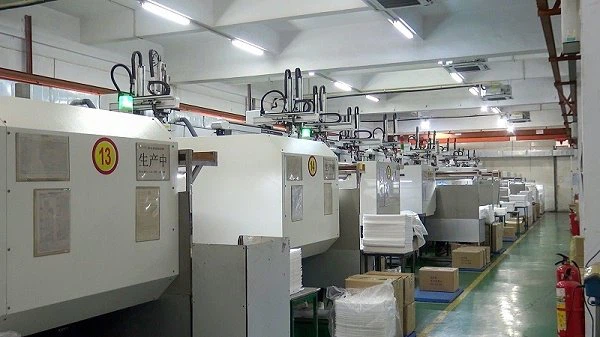
Phenolic plastics, commonly known as bakelite powder, are hard and brittle thermosetting plastics. Plastics based on phenolic resins are collectively referred to as phenolic plastics, which are the most important type of thermosetting plastics. PF injection parts are widely used as electrical insulating materials, furniture parts, daily necessities, handicrafts, etc. The main products of Zhongwei Precision Machinery Co., Ltd. are nylon products, plastic products, ABS series, rubber products, etc. Types of injection molding materials that can be processed: polyethylene (PE), polypropylene (PP), nylon (PA, PA6, PA66), polyoxymethylene (POM), ABS, polyurethane (TPU), polyphenylene sulfide (PPS), polystyrene Carbonate (PC), Polyetheretherketone (PEEK), etc.
Product Description
1. Implementation standards: the company strictly implements ISO9001, ISO14001, IATF16949, VDA6.3 certification, and products have passed ROHS, FDA EU certification, etc.
2. Product material standards: ISO, GB, ASTM, SAE, EN, DIN, BS, AMS, JIS, ASME, DMS, TOCT, GB
3. Main processes: plastic injection molding, metal insert injection molding, investment casting, die-casting aluminum,
4. Available materials for injection molding:
Processable nylon products, plastic products, ABS series; injection molding material types: polyethylene (PE), polypropylene (PP), nylon (PA, PA6, PA66), polyoxymethylene (POM), ABS, polyurethane (TPU), poly Phenyl sulfide (PPS), polycarbonate (PC), polyether ether ketone (PEEK) and 3D printing can be customized according to customer requirements.
Product Features and Uses
PF is the earliest industrialized plastic variety, which was first industrialized in the United States in 1910. The raw materials for the production of PF are mainly phenols and aldehydes, the most commonly used are phenol and formaldehyde, which are catalyzed by catalysts such as acids and bases to obtain PF by polycondensation. There are two main types of industrial production: dry method and wet method. Under the action of different catalysts, phenol and aldehyde can generate two kinds of PF: one is thermoplastic PF, and the other is thermosetting PF. The former needs to add a curing agent and can be cured into a body-shaped structure under heating, while the latter does not require a curing agent and can be a body-shaped structure as long as it is heated.
Whether it is thermoplastic PF or thermosetting PF, only the exchange network formed by curing can be used. The curing process is the continuation of the polycondensation reaction of the body shape and the formation of the final body shape product. This process is different from the melting and solidification of general thermoplastics. It is irreversible, both physical and chemical processes.
(1) Common characteristics of PF
PF Due to different raw materials, processes, etc., different types of PF can be obtained, and their properties will also be different. The following will discuss their commonalities. PF is an amorphous low molecular weight polymer with no clear melting point. The solid resin can be softened or melted within a certain temperature range. It is soluble in alcohol, benzene, acetone, toluene and other solvents, but insoluble in mineral oil and vegetable oil. PF is a polar polymer. Due to the existence of phenolic hydroxyl groups, it is resistant to acid but not alkali. When the degree of crosslinking is not high, alkali can depolymerize.
PF is a polar polymer, so it has a large dielectric constant and a high dielectric loss tangent after curing, but it has high insulation resistance and dielectric strength, and is an excellent power frequency insulating material. PF without additives is brittle after curing and has average mechanical properties. The mechanical properties of PF with additives are affected by many factors, and its properties are not the same.
PF without fillers is hardly eroded by general inorganic acids, insoluble in most hydrocarbons and chlorides, insoluble in ketones and alcohols, but not resistant to corrosion by concentrated sulfuric acid, concentrated nitric acid, and high-temperature chromic acid. PF has high heat resistance, and the heat resistance is improved after adding fillers, and the mechanical properties also change with the different fillers.
PF can be injection molded by a method similar to that of thermoplastics. PF used for injection molding requires good fluidity, can be molded under lower injection pressure, and has higher thermal rigidity and faster hardening speed. The surface of the plastic parts has good gloss, easy demoulding, and does not pollute the mold. However, injection molding also has its shortcomings. For example, the melt is limited by the type of filler, and it is not suitable for molding plastic parts with many inserts. After curing, a large number of gates and runners cannot be recycled and can only be discarded.
(2) The main purpose of PF
PF has a wide range of uses, and it occupies the first place in thermosetting plastics in our country. Most of its PF injection parts are used to manufacture electrical insulating parts, such as lamp caps, sockets, switches; automotive electrical appliances, instrument parts, textile machinery parts, telephone casings and daily necessities. In recent years, with the development of runnerless molding and plastic electroplating technology, PF has been widely used in automobile manufacturing and electronic industry sectors. It can replace metal materials to make many mechanical parts, and can also reduce the weight of structural parts and reduce cost.
Post Injection Molding Process
1. Processing equipment: CNC, WEDM, lathe, milling machine, drilling machine, grinder, etc.;
2. Surface treatment: For some products that require subsequent processing, we can provide surface treatment services to achieve the special purpose of customers. At present, we can provide degreasing, polishing, electroplating (gold, silver, nickel, tin, galvanized, etc.), anodizing, electrophoresis and other surface treatment services for precision parts.

Moulds and Inspection Fixtures
1. Mold service life: usually semi-permanent. (except for lost foam)
2. Mold delivery time: 10-25 days, (according to product structure and product size).
3. Tooling and mold maintenance: Zhongwei is responsible for precision parts.
Quality Control
1. Quality control: the defective rate is less than 0.1%.
2. Samples and trial run will be 100% inspected during production and before shipment, sample inspection for mass production according to ISDO standards or customer requirements
3. Testing equipment: automated visual inspection equipment can carry out 100% inspection of products, spectrum analyzer, golden elephant analyzer, three-coordinate measuring machine, hardness testing equipment, tensile testing machine.
Application
PF: Bakelite, commonly known as bakelite powder, is a hard and brittle thermosetting plastic. Plastics based on phenolic resins are collectively referred to as phenolic plastics, which are the most important type of thermosetting plastics.
PF injection parts are widely used as electrical insulating materials, furniture parts, daily necessities, handicrafts, etc. In addition, it is also used as asbestos phenolic plastic for acid resistance, glued paper and tape for insulation, phenolic foam and honeycomb plastic for insulation and sound insulation.



Send Inquiry
