



Polypropylene Injection Parts
Polypropylene injection parts are used for injection molding products in Europe and the United States, accounting for 50% of the total consumption, mainly used as parts of automobiles and electrical appliances, various containers, furniture, packaging materials and medical equipment, etc.; film accounts for 8% to 15%; Propylene fiber (known as polypropylene in China) accounts for 8% to 10%; pipes and plates for construction and other use account for 10% to 15%, and others are 10% to 12%.
Polypropylene injection parts are used for injection molding products in Europe and the United States, accounting for 50% of the total consumption, mainly used as parts of automobiles and electrical appliances, various containers, furniture, packaging materials and medical equipment, etc.; film accounts for 8% to 15%; Propylene fiber (known as polypropylene in China) accounts for 8% to 10%; pipes and plates for construction and other use account for 10% to 15%, and others are 10% to 12%. At present, the amount of woven products in China accounts for 40% to 45%, followed by films and injection products accounting for about 40%; polypropylene and others account for 10% to 20%.
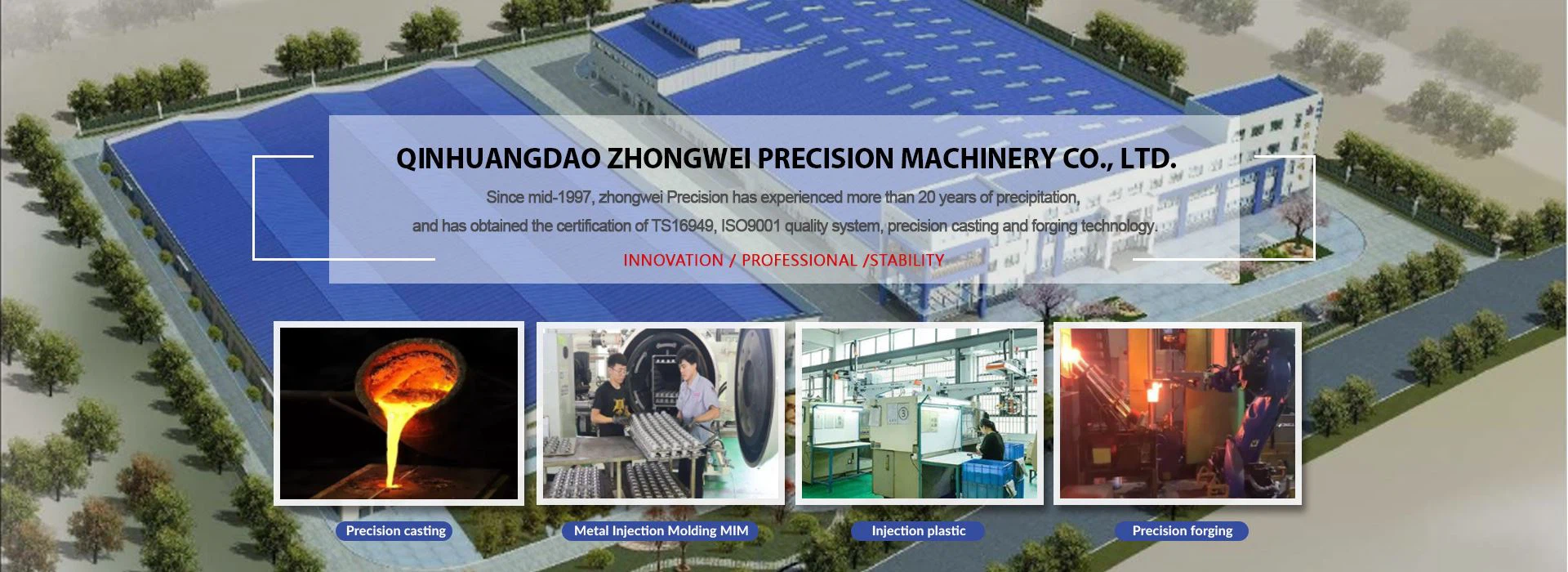
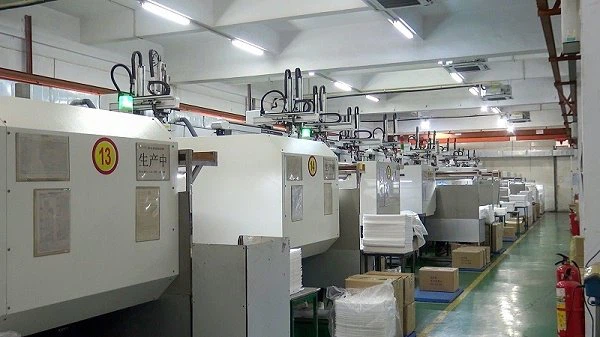
The main products of Zhongwei Precision Machinery Co., Ltd. are nylon products, plastic products, ABS series, rubber products, etc. Types of injection molding materials that can be processed: polyethylene (PE), polypropylene (PP), nylon (PA, PA6, PA66), polyoxymethylene (POM), ABS, polyurethane (TPU), polyphenylene sulfide (PPS), polystyrene Carbonate (PC), Polyetheretherketone (PEEK), etc.
Product Description
1. Implementation standards: the company strictly implements ISO9001, ISO14001, IATF16949, VDA6.3 certification, and products have passed ROHS, FDA EU certification, etc.
2. Product material standards: ISO, GB, ASTM, SAE, EN, DIN, BS, AMS, JIS, ASME, DMS, TOCT, GB
3. Main processes: plastic injection molding, metal insert injection molding, investment casting, die-casting aluminum,
4. Available materials for injection molding:
Processable nylon products, plastic products, ABS series; injection molding material types: polyethylene (PE), polypropylene (PP), nylon (PA, PA6, PA66), polyoxymethylene (POM), ABS, polyurethane (TPU), poly Phenyl sulfide (PPS), polycarbonate (PC), polyether ether ketone (PEEK) and 3D printing can be customized according to customer requirements.
Application
In my country, polypropylene is mainly used in food packaging, household items, automobiles, optical fibers and other fields. The largest areas of polypropylene use in my country are woven bags, packaging bags, binding ropes and other products, accounting for about 30% of the total consumption. In recent years, with the development of Polypropylene injection parts and packaging films, the proportion of polypropylene used in woven products has declined, but it is still the most consumed area of polypropylene. Injection products are the second largest polypropylene consumption area in China, accounting for about 26% of the total consumption, and it is also one of the regions with the largest demand for polypropylene in the future. Another major consumption area of domestic polypropylene is film, which accounts for about 20% of the total consumption, mainly BOPP (biaxially oriented polypropylene film). In the next few years, the proportion of textile products will gradually decrease, while the proportion of injection molded products, pipes and sheets will increase. According to experts' predictions on the development of the polypropylene industry, my country's demand for polypropylene is likely to be by 2020. reached about 23.7 million tons. Textile products, injection molding products, and films are still the main demand areas for polypropylene in my country, while the annual demand for pipes, sheets, fibers and other fields is growing rapidly, and the domestic demand for polypropylene is also growing rapidly. The market for special materials such as high-speed drawing BOPP films, pipes, thin non-woven fabrics, and highly transparent food containers is promising.
• Machinery and automotive parts
Polypropylene has good mechanical properties and can be directly manufactured or modified to manufacture parts of various mechanical equipment, such as manufacturing industrial pipes, agricultural water pipes, motor fans, infrastructure templates, etc. Modified polypropylene can be molded into bumpers, anti-scratch strips, automobile steering wheels, instrument panels and interior trim parts, etc., which can greatly reduce the body weight and achieve the purpose of saving energy.
• Electronic and electrical industrial devices
Modified polypropylene can be used to make the insulating shell of household appliances and the inner tank of washing machine, and is widely used as the insulating material of wires and cables and other electrical appliances. 60-80 parts by weight of homopolypropylene, 20-40 parts of ethylene-vinyl alcohol copolymer, 1- 10 parts, the polypropylene composite material made by mixing at 170 ℃ ~ 190 ℃ has high toughness, its impact strength is as high as 210J/m, and it has high gas barrier properties, and the water vapor rate is close to 2000g·μm/ (m2·24h). When preparing the barrier film, the traditional film-making process can be used for production, the process is relatively simple, and the production cost is low.
construction industry
Polypropylene fiber is the lightest among all chemical fibers, and its density is (0.90~0.92) g/cm3. It has the advantages of high strength, good toughness, good chemical resistance and anti-microbial resistance and low price. Reinforced and modified polypropylene or modified with rubber and SBS is widely used to make building engineering templates. Polypropylene after foaming can be used to make decorative materials. [6] When the earthquake occurred, the failure mode of polypropylene fiber ceramsite concrete was plastic failure, and there was no fragmentation. It is safer to use polypropylene fiber ceramsite concrete than plain ceramsite concrete.
• Agriculture, fishing and food industry
Polypropylene injection parts can be used to make greenhouse canopies, plastic films, culture bottles, farm implements, fishing nets, etc., as well as food turnover boxes, food bags, beverage packaging bottles, etc. It is reactively blended with waste PET (polyethylene terephthalate) to make multifunctional waste PET, which is an in-situ fiber-forming composite material made by in-situ fiber-forming composite material of multi-functional waste PET and polypropylene. The composite material has structural characteristics such as the formation of special-shaped microfibers from waste PET, and the formation of moderately flexible and strong bonding interfaces between waste PET microfibers and PP matrix resin. Significantly improved, the reproducibility of mechanical properties is quite good. Recycling waste PET, a large amount of waste produced every year in my country, has significant economic and social benefits.
The eastern coastal areas of my country have vast marine tidal flats with typical characteristics of saline soil. There are studies on polyacrylamide (PAM) in conjunction with three kinds of forages to implement soil and water conservation in coastal saline soil areas. PAM was administered under biological measures. It has a good effect on promoting the improvement of soil erosion resistance ability of the three kinds of forages. The application of PAM can reduce the amount of soil erosion and increase the amount of rainwater interception; the low dose (1g/m) is given priority, and its unit mass of PAM has the highest soil and water conservation benefits, which can reduce the annual erosion amount by 42.8%~46.7%, and can inhibit the total amount of soil evapotranspiration. 28.7%~40.4%, increase soil water loss by 5.0%~12.4%, reduce water loss rate by 1.83%~3.25%, and promote soil water holding capacity; in the early stage of forage growth. Increase rainwater interception by 16.5%~33.8%. The synergistic effect of PAM is beneficial to inhibit the generation of soil evapotranspiration and enhance the rainwater interception capacity.
• Textile and printing industries
Polypropylene is the raw material of synthetic fibers. Polypropylene fibers are widely used to make lightweight and beautiful durable textile products. The pictures printed with polypropylene materials are particularly bright, bright and beautiful.
• Other industries
In the chemical industry, polypropylene can be used to prepare various corrosion-resistant pipelines, storage tanks, valves, special-shaped packings in packed towers, filter cloths, anti-corrosion pumps and linings of anti-corrosion containers; in medicine, it can be used to make Medical devices; polypropylene can also be developed and applied in the energy field through grafting, compounding and blending processes.
Post Injection Molding Process
1. Processing equipment: CNC, WEDM, lathe, milling machine, drilling machine, grinder, etc.;
2. Surface treatment: For some products that require subsequent processing, we can provide surface treatment services to achieve the special purpose of customers. At present, we can provide degreasing, polishing, electroplating (gold, silver, nickel, tin, galvanized, etc.), anodizing, electrophoresis and other surface treatment services for precision parts.

Moulds and Inspection Fixtures
1. Mold service life: usually semi-permanent. (except for lost foam)
2. Mold delivery time: 10-25 days, (according to product structure and product size).
3. Tooling and mold maintenance: Zhongwei is responsible for precision parts.
Quality Control
1. Quality control: the defective rate is less than 0.1%.
2. Samples and trial run will be 100% inspected during production and before shipment, sample inspection for mass production according to ISDO standards or customer requirements
3. Testing equipment: automated visual inspection equipment can carry out 100% inspection of products, spectrum analyzer, golden elephant analyzer, three-coordinate measuring machine, hardness testing equipment, tensile testing machine.


Send Inquiry
