



PS Injection Molded Parts
PS plastics, PS (polystyrene plastics) refers to a class of plastics including styrene groups in the macromolecular chain, including styrene and its copolymers. The specific varieties include ordinary polystyrene (GPPS), high-impact polystyrene Ethylene (HIPS), expandable polystyrene (EPS) and metallocene polystyrene (SPS), etc.
PS plastics, PS (polystyrene plastics) refers to a class of plastics including styrene groups in the macromolecular chain, including styrene and its copolymers. The specific varieties include ordinary polystyrene (GPPS), high-impact polystyrene Ethylene (HIPS), expandable polystyrene (EPS) and metallocene polystyrene (SPS), etc.
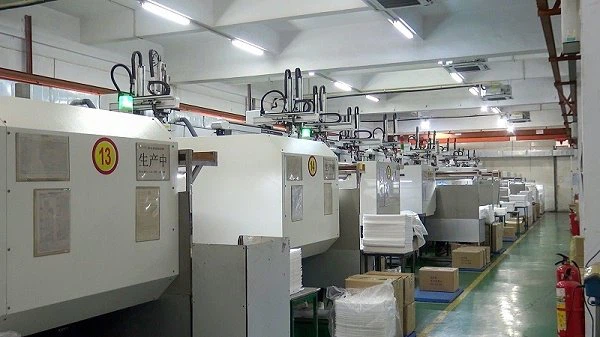
The main products of Zhongwei Precision Machinery Co., Ltd. are nylon products, plastic products, ABS series, rubber products, etc. Types of injection molding materials that can be processed: polyethylene (PE), polypropylene (PP), nylon (PA, PA6, PA66), polyoxymethylene (POM), ABS, polyurethane (TPU), polyphenylene sulfide (PPS), polystyrene Carbonate (PC), Polyetheretherketone (PEEK), etc.
Product Description
1. Implementation standards: the company strictly implements ISO9001, ISO14001, IATF16949, VDA6.3 certification, and products have passed ROHS, FDA EU certification, etc.
2. Product material standards: ISO, GB, ASTM, SAE, EN, DIN, BS, AMS, JIS, ASME, DMS, TOCT, GB
3. Main processes: plastic injection molding, metal insert injection molding, investment casting, die-casting aluminum,
4. Available materials for injection molding:
Processable nylon products, plastic products, ABS series; injection molding material types: polyethylene (PE), polypropylene (PP), nylon (PA, PA6, PA66), polyoxymethylene (POM), ABS, polyurethane (TPU), poly Phenyl sulfide (PPS), polycarbonate (PC), polyether ether ketone (PEEK) and 3D printing can be customized according to customer requirements.
Production Process
• Nature
General-purpose polystyrene is a thermoplastic resin that is a shiny, transparent beaded or granular solid. The density is 1.04~1.09, the transparency is 88%~92%, and the refractive index is 1.59~1.60. Under the action of stress, birefringence occurs, which is the so-called stress-optical effect. The melting temperature of the product is 150~180℃, the thermal decomposition temperature is 300℃, the thermal deformation temperature is 70~100℃, and the long-term use temperature is 60~80℃. At 5-6℃ lower than the heat distortion temperature, after annealing, the stress can be eliminated and the heat distortion temperature can be increased. If a little α-methylstyrene is added in the production process, the heat resistance level of general-purpose polystyrene can be improved.
PS injection molded parts are soluble in aromatic hydrocarbons, chlorinated hydrocarbons, aliphatic ketones and esters, etc., but only swell in acetone. Resistant to some mineral oils, organic acids, alkalis, salts, lower alcohols and their aqueous solutions. It has low water absorption and can still maintain its mechanical properties and dimensional stability in a humid environment. Optical properties are second only to acrylic resins. It has excellent electrical properties, high volume resistivity and surface resistivity, and is not affected by changes in temperature and humidity, nor by corona discharge. Radiation resistance is also very good. Its main disadvantage is that it is brittle and easy to crack, has low impact strength, poor heat resistance, cannot withstand boiling water, and can only be used at lower temperatures and lower loads. Poor sunlight resistance, flammable. When burning, it emits black smoke and has a special odor.
• Manufacturing method
General-purpose polystyrene is obtained by radical polymerization or ionic polymerization with styrene as a monomer. Production methods include bulk polymerization, solution polymerization, suspension polymerization and emulsion polymerization. Suspension polymerization and bulk polymerization are mainly used in today's industrial production.
1. The styrene monomer is fed into the prepolymerization kettle by the bulk polymerization method, then a small amount of additives and initiators are added, and the prepolymerization is carried out by heating and stirring at 95-115 °C. After the conversion rate reaches 20%-35%, it is then fed into The continuous polymerization is carried out in a tower reactor with an agitator. The polymerization temperature was gradually increased to about 170 ℃ to achieve complete conversion. A small amount of unreacted styrene is released from the top of the tower and can be recycled. The polymer is continuously discharged from the bottom of the tower, and the finished product is obtained by extrusion and granulation, which is packaged and shipped out. Its process is as follows.
2. The suspension polymerization method uses styrene as the monomer and water as the medium, and uses gelatin or starch, polyvinyl alcohol, hydroxyethyl cellulose and other protective gums or insoluble inorganic salts such as magnesium carbonate, magnesium silicate, calcium phosphate, etc. as the dispersion method. The sodium salt of maleic anhydride-styrene copolymer was used as a co-dispersing agent, and benzoyl peroxide was used as an initiator, and the polymerization was initiated at about 85 °C. It is also possible to carry out high-temperature polymerization at a high temperature above 100 °C in an autoclave without an initiator. The polymer is washed, separated and dried to obtain a colorless and transparent bead resin.
• Forming
Polystyrene has good fluidity, good processing performance, easy coloring, and good dimensional stability. It can be processed into various parts by injection molding, extrusion molding, blow molding, foaming, thermoforming, bonding, coating, welding, machining, printing, etc. It is especially suitable for injection molding.
In injection molding, materials can generally be used directly without drying. However, in order to improve the quality of the product, it can be pre-dried in a blast oven at 55 to 70 °C for 1 to 2 hours. The specific processing conditions are roughly as follows: the barrel temperature is about 200°C, the mold temperature is 60-80°C, the injection temperature is 170-220°C, 60-150MPa, and the compression ratio is 1.6-4.0. In order to eliminate internal stress, the molded product can be treated at a constant temperature of 70 °C for 2 to 4 hours in an infrared lamp or a blast oven.
In extrusion molding, the L/D ratio of the screw generally used is 17-24, air-cooled, and the extrusion temperature is 150-200 °C.
During blow molding, parisons obtained by injection molding and extrusion molding can be used for blow molding to obtain the desired products. The blowing pressure is generally 0.1 to 0.3 MPa.
Post Injection Molding Process
1. Processing equipment: CNC, WEDM, lathe, milling machine, drilling machine, grinder, etc.;
2. Surface treatment: For some products that require subsequent processing, we can provide surface treatment services to achieve the special purpose of customers. At present, we can provide degreasing, polishing, electroplating (gold, silver, nickel, tin, galvanized, etc.), anodizing, electrophoresis and other surface treatment services for precision parts.

Moulds and Inspection Fixtures
1. Mold service life: usually semi-permanent. (except for lost foam)
2. Mold delivery time: 10-25 days, (according to product structure and product size).
3. Tooling and mold maintenance: Zhongwei is responsible for precision parts.
Quality Control
1. Quality control: the defective rate is less than 0.1%.
2. Samples and trial run will be 100% inspected during production and before shipment, sample inspection for mass production according to ISDO standards or customer requirements
3. Testing equipment: automated visual inspection equipment can carry out 100% inspection of products, spectrum analyzer, golden elephant analyzer, three-coordinate measuring machine, hardness testing equipment, tensile testing machine.


Send Inquiry
