



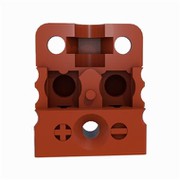
Metal Injection Molding Inserts
The insert is the part that the worker adds to the mold before the product is formed, so that the part and the injection-molded part become one part during the injection process. (The reason why inserts are used is because the materials of the inserts are different from the parts.)
The insert is the part that the worker adds to the mold before the product is formed, so that the part and the injection-molded part become one part during the injection process. (The reason why inserts are used is because the materials of the inserts are different from the parts.) Qinhuangdao Zhongwei Precision Machinery Co., Ltd. can produce German standards: 1.4301 stainless steel metal injection molding inserts, 1.4306 stainless steel metal injection molding inserts, 1.4401 Stainless Steel Metal Injection Molding Inserts, 1.4404 Stainless Steel Metal Injection Molding Inserts, 1.4548 Stainless Steel Metal Injection Molding Inserts, 1.4542 Stainless Steel Metal Injection Molding Inserts, Tungsten Alloy Metal Injection Molding Inserts, Titanium Alloy Metal Injection Molding Inserts, Carbide Metals A comprehensive high-tech enterprise integrating R&D, production and sales of injection molding inserts and powder metallurgy structural parts.
Reminder: Inserts need to be in a state where the sintering temperature of the product is basically balanced.
Product Description
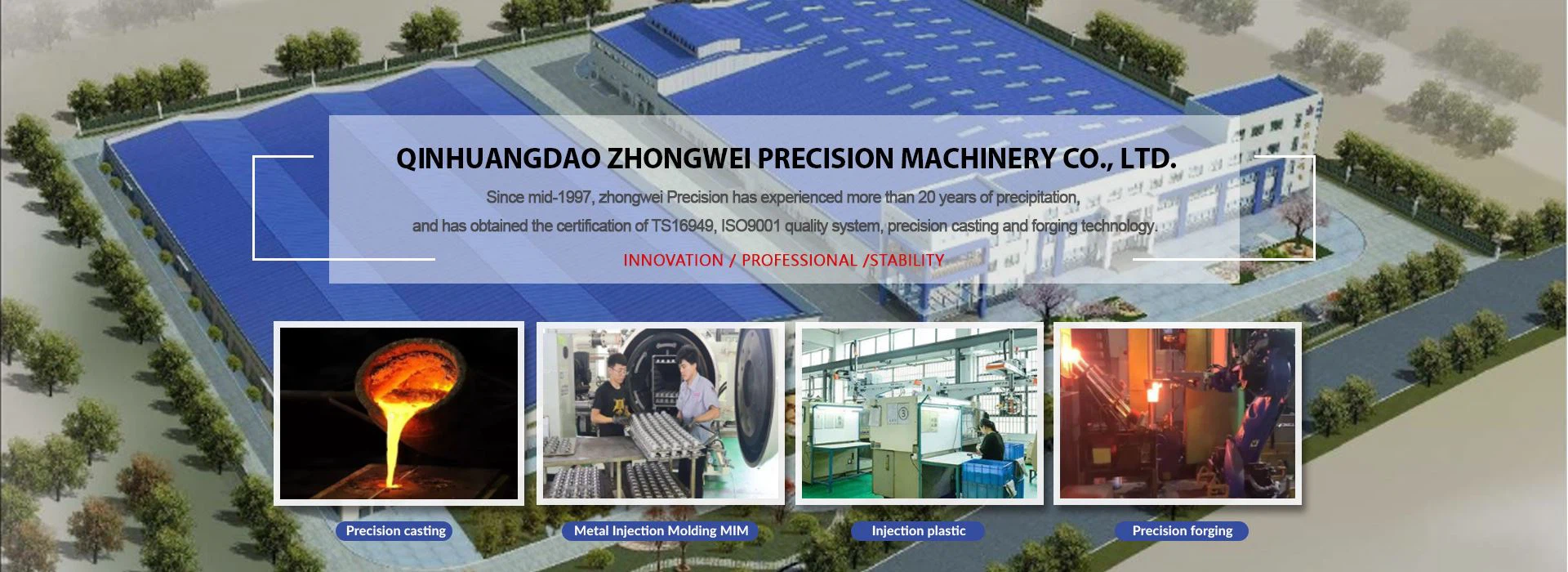
1. Implementation standards: the company strictly implements ISO9001, ISO14001, IATF16949 certification
The products have passed the certification of ROHS, FDA EU, etc.
2. Product material standards: ISO, GB, ASTM, SAE, EN, DIN, BS, AMS, JIS, ASME, DMS, TOCT, GB
3. Main processes: metal injection molding MIM, powder metallurgy PM, investment casting, die-casting aluminum,
4. Available materials for powder metallurgy:
Copper alloys, iron bases, titanium alloys, stainless steel bases, aluminum alloys, nickel alloys, cobalt alloys, tungsten alloys, cemented carbides, hydroxy alloys, soft magnetic materials and 3D printing can be customized according to customer requirements.
Production Process
Insert molding refers to a molding method in which pre-prepared inserts of different materials are placed in the mold, resin is injected, and the molten material is bonded and solidified with the inserts to form an integrated product.
Injection molding on the substrate refers to the method of inserting injection molded parts on the part of the metal plate surface. Its characteristics are as follows:
1. The combination of the easy formability and flexibility of resin and the rigidity, strength and heat resistance of metal can make complex and delicate metal-plastic integrated products solidly.
2. In particular, by utilizing the combination of the insulating properties of resins and the electrical conductivity of metals, molded products can meet the basic functions of electrical products.
3. The pre-molding combination of multiple inserts makes the post-engineering of the product unit combination more rational.
4. Inserts are not limited to metals, but also include cloth, paper, wires, plastics, glass, wood, coils, and electrical parts.
5. For rigid molded products and bending elastic molded products on the rubber gasket plate, after the integrated product is made by injection molding on the base, the complicated operation of arranging the sealing ring can be omitted, which makes the automatic combination of the post-process easier.
6. Because it is the fusion of the molten material and the metal insert, the gap between the metal insert can be designed to be narrower compared to the press-in molding method, and the reliability of composite product molding is higher. .
7. By selecting appropriate resin and molding conditions, products that are easily damaged (such as glass, coils, electrical parts, etc.) can be sealed and fixed by resin.
8. The insert can also be completely encapsulated in the resin by selecting the appropriate mold configuration.
9. The combination of vertical injection molding machine, manipulator, insert product alignment device, etc., most of the insert molding projects can realize automatic production.
10. After insert molding, it can also be made into products with hollow grooves after de-cored hole treatment.
Automatic Insert Molding System Design Selection Considerations:
1. Metal insert molding is prone to non-uniform molding shrinkage, and the limit test of the shape and dimensional accuracy of important parts should be done in advance.
2. The metal insert is easily deformed and displaced during the injection process, and the mold composition and the design of the mold shape that easily maintains the metal insert should be fully considered. For products where the shape of the insert cannot be changed, prior testing is essential.
3. When the arrangement of Metal Injection Molding Inserts is separated and the conveyor is used, the contact between the metal inserts and the insert and the vibration ball will cause slight damage to the surface of the insert, which will affect the quality of the product. Its quality tolerance limit range should be confirmed in advance.
4. The zigzag, warpage, material thickness difference, diameter difference, and thickness difference caused by gold coating processing of metal inserts should be measured in advance. On this basis, the matching selection design of the automation device and the design of the mold structure are carried out.
5. The predictable matters that restrict the mold structure, such as the position of the mold gate and the molding cycle, should be solved as much as possible in advance or have corresponding improvement measures.
6. It should be confirmed whether the metal insert requires preheating or drying. The purpose is to ensure product quality and molding stability.
7. The various detection devices installed in the mold are used to ensure the stable molding action when the mold is affected by environmental conditions such as heat, force, and vibration, and it should be confirmed whether to use it.
Post Casting Process
1. Heat treatment: annealing, carbonization, tempering, quenching, normalizing, surface tempering
2. Processing equipment: CNC, WEDM, lathe, milling machine, drilling machine, grinder, etc.;
3. Surface treatment: powder spraying, chrome plating, painting, sandblasting, nickel plating, galvanizing, blackening, polishing, bluing, etc.

Moulds and Inspection Fixtures
1. Mold service life: usually semi-permanent. (except for lost foam)
2. Mold delivery time: 10-25 days, (according to product structure and product size).
3. Tooling and mold maintenance: Zhongwei is responsible for precision parts.

Quality Control
1. Quality control: the defective rate is less than 0.1%.
2. Samples and trial run will be 100% inspected during production and before shipment, sample inspection for mass production according to ISDO standards or customer requirements
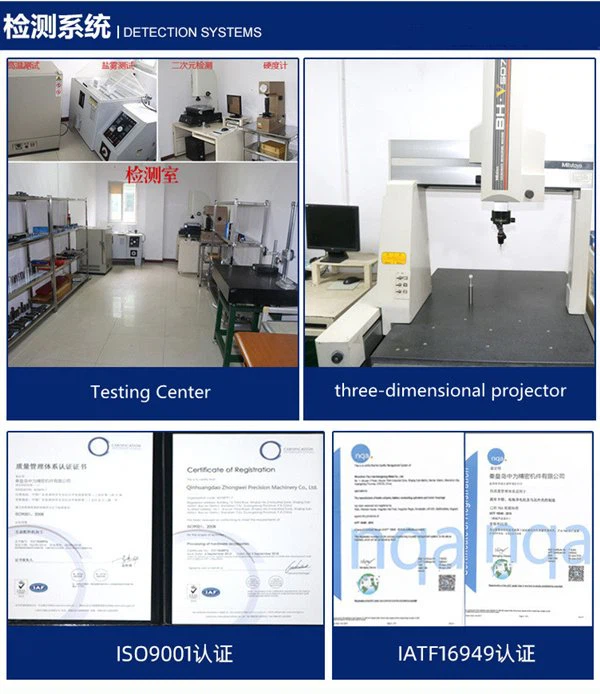
3. Testing equipment: flaw detection, spectrum analyzer, golden image analyzer, three-coordinate measuring machine, hardness testing equipment, tensile testing machine.




Send Inquiry
