




Stainless Steel Metal Injection Molded Parts
In recent years, with the continuous development of manufacturing processes and technologies, people have realized that nitrogen has great advantages in stabilizing austenite in steel, and can retain the excellent properties of austenite such as non-magnetic properties.
In recent years, with the continuous development of manufacturing processes and technologies, people have realized that nitrogen has great advantages in stabilizing austenite in steel, and can retain the excellent properties of austenite such as non-magnetic properties. The same is true for stainless steel products. Moreover, with the continuous development and application of 3D printing technology, the application advantages of metal injection molding (MIM) high nitrogen stainless steel in the electronics industry are becoming more and more obvious. Qinhuangdao Zhongwei Precision Machinery Co., Ltd. can produce: Japanese grades: SUS304L stainless steel metal injection molding, SUS306L stainless steel metal injection molding, American grade 17-4ph stainless steel base metal injection molding, Indian grades: 07cr18ni9 stainless steel metal injection molding, 02cr18ni11Stainless Steel Metal Injection Molded Parts and a comprehensive high-tech enterprise integrating titanium alloy metal injection molding, tungsten alloy metal injection molding, cemented carbide metal injection molding, powder metallurgy structural parts research and development, production and sales.
Product Description
1. Implementation standards: the company strictly implements ISO9001, ISO14001, IATF16949 certification
The products have passed the certification of ROHS, FDA EU, etc.
2. Product material standards: ISO, GB, ASTM, SAE, EN, DIN, BS, AMS, JIS, ASME, DMS, TOCT, GB
3. Main processes: metal injection molding MIM, powder metallurgy PM, investment casting, die-casting aluminum,
4. Available materials for powder metallurgy:
Copper alloys, iron bases, titanium alloys, stainless steel bases, aluminum alloys, nickel alloys, cobalt alloys, tungsten alloys, cemented carbides, hydroxy alloys, soft magnetic materials and 3D printing can be customized according to customer requirements.
High nitrogen stainless steel metal injection molded parts will replace nickel
1. High nitrogen stainless steel was born to replace nickel
Stainless steel is one of the greatest inventions in the history of human material development, and has now penetrated into all aspects of human production and life. Due to its excellent corrosion resistance, stainless steel is widely used in various harsh industrial environments in the industrial field; in the field of life, it is used to make parts or final products of various consumer goods (such as tableware), and can be maintained for a long time. Silver shiny metallic luster, loved by consumers.
In the early stage of the development of stainless steel, the research on nitrogen-containing stainless steel did not attract much attention. First, it is difficult to add gaseous nitrogen to molten steel due to the limitation of production process; second, whether nitrogen will cause the brittleness of stainless steel was controversial at the time. It was not until 1912 that the significant effect of nitrogen on the mechanical properties of steel and the stabilization of austenite was documented for the first time in the literature. Later, in 1926, another study reported that nitrogen had a similar effect on chromium and iron-chromium alloys. Beginning in the 1930s, there have been literature records of adding nitrogen to iron-chromium alloys to improve the strength of the alloys. During World War II, due to the shortage of nickel resources, the possibility of using nitrogen to replace nickel to stabilize austenite became a hot spot. At that time, the beneficial effect of nitrogen on the corrosion resistance of stainless steel was discovered for the first time, in addition to the known effects of nitrogen on the structure and strength of stainless steel.
In the development history of high nitrogen steel, two factors have promoted people's thinking about the meaning of nitrogen as an alloying element of stainless steel: one is the gradual decrease in the supply of nickel, an important alloying element in stainless steel; the other is to produce high-strength austenitic steel Body stainless steel. Nitrogen alloying of stainless steel was rapidly promoted when the AOD furnace method (argon oxygen decarburization method) realized the possibility of nitrogen as an alloying element. Especially in austenitic stainless steel, by adjusting the content of nitrogen and manganese to replace nickel, high-quality and cheap high-nitrogen stainless steel can be produced, and the nickel content can even be reduced to a level below 0.1%, thus giving birth to high-nitrogen stainless steel Nickel-free austenitic stainless steel.
Austenitic stainless steel is one of the most important engineering materials and is widely used in industry due to its strong corrosion resistance, high ductility, and non-magnetic properties. Conventional austenitic stainless steels contain significant amounts of nickel. Although the presence of nickel stabilizes the austenite structure in steel, there are also some difficult problems to solve. For example, the cost of nickel is high; it exists in austenite as a replacement solid solution atom, which cannot effectively improve the strength and hardness of the material; poor biocompatibility, easy to cause allergic reactions in the human body, limiting its use in consumer electronics and biomedical fields Applications.
To solve these problems, nitrogen was introduced into austenitic stainless steel to replace nickel, and high nitrogen stainless steel was born. Compared with traditional austenitic stainless steels, high nitrogen stainless steels have comparative advantages. For example, the stability of nitrogen to austenite is much higher than that of nickel, and a small amount of nitrogen can effectively stabilize the austenite structure in stainless steel, reduce the formation of ferrite and martensite during processing, and thus preserve austenite. High corrosion resistance and non-magnetic properties of bulk stainless steel. Nitrogen, as an interstitial solid solution element, can effectively improve the hardness and strength of austenite while maintaining good ductility of the material. Nitrogen replacement of nickel can reduce the release of nickel from the material, improve the biocompatibility of the material, and effectively improve the pitting and crack corrosion resistance of austenitic stainless steel.
Therefore, high nitrogen austenitic stainless steel has become a research hotspot in recent years, and its application in industry is also increasing.
2. Use MIM technology to manufacture high nitrogen stainless steel
The early development of high nitrogen austenitic stainless steel was mostly based on casting technology, adding nitrogen in the molten state of the metal. Due to the low solubility of nitrogen in liquid iron, a higher nitrogen partial pressure is required to dissolve sufficient nitrogen in the molten steel. However, this method requires the use of expensive high temperature and high pressure equipment, and has certain risks, so it is hindered in industrial promotion.
In contrast, the solid solubility of nitrogen in austenite is much higher than that in liquid iron, so the stainless steel powder can infiltrate more nitrogen at low pressure when it is solid. This makes the powder metallurgy process a more economical and efficient method of manufacturing high nitrogen austenitic stainless steels. In addition, the use of powder metallurgy process can also achieve near-net shape of the product, reduce subsequent processing, and at the same time obtain a more uniform structure and properties than casting.
MIM technology is a new near-net-shape technology that has been introduced into the field of powder metallurgy by introducing injection molding. In the process of metal injection molding, first, select the required metal powder and polymer binder, and then mix and extrude it under appropriate process conditions to make a uniform granular feed. Secondly, through injection molding, the feed material is injected into the mold cavity in a molten state to form a green body. Finally, the binder in the green body is removed through a debinding process, and a densified metal product is obtained through sintering. After sintering, the density of the finished product can reach 96% to 98% of the theoretical density, and the mechanical properties are close to forging materials.
The advantage of MIM technology is that it can mass-produce precision metal parts with complex shapes at very low cost. It is now possible to use MIM technology to manufacture high-nitrogen nickel-free stainless steel products. At present, the most widely used high-nitrogen nickel-free stainless steel grade manufactured by MIM technology in the industry is PANACEA, and its chemical composition (mass fraction) is: carbon ≤ 0.2%, nitrogen ≥ 0.65%, chromium 16.5%~17.5%, nickel ≤ 0.1%, molybdenum is 3.0%~3.5%, manganese is 10%~12%, silicon≤0.1%, and the balance is iron. The nitrogen content of the original powder of the product does not exceed 0.3%, and the nitrogen content can be increased to more than 0.65% by the sintering process, and finally a high-nitrogen nickel-free austenitic stainless steel with good performance is obtained. Although this stainless steel has excellent performance, there are still technical barriers to mass production. For example, nitrogen in this material is infiltrated during the sintering process, and the control of its nitrogen content involves an understanding of the thermodynamics and kinetics of the nitriding process; the existence of nitrogen in stainless steel is related to the process of heat treatment of the material; Different manufacturers use different sintering furnaces, and the optimal sintering conditions need to be fully verified in the early stage of production. These factors all increase the difficulty of stable production of this material.
The high-nitrogen nickel-free stainless steel manufactured by MIM technology has higher strength and hardness than traditional austenitic stainless steel, excellent corrosion resistance, and no magnetism. It is an excellent material for manufacturing structural parts of electronic products. Huawei has used this material to manufacture the camera mounts of the company's flagship mobile phones since the end of 2017, and has gone through two generations of mobile phone products so far. At present, four camera brackets have been mass-produced, each with a shipment of several million pieces. It is a classic application case of injection molding of high nitrogen and nickel-free stainless steel. With the promotion of Huawei, more and more mobile phone structural parts will choose this high-nitrogen nickel-free austenitic stainless steel material. It is believed that in the near future, high nitrogen and nickel-free stainless steel manufactured by MIM technology will usher in more development opportunities.
Post Casting Process
1. Heat treatment: annealing, carbonization, tempering, quenching, normalizing, surface tempering
2. Processing equipment: CNC, WEDM, lathe, milling machine, drilling machine, grinder, etc.;
3. Surface treatment: powder spraying, chrome plating, painting, sandblasting, nickel plating, galvanizing, blackening, polishing, bluing, etc.

Moulds and Inspection Fixtures
1. Mold service life: usually semi-permanent. (except for lost foam)
2. Mold delivery time: 10-25 days, (according to product structure and product size).
3. Tooling and mold maintenance: Zhongwei is responsible for precision parts.

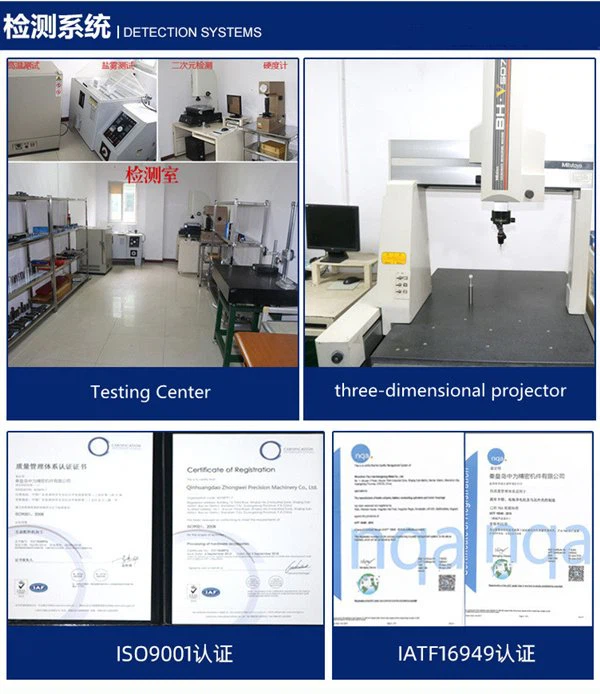
Quality Control
1. Quality control: the defective rate is less than 0.1%.
2. Samples and trial run will be 100% inspected during production and before shipment, sample inspection for mass production according to ISDO standards or customer requirements
3. Testing equipment: flaw detection, spectrum analyzer, golden image analyzer, three-coordinate measuring machine, hardness testing equipment, tensile testing machine.
Application of High Nitrogen Stainless Steel Metal Injection Molding
None of the known surgical implant materials has been proven to be completely free of side effects on the human body. However, the materials covered in this section have demonstrated in long-term clinical applications that the expected biological response is acceptable if used appropriately. 0Cr20Ni10Mn4Mo3NbN, as a high nitrogen stainless steel for surgical implants, has undergone a lot of application practice. It has high strength and excellent corrosion resistance, and has a broad market prospect. It can be used to make various specifications of joint products and orthopedic screws.


Send Inquiry
