



Metal Injection Molding Computer Parts
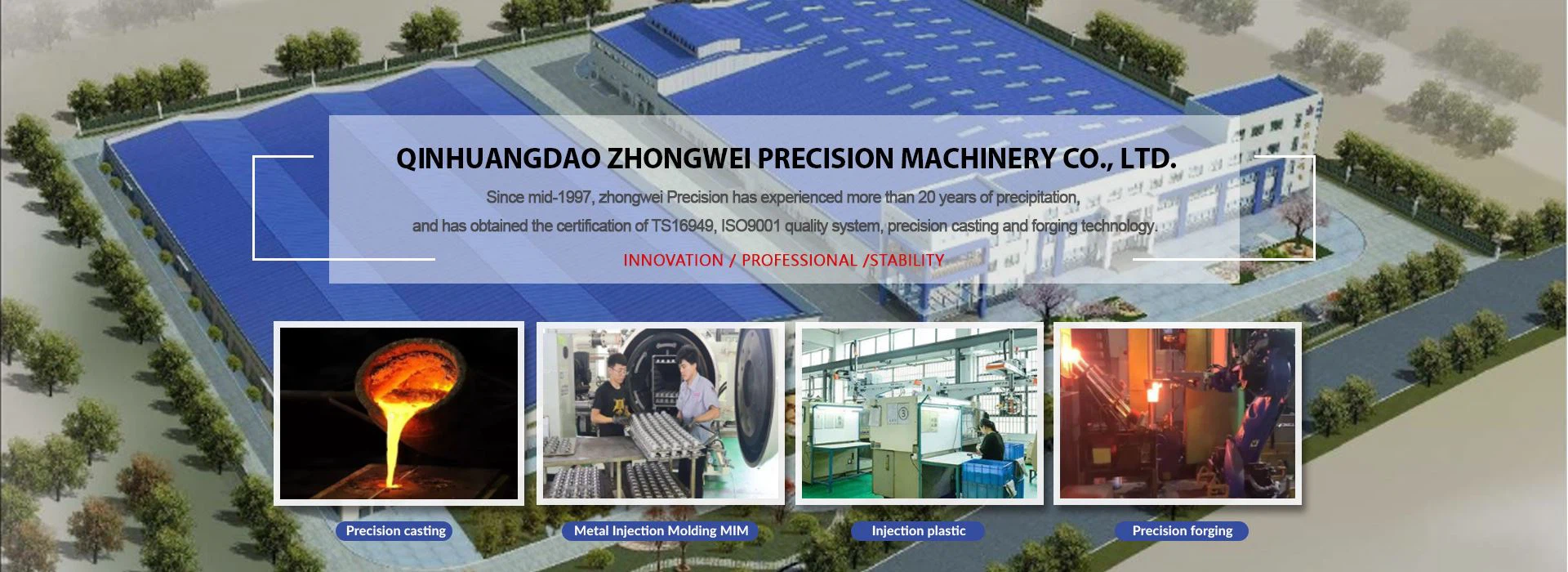
Metal Injection Molding (MIM) is a near-net-shape process suitable for producing small, three-dimensional complex shapes and products with special performance requirements. Metal Injection Molding Computer Parts, Metal Injection Molding Computer Parts, Metal Injection Molding Computer Connectors It is a comprehensive high-tech enterprise integrating R&D, production and sales of cemented carbide and powder metallurgy structural parts.
Metal Injection Molding (MIM) is a near-net-shape process suitable for producing small, three-dimensional complex shapes and products with special performance requirements. Metal Injection Molding Computer Parts, Metal Injection Molding Computer Parts, Metal Injection Molding Computer Connectors It is a comprehensive high-tech enterprise integrating R&D, production and sales of cemented carbide and powder metallurgy structural parts. We are willing to achieve common development with every businessman.
Product Description
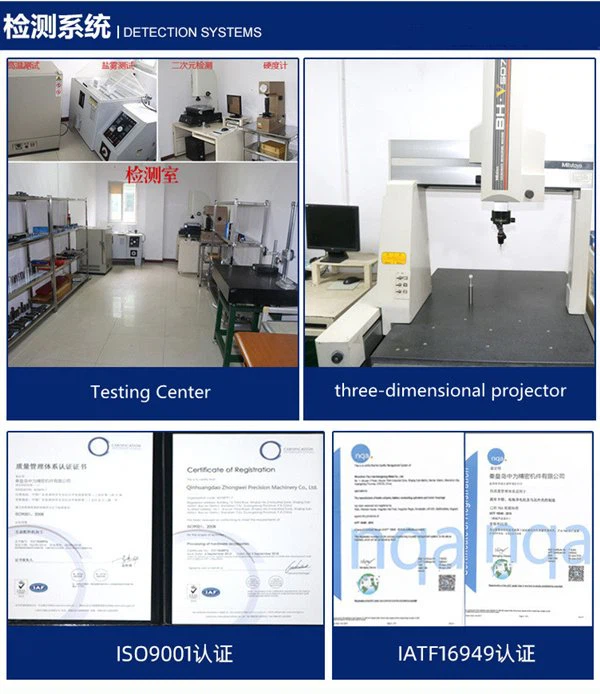
1. Implementation standards: the company strictly implements ISO9001, ISO14001, IATF16949 certification
The products have passed the certification of ROHS, FDA EU, etc.
2. Product material standards: ISO, GB, ASTM, SAE, EN, DIN, BS, AMS, JIS, ASME, DMS, TOCT, GB
3. Main processes: metal injection molding MIM, powder metallurgy PM, investment casting, die-casting aluminum,
4. Available materials for powder metallurgy:
Copper alloy, iron base, titanium alloy, stainless steel base, aluminum alloy, nickel alloy, cobalt alloy, tungsten alloy, cemented carbide, hydroxy alloy, soft magnetic material and 3D printing can be customized according to customer requirements.
Product Advantages and Existing Problems
MIM is developed from the integration of traditional powder metallurgy technology and modern plastic injection molding technology. , wax and other materials) are evenly mixed to make a feed with rheological properties, which are injected into the mold cavity (or multiple mold cavities) through an injection machine to form a part blank. After the blank is removed from the binder and sintered at high temperature, Various metal parts with uniform microstructure and highly dense materials can be obtained.
1. The development process of MIM
In the 1970s, American scholar Wiech first developed a powder metallurgy process for metal powder injection molding. In the 1980s, the Renssell Institute of Technology in the United States began to carry out research on the theoretical basis and application basis of MIM technology. The American Injectamax Company and the German BASF Company shortened the degreasing time from tens of hours to several hours, and the shape retention was significantly improved, and the dimensional accuracy of the product was increased from ±0.5% to ±0.3%. After the 21st century, the MIM process has been further improved, new materials and new processes have emerged, and the industrialization has developed rapidly. The complex shape, small size and large output are the strengths of MIM, making it find a large number of applications in small arms, watches, hand tools, orthodontic brackets, automotive engine parts, electronic seals, cutting tools and sports equipment.
2. Application examples of MIM in the electronics industry
The electronic instrument industry is the main application area of MIM parts, accounting for about 50% of MIM parts sales in Asia. The miniaturization of electronic devices requires the production of lower-cost, better-performing, smaller parts, which is where MIM parts come in handy.
The development of MIM in China has benefited from the drive of the electronics industry (such as the mobile phone industry, etc.), and the entire industry has skyrocketed since 2009; especially after the middle of 2011, due to the competition of products from Apple and Samsung Electronics, the mobile phone device The mass adoption of MIM parts is a boom that has never been seen in the past. The following examples illustrate MIM products in the electronics industry.
3. Smartphone
In the 1990s, the most widely known application of MIM was the tungsten alloy vibrator of the vibration motor of the BP machine. After 2000, stainless steel series began to be widely used, such as optical fiber connectors, hinge series of consumer electronics, mobile phone buttons, sim card trays, etc. The recent investment boom in the MIM industry is due to the wide application of MIM parts in the mobile phone industry, and the fact that assembly plants in the 3C industry are also in China. The investment threshold has been lowered, which has attracted a large inflow of capital.
2015 Domestic Smartphones Adopt MIM Parts:
According to the market situation, in 2015, only domestic mobile phone parts (card tray, button, lens ring, LED ring, rotating shaft) reached 1.65 billion yuan, and the market demand for MIM products will further expand.
4. Optical fiber parts
It is a thin-walled (wall thickness less than 1mm) and complex-shaped optical fiber transceiver cover made of 17-4PH stainless steel. It is an ultra-high-speed transceiver parallel optical module used in network and telecommunication equipment. These thin-walled MIM enclosures are supported by 4 thin struts supporting 2 parallel strips.
5. Other typical electronic industry MIM products
MIM products are also commonly used in the electronics industry such as disk drive components, cable connectors, electronic packages, cell phone vibrators, computer print heads, and the like.
6. Main criteria for selecting MIM technology
The metal injection molding associations of Japan, the United States and Europe jointly issued the ISO standard-ISO22068 sintered metal injection molding material specification, which is intended to provide design and material engineers with the information required by the material specified for the parts manufactured by the MIM process. With regard to the selection of MIM process criteria, it was determined that the following major items need to be considered:
☆ Quality/Plenty
For parts with high material loss during machining or grinding, MIM is extremely effective in reducing production costs.
☆ Quantity
Tooling and creation costs are prohibitive for low volumes. Therefore, it is most suitable for MIM when the annual output exceeds 20,000 pieces.
☆ Material
MIM is most attractive for parts designed in difficult-to-machine materials such as titanium, stainless steel, and nickel alloys.
☆ Complexity
The MIM process is most suitable for the manufacture of multi-axis parts with complex geometries and positions that need to be shifted during machining.
☆ Use performance
If use performance is important, the performance of the high density formation of MIM is often competitive.
☆ Surface roughness
Surface roughness reflects the size of the original powder particles, however, unlike other competing processes, controllable texture may have little impact on cost.
☆ Tolerance
If the required tolerance is tight, the cost of MIM tends to increase due to the need for subsequent processing, and the tolerance of the sintered part is about ±0.3%.
☆ Combination
In order to save inventory and assembly costs, it can be beneficial when multiple parts are united into one part.
☆ Defects
Defects inherent to MIM must be located in non-critical locations, or removed after fabrication such as gate footprints, lift pin marks or bond lines.
☆ New combination materials
MIM can create new composite materials that are difficult to manufacture with traditional processes, such as laminates, two-material structures, or hybrid metal-ceramic materials for wear resistance.
7. The current situation and main problems of MIM in my country
After more than 20 years of development, my country's MIM practitioners not only broke through the technical blockade, but also developed a large number of MIM products to expand the market. In recent years, with the introduction of Made in China 2025, the market demand for MIM products has become increasingly strong, and MIM companies have sprung up like mushrooms after a rain.
However, from the overall situation of industry development, my country's current MIM prospects are gratifying, but there is still a certain gap with foreign countries in some aspects.
(1) The development of the industry is not standardized, the product variety is small, the quality is poor, and the market competitiveness is not strong;
(2) The scale of the enterprise is small, the level of technology and equipment is backward, and it is difficult to improve the quality and efficiency;
(3) There are few professional talents, poor scientific research and development capabilities, and insufficient stamina for sustainable development.
8. MIM improvement measures and suggestions for current problems
In the early 1990s, developed countries in the world, such as the United States, Europe and Japan, basically completed the transformation from MIM technology to the development of MIM industry. The gap between my country's MIM industry and the overall level of foreign countries is about 10-15 years. At present, my country is in a favorable period for the development of the manufacturing industry. The application space of MIM technology is large and the product market prospect is broad. This undoubtedly provides a rare strategic opportunity for my country to accelerate the development of the MIM industry.
Post Casting Process
1. Heat treatment: annealing, carbonization, tempering, quenching, normalizing, surface tempering
2. Processing equipment: CNC, WEDM, lathe, milling machine, drilling machine, grinder, etc.;
3. Surface treatment: powder spraying, chrome plating, painting, sandblasting, nickel plating, galvanizing, blackening, polishing, bluing, etc.

Moulds and Inspection Fixtures
1. Mold service life: usually semi-permanent. (except for lost foam)
2. Mold delivery time: 10-25 days, (according to product structure and product size).
3. Tooling and mold maintenance: Zhongwei is responsible for precision parts.

Quality Control
1. Quality control: the defective rate is less than 0.1%.
2. Samples and trial run will be 100% inspected during production and before shipment, sample inspection for mass production according to ISDO standards or customer requirements
3. Testing equipment: flaw detection, spectrum analyzer, golden image analyzer, three-coordinate measuring machine, hardness testing equipment, tensile testing machine.
Application
1. Computers and auxiliary facilities: such as printer accessories, magnetic cores, front pins, drive components, etc.
2. Tools: gun drills, drills, power tools, hand tools, wrenches, milling heads, nozzles, etc.
3. Household appliances: watch cases, bracelets, electric toothbrushes, scissors, fans, golf club heads, imitation jewelry, and tool tips for other parts;
4. Medical equipment accessories, such as orthodontic brackets, scissors, pliers, etc.;
5. Military weapon parts: missile tail, firearms, bullets, fuze parts;
6. Electronic parts: micro motor parts, electronic metal parts, sensors, mobile phone switches, micro USB interfaces, catos, etc.
7. Mechanical accessories: industrial metal parts, spinning machines, sewing machines, office machinery and other small complex parts;
8. Automobile, marine parts, clutch inner ring, rocker arm plate, fork group, distributor group, automobile air bag parts, automobile lock.
The above is the application of MIM metal injection molding parts. That is, Jingke Intelligent Technology Co., Ltd. has been committed to using metal powder injection molding technology and MIM powder metallurgy technology to produce miniaturized, complex three-dimensional shapes, and high-precision precision metal structure technology. Metal Injection Molding Computer Parts are widely used in communication electronics, consumer electronics, auto parts, smart locks, industrial automation and other fields.




Send Inquiry
