




Electrical Phenolic Resin Injection Parts
Phenolic resin, originally a colorless or yellowish-brown transparent substance, is often sold in the market with the addition of colorants to give red, yellow, black, green, brown, blue and other colors, in the form of granules or powder. Resistant to weak acid and weak base, it will decompose in case of strong acid and corrode in case of strong alkali.
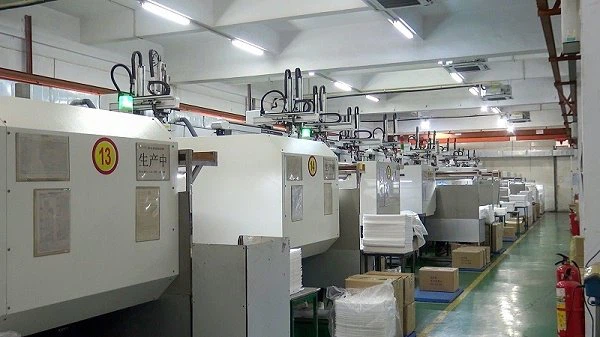
Phenolic resin, originally a colorless or yellowish-brown transparent substance, is often sold in the market with the addition of colorants to give red, yellow, black, green, brown, blue and other colors, in the form of granules or powder. Resistant to weak acid and weak base, it will decompose in case of strong acid and corrode in case of strong alkali. Electrical phenolic resin injection parts are insoluble in water and soluble in organic solvents such as acetone and alcohol. It is obtained by polycondensation of phenolic aldehyde or its derivatives. The main products of Zhongwei Precision Machinery Co., Ltd. include nylon products, plastic products, ABS series, rubber products, etc. Types of injection molding materials that can be processed: polyethylene (PE), polypropylene (PP), nylon (PA, PA6, PA66), polyoxymethylene (POM), ABS, polyurethane (TPU), polyphenylene sulfide (PPS), polystyrene Carbonate (PC), Polyetheretherketone (PEEK), etc.
Product Description
1. Implementation standards: the company strictly implements ISO9001, ISO14001, IATF16949, VDA6.3 certification, and products have passed ROHS, FDA EU certification, etc.
2. Product material standards: ISO, GB, ASTM, SAE, EN, DIN, BS, AMS, JIS, ASME, DMS, TOCT, GB
3. Main processes: plastic injection molding, metal insert injection molding, investment casting, die-casting aluminum,
4. Available materials for injection molding:
Processable nylon products, plastic products, ABS series; injection molding material types: polyethylene (PE), polypropylene (PP), nylon (PA, PA6, PA66), polyoxymethylene (POM), ABS, polyurethane (TPU), poly Phenyl sulfide (PPS), polycarbonate (PC), polyether ether ketone (PEEK) and 3D printing can be customized according to customer requirements.
Application
Application of Electrical phenolic resin injection parts in the field of electrical insulation
With the development of the national economy and the continuous improvement of the level of science and technology, higher and higher requirements for safety and reliability are put forward from cutting-edge technology to household appliances. The corresponding insulating material should have high heat resistance, flame retardancy and should meet the requirements of contemporary environmental protection in Taiwan. The author recently learned that a foreign businessman in the West clearly proposed that halogen-containing flame retardants are not allowed to be used in flame retardant insulation materials. The development of FB high temperature flame retardant thermoisotropic phenolic resin (FS resin) has already considered these comprehensive requirements. After a variety of tests and the joint efforts of scientific and technological personnel of related units, the relevant properties of FB resin are now collected for reference.
1. Phenolic resin
Phenolic resin is also called bakelite, also known as bakelite powder, English name phenolic resin, PF for short, specific gravity 1.25~1.30, is the general name of synthetic resin obtained by polymerization of phenol and aldehyde. It contains free molecules and is reddish, and is often sold in the market with colorants added to show colors such as red, yellow, black, green, brown, blue, etc., in the form of granules and powders. Resistant to weak acid and weak base, it will decompose in case of strong acid and corrode in case of strong alkali. Insoluble in water, soluble in acetone, alcohol and other organic solvents. Stable to water, weak acid and weak base solution. Resin made by polycondensation of phenol and formaldehyde under catalyst conditions, neutralization and water washing. Due to the different catalysts used, they can be divided into two categories: thermosetting and thermoplastic. Mainly include: novolac resin, thermosetting phenolic resin and oil-soluble phenolic resin.
Thermosetting phenolic resins (or one-step phenolic resins) can be made into solids, liquids and emulsions as required, and can be cross-linked and cured without a cross-linking agent under the action of heat or (and) acid. In order to guide resin synthesis and molding processing, the curing process is often divided into three stages: A, B, and C. The prepolymer with soluble and fusible properties is called A-stage phenolic resin; the final state of cross-linking and curing is called C-stage phenolic resin; it swells in the solvent but does not completely dissolve, and is softened but not melted by heat. The state is called B-stage phenolic resin. The viscosity of thermosetting phenolic resin gradually increases during storage, and finally it can become an insoluble and infusible C-stage resin. Therefore, its storage period is generally not more than 3 to 6 months. Thermosetting phenolic resins can be used in the manufacture of various laminated plastics, compression powders and laminated plastics; in the manufacture of varnishes or insulating and corrosion-resistant coatings; in the manufacture of daily necessities and decorations; in the manufacture of sound insulation and heat insulation materials, etc. Common high voltage electrical sockets, adhesives and other modified polymers.
2. Important properties of phenolic resin
2.1 High temperature performance
The most important feature of phenolic resins is their high temperature resistance, which maintains their structural integrity and dimensional stability even at very high temperatures. It is for this reason that phenolic resins are used in some high temperature fields, such as refractories, friction materials, adhesives and foundry industries.
2.2 Bond strength
An important application of phenolic resin is as a binder. Phenolic resins are versatile and compatible with a wide variety of organic and inorganic fillers. With the right design of phenolic resins, wetting is exceptionally fast. And after cross-linking, it can provide the required mechanical strength, heat resistance and electrical properties for abrasive tools, refractory materials, friction materials and bakelite powder.
Water-soluble phenolic resins or alcohol-soluble phenolic resins are used to impregnate paper, cotton, glass, asbestos and other similar substances to provide them with mechanical strength, electrical properties, etc. Typical examples include electrical insulation and mechanical lamination manufacturing, clutch discs and filter papers for automotive filters.
2.3 High carbon residual rate
Under the condition of inert gas at a temperature of about 1000°C, phenolic resin will generate high carbon residue, which is beneficial to maintain the structural stability of phenolic resin. This characteristic of phenolic resin is also an important reason why it can be used in the field of refractory materials.
2.4 Low smoke and low toxicity
Compared with other resin systems, phenolic resin systems have the advantages of low smoke and low toxicity. In the event of combustion, the scientifically formulated phenolic resin system will slowly decompose to produce hydrogen, hydrocarbons, water vapor and carbon oxides. Relatively little smoke is produced during the decomposition process, and the toxicity is also relatively low. These characteristics make phenolic resins suitable for areas with very strict public transportation and safety requirements, such as mines, guardrails and construction.
2.5 Chemical resistance
The cross-linked phenolic resin resists any chemical decomposition. Such as gasoline, petroleum, alcohol, glycol and various hydrocarbons.
Post Injection Molding Process
1. Processing equipment: CNC, WEDM, lathe, milling machine, drilling machine, grinder, etc.;
2. Surface treatment: For some products that require subsequent processing, we can provide surface treatment services to achieve the special purpose of customers. At present, we can provide degreasing, polishing, electroplating (gold, silver, nickel, tin, galvanized, etc.), anodizing, electrophoresis and other surface treatment services for precision parts.

Moulds and Inspection Fixtures
1. Mold service life: usually semi-permanent. (except for lost foam)
2. Mold delivery time: 10-25 days, (according to product structure and product size).
3. Tooling and mold maintenance: Zhongwei is responsible for precision parts.
Quality Control
1. Quality control: the defective rate is less than 0.1%.
2. Samples and trial run will be 100% inspected during production and before shipment, sample inspection for mass production according to ISDO standards or customer requirements
3. Testing equipment: automated visual inspection equipment can carry out 100% inspection of products, spectrum analyzer, golden elephant analyzer, three-coordinate measuring machine, hardness testing equipment, tensile testing machine.


Send Inquiry
