




Urea-formaldehyde Resin Injection Molding
Used as a crosslinking agent for emulsion adhesives. It can react and cross-link with OH in polyvinyl acetate emulsion to improve water resistance and heat resistance. The -CH2OH and NH2 of the urea-formaldehyde resin molecule can be condensed and cross-linked with -COOH in the acrylic modified emulsion molecule to a certain extent, reducing the hydrophilic group, improving the water resistance and the frost resistance.
Used as a crosslinking agent for emulsion adhesives. It can react and cross-link with OH in polyvinyl acetate emulsion to improve water resistance and heat resistance. The -CH2OH and NH2 of the urea-formaldehyde resin molecule can be condensed and cross-linked with -COOH in the acrylic modified emulsion molecule to a certain extent, reducing the hydrophilic group, improving the water resistance and the frost resistance.
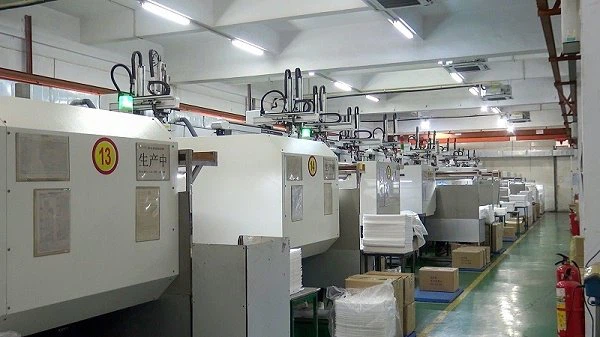
The main products of Zhongwei Precision Machinery Co., Ltd. are nylon products, plastic products, ABS series, rubber products, etc. Types of injection molding materials that can be processed: polyethylene (PE), polypropylene (PP), nylon (PA, PA6, PA66), polyoxymethylene (POM), ABS, polyurethane (TPU), polyphenylene sulfide (PPS), polystyrene Carbonate (PC), Polyetheretherketone (PEEK), etc.
Product Description
1. Implementation standards: the company strictly implements ISO9001, ISO14001, IATF16949, VDA6.3 certification, and products have passed ROHS, FDA EU certification, etc.
2. Product material standards: ISO, GB, ASTM, SAE, EN, DIN, BS, AMS, JIS, ASME, DMS, TOCT, GB
3. Main processes: plastic injection molding, metal insert injection molding, investment casting, die-casting aluminum,
4. Available materials for injection molding:
Processable nylon products, plastic products, ABS series; injection molding material types: polyethylene (PE), polypropylene (PP), nylon (PA, PA6, PA66), polyoxymethylene (POM), ABS, polyurethane (TPU), poly Phenyl sulfide (PPS), polycarbonate (PC), polyether ether ketone (PEEK) and 3D printing can be customized according to customer requirements.
Production Process
1. Inspection of raw materials for Urea-formaldehyde resin injection molding. It is mainly to test whether the quality of formaldehyde and urea meets the requirements. According to the concentration of formaldehyde and the purity of urea, the dosage of formaldehyde and urea in the process formula is calculated.
2. Preparation. In the production of urea-formaldehyde resin, formaldehyde is generally added first, and the formaldehyde is pumped into the measuring tank, and then sent to the reaction pot after measurement. Urea is generally weighed on a scale.
3. Stir and heat up. After the metered formaldehyde is added to the reaction pot, start the stirrer and add alkali to adjust the pH value to the specified value, and at the same time open the steam to heat up, because the reaction between urea and formaldehyde is an exothermic reaction to form the formaldehyde solution, so after adding urea, heat it to a certain value. After the temperature reaches the specified temperature, the steam should be turned off immediately, and the temperature should be raised to the specified temperature by the self-heating of the reaction, and kept at the specified temperature for a period of time. When the steam is heated, the temperature at which the steam is turned off depends on the equipment materials and the amount of the reaction solution. Generally, the small reaction pot uses less amount, the reaction heat is small, and the steam closing temperature is slightly higher. In addition, it is related to the steam pressure used. If the steam pressure is large, the steam closing temperature should be lower.
4. The pH value of the reaction medium. The pH value of the reaction medium is an important conditional factor for the synthesis of urea-formaldehyde resin. It should be clearly specified in the regulations: what should be the pH value at the beginning of the reaction, and what range should the pH value be after the temperature is raised to the specified temperature? When the insulation is over, what should the pH be? When using acid or ammonium chloride to adjust the acid treatment, the pH value should also have a certain range.
5. reaction end point. The end point of the reaction is the key to the quality of the urea-formaldehyde resin. At the end of the reaction, the time (s) for the resin liquid to flow out of the cup is generally measured with a No. 4 paint cup. Generally, it is stipulated to measure the time when the resin liquid flows out at a certain temperature (there is a relatively narrow range); or it is expressed by the turbidity of the resin liquid in water. For example, it is stipulated that the resin droplets taken out are turbid in water at 20 °C as the end point. Wait.
6. Treatment after reaction endpoint. After reaching the end point of the reaction, it should be neutralized immediately, that is, add alkali immediately after reaching the end point of the reaction, so that the pH value of the reaction resin liquid is raised to the specified value, and at the same time, cooling water should be opened for cooling treatment.
7. Weighing and storage. After the urea-formaldehyde resin is made, it can be discharged after cooling to the specified temperature. When discharging, it should be weighed and measured, and the output of each pot of glue should be recorded. The finished urea-formaldehyde resin is best stored in plastic drums, avoid contact with iron, and store in a cool place.
The urea-formaldehyde resin produced by the new environmentally friendly formaldehyde is green, environmentally friendly, low-toxic and odorless. The urea-formaldehyde resin glue made of new environmentally friendly formaldehyde can reach E1 or E0 level without adding any additives. The urea-formaldehyde resin produced by the new environmentally friendly formaldehyde is an upgraded product of ordinary urea-formaldehyde resin.
Raw Material Ratio
Raw material | Specification | Dosage (kg) | Remark |
Formaldehyde | 36.5% | 600 | Ordinary formaldehyde |
New environmentally friendly formaldehyde | 400 | ||
Urea | ≥N46 | 300 | Commercially available |
Polyvinyl alcohol | 2099 or 2299 model | Moderate | |
Sodium hydroxide | 30% | Moderate | Pressed alkali |
Ammonium chloride | 20% | Moderate | Sour |
Production Process
1. Add 400 kg of environmentally friendly formaldehyde and 600 kg of ordinary formaldehyde into the reaction kettle, and start the stirrer. Add polyvinyl alcohol (2099 or 2299 model) 2 to 4 kg.
2. Add 300 kg of urea and start to heat up.
3. After the incubation reaction, adjust the pH with ammonium chloride.
4. After forming gel, cool down to 45℃, stop stirring, and then discharge.
The process is simple to manufacture, easy to operate and easy to master.
Process Characteristics
1. Low cost. The price of environmentally friendly formaldehyde is exactly the same as that of ordinary formaldehyde on the market. The amount of urea is small, accounting for 30% of the total formaldehyde, which saves about 50% of urea compared with ordinary environmentally friendly urea-formaldehyde resins.
2. Environmentally friendly. The resin has a very low free formaldehyde content, and during the manufacturing process, the taste is minimal. After gelling, there is almost no smell of formaldehyde. The plywood made of this resin has been tested and tested by the Technical Supervision Bureau, and it has fully reached the national standard E2 level and E1 level.
3. The production process is simple. Both formaldehyde and urea are fed at one time, and there is no need to adjust the pH value in the early stage, which is extremely easy to operate.
Resin quality index
Exterior | Milky mucus |
Viscosity | 0.25~0.4Pa.s |
Free formaldehyde content | < 0.05 |
Curing time | 45~65s |
PHvalue | 7.0~8.0 |
Solid content | > 50% |
Storage period (days) | > 20 |
Post Injection Molding Process
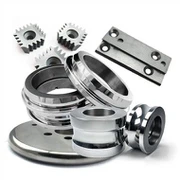
1. Processing equipment: CNC, WEDM, lathe, milling machine, drilling machine, grinder, etc.;
2. Surface treatment: For some products that require subsequent processing, we can provide surface treatment services to achieve the special purpose of customers. At present, we can provide degreasing, polishing, electroplating (gold, silver, nickel, tin, galvanized, etc.), anodizing, electrophoresis and other surface treatment services for precision parts.

Moulds and Inspection Fixtures
1. Mold service life: usually semi-permanent. (except for lost foam)
2. Mold delivery time: 10-25 days, (according to product structure and product size).
3. Tooling and mold maintenance: Zhongwei is responsible for precision parts.
Quality Control
1. Quality control: the defective rate is less than 0.1%.
2. Samples and trial run will be 100% inspected during production and before shipment, sample inspection for mass production according to ISDO standards or customer requirements
3. Testing equipment: automated visual inspection equipment can carry out 100% inspection of products, spectrum analyzer, golden elephant analyzer, three-coordinate measuring machine, hardness testing equipment, tensile testing machine.


Send Inquiry
