




Urea-formaldehyde Resin Injection Molding Parts
Urea-formaldehyde resin (UF), also known as urea-formaldehyde resin, is a polycondensation of urea and formaldehyde under the action of a catalyst (alkaline or acid catalyst) to form an initial urea-formaldehyde resin, and then under the action of a curing agent or auxiliary agent to form an insoluble and insoluble final stage Thermosetting resin.
Urea-formaldehyde resin (UF), also known as urea-formaldehyde resin, is a polycondensation of urea and formaldehyde under the action of a catalyst (alkaline or acid catalyst) to form an initial urea-formaldehyde resin, and then under the action of a curing agent or auxiliary agent to form an insoluble and insoluble final stage Thermosetting resin. The cured urea-formaldehyde resin is lighter in color than phenolic resin, translucent, resistant to weak acid and alkali, has good insulation performance, excellent wear resistance, and is cheap. It is the most used type of adhesive, especially in the wood processing industry. In the manufacture of various wood-based panels, urea-formaldehyde resin and its modified products account for about 90% of the total amount of adhesives. However, urea-formaldehyde resin is easily decomposed in the presence of strong acid and strong alkali, and has poor weather resistance, poor initial viscosity, large shrinkage, high brittleness, water resistance, and easy aging. The wood-based panels produced with urea-formaldehyde resin have formaldehyde release in the process of manufacturing and use. problem, so it must be modified.
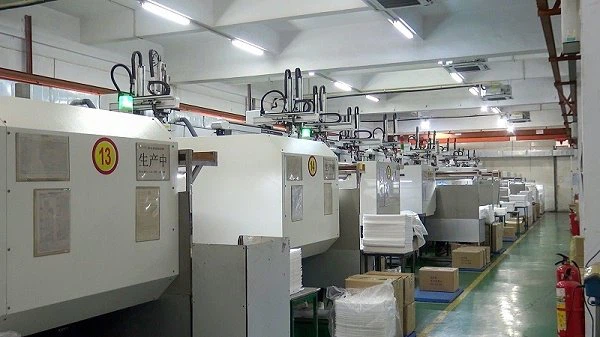
The main products of Zhongwei Precision Machinery Co., Ltd. are nylon products, plastic products, ABS series, rubber products, etc. Types of injection molding materials that can be processed: polyethylene (PE), polypropylene (PP), nylon (PA, PA6, PA66), polyoxymethylene (POM), ABS, polyurethane (TPU), polyphenylene sulfide (PPS), polystyrene Carbonate (PC), Polyetheretherketone (PEEK), etc.
Product Description
1. Implementation standards: the company strictly implements ISO9001, ISO14001, IATF16949, VDA6.3 certification, and products have passed ROHS, FDA EU certification, etc.
2. Product material standards: ISO, GB, ASTM, SAE, EN, DIN, BS, AMS, JIS, ASME, DMS, TOCT, GB
3. Main processes: plastic injection molding, metal insert injection molding, investment casting, die-casting aluminum,
4. Available materials for injection molding:
Processable nylon products, plastic products, ABS series; injection molding material types: polyethylene (PE), polypropylene (PP), nylon (PA, PA6, PA66), polyoxymethylene (POM), ABS, polyurethane (TPU), poly Phenyl sulfide (PPS), polycarbonate (PC), polyether ether ketone (PEEK) and 3D printing can be customized according to customer requirements.
Process Characteristics
Urea-formaldehyde resin, also known as urea-formaldehyde resin, or UF for short, has an average molecular weight of about 10,000. Urea and 37% formaldehyde aqueous solution can be polycondensed under the catalysis of acid or alkali to obtain linear urea-formaldehyde oligomers. Industrially, alkali is used as catalyst to react at about 95 °C, and the molar ratio of formaldehyde/urea is 1.5 to 2.0 to ensure that the resin can be cured. . The first step of the reaction generates mono- and dimethylol urea, and then the methylol and amino groups are further condensed to obtain a soluble resin. If catalyzed by an acid,resulting in a gel. The product can be stored under neutral conditions. The linear urea-formaldehyde resin can be cured at room temperature when ammonium chloride is used as the curing agent. The molding powder is heated and cured at 130-160 °C, and accelerators such as zinc sulfate, trimethyl phosphate, and diethyl oxalate can accelerate the curing process. Urea-formaldehyde resin is mainly used in the manufacture of molded plastics, daily necessities and electrical parts, and can also be used as sheet adhesives, pulp for paper and fabrics, veneer panels, and architectural decorative panels. Because of its light color and ease of coloring, the products are often rich and colorful.
Urea-formaldehyde resin has low cost, light color, high hardness, oil resistance, mildew resistance, good insulation and temperature resistance, but poor weather resistance and water resistance. It was one of the earlier thermoset resins to be developed. In 1924, it was developed by the British Cyanamide Company, and the products were sold in 1928. In the mid-1930s, the output reached 1,000 tons. In the 1980s, the world's annual output exceeded 1.5Mt.
The amount of urea-formaldehyde resin used in making plastic products only accounts for about 10% of the total output. Urea-formaldehyde resin prepared under the condition that the molar ratio of formaldehyde and urea is low, together with filler (pulp, wood flour), pigment, lubricant, curing agent, stabilizer (hexamethylenetetramine, ammonium carbonate), enhancer Plasticizer (urea or thiourea) and other components are mixed, and then dried, pulverized, ball-milled and sieved to obtain urea-formaldehyde compression molding powder. The temperature of pressing urea-formaldehyde plastic is 140-150℃, the pressure is 25-35MPa, and the pressing time varies according to the thickness of the product, generally 10-60min. Plastic products are mainly electrical lighting equipment and telephone parts.
Urea-formaldehyde resin is generally a water-soluble resin, which is easy to cure. The cured resin is non-toxic, colorless, and has good light resistance. It will not change color after long-term use, nor will it change color during thermoforming. Various colorants can be added to prepare various bright colors. 's products.
Urea-formaldehyde resin is hard, scratch-resistant, resistant to weak acids, alkalis and oils and other media. It is cheap and has a certain toughness, but it is easy to absorb water, so its water resistance and electrical properties are poor, and its heat resistance is not high.
Product Feature
Urea-formaldehyde resin is mainly used to formulate aminoalkyd baking paint with alkyd resin to improve the hardness and dryness of the paint film. It can be combined with non-drying alkyd resin to make acid curing amino paint for wood furniture finish. However, the weather resistance, water resistance and gloss retention are slightly worse. Epoxy and alkyd resins can be used to formulate primers and interior paints with different properties. Key features include:
1. The price is cheap and the raw materials are sufficient.
2. The molecular structure of urea-formaldehyde resin contains polar oxygen atoms, so it has good adhesion to the object surface. It can be used in primers and intermediate coatings to improve the adhesion between topcoats.
3. Since it can be cured at room temperature when using an acid catalyst, it can be used for two-component wood coatings.
4. The paint film cured with urea-formaldehyde resin has better flexibility.
5. Urea-formaldehyde resin has higher viscosity, higher acid value and poor storage stability.
Post Injection Molding Process
1. Processing equipment: CNC, WEDM, lathe, milling machine, drilling machine, grinder, etc.;
2. Surface treatment: For some products that require subsequent processing, we can provide surface treatment services to achieve the special purpose of customers. At present, we can provide degreasing, polishing, electroplating (gold, silver, nickel, tin, galvanized, etc.), anodizing, electrophoresis and other surface treatment services for precision parts.

Moulds and Inspection Fixtures
1. Mold service life: usually semi-permanent. (except for lost foam)
2. Mold delivery time: 10-25 days, (according to product structure and product size).
3. Tooling and mold maintenance: Zhongwei is responsible for precision parts.
Quality Control
1. Quality control: the defective rate is less than 0.1%.
2. Samples and trial run will be 100% inspected during production and before shipment, sample inspection for mass production according to ISDO standards or customer requirements
3. Testing equipment: automated visual inspection equipment can carry out 100% inspection of products, spectrum analyzer, golden elephant analyzer, three-coordinate measuring machine, hardness testing equipment, tensile testing machine.


Send Inquiry
