



Lock Metal Injection Molded Parts
Metal powder injection molding technology is a new type of powder metallurgy near-net formation technology formed by introducing modern plastic injection molding technology into the field of powder metallurgy. This process not only has the advantages of less traditional powder metallurgy process, no cutting or less cutting, and high economic benefits, but also overcomes the shortcomings of traditional powder metallurgy process products, uneven materials, low mechanical properties, difficult to form thin walls, and complex structures, especially It is suitable for mass production of small, complex and metal parts with special requirements.
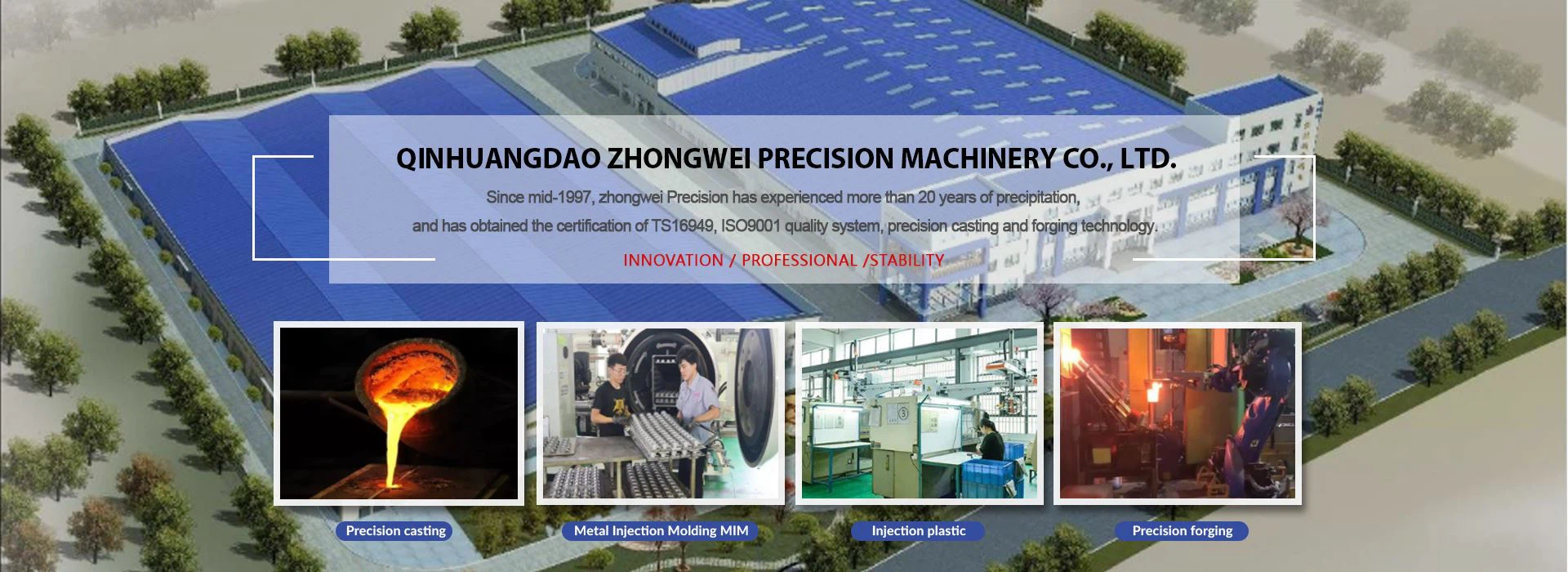
Metal powder injection molding technology is a new type of powder metallurgy near-net formation technology formed by introducing modern plastic injection molding technology into the field of powder metallurgy. This process not only has the advantages of less traditional powder metallurgy process, no cutting or less cutting, and high economic benefits, but also overcomes the shortcomings of traditional powder metallurgy process products, uneven materials, low mechanical properties, difficult to form thin walls, and complex structures, especially It is suitable for mass production of small, complex and metal parts with special requirements. Qinhuangdao Zhongwei Precision Machinery now produces Lock Metal Injection Molded Parts products: metal injection molding lock accessories, metal injection molding, metal injection molding lock tongue, metal injection molding lock cylinder rotor, metal injection molding intelligent lock cylinder and other lock products, The company is a comprehensive high-tech enterprise integrating R&D, production and sales of copper alloy, iron base, stainless steel base, aluminum alloy, nickel alloy, cobalt alloy, tungsten alloy, cemented carbide and powder metallurgy structural parts. We are willing to achieve common development with every businessman.
Process Control
Metal powder injection molding, abbreviated (MIM) has many similarities in the molding process, but metal powder injection molding also has special processing such as degreasing and sintering. Powder: The so-called powder metal material is obtained by metal atomization, which includes steel (low alloy, tool steel, stainless steel), super-resistant stainless steel, tungsten, cobalt, titanium, copper, aluminum alloy, and rare metals. Parts processed by metal powder injection molding have higher mechanical properties (tensile strength and elastic modulus) and high temperature resistance, which cannot be achieved by plastic injection molding products. However, due to metal powder (stainless steel metal powder and The price is 90~385 yuan per kilogram) and MIM forming tools are expensive, so it is necessary to reduce the use of expensive metals to make cheaper products. For example: the coordination of investment costs (large-scale products) and processing equipment (reduced use), therefore, in terms of processing relatively small size (thin-walled plastic products) and mass production, metal powder injection molding has the same obvious advantages as plastic injection molding. competitive advantage. During the sintering process of powder particles, with the continuous increase of temperature, the binders (PP, PE, POM) in the products in the early stage are gradually removed, and the particles are combined to achieve a product with a density of 97~99%. , According to the different amount of binder added, the shrinkage rate of the product before and after sintering is also different (10~20%) before, normally 16%. Parts without support areas require fixtures to maintain their shape during sintering.
What are the general types of metal injection molding molds? Generally, this method is used to process the mold using two parts. One is the cavity, which provides a concave shape. The second is the center of gravity, which gives part of the internal shape. The cost depends on the geometry achieved for the part. As a complex part, the complexity of the mold increases more expensively. In the metal injection molding process, the melt of the injection molding machine is injected into the thermoplastic mold under high pressure. Molten plastic takes shape in a mold, cools and solidifies. The formed part is ejected from the mold. The need for an ejection system pushes up a part of the mold as the part shrinks to the center of gravity as it cools. This is a mold that is generally at the center of gravity with the ejection pins. Qinhuangdao Zhongwei Precision Machinery Co., Ltd. is committed to providing tungsten alloy and titanium alloy Lock Metal Injection Molded Parts. If you need it, you can contact our company!
Select materials suitable for precision injection molding. The more important technical indicators for evaluating products are the accuracy of injection molded products (dimensional tolerances, geometric tolerances and surface finish of products). In order to inject precision plastic products, it is necessary to strictly control four major factors, including material selection, mold design, injection molding process, and operator's technical level. The precision injection molding machine requires the dimensional accuracy of the product to be generally ~, and many precision injection molding also requires the injection molding machine to have high injection pressure and high injection speed; the clamping system is required to have sufficient rigidity and high enough clamping accuracy, the so-called clamping accuracy. It refers to the uniformity, adjustment, stability and repeatability of the clamping force, and high precision of the opening and closing position; it is required to accurately control the pressure, flow, temperature, measurement, etc. Injection, to ensure the reproduction conditions of the molding process and the repeatability of the product size, etc. Factors affecting the dimensional accuracy of the product; mold accuracy; molding shrinkage; temperature, humidity and fluctuation range of the environment where the product is used. What is the ultimate goal? High mechanical strength, good dimensional stability, good creep resistance and wide environmental adaptability. There are four commonly used materials: polyoxymethylene (POM) and carbon fiber (CF) reinforced or glass fiber (GF) reinforced POM. This material is characterized by good creep resistance, fatigue resistance, weather resistance, good dielectric properties, flame retardancy, and easy demoulding by adding lubricants. Nylon (PA) and GF reinforced PA66. Features: strong impact resistance and wear resistance, good fluidity, and can be formed. GF reinforced PA66 has higher heat resistance (melting point 250℃).
Product Description
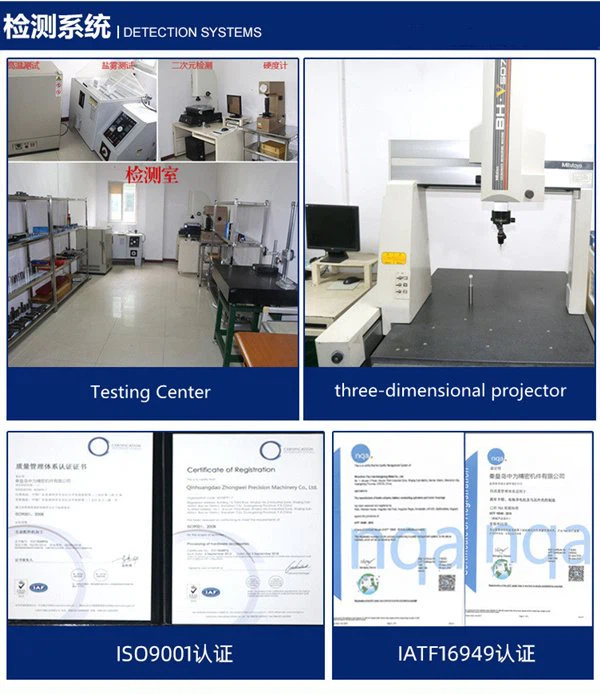
1. Implementation standards: the company strictly implements ISO9001, ISO14001, IATF16949 certification
The products have passed the certification of ROHS, FDA EU, etc.
2. Product material standards: ISO, GB, ASTM, SAE, EN, DIN, BS, AMS, JIS, ASME, DMS, TOCT, GB
3. Main processes: metal injection molding MIM, powder metallurgy PM, investment casting, die-casting aluminum,
4. Available materials for powder metallurgy:
Copper alloy, iron base, titanium alloy, stainless steel base, aluminum alloy, nickel alloy, cobalt alloy, tungsten alloy, cemented carbide, hydroxy alloy, soft magnetic material and 3D printing can be customized according to customer requirements.
Post Casting Process
1. Heat treatment: annealing, carbonization, tempering, quenching, normalizing, surface tempering
2. Processing equipment: CNC, WEDM, lathe, milling machine, drilling machine, grinder, etc.;
3. Surface treatment: powder spraying, chrome plating, painting, sandblasting, nickel plating, galvanizing, blackening, polishing, bluing, etc.

Moulds and Inspection Fixtures
1. Mold service life: usually semi-permanent. (except for lost foam)
2. Mold delivery time: 10-25 days, (according to product structure and product size).
3. Tooling and mold maintenance: Zhongwei is responsible for precision parts.

Quality Control
1. Quality control: the defective rate is less than 0.1%.
2. Samples and trial run will be 100% inspected during production and before shipment, sample inspection for mass production according to ISDO standards or customer requirements
3. Testing equipment: flaw detection, spectrum analyzer, golden image analyzer, three-coordinate measuring machine, hardness testing equipment, tensile testing machine.



Send Inquiry
