



Metal Injection Molding Watch Accessories
The global watch industry has annual sales of 15 billion US dollars, and metal powder injection molding has been closely involved in the production of many new watches. Powder injection moulded bracelets, clasps and watch holders are produced worldwide.
The global watch industry has annual sales of 15 billion US dollars, and metal powder injection molding has been closely involved in the production of many new watches. Powder injection moulded bracelets, clasps and watch holders are produced worldwide.
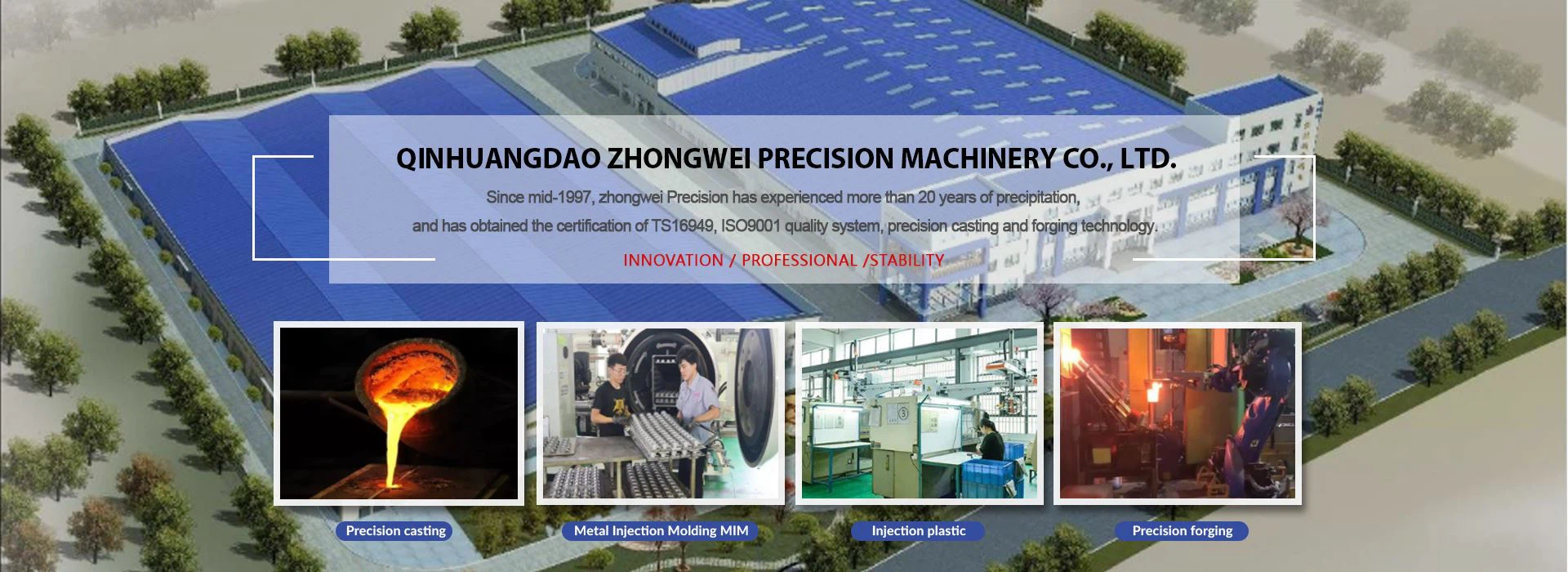
Metal Injection Molding Watch Bracelet, Metal Injection Molding Watch Holder, Metal Injection Molding Watch Buckle, Metal Injection Molding Watch Case, Metal Injection Molding Watch Accessories, Qinhuangdao Zhongwei Precision Machinery Co., Ltd. Powder Metallurgy Division was established in 2007 and is located in Hebei Province Qinhuangdao City has two production lines of metal injection molding MIM process and powder metallurgy PM. The company has independent research and development products: German Maya warp knitting machine sensor chain block, electric actuator gear, automobile oil pump rotor, washing machine transmission gear and other products , The powder metallurgy products produced cover automobiles, motorcycles, power tools, home appliances, textile machinery parts and other fields. Our company is a comprehensive high-tech enterprise integrating R&D, production and sales of copper alloy, iron base, stainless steel base, aluminum alloy, nickel alloy, cobalt alloy, tungsten alloy, cemented carbide and powder metallurgy structural parts.
Product Description
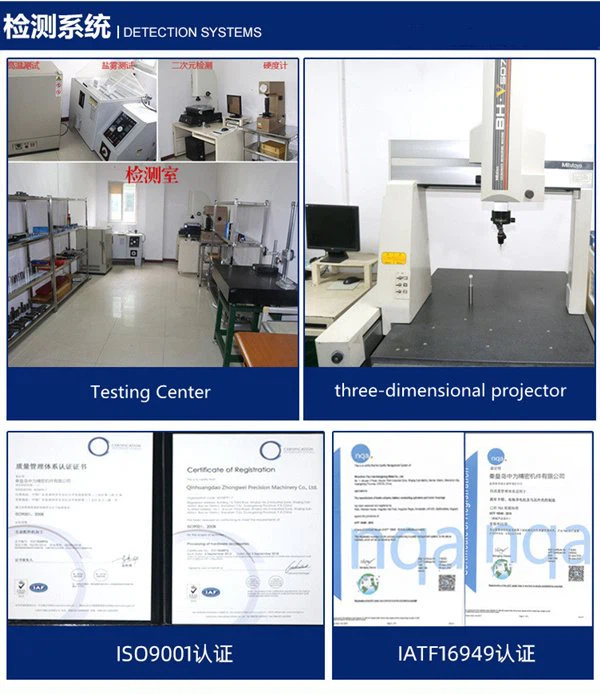
1. Implementation standards: the company strictly implements ISO9001, ISO14001, IATF16949 certification
The products have passed the certification of ROHS, FDA EU, etc.
2. Product material standards: ISO, GB, ASTM, SAE, EN, DIN, BS, AMS, JIS, ASME, DMS, TOCT, GB
3. Main processes: metal injection molding MIM, powder metallurgy PM, investment casting, die-casting aluminum,
4. Available materials for powder metallurgy:
Copper alloy, iron base, titanium alloy, stainless steel base, aluminum alloy, nickel alloy, cobalt alloy, tungsten alloy, cemented carbide, hydroxy alloy, soft magnetic material and 3D printing can be customized according to customer requirements.
Material: 17-4PH, 316, 316L, 304, 304L, titanium alloy, cobalt alloy, etc.
Tensile strength: ≥960MPa after sintering, ≥1150MPa after heat treatment
Yield strength: ≥730MPa after sintering, ≥960MPa after heat treatment
Hardness: HRC20-25 after sintering, HRC40-45 after heat treatment
Density: ≥7.80g/cm3
Process: mim, metal powder injection molding, powder metallurgy
Application: watch frame, strap, buckle, rotating shaft
Our company mainly deals in powder metallurgy products, metal powder injection molding products, MIM process manufacturing, communication parts, computer parts, smartphone product parts, wearable device parts, auto parts, medical equipment parts, lock cylinders , Power tool parts, etc.
Product Selection and Application
1. MIM technology concept
Metal powder injection molding technology (MIM for short) is a new manufacturing technology that combines powder metallurgy and plastic molding technology. It is firstly mixing the selected powder with a binder, then granulating the mixture and then injection molding the desired shape. The polymer imparts its viscous flow characteristics to the mix, which aids uniformity in forming, cavity filling and powder filling. After forming, the binder is removed, and the degreased blank is sintered. Some sintered products may also be subjected to further densification, heat treatment or machining. Sintered products not only have the same complex shape and high precision as those obtained by plastic injection molding, but also have physical, chemical and mechanical properties close to forgings. This process technology is suitable for mass production of small, precise, complex three-dimensional shapes and metal parts with special performance requirements.
2. MIM technical characteristics
Features of metal injection molding technology:
As a near-net-shape technology for manufacturing high-quality precision parts, MIM has incomparable advantages over conventional powder metallurgy and machining methods. MIM can manufacture many parts with complex shape features: such as various external grooves, external threads, tapered external surfaces, cross through holes, blind holes, recesses and key pins, rib plates, surface knurling, etc., with Parts with the above characteristics are not available by conventional powder metallurgy methods. Since parts produced by MIM require little further machining, material consumption is reduced, so MIM is more economical than machining when the number of complex-shaped parts required to be produced is higher than a certain value.
3. Comparison of MIM and precision casting forming ability
Features Precision Casting MIM
* Small hole diameter 2mm 0.4mm
2mm diameter blind hole maximum depth 2mm 20mm
* Small wall thickness 2mm <1mm
* Large wall thickness unlimited 10mm
4mm diameter tolerance ±0.2mm ±0.06mm
Surface roughness (Ra) 5μm 1μm
4. Advantages of MIM technology
As a near-net-shape technology for manufacturing high-quality precision parts, MIM technology has incomparable advantages over conventional powder metallurgy, machining and precision casting methods:
3D shape complexity comparable to plastic injection molding
High precision (±0.3%~±0.1%), generally no follow-up processing is required;
High relative density (≥95%);
Good surface finish, 32 ms or better;
The product has high mechanical properties such as strength, hardness and elongation, good wear resistance, fatigue resistance and uniform structure;
A wide selection of alloys enables the manufacture of special performance parts that cannot be produced by other technologies;
Good mechanical properties, comparable to forgings of similar materials;
High degree of production automation, simple process, stable quality, continuous mass production;
Cost* competitive advantage, usually save more than 20%, and the delivery time is shorter;
No pollution, the production process is clean process production.
5. Typical materials used in MIM process
Material system Compound number, composition Application field
Low alloy steel Fe-2Ni, Fe-8Ni Various structural parts in automobile, machinery and other industries
Stainless steel 316L ,17-4PH medical equipment, watch parts
Carbide WC-Co Various knives, clocks, watches
Ceramics Al 2 O 3 , ZrO 2 , SiO 2 IT Electronics, daily necessities, clocks
High specific gravity alloys W-Ni-Fe, W-Ni-Cu, W-Cu Military industry, communication, daily necessities
Titanium alloy Ti,Ti-6Al-4V Medical and military structural parts
Magnetic materials Fe, Fe 14 Nd 2 B, SmCo 5 Various magnetic properties
6. Application fields of MIM technology
Typical application areas
Aviation industry: aircraft wing hinge, rocket nozzle, missile tail, ceramic turbine blade core;
Automotive industry: ignition control lock parts, turbocharger rotors, valve guide parts, automotive brake parts, automotive sunshade parts;
Electronics industry: disk drive components, cable connectors, electronic packages, computer print heads, electronic packages, heat sink materials;
Military industry: mine rotors, gun plate triggers, armor-piercing bullet cores, quasi-constellations, cluster arrows and small arrows;
Medical equipment: orthodontic brackets, internal suture needles, biopsy forceps, radiation shields;
Daily products: watch cases, watch straps, buckles, golf heads and tees, sports shoe buckles, sports firearm parts, document binding punches;
Machinery industry: special-shaped milling cutters, cutting tools, micro gears.
Post Casting Process
1. Heat treatment: annealing, carbonization, tempering, quenching, normalizing, surface tempering
2. Processing equipment: CNC, WEDM, lathe, milling machine, drilling machine, grinder, etc.;
3. Surface treatment: powder spraying, chrome plating, painting, sandblasting, nickel plating, galvanizing, blackening, polishing, bluing, etc.

Moulds and Inspection Fixtures
1. Mold service life: usually semi-permanent. (except for lost foam)
2. Mold delivery time: 10-25 days, (according to product structure and product size).
3. Tooling and mold maintenance: Zhongwei is responsible for precision parts.

Quality Control
1. Quality control: the defective rate is less than 0.1%.
2. Samples and trial run will be 100% inspected during production and before shipment, sample inspection for mass production according to ISDO standards or customer requirements
3. Testing equipment: flaw detection, spectrum analyzer, golden image analyzer, three-coordinate measuring machine, hardness testing equipment, tensile testing machine.


Send Inquiry
