




Medical Metal Injection Molded Parts
Application examples of metal powder injection molding (MIM) technology in medical devices in advanced countries in Europe, America and Japan. See how international experts design metal parts with the concept of plastic injection, and make them meet the requirements of size and material.
Application examples of metal powder injection molding (MIM) technology in medical devices in advanced countries in Europe, America and Japan. See how international experts design metal parts with the concept of plastic injection, and make them meet the requirements of size and material. Zhongwei Precision can produce metal injection molding surgical forceps, metal injection molding hemostatic forceps, metal injection molding minimally invasive surgical forceps, metal injection molding medical handles, metal injection molding medical scalpels, metal injection molding titanium alloy implanted bone nails, and various Production and processing of precision parts for metal injection molded medical devices.
Qinhuangdao Zhongwei Precision Machinery Co., Ltd. is a comprehensive company integrating R&D, production and sales of copper alloy, iron base, stainless steel base, aluminum alloy, nickel alloy, cobalt alloy, tungsten alloy, cemented carbide and powder metallurgy structural parts. high-tech enterprises. We are willing to achieve common development with every businessman who needs Medical Metal Injection Molded Parts.
Product Description
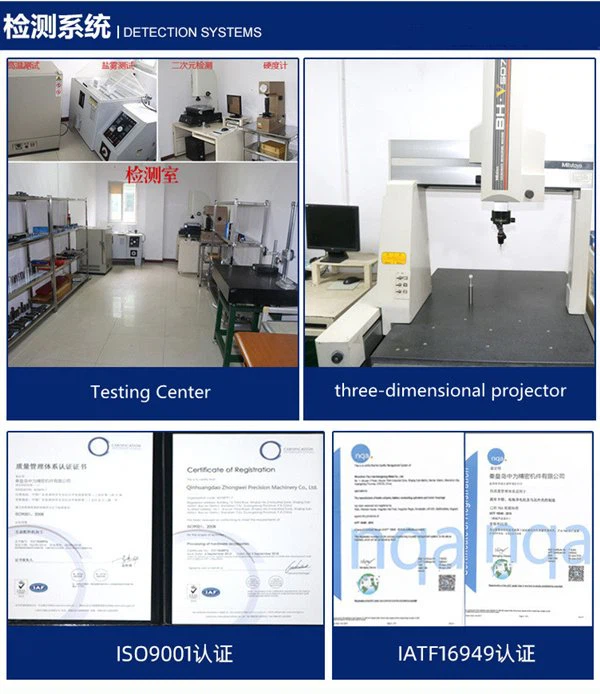
1. Implementation standards: the company strictly implements ISO9001, ISO14001, IATF16949 certification
The products have passed the certification of ROHS, FDA EU, etc.
2. Product material standards: ISO, GB, ASTM, SAE, EN, DIN, BS, AMS, JIS, ASME, DMS, TOCT, GB
3. Main processes: metal injection molding MIM, powder metallurgy PM, investment casting, die-casting aluminum,
4. Available materials for powder metallurgy:
Copper alloy, iron base, titanium alloy, stainless steel base, aluminum alloy, nickel alloy, cobalt alloy, tungsten alloy, cemented carbide, hydroxy alloy, soft magnetic material and 3D printing can be customized according to customer requirements.
Detailed explanation of products in medical devices
1. MIM process advantages
Metal powder molding belongs to the fifth-generation metal molding process, which can process products with complex shapes while ensuring accuracy and strength. Currently, it is mainly used in electronics, automobiles, medical care, daily necessities and other fields. It is one of the hotspots of current research.


(1) MIM has the following two major advantages:
①Can be designed like plastic parts
• Metal parts can be obtained by injection molding, so metal parts can be designed like plastic parts
• Plastic injection has more than 100 years of technical advantages, and now it has the advantages of mold simulation software analysis
• Plastic injection can quickly replicate parts and is a highly productive near net shape process
• Injection molding reduces material waste
• Purchase/start-up of plastic injection machine equipment is faster than other metal processing equipment
• There are many technical talents in plastic injection molding, and it is quick to transfer to MIM
②MIM part design example

Fully meet the requirements of complex shapes and special characteristics of medical device products, and have high strength
(3) Metal powder injection molding is an integrated manufacturing technology
• Modern production and management advantages - reduce the number of parts and replace the material
• Drive the way out of the upstream powder manufacturing industry—powder grading supply
• Drive domestic demand in the body industry—standardized feeding and equipment
• Drive the growth of downstream industries—integrating technology and the life of the industry chain
• The huge metal processing production and sales chain is endless
(4) MIM can realize the integration of multiple components
Due to processing technology or material properties, when some parts are manufactured by traditional technology, they need to be processed into several parts for assembly, and sometimes the materials of several parts are different. Using MIM technology can directly make an integral composite part.

The MIM process can turn the original six product assemblies into one product without positioning pins and assembly.

Originally 7 parts were designed by MIM to become one part.
2. Examples of medical applications of MIM components
●The materials and process requirements used in the medical industry have always been extremely strict. MIM components can meet the requirements of high precision, high strength, and complex modeling. However, there are still certain thresholds for entering medical devices. Let's take a look Here are the main points:
●As the US Food and Drug Administration (FDA) has strict regulations on the materials used in medical devices, MIM manufacturers must change the past usage habits of recycled feeds, strictly control and trace the number of uses
●To be able to pass the FDA's three-level use of MIM parts (third-level external use, second-level internal use but not staying, first-level implant), it must be certified for several years, and the investment is expensive
●The complex medical systems of various countries make certification difficult
●Fewer standard products, more customization, large investment in molds and limited mass production, not as good as 3C industry
●Pay attention to product insurance. Once personal safety is involved, attention should be paid to the dispute of product being retroactively compensated
●The cost of molds for small products is quite high and secondary processing is more difficult. These are all technical difficulties that must be overcome.
3. Application examples
(1) Medical minimally invasive surgical instruments
Modern advances in medicine rely on instruments. Small wounds reduce infection and speed up wound healing, greatly increasing the patient's ability to recover and reducing the risk of surgery.

Why do medical minimally invasive surgical instruments need MIM? The main summary is that medical minimally invasive surgical instruments must meet the following requirements:
●Tools must be highly rigid and capable of shearing, cutting, clamping, twisting, etc.
●Pass electric current and can heat and ultrasonic vibration
●Tools must be able to pass through holes only 5mm in diameter
●The material of the tool needs to be harmless to the human body (some consumables need to be in the body)
●Has complex features to provide necessary functionality
●Throw away after use to avoid infection, product is in demand
(2) Traditional medical machinery
The space is small, thin, and narrow, so medical tools must be made of high-strength steel materials to provide the doctor's force in various states, including the repeated action of shearing, cutting, filing, twisting, slicing, etc. To avoid tool breakage remaining in the human body, MIM can meet such requirements.

(3) Artificial joints and implants
Human beings often cause damage to hands and feet and broken bones in accidents. With the help of different MIM artificial joints and implants, their hands and feet can be reconstructed, and they can support the body and take heavy objects. This can be standardized and tailored to the physique. Manufactured using MIM technology.

Artificial kneecap made of titanium alloy
(4) Dental medical equipment - fighting in a narrow space
Toothache is not a disease. When it hurts, it can be fatal, and it can even cause a heart attack. It should not be underestimated. For dental medical instruments and tools, such as files, drills, etc., these tools can use MIM to design complex features to play their medical role.
①Orthodontic appliances - also aesthetically pleasing
Orthodontic appliances, which are exposed aids, must be aesthetically pleasing. These tiny and different sizes of aligners, such as orthodontic appliances, must stay in the mouth for a period of time and may be exposed. Attention must be paid to their aesthetics and the interests of patients have been protected. These products are all personalized products that are discarded after use or implanted and not taken out. They can be made into standard products with MIM or CIM to reduce costs and make them available to the general public.
②The tiny features of dental medical micro-devices can only be achieved by injection molding with molds
Some tiny orthodontic aids are smaller than 5mm. We can use PIM's feed zoom pen to zoom in on details by 1.2-1.3 times, and it can be mass-produced by mold making, making it affordable for the general public.
(5) External use of micro-machines
Many medical devices are designed to miniaturize industrial products. These miniaturized devices require high-strength and more durable metal components, which are the strengths of MIM.
Post Casting Process
1. Heat treatment: annealing, carbonization, tempering, quenching, normalizing, surface tempering
2. Processing equipment: CNC, WEDM, lathe, milling machine, drilling machine, grinder, etc.;
3. Surface treatment: powder spraying, chrome plating, painting, sandblasting, nickel plating, galvanizing, blackening, polishing, bluing, etc.

Moulds and Inspection Fixtures
1. Mold service life: usually semi-permanent. (except for lost foam)
2. Mold delivery time: 10-25 days, (according to product structure and product size).
3. Tooling and mold maintenance: Zhongwei is responsible for precision parts.

Quality Control
1. Quality control: the defective rate is less than 0.1%.
2. Samples and trial run will be 100% inspected during production and before shipment, sample inspection for mass production according to ISDO standards or customer requirements
3. Testing equipment: flaw detection, spectrum analyzer, golden image analyzer, three-coordinate measuring machine, hardness testing equipment, tensile testing machine.


Send Inquiry
