



PTFE Injection Molded Parts
PTFE Injection Molded Parts has more excellent chemical properties and chemical stability than other plastics. It is the most ideal material for saving and making up for non-ferrous metals and various alloys that cannot solve anti-corrosion and sealing. Camp products include nylon products, plastic products, ABS series, rubber products and so on.
PTFE Injection Molded Parts has more excellent chemical properties and chemical stability than other plastics. It is the most ideal material for saving and making up for non-ferrous metals and various alloys that cannot solve anti-corrosion and sealing. Camp products include nylon products, plastic products, ABS series, rubber products and so on. Types of injection molding materials that can be processed: polyethylene (PE), polypropylene (PP), nylon (PA, PA6, PA66), polyoxymethylene (POM), ABS, polyurethane (TPU), polyphenylene sulfide (PPS), polystyrene Carbonate (PC), Polyetheretherketone (PEEK), etc.
Product Description
1. Implementation standards: the company strictly implements ISO9001, ISO14001, IATF16949, VDA6.3 certification, and products have passed ROHS, FDA EU certification, etc.
2. Product material standards: ISO, GB, ASTM, SAE, EN, DIN, BS, AMS, JIS, ASME, DMS, TOCT, GB
3. Main processes: plastic injection molding, metal insert injection molding, investment casting, die-casting aluminum,
4. Available materials for injection molding:
Processable nylon products, plastic products, ABS series; injection molding material types: polyethylene (PE), polypropylene (PP), nylon (PA, PA6, PA66), polyoxymethylene (POM), ABS, polyurethane (TPU), poly Phenyl sulfide (PPS), polycarbonate (PC), polyether ether ketone (PEEK) and 3D printing can be customized according to customer requirements.
Product Applicable Environment
Polytetrafluoroethylene (PTFE), which has more excellent chemical properties and chemical stability than other plastics, is the most ideal material for saving and making up for non-ferrous metals and various alloy metals that cannot solve anticorrosion, sealing, etc. Its characteristics are:
1. Wide operating temperature: it can be used in the high and low temperature range of -200 ~ +250 ℃, and it can be used in mild and extremely cold industrial equipment towers, kettles, pipes, valves, containers, etc.
2. Excellent chemical stability: It is resistant to corrosion by almost all organic and inorganic compounds (except elemental fluorine, chlorine trifluoride and molten alkali metals), and has become the most ideal corrosion-resistant material in petroleum, chemical, atomic energy and other fields.
3. Excellent electrical properties: high dielectric strength, with a dielectric strength of 30 kV/mm, in a 0.1 mm thick film, the dielectric strength is 100 kV/mm, and the dielectric strength does not change with temperature.
4. Abnormal non-stick surface: due to the specific molecular structure, the surface polarity is small, and it does not adhere to general substances. The surface energy is only 18 dynes/cm. It is widely used in textile, food, paper and other light industries.
5. Low coefficient of friction and strong self-lubrication: The coefficient of friction is 0.04, and PTFE Injection Molded Parts are widely used in shipbuilding, machinery, aviation, textiles, etc.
Introduction to tetrafluoro Pall ring
Pall ring packing is a new type of packing, which is developed to improve some of the main shortcomings of Raschig rings. Six layers of rectangular small windows are opened on the wall of ordinary Raschig rings, and the small window blades overlap in the center of the ring. The upper and lower windows are overlapped with each other. The main difference between it and Raschig ring packing is that a rectangular window hole is opened on the side wall, and the vanes of the window hole are bent into the center of the ring. Due to the opening of the ring wall, the distribution performance of gas and liquid is larger than that of Raschig ring. The improvement, especially the inner surface area of the ring can be fully utilized.
PTFE Pall Ring Characteristics
High temperature resistance - the working temperature is up to 160 ℃.
Low temperature resistance - good mechanical toughness; 5% elongation can be maintained even when the temperature drops to -196°C.
Corrosion resistance - for most chemicals and solvents, it is inert, resistant to strong acids and alkalis, water and various organic solvents.
Weather Resistant - Has the best aging life of any plastic.
Non-toxic - non-toxic to living things
PTFE is polytetrafluoroethylene, a polymer of tetrafluoroethylene, which belongs to a kind of Teflon. It uses modified PTFE as the main raw material, and adds inorganic fillers such as trioxide.
PTFE is also polytetrafluoroethylene, which is a thermoplastic elastomer and has applications in sealing, but its characteristics are nothing special.
Different applications
PTFE material has the smallest surface tension among solid materials, does not adhere to any substance, and also has excellent high and low temperature resistance, which makes it widely used in anti-sticking such as making non-stick pans.
PTFE materials can be made into wear-resistant coatings, etc., which can be used continuously at 260 °C, with the highest operating temperature of 290-300 °C, extremely low friction coefficient, good wear resistance and excellent chemical stability. Because of its very good performance, it has a wide range of applications.
Properties of PTFE Materials
PTFE can only use molding and extrusion processes to make simple products, which is difficult to form, and complex products must be processed by later machine tools, which limits the production efficiency of products, and wastes too much material during processing.
PTFE has "cold flow" properties. That is, the plastic deformation (creep) of a material product under a long-term continuous load, which brings certain limitations to its application. For example, when PTFE is used as a gasket, the bolts are tightened so tightly that a certain compressive stress is exceeded, which will cause the gasket to "cold flow" (creep) and be crushed.
PTFE has a high melt viscosity and does not flow at high temperatures. It is above the melting point (327 ° C), and the melt viscosity reaches 1 010 Pa.s. Even if it is heated to the decomposition temperature, it will not flow, which makes it impossible to use the general thermoplastic molding method, but to use a sintering method similar to powder metallurgy. method to shape.
Post Injection Molding Process
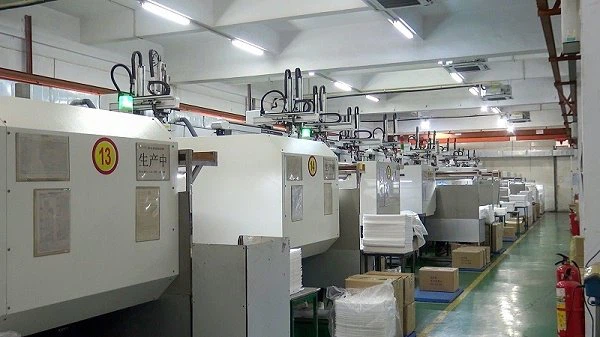
1. Processing equipment: CNC, WEDM, lathe, milling machine, drilling machine, grinder, etc.;
2. Surface treatment: For some products that require subsequent processing, we can provide surface treatment services to achieve the special purpose of customers. At present, we can provide degreasing, polishing, electroplating (gold, silver, nickel, tin, galvanized, etc.), anodizing, electrophoresis and other surface treatment services for precision parts.

Moulds and Inspection Fixtures
1. Mold service life: usually semi-permanent. (except for lost foam)
2. Mold delivery time: 10-25 days, (according to product structure and product size).
3. Tooling and mold maintenance: Zhongwei is responsible for precision parts.
Quality Control
1. Quality control: the defective rate is less than 0.1%.
2. Samples and trial run will be 100% inspected during production and before shipment, sample inspection for mass production according to ISDO standards or customer requirements
3. Testing equipment: automated visual inspection equipment can carry out 100% inspection of products, spectrum analyzer, golden elephant analyzer, three-coordinate measuring machine, hardness testing equipment, tensile testing machine.
Application
1. It is used in the electrical industry, in the aerospace, aviation, electronics, instrumentation, computer and other industries as an insulating layer for power supply and signal lines, corrosion-resistant, wear-resistant materials can be made into films, tube sheet rods, bearings, gaskets, valves and Chemical pipelines, pipe fittings, equipment container linings, etc.
2. PTFE Injection Molded Parts are used in electrical, chemical, aviation, machinery and other fields to replace quartz glassware in ultra-pure chemical analysis and storage in atomic energy, medicine, semiconductor and other industries. Various acids, alkalis and organic solvents can be made into high insulation. It can be used as additives for plastics, rubber, paints, inks, lubricating oils, greases, etc.
3. This product has high temperature resistance, corrosion resistance, excellent electrical insulation, aging resistance, low water absorption, and excellent self-lubricating performance. It is a general-purpose lubricating powder suitable for various media. It can be quickly applied to form a dry film , as a substitute for graphite, molybdenum and other inorganic lubricants. Mold release agent for thermoplastic and thermoset polymers with excellent load-carrying capacity. Widely used in the elastomer and rubber industries and in anticorrosion.
4. Used as a filler for epoxy resins to improve the wear resistance, heat resistance and corrosion resistance of epoxy adhesives.
5. Mainly used as a binder and filler for powder cakes.



Send Inquiry
