



Carbon Steel Hot Forging
Carbon steel hot forging has super toughness and flexural strength. The hook is made of super high carbon steel, which has super toughness and bending strength. The hook has been forged and pressed, the hook is sharp and not easy to break, and the penetrating force is strong.
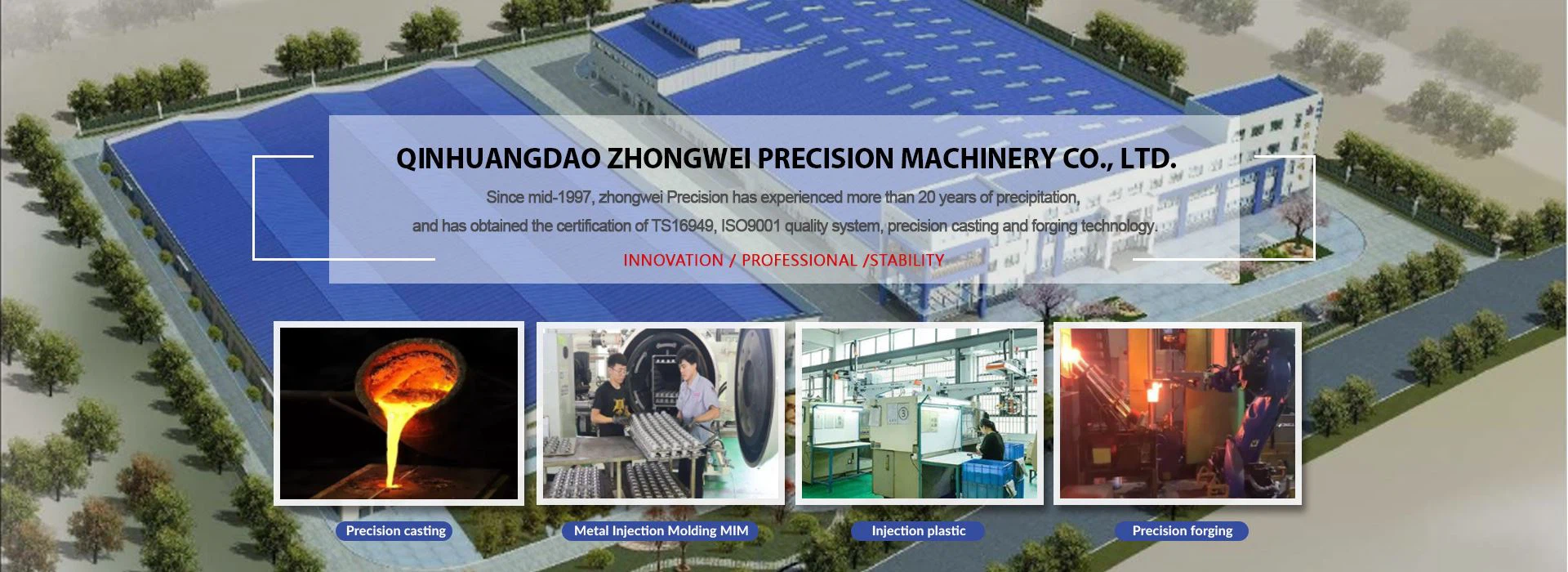
Carbon steel hot forging has super toughness and flexural strength. The hook is made of super high carbon steel, which has super toughness and bending strength. The hook has been forged and pressed, the hook is sharp and not easy to break, and the penetrating force is strong. The surface has undergone multiple treatments of special oxidation and electroplating, which has ultra-high wear resistance and excellent corrosion resistance. Qinhuangdao Zhongwei Precision Machinery Co., Ltd. is an enterprise specializing in forging, processing and production of forgings. Products can be produced according to drawings and chemical compositions, and the integration of free forging, die forging, rough machining, heat treatment and finishing is completed. Long-term cooperation with crane, petroleum, chemical, mining, metallurgy, hydraulic, coking, train, construction machinery and other enterprises.
Product Dsecription
1. Implementation standards: the company strictly implements ISO9001, ISO14001, IATF16949 certification
The products have passed the certification of ROHS, FDA EU, etc.
2. Product material standards: ISO, GB, ASTM, SAE, EN, DIN, BS, AMS, JIS, ASME, DMS, TOCT, GB
3. Main process: cold forging, hot forging, free forging, fetal membrane forging, die forging and special die forging. And has die casting process, investment casting, shell casting, deburring, sand blasting, machining, heat treatment, leak testing, surface treatment, etc.
4. Forging available materials:
Copper, titanium alloy, high manganese steel, high chromium steel, high nickel steel, carbon steel, aluminum alloy, alloy steel, stainless steel, gray iron, cast iron, cast steel, etc. are customized according to customer requirements.
Product Category
1. Carbon steel hot forging can be divided into low carbon steel, medium carbon steel and high carbon steel according to chemical composition (that is, carbon content).
⑴ Low carbon steel: also known as mild steel, carbon content from 0.10% to 0.30% low carbon steel is easy to accept various processing such as forging, welding and cutting, commonly used in the manufacture of chains, rivets, bolts, shafts, etc.
(2) Medium carbon steel: carbon steel with a carbon content of 0.25% to 0.60%. There are killed steel, semi-killed steel, boiling steel and other products. In addition to carbon, it can also contain a small amount of manganese (0.70% to 1.20%). According to product quality, it is divided into ordinary carbon structural steel and high-quality carbon structural steel. Good thermal processing and cutting performance, poor welding performance. The strength and hardness are higher than those of low carbon steel, while the plasticity and toughness are lower than those of low carbon steel. Hot-rolled and cold-drawn materials can be used directly without heat treatment, or they can be used after heat treatment.
The quenched and tempered medium carbon steel has good comprehensive mechanical properties. The highest hardness that can be achieved is about HRC55 (HB538), and σb is 600-1100MPa. Therefore, among various uses of medium strength level, medium carbon steel is the most widely used, in addition to being used as a building material, it is also widely used in the manufacture of various mechanical parts.
(3) High carbon steel: often called tool steel, with carbon content ranging from 0.60% to 1.70%, which can be hardened and tempered. Hammers, crowbars, etc. are made of steel with a carbon content of 0.75%; cutting tools such as drills, taps, reamers, etc. are made of steel with a carbon content of 0.90% to 1.00%.
2. Classification according to the quality of steel
According to the quality of steel, it can be divided into ordinary carbon steel and high-quality carbon steel.
(1) Ordinary carbon structural steel, also known as ordinary carbon steel, has wide restrictions on carbon content, performance range and content of phosphorus, sulfur and other residual elements. In China and some countries, it is divided into three categories according to the guaranteed conditions of delivery: Class A steel (Class A steel) is steel that guarantees mechanical properties. Type B steels (Type B steels) are steels with guaranteed chemical composition. Special steel (C-type steel) is a steel that guarantees both mechanical properties and chemical composition, and is often used to manufacture more important structural parts. China currently produces and uses the most A3 steel (Class A No. 3 steel) with a carbon content of about 0.20%, which is mainly used for engineering structures.
Some carbon structural steels also add a small amount of aluminum or niobium (or other carbide-forming elements) to form nitride or carbide particles to limit grain growth, strengthen the steel, and save steel. In China and some countries, in order to meet the special requirements of professional steel, the chemical composition and properties of ordinary carbon structural steel have been adjusted, and a series of professional steels of ordinary carbon structural steel (such as bridges, buildings, steel bars, steel for pressure vessels, etc.).
(2) Compared with ordinary carbon structural steel, high-quality carbon structural steel has lower content of sulfur, phosphorus and other non-metallic inclusions. According to the different carbon content and use, this kind of steel is roughly divided into three categories:
① Less than 0.25% C is low carbon steel, especially 08F, 08Al with carbon content less than 0.10%, etc., which are widely used as deep drawing parts such as automobiles and cans because of their good deep drawing and weldability. ……Wait. 20G is the main material for making ordinary boilers. In addition, low carbon steel is also widely used as carburizing steel for machinery manufacturing.
②0.25~0.60%C is medium carbon steel, which is mostly used in the quenched and tempered state to make parts in the machinery manufacturing industry.
③More than 0.6%C is high carbon steel, which is mostly used in the manufacture of springs, gears, rolls, etc. According to the different manganese content, it can be divided into ordinary manganese content (0.25-0.8%) and higher manganese content (0.7-1.0% and 0.9-1.2%) two steel groups. Manganese can improve the hardenability of steel, strengthen ferrite, and improve the yield strength, tensile strength and wear resistance of steel. Usually, "Mn" is added after the grade of steel with high manganese content, such as 15Mn, 20Mn, to distinguish it from carbon steel with normal manganese content.
3. Classification by use
According to the use, it can be divided into carbon structural steel and carbon tool steel. Carbon tool steel The carbon content is between 0.65 and 1.35%. After heat treatment, high hardness and high wear resistance can be obtained. It is mainly used to manufacture various tools, cutting tools, molds and measuring tools (see tool steel). Carbon structural steel is divided into 5 grades according to the yield strength of steel: Q195, Q215, Q235, Q255, Q275. Each grade is divided into A, B, C, D grades due to different quality. There are four types at most, and some only have one grade. ; In addition, there are differences in the deoxidation method of steel smelting. Symbol of deoxidation method: F - boiling steel b - semi-killed steel Z - killed steel TZ - special killed steel.
Post Casting Process
1. Heat treatment: annealing, carbonization, tempering, quenching, normalizing, surface tempering
2. Processing equipment: CNC, WEDM, lathe, milling machine, drilling machine, grinder, etc.;
3. Surface treatment: powder spraying, chrome plating, painting, sandblasting, nickel plating, galvanizing, blackening, polishing, bluing, etc.

Moulds and Inspection Fixtures
1. Mold service life: usually semi-permanent. (except for lost foam)
2. Mold delivery time: 10-25 days, (according to product structure and product size).
3. Tooling and mold maintenance: Zhongwei is responsible for precision parts.

Quality Control
1. Quality control: the defective rate is less than 0.1%.
2. Samples and trial run will be 100% inspected during production and before shipment, sample inspection for mass production according to ISDO standards or customer requirements
3. Testing equipment: flaw detection, spectrum analyzer, golden image analyzer, three-coordinate measuring machine, hardness testing equipment, tensile testing machine;
4. Provide after-sales service.

Application
1. Low carbon steel
Also known as mild steel, low carbon steel with carbon content from 0.10% to 0.30% is easy to accept various processing such as forging, welding and cutting, and is often used in the manufacture of chains, rivets, bolts, shafts, etc. Low carbon steel is generally rolled into angle steel, channel steel, I-beam, steel pipe, steel strip, and steel plate, which are used to make various building components, containers, boxes, furnace bodies and agricultural machinery. High-quality low-carbon steel is rolled into sheets to make deep-drawn products such as car cabs and hoods; it is also rolled into bars to make mechanical parts with low strength requirements.
2. Medium carbon steel
Carbon content (C:0.25%<Cs0.6%) can contain a small amount of manganese (0.70%~1.20%) in addition to carbon. Its thermal processing and cutting performance are good, but its welding performance is poor. The strength and hardness are higher than those of low carbon steel, while the plasticity and toughness are lower than those of low carbon steel. Therefore, among various uses of medium strength level, medium carbon steel is the most widely used, in addition to being used as a building material, it is also widely used in the manufacture of various mechanical parts. Medium carbon steel is mainly used to manufacture high-strength moving parts, such as air compressors, pump pistons, steam turbine impellers, heavy machinery shafts, worms, gears, etc., wear-resistant parts, crankshafts, machine tools Spindles, rollers, fitter tools and more.
3. High carbon steel
Carbon content (C: 0.6%~1.3%) is often called tool steel. The carbon content ranges from more than 0.60% to 1.70%, which can be hardened and tempered. Hammers, crowbars, etc. are made of steel with a carbon content of 0.75%; cutting tools such as drills, taps, reamers, etc. are made of steel with a carbon content of 0.90% to 1.00%. The higher the carbon content, the greater the hardness and strength, but the lower the plasticity.


Send Inquiry
