



Aluminum Alloy Forging Auto Parts
Aluminum alloy forging auto parts is a processing method that uses forging machinery to apply pressure to metal blanks to produce plastic deformation to obtain forgings with certain mechanical properties, shape and size.
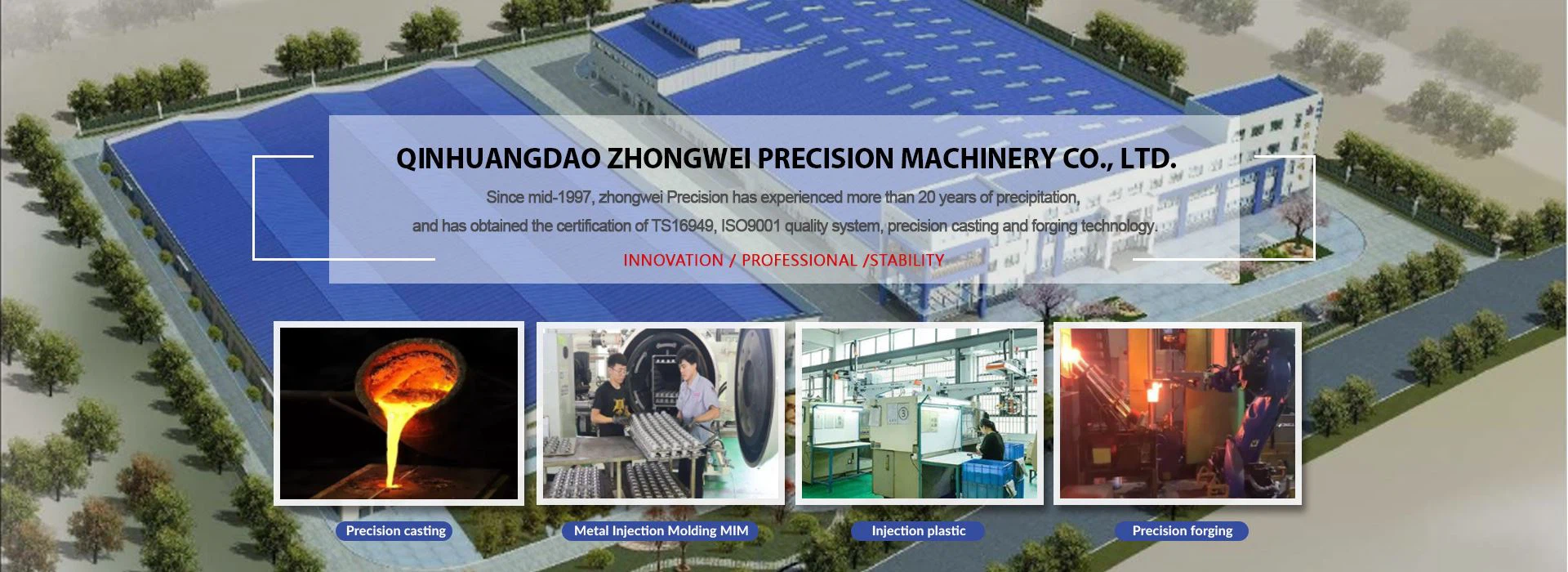
Aluminum alloy forging auto parts is a processing method that uses forging machinery to apply pressure to metal blanks to produce plastic deformation to obtain forgings with certain mechanical properties, shape and size. It is one of two parts of forging pressure (forging and stamping). Forging can eliminate defects such as loose metal casting during the smelting process and optimize the microstructure. At the same time, the mechanical properties of forgings are generally better than castings of the same material, because it preserves the complete metal flow line. Except for rollable sheets, profiles or welded parts, forgings are mainly used for important parts with high relative mechanical loads and severe working conditions. Qinhuangdao Zhongwei Precision Machinery Co., Ltd. is an enterprise specializing in forging, processing and production of forgings. Products can be produced according to drawings and chemical compositions, and the integration of free forging, die forging, rough machining, heat treatment and finishing is completed. Long-term cooperation with crane, petroleum, chemical, mining, metallurgy, hydraulic, coking, train, construction machinery and other enterprises.
Product Description
1. Implementation standards: the company strictly implements ISO9001, ISO14001, IATF16949 certification
The products have passed the certification of ROHS, FDA EU, etc.
2. Product material standards: ISO, GB, ASTM, SAE, EN, DIN, BS, AMS, JIS, ASME, DMS, TOCT, GB
3. Main process: cold forging, hot forging, free forging, fetal membrane forging, die forging and special die forging. And has die casting process, investment casting, shell casting, deburring, sand blasting, machining, heat treatment, leak testing, surface treatment, etc.
4. Aluminum alloy forging auto parts Available materials:
Copper, titanium alloy, high manganese steel, high chromium steel, high nickel steel, carbon steel, aluminum alloy, alloy steel, stainless steel, gray iron, cast iron, cast steel, etc. are customized according to customer requirements.
What are the requirements for aluminum alloy forging auto parts?
Forging is usually divided into free forging, membrane forging and die forging. Each forging method has its own characteristics and scope of application. When choosing a forging method, the most reasonable method must be adopted based on the requirements of the product components (quantity, processing requirements, size and shape, etc.) in the drawings and the actual situation of the existing production conditions (region, unit). For example, single piece, small, complex and large forgings are mostly free forgings; for mass production or small batches, die forgings or die forgings are used; for mass production, die forgings or other special die forgings (such as extrusion) should be used. , rolling, roll forging, etc.). In short, according to the results of process and economic analysis, select a reasonable, feasible, energy-saving, energy-saving and efficient forging process plan.
1.Strength requirements: factors such as the strength, complexity, surface roughness and quality of the parts need to be considered. The strength requirements are not high, the shape is complex, and casting is used; the shape is simple, the strength requirements are high, and forging is used. However, when the shape of the parts is complex and the casting cannot guarantee the strength, the forging method is still used. The combination of forging and machining can obtain parts with small surface roughness values and high precision.
2. Annual output: what kind of forging method depends on the annual output of forgings. The annual output test is very small, and can be forged freely; the annual output is small, and the tire is forged; the output is large, and the die forging is used; the annual output is large, and the special die forging production line is available.
3. Shape and size: The shape and size of die forgings will determine the type of equipment used for die forging, that is, each type of die forging equipment is suitable for typical forgings:
① Die forging hammer is suitable for forging gears, shafts, connecting rods and bending parts and fork parts with complex shapes;
②The hot die forging press is suitable for forging gears and long shafts with little change in section. If roll forging blanks are used, long shafts with large cross-section changes can also be forged;
③ The flat forging machine is suitable for forging partial rolling parts with rods and forgings with holes.
4. Workpiece material: it will determine the blanking process, heating temperature, cold trimming or hot trimming, and heat treatment process.
5. Accuracy: Machining allowance and forging tolerance will be determined.
6. Hardness: will determine the heat treatment process.
7. Surface roughness: decide whether to use machining.
8. Cleaning method: The cleaning method is determined by comprehensive factors such as the shape, size, material and hardness of the parts.
9. Equipment condition: Although a certain plastic equipment has its suitable typical forgings, it also depends on the specific situation. If the forgings on the flat forging machine are more suitable, but there is no flat forging machine in the workshop and the output is not large, the die forging can be replaced on other equipment.
Post Casting Process
1. Heat treatment: annealing, carbonization, tempering, quenching, normalizing, surface tempering
2. Processing equipment: CNC, WEDM, lathe, milling machine, drilling machine, grinder, etc.;
3. Surface treatment: powder spraying, chrome plating, painting, sandblasting, nickel plating, galvanizing, blackening, polishing, bluing, etc.

Moulds and Inspection Fixtures
1. Mold service life: usually semi-permanent. (except for lost foam)
2. Mold delivery time: 10-25 days, (according to product structure and product size).
3. Tooling and mold maintenance: Zhongwei is responsible for precision parts.

Quality Control
1. Quality control: the defective rate is less than 0.1%.
2. Samples and trial run will be 100% inspected during production and before shipment, sample inspection for mass production according to ISDO standards or customer requirements
3. Testing equipment: flaw detection, spectrum analyzer, golden image analyzer, three-coordinate measuring machine, hardness testing equipment, tensile testing machine;
4. Provide after-sales service.


Send Inquiry
