



Hot Forging
Starting from the source, with rigorous production technology and strict testing process, we have controlled every link for every product of the user, and won the trust of domestic and foreign customers with good product quality and service. Forging products are exported to South Korea, Japan, Russia, Brazil, Africa, Germany, Australia, Europe and other countries.
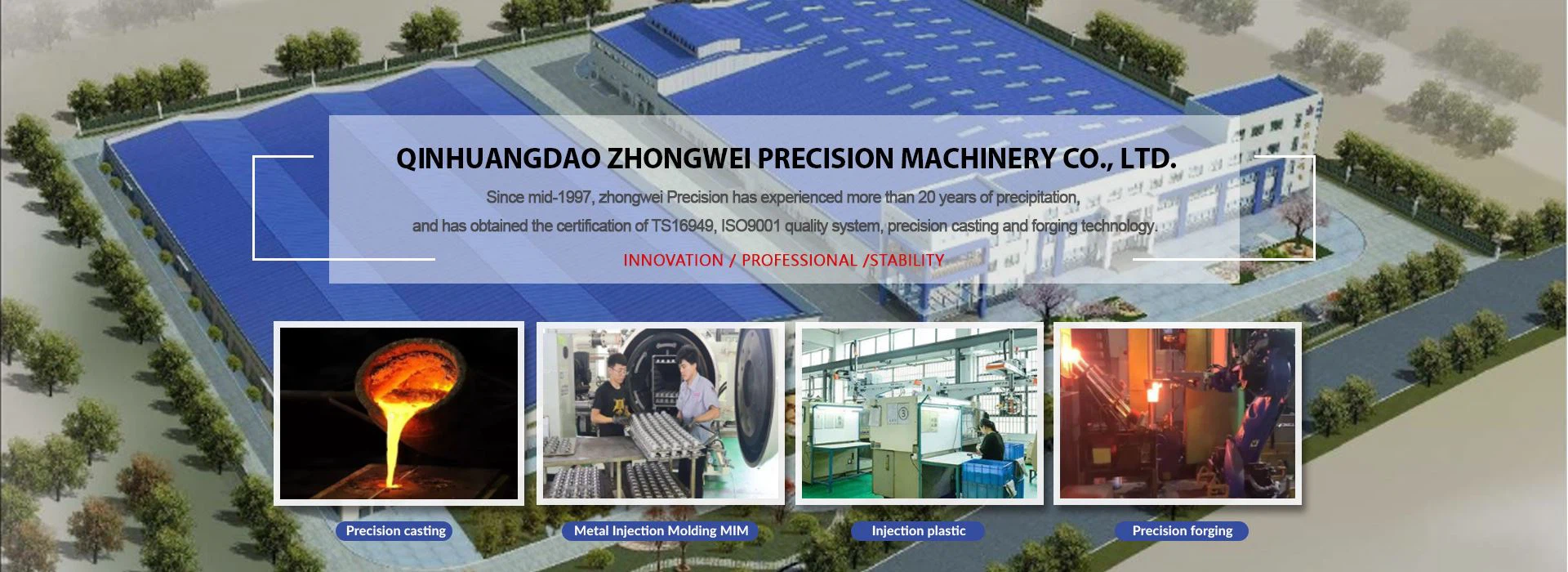
Qinhuangdao Zhongwei Precision Machinery Co., Ltd. is an enterprise specializing in forging, processing and production of forgings. Products can be produced according to drawings and chemical compositions, and the integration of free forging, die forging, rough machining, heat treatment and finishing is completed. Long-term cooperation with crane, petroleum, chemical, mining, metallurgy, hydraulic, coking, train, construction machinery and other enterprises. Supporting the production of wheels, pulleys, sprockets, gears, ring gears, rings, cylinders, shafts, cylinders, blocks, modules, support seats, flanges and other forging products.
The company adheres to the concept of quality assurance and service first, and consistently insists on making forgings with a good attitude. Starting from the source, with rigorous production technology and strict testing process, we have controlled every link for every product of the user, and won the trust of domestic and foreign customers with good product quality and service. Forging products are exported to South Korea, Japan, Russia, Brazil, Africa, Germany, Australia, Europe and other countries.
Product Dsecription
1. Implementation standards: the company strictly implements ISO9001, ISO14001, IATF16949 certification
The products have passed the certification of ROHS, FDA EU, etc.
2. Product material standards: ISO, GB, ASTM, SAE, EN, DIN, BS, AMS, JIS, ASME, DMS, TOCT, GB
3. Main process: cold forging, hot forging, free forging, fetal membrane forging, die forging and special die forging. And has die casting process, investment casting, shell casting, deburring, sand blasting, machining, heat treatment, leak testing, surface treatment, etc.
4. Hot forging available materials:
Copper, titanium alloy, high manganese steel, high chromium steel, high nickel steel, carbon steel, aluminum alloy, alloy steel, stainless steel, gray iron, cast iron, cast steel, etc. are customized according to customer requirements.
Order Process for Hot Forgings
The company has established a quality system in strict accordance with the ISO9001 standard, and obtained a certificate through the audit of the certification center. All departments of the company strictly implement the regulations and requirements of quality documents and technical documents such as "Quality Manual" and "Procedural Documents", conscientiously perform quality responsibilities, and effectively carry out various productions.
1. Contract conversion:
According to the reviewed contract, the "Production Task List" is prepared, and the technical department prepares drawings according to the contract requirements to clarify the technical requirements of the forging products, and formulates the blanking process, forging process, and heat treatment process according to the material and performance requirements, and executes as required.
2. Control and verification of raw materials:
After the raw materials arrive at the factory, the raw materials will be re-inspected, and the specifications, surface quality, and logos (mainly referring to materials and furnace numbers) will be inspected. After passing the inspection, they will be sent to the relevant departments for comprehensive inspection of the materials and issue relevant reports.
3. Production process control:
The inspector inspects each step of the process, and the products that pass the inspection are transferred to the order according to the "flow card with the piece" signed by the inspector.
(1) Sawing and cutting: Saw cutting and cutting in strict accordance with the "Cutting Task List", and make inspection records. Only after passing the test can batch sawing.
(2) Heating: Products with different materials and different furnace numbers cannot be heated in the same furnace.
(3) Forging: The operator performs the forging according to the drawings, and uses an infrared thermometer to control the forging temperature of the forging during the forging process.
(4) Heat treatment: verify the thermocouple and temperature instrument according to the cycle. Strictly follow the process parameters and cooling methods specified in the heat treatment process, such as the heating rate, holding temperature, holding time, etc.
(5) Machining: processing according to the drawings, and mass production after the first inspection is qualified. In the process of processing, inspectors conduct inspections and conduct random inspections of processed products.
(6) Inspection before packaging: full-time inspectors will inspect the size, surface quality and logo of the machined products strictly according to the drawings, and then re-inspect the products to prevent confusion.
(7) Packaging process:
① Typing: Type according to the typing notice in the "Production Task List". After the self-inspection of the first piece, the full-time packaging inspector will carry out the first piece inspection. After passing the test, batch typing will be carried out. During the process, the clarity of the handwriting will be sampled to ensure that the typing is clear and tidy. .
②Anti-rust treatment: Anti-rust treatment (oiling, painting, etc.) is carried out according to customer requirements, the operator conducts self-inspection as required, and full-time packaging inspectors conduct first-piece inspection, patrol inspection, and process for anti-rust treatment and surface quality as required If it is qualified, it will enter the packing process, otherwise it will be reworked.
4. Control of unqualified products:
For unqualified products, inspectors will identify and isolate them, fill in the "Unqualified Handling Form" and hand them over to authorized personnel for processing, and strictly follow the "Unqualified Product Control Procedures" to ensure that unqualified products are identified and controlled to prevent unexpected use or deliver.
Post Casting Process
1. Heat treatment: annealing, carbonization, tempering, quenching, normalizing, surface tempering
2. Processing equipment: CNC, WEDM, lathe, milling machine, drilling machine, grinder, etc.;
3. Surface treatment: powder spraying, chrome plating, painting, sandblasting, nickel plating, galvanizing, blackening, polishing, bluing, etc.

Moulds and Inspection Fixtures
1. Mold service life: usually semi-permanent. (except for lost foam)
2. Mold delivery time: 10-25 days, (according to product structure and product size).
3. Tooling and mold maintenance: Zhongwei is responsible for precision parts.

Quality Control
1. Quality control: the defective rate is less than 0.1%.
2. Samples and trial run will be 100% inspected during production and before shipment, sample inspection for mass production according to ISDO standards or customer requirements
3. Testing equipment: flaw detection, spectrum analyzer, golden image analyzer, three-coordinate measuring machine, hardness testing equipment, tensile testing machine;
4. Provide after-sales service.
5. The quality can be traced back.

Application
Hot forging can be applied to gear industry, gear industry, construction machinery industry, rail transit industry, marine engineering equipment industry, etc.
(1) Gear industry
Gear is an important basic part of equipment machinery. The main transmission components of most complete sets of machinery are gears. The characteristics of gear transmission are precision, high efficiency, safety, reliability and superior cost performance. At present, gear products are basically divided into three categories: vehicle gears, industrial general-purpose gears and industrial-specific gears.
(2) Gear industry
Wind power generation is one of the most mature technologies, the most large-scale development conditions and commercial development prospects in the field of renewable energy, and the available wind energy is widely distributed around the world and has huge reserves. In recent years, with the international community's increasing attention to energy security, ecological environment, abnormal climate and other fields, as well as the continuous maturity of wind power-related technologies and the continuous upgrading of equipment, the global wind power industry has continued to develop rapidly.
(3) Construction machinery industry
Since 2019, in the face of the complex international environment and the situation of domestic economic downward pressure, the construction machinery industry, with the help of a stable and positive macro economy and continuous and stable investment in fixed assets, has further shown the results of industry transformation and upgrading, and the second-hand equipment in the market has accelerated. Under the superimposed influence of many factors such as renewal, the positive effect of air pollution prevention and environmental protection policies on the market, the “One Belt, One Road” construction driving export growth, and the promotion and application of new technologies and new construction methods in the construction field, the prosperity of the construction machinery industry is at a relatively high level. , the demand in downstream industries is strong, and the sales volume of various products has increased year-on-year, among which the sales growth rate of excavators has continued to maintain a high level.
(4) Rail transit industry
Rail transit refers to the mode of transportation in which fixed rails are laid and transportation tasks are performed by rail vehicles. Forgings are mainly used in equipment manufacturing in the middle reaches of the rail transit industry chain, and are the main components of transmission gears, bogies, wheels, axles, etc. in rail transit equipment such as high-speed rail and motor trains...
(5) Offshore engineering equipment industry
From the perspective of the industrial chain, the industrial chain of marine engineering equipment consists of main links such as upstream marine engineering equipment foundation (including design, raw materials, anti-corrosion coatings and equipment support), midstream marine engineering equipment manufacturing and downstream engineering general charter services. Forgings are mainly used in equipment manufacturing in the middle reaches of the marine engineering industry chain, and are the main components of marine climbing gears, transmission gears and other parts...


Send Inquiry
