



Copper Alloy Hot Forgings
"Red Chong" is actually a kind of hot extrusion process, and it is also a kind of copper forging, because in the pipeline hardware production industry, if someone mentions "hot extrusion", not many people can immediately understand its meaning.
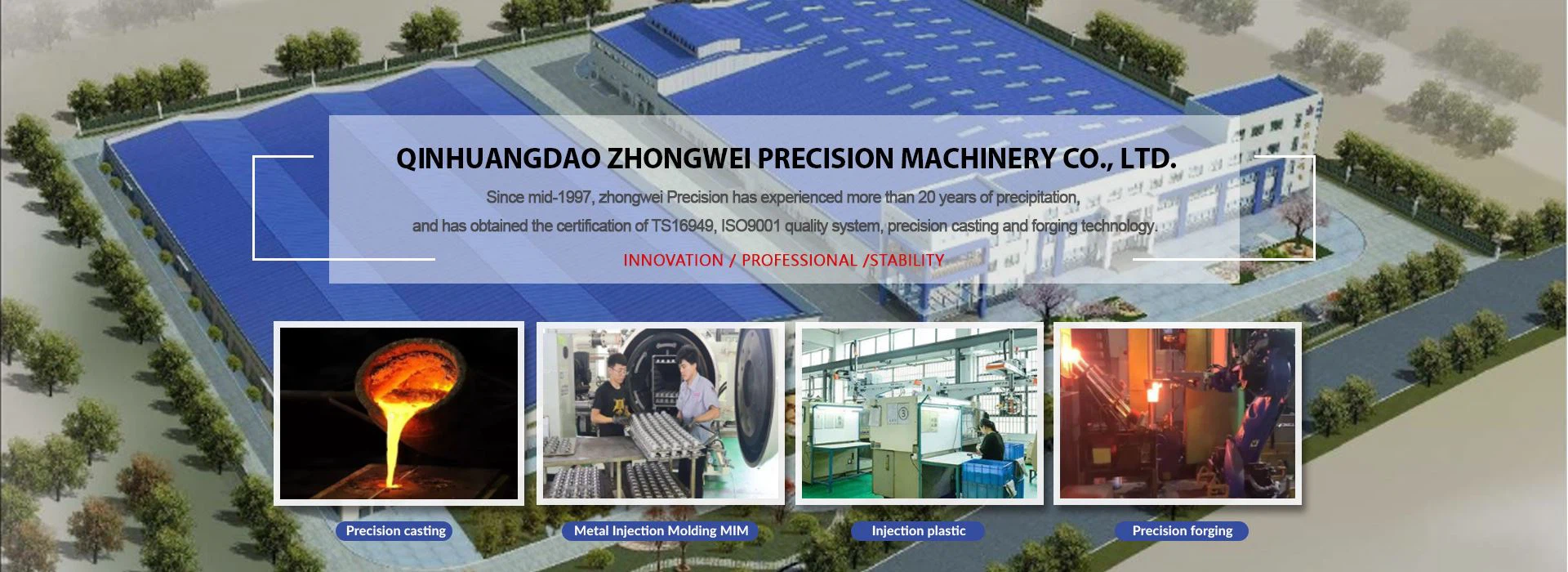
"Red Chong" is actually a kind of hot extrusion process, and it is also a kind of copper forging, because in the pipeline hardware production industry, if someone mentions "hot extrusion", not many people can immediately understand its meaning. When it comes to the word "Red Chong", then the insider knows what kind of craft it is? What kind of mold? Which product is produced? Qinhuangdao Zhongwei Precision Machinery Co., Ltd. is an enterprise specializing in forging, processing and production of forgings. Copper alloy hot forgings can be produced according to the drawings and chemical composition, and the integration of free forging, die forging, rough machining, heat treatment and finishing is completed. Long-term cooperation with crane, petroleum, chemical, mining, metallurgy, hydraulic, coking, train, construction machinery and other enterprises.
Product Description
1. Implementation standards: the company strictly implements ISO9001, ISO14001, IATF16949 certification
The products have passed the certification of ROHS, FDA EU, etc.
2. Product material standards: ISO, GB, ASTM, SAE, EN, DIN, BS, AMS, JIS, ASME, DMS, TOCT, GB
3. Main process: cold forging, hot forging, free forging, fetal membrane forging, die forging and special die forging. And has die casting process, investment casting, shell casting, deburring, sand blasting, machining, heat treatment, leak testing, surface treatment, etc.
4. Forging available materials:
Copper, titanium alloy, high manganese steel, high chromium steel, high nickel steel, carbon steel, aluminum alloy, alloy steel, stainless steel, gray iron, cast iron, cast steel, etc. are customized according to customer requirements.
Process Of Copper Alloy Hot Forging
"Red Chong" is a new noun, and it is difficult to find the source of its noun in the dictionary. Because the red punching process is an advanced professional process just developed on the basis of modern precision forging and hot extrusion. With the advancement of society and the development of science and technology, the machinery industry has put forward new mechanical strength requirements for mechanical parts. To improve the mechanical strength, two methods are generally used, one is to change the material of the parts, and the other is to change its processing method. The red punching process is one of the effective ways to improve the mechanical properties of parts by changing the processing method, so it has strong vitality and good development prospects like its forging process. The red punching process, like the precision forging process, heats the metal blank and places it in the mold to form, but the red punching is generally one-time forming except for the large red punching parts, while the precision forging is generally formed by several pressures. Compared with the hot extrusion process, the metal blank also needs to be heated. The hot extrusion die is basically the same as the cold extrusion die. The flow of the metal material in the cavity is relatively simple, and the shape of the formed parts is mostly the same as that of the cold extrusion. The cold extrusion parts are similar, and they tend to form parts with simpler shapes, while the structure of the red punching die is more complicated than that of the hot extrusion die. Compression molding cavity extrusion die, and can perform multi-directional demoulding action at one time, it forces the metal material to pass through the complex flow in the cavity under strong enough pressure, and extrudes the imaging cavity mold (injection mold) A complex part of that shape. Therefore, the red punching process is a deeper and broader development of the precision forging and hot extrusion processes.
Product Feature
1) The forming is basically not limited by the external shape of the copper alloy hot forgings part itself;
2) The production uses common equipment, which is easy to put into production and suitable for small and medium-sized enterprises;
3) High productivity, suitable for mass production;
4) Due to the core pulling device, the inside of the pressed part is hollow, not as solid as the part processed by the forging die, and the burr thickness of the general small red die is about 0.5mm, while the forging die The burr thickness of the parts is generally more than 2mm, so the material utilization rate is much higher than that of the forging die;
5) Red punching is a processing technology with little or no cutting. The surface roughness is close to that of the mold, and the dimensional accuracy can reach grade 6-7, so its mechanical cutting amount is very small;
6) The mechanical properties of red punching parts are good, because the metal blank is heated, extruded and cooled after red punching, and its metal structure changes, which eliminates the original defects caused by casting or drawing, and makes the internal crystal structure of the part. The linear shape from the inside to the outside improves the mechanical properties of the red punched parts;
7) For the parts after red punching, the internal grains of the metal are refined, the density of the metal is enhanced, and the corrosion resistance of the parts is improved;
8) Suitable for all kinds of colored or black metal processing.
Because the red punching process requires less investment, high production efficiency, high quality parts, and is suitable for mass production, it has produced good economic results. For example, the red punching process has been widely used in the production of daily hardware industry, such as various valves, fittings, nuts, etc. in the pipe hardware made of copper red punching, with its unparalleled quality advantages , has replaced the products that have been produced by die casting or casting in the past.
Hongchong, generally used in Zhejiang's manufacturing industry, especially the pipe hardware production industry, is a broad term.
Post Casting Process
1. Heat treatment: annealing, carbonization, tempering, quenching, normalizing, surface tempering
2. Processing equipment: CNC, WEDM, lathe, milling machine, drilling machine, grinder, etc.;
3. Surface treatment: powder spraying, chrome plating, painting, sandblasting, nickel plating, galvanizing, blackening, polishing, bluing, etc.

Moulds and Inspection Fixtures
1. Mold service life: usually semi-permanent. (except for lost foam)
2. Mold delivery time: 10-25 days, (according to product structure and product size).
3. Tooling and mold maintenance: Zhongwei is responsible for precision parts.

Quality Control
1. Quality control: the defective rate is less than 0.1%.
2. Samples and trial run will be 100% inspected during production and before shipment, sample inspection for mass production according to ISDO standards or customer requirements
3. Testing equipment: flaw detection, spectrum analyzer, golden image analyzer, three-coordinate measuring machine, hardness testing equipment, tensile testing machine;
4. Provide after-sales service.

Application
Copper is a non-ferrous metal that is very close to human beings. It is not only rich in natural resources, but also has excellent electrical conductivity, thermal conductivity, ductility, corrosion resistance, wear resistance and other excellent properties. Copper alloy hot forgings are widely used. Electricity, electronics, power and petrochemicals, machinery and metallurgy, transportation, light industry, emerging industries and other fields are second only to aluminum in the consumption of non-ferrous metal materials in my country.
The main condenser tube sheets and condenser pipes of power industrial thermal power plants are made of brass, bronze or cupronickel. Solar heaters are also often made of copper pipes. Petrochemical industry copper and many copper alloys, many used to make various containers, piping systems, filters, pumps and valves, various evaporators, heat exchangers and condensers that touch corrosive media. In the marine industry, copper is not only resistant to seawater corrosion, but also has a bactericidal effect of copper ions dissolved in the water, which can avoid marine biological fouling. Therefore, copper and its copper alloys are very important materials in the marine industry, and have also been used in seawater desalination plants, Widely used in marine oil and gas production channels and other coastal and subsea equipment, such as pipeline systems, pumps and valves used in seawater desalination processes, and equipment used in oil and gas production channels, including splash zone and underwater bolts, anti-corrosion Biofouling envelopes, pump valves and piping systems, etc.
1. Transportation Occupation
Aluminum bronze in the marine industry Copper alloys include aluminum bronze, manganese bronze, aluminum brass, gunmetal (tin-zinc bronze), cupronickel and nickel-copper alloy (Monel alloy), etc., all of which are classified as standard materials for shipbuilding. In warships and merchant ships, copper and copper alloys are generally used as aluminum bronze propellers, bolts, condenser pipes, rivets, and copper-containing clad paints. In the automotive industry, copper and copper alloys are mainly used for radiators, brake system pipelines, hydraulic equipment, gears, bearings, power distribution and power systems, brake pads, gaskets, and various joints, accessories and trims. Motors, rectifiers, control, braking, electrical and signaling systems on railway trains also rely on copper and copper alloys to work. In addition, the electrification of railways is in high demand for copper and copper alloys. The wiring, hydraulic, cooling and pneumatic systems in the aircraft need to use copper, the bearing retainer and landing gear bearings are made of aluminum bronze pipes, and the navigation surface is made of diamagnetic copper alloy.
2. Machinery and metallurgical industry
In addition to copper used in motors, circuits, hydraulic systems, air pressure systems and control systems in mechanical engineering, various transmission parts and fixing parts, such as cylinder liners, connecting parts, fasteners, gears, twisting parts, etc., all require Grinding and smoothing in copper or copper alloys. The key component in the continuous casting technology of metallurgical equipment - the crystallizer, is mostly made of high-strength and high thermal conductivity copper alloys such as chromium copper and silver copper. , All kinds of induction heating induction coils are made of copper tubes or special-shaped copper tubes, and the inside is cooled by water. Alloy Additive Copper is an important additive element in alloys such as steel and aluminum. The addition of a small amount of copper to low-alloy structural steel can improve the strength of the steel and its resistance to atmospheric and marine corrosion. Adding copper to corrosion-resistant cast iron and stainless steel can further improve their corrosion resistance.
3. Application in light industry
Copper and copper alloys can be used to make heat exchangers of air conditioners, wall clock movements, mesh cloths of paper machines, rollers, printed copper plates, linings of fermentation tanks, stills, building decoration components, etc.


Send Inquiry
