



Alloy Steel Hot Forgings
In addition to iron and carbon, Alloy Steel Hot Forgings steel is called alloy steel by adding other alloying elements. An iron-carbon alloy formed by adding an appropriate amount of one or more alloying elements on the basis of ordinary carbon steel.
In addition to iron and carbon, Alloy Steel Hot Forgings steel is called alloy steel by adding other alloying elements. An iron-carbon alloy formed by adding an appropriate amount of one or more alloying elements on the basis of ordinary carbon steel. According to the difference of added elements and appropriate processing technology, special properties such as high strength, high toughness, wear resistance, corrosion resistance, low temperature resistance, high temperature resistance, and non-magnetic properties can be obtained.
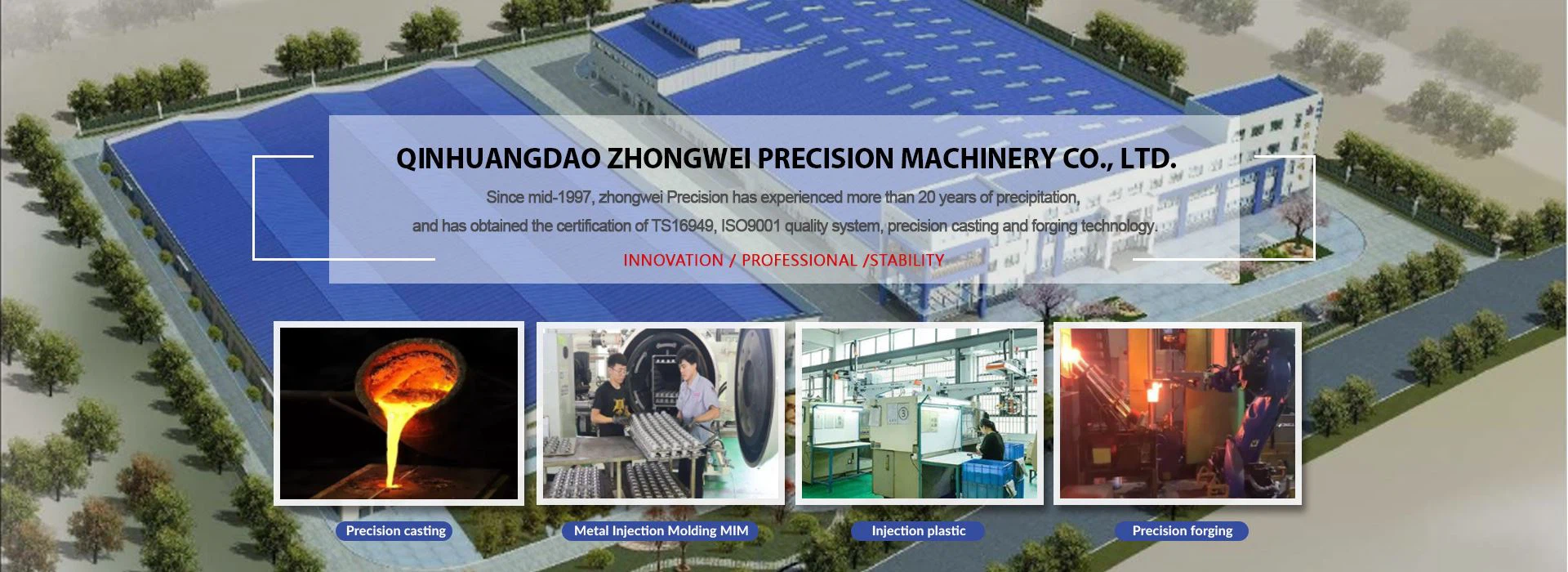
Qinhuangdao Zhongwei Precision Machinery Co., Ltd. is an enterprise specializing in forging, processing and production of forgings. Products can be produced according to drawings and chemical compositions, and the integration of free forging, die forging, rough machining, heat treatment and finishing is completed. Long-term cooperation with crane, petroleum, chemical, mining, metallurgy, hydraulic, coking, train, construction machinery and other enterprises.
Product Dsecription
1. Implementation standards: the company strictly implements ISO9001, ISO14001, IATF16949 certification
The products have passed the certification of ROHS, FDA EU, etc.
2. Product material standards: ISO, GB, ASTM, SAE, EN, DIN, BS, AMS, JIS, ASME, DMS, TOCT, GB
3. Main process: cold forging, hot forging, free forging, fetal membrane forging, die forging and special die forging. And has die casting process, investment casting, shell casting, deburring, sand blasting, machining, heat treatment, leak testing, surface treatment, etc.
4. Alloy Steel Hot Forgings Available Materials:
Copper, titanium alloy, high manganese steel, high chromium steel, high nickel steel, carbon steel, aluminum alloy, alloy steel, stainless steel, gray iron, cast iron, cast steel, etc. are customized according to customer requirements.
Performance and Application
Forging steel can be divided into carbon steel, low alloy steel, medium alloy steel and high alloy steel, etc. Different steels have different properties and uses. Such as 5CrMnMo, 3Cr2W8V steel for making hot forging dies; 1Cr13, 2Cr13, 3Cr13, 4Cr13 steel for medical tools; 1Cr18Ni9, 1Cr18Ni9Ti steel for corrosion-resistant parts; Mn13 steel for wear-resistant parts; for high temperature 5CrMo, 4Cr10Si2Mo steel for parts; or 304, 304L, 316, 316L, 2205, 45, 42CrMo, 27SiMn, 40CrNiMo, 40Cr, Q345B/C/D/E, GCr15 steel for barrel forgings; or for gear forgings 40Cr, 42CrMo, 20CrMnMo, 20CrMnTi, 42CrMo, 40Cr steel, etc.
Here are some common forging steels for simple analysis.
1.20SiMn
It has certain strength and toughness, good machinability and good weldability. Can replace 27SiMn and 45 steel; suitable for electroslag welding, single hydraulic props and parts with large section wall thickness; tensile strength ≥ 450; yield strength ≥ 255; elongation ≥ 14; impact energy ≥ 39; section size (diameter or thickness): 600~900mm; common heat treatment method: normalizing + tempering.
2.35SiMn
It has high strength, wear resistance, toughness and fatigue resistance, good machinability, good hardenability, poor welding performance, and medium cold deformation plasticity. Good economy, can completely replace 40Cr, and can also partially replace 40CrNi steel; generally used for various small and medium shafts and gears, such as transmission gears, main shafts, spindles, rotating shafts, connecting rods, worms, tram shafts, generator shafts , crankshaft, flywheel, hub, impeller, hoe handle, plough shaft, thin-walled seamless steel pipe. Various important fasteners and large and small forgings; tensile strength ≥885MPa; yield strength ≥735MPa; elongation ≥15; impact energy ≥47; common heat treatment methods: quenching at 900 degrees, water cooling, tempering at 570 degrees, water cooling or oil cold.
3.50SiMn
High strength and good toughness, good corrosion resistance, high temperature oxidation resistance, easy plastic processing, high surface finish, sensitive to temper brittleness. It can replace 40Cr; it is mostly used for large ring gears, wheels and shaft parts with small and medium sections.
4.16MnCr
A gear steel imported from Germany, equivalent to 16CrMnH in my country, has good hardenability and good machinability, high surface hardness, high wear resistance, and high low-temperature impact toughness; it is often used in larger sizes. components, such as gears, gear shafts, worms, sealed shaft sleeves, turbine oil seals, gasoline sleeves and bolts, etc.; tensile strength 880-1180; yield strength 635; elongation 9; hardness ≤ 297HB; heat treatment specification: 900 ℃ oil Quenching + 870℃ oil quenching, 200℃ tempering.
5.20MnCr
A carburized steel imported from Germany, equivalent to 20CrMn in my country, can be used as quenched and tempered steel. Good hardenability, small heat treatment deformation, good low temperature toughness, good cutting performance, but poor weldability; it can be used for parts with small cross-section, medium pressure and no large impact load, such as gears, shafts, connecting rods, etc. Rods, rotors, sleeves, friction wheels, worms, main shafts, couplings, universal couplings, sleeves of governors and bolts of high pressure vessel cover plates, etc.; tensile strength 1482; yield strength 1232; elongation Rate 13; impact toughness value 73; hardness 357HB; heat treatment specification: 900 ℃ oil quenching + 870 ℃ oil quenching, 200 ℃ tempering.
6.20CrMnTi
Carburized steel. High hardenability, good machinability, small deformation, and good fatigue resistance. It has high low temperature impact toughness and medium weldability; it is mostly used in automobile transmission gears, and can be used as gears, gear shafts, ring gears, crossheads, etc.; Main shaft, claw clutch, worm, cross head, etc.; tensile strength ≥ 1080 (110); yield strength ≥ 835 (85); elongation ≥ 10; impact energy ≥ 55; impact toughness value ≥ 69 (7); hardness ≤ 217HB; heat treatment specification: quenching: the first 880 ℃, the second 870 ℃, oil cooling; tempering 200 ℃, water cooling, air cooling.
7.20MnMo
Welding performance is good. The chemical composition is very similar to SA508-3cl.2 steel; it is used for medium temperature and high pressure containers, such as head, bottom cover, cylinder, etc.; tensile strength ≥ 470; yield strength ≥ 275; elongation ≥ 14; impact energy ≥ 31.
8.25CrMo4
High strength and toughness, high hardenability, no temper brittleness, fairly good weldability, little tendency to form cold cracks, good machinability and cold strain plasticity. Generally used in the quenching and tempering or carburizing and quenching state, it is used to manufacture high-pressure pipes and various fasteners, high-grade infiltrators working in non-corrosive media and media containing nitrogen and hydrogen mixtures with a working temperature below 250 °C. Carbon parts, such as gears, shafts, pressure plates, piston connecting rods, etc.; tensile strength ≥ 885 (90); yield strength ≥ 685 (70); elongation ≥ 12; impact energy ≥ 35; impact toughness value ≥ 98 (10 ); hardness ≤ 212HB; heat treatment specifications: quenching at 880 °C, water cooling, oil cooling; tempering at 500 °C, water cooling, oil cooling.
9.35CrMo
High creep strength and high durability at high temperature, long-term working temperature can reach 500 ℃; medium plasticity and poor weldability during cold deformation; low temperature to -110 ℃, with high static strength, impact toughness and high fatigue strength, Good hardenability, no overheating tendency, small quenching deformation, acceptable plasticity during cold deformation, medium machinability, but the first type of temper brittleness, poor weldability, need to be preheated to 150~400 degrees Celsius before welding, Post weld heat treatment to relieve stress. It is generally used after quenching and tempering treatment, and it can also be used after high and medium frequency surface quenching or quenching and low and medium temperature tempering; it is mainly used to manufacture important parts in various machines that are subjected to impact, bending and torsion, and high loads, such as large sections. Gears, heavy-duty transmission shafts, turbine engine rotors, main shafts, support shafts, gears, crankshafts, crankshafts, hammer rods, connecting rods, fasteners, high-pressure seamless thick-walled conduits, etc.; tensile strength ≥ 985 (100) ; Yield strength ≥ 835 (85); Elongation ≥ 12; Section shrinkage ≥ 45; Impact energy ≥ 63; Impact toughness value ≥ 78 (8); Hardness ≤ 229HB; Fire 550 ℃, water cooling, oil cooling.
10.42CrMo
It has good mechanical properties and machinability, and its strength and hardenability are higher than 35CrMo; it is used to manufacture forgings with higher strength or larger quenched and tempered sections than 35CrMo steel, such as large gears for locomotive traction, supercharger transmission gears, Rear axle, connecting rod, reducer, connecting shaft universal coupling and grade 8.8 bolts, nuts, washers, etc. with a diameter up to 100mm; annealing hardness 255~207HB, quenching hardness ≥60HRC.
11.50CrMo
The strength and hardenability are higher than 42CrMo, and it is generally applied after quenching and tempering. It can replace quenched and tempered steel with higher nickel content; it is used to manufacture forgings with higher strength or larger section than 42CrMo steel, such as large gears for locomotive traction, supercharger transmission gears, rear axles, engine cylinders, 1200~2000m oil Deep well drill pipe joints, fishing tools, piston rods and 8.8 grade fasteners with a diameter of 100~160mm; heat treatment process: quenching 850°; coolant: oil; tempering temperature 560°; coolant: water, oil; tensile strength MPa1080 ; Yield point MPa930; elongation 12, area shrinkage 45, impact absorption energy 63.
12.20CrMnMo
High-grade carburized steel, the strength is higher than 15CrMnMo; the plasticity and toughness are slightly lower, and the hardenability and mechanical properties are higher than 20CrMnTi; after quenching and tempering, it has good comprehensive mechanical properties and low-temperature impact toughness; after carburizing and quenching, it has higher High bending strength and wear resistance, but easy to produce cracks during grinding; poor weldability, suitable for resistance welding, preheating before welding and tempering after welding; good machinability and hot workability. It can be used instead of 12Cr2Ni4; it is often used to manufacture large and important carburized parts with high hardness, high strength, high toughness and wear resistance, such as crankshafts, camshafts, connecting rods, gear shafts, gears, pins, etc.; tensile strength ≥ 1180 ; Yield point ≥ 885; Elongation after fracture ≥ 10; Section shrinkage ≥ 45; Impact absorption energy ≥ 55; Brinell hardness ≤ 217.
13.18MnMoNb
High temperature resistance below 500~530℃, good welding and processing performance; commonly used in chemical high-pressure containers, hydraulic press working cylinders, hydraulic turbine shafts, etc. Low alloy structural steel for boilers and pressure vessels. It has high strength and yield ratio, good thermal processing performance and medium temperature performance, simple production process, good welding performance and high heat resistance. Used in the manufacture of high-pressure boiler drums and large chemical containers; also used as large shafts of hydraulic turbines and hydro-generators, as well as AC and DC motor shafts; tensile strength ≥ 635; yield strength ≥ 510; elongation 17; room temperature impact toughness value 69; Heat treatment specification: general normalizing + tempering treatment: normalizing at 950~980℃, heat preservation for 1.5min~2.0min/mm, tempering at 600~650℃, heat preservation for 5min~7min/mm, air cooling.
14.42MnMoV
Quenched and tempered low alloy steel. Can replace 42CrMo; mainly used to make shafts and gears, etc.; surface quenching hardness 45~55HRC; tensile strength ≥ 765; yield strength ≥ 590; elongation ≥ 12; -286HB.
Post Casting Process
1. Heat treatment: annealing, carbonization, tempering, quenching, normalizing, surface tempering
2. Processing equipment: CNC, WEDM, lathe, milling machine, drilling machine, grinder, etc.;
3. Surface treatment: powder spraying, chrome plating, painting, sandblasting, nickel plating, galvanizing, blackening, polishing, bluing, etc.

Moulds and Inspection Fixtures
1. Mold service life: usually semi-permanent. (except for lost foam)
2. Mold delivery time: 10-25 days, (according to product structure and product size).
3. Tooling and mold maintenance: Zhongwei is responsible for precision parts.

Quality Control
1. Quality control: the defective rate is less than 0.1%.
2. Samples and trial run will be 100% inspected during production and before shipment, sample inspection for mass production according to ISDO standards or customer requirements
3. Testing equipment: flaw detection, spectrum analyzer, golden image analyzer, three-coordinate measuring machine, hardness testing equipment, tensile testing machine;
4. Provide after-sales service.


Send Inquiry
