



Tungsten Copper Alloy Metal Injection Molding MIM Parts
Tungsten copper powder injection molding technology (Metal Injection Molding, MIM) is a new type of near net shape molding technology developed on the basis of traditional powder metallurgy (Powder Metallurgy, PM) technology combined with plastic molding technology.

Tungsten copper powder injection molding technology (Metal Injection Molding, MIM) is a new type of near net shape molding technology developed on the basis of traditional powder metallurgy (Powder Metallurgy, PM) technology combined with plastic molding technology. Its emergence has made a breakthrough in the limitations of traditional metal powder compression molding technology in product shape, and can be used to prepare high-performance parts with relatively complex geometric shapes, uniform structural organization, and small size. MIM technology has many advantages, such as one-time molding, no or only a small amount of subsequent processing, extremely small dimensional tolerance, high consistency of batch parts, repeated use of injection materials, high material utilization, relatively low production cost, high surface finish of products can still reach Ra3.2 without subsequent processing, sintering density close to fully dense, uniform microstructure, high production flexibility, etc. In theory. Tungsten copper injection molding uses a certain proportion of high molecular polymer (binder) and tungsten copper powder to make a uniform mixture with good fluidity under certain conditions. After the required complex shape parts are formed by injection molding, the final product is obtained by degreasing, sintering and other processes. The molding powder, binder selection and sintering parameter control contained in it are all key technologies affecting the tungsten copper powder injection molding process.
1. Injection molding powder: Since the MIM process is generally used to prepare parts with small size and relatively complex geometric structure, its requirements for powder raw materials are higher than those of traditional powder metallurgy processes, and the powder particle size is required to be extremely fine, which is also one of the most critical factors limiting the promotion and use of MIM technology. At present, the main methods for producing metal powder for injection molding are water atomization, gas atomization and carbonyl method. The water mist method can refine the powder, has high efficiency, is suitable for mass production, and is a more common industrial method. However, the irregular shape and size of the powder make it easy to form an oxide film on the powder surface, thus affecting the various properties of MIM parts; the powder obtained by the gas atomization method is spherical, and its surface oxidation degree is lower than that of the powder formed by the water atomization method, but the collection efficiency is also lower; from the characteristics of the powder, the powder prepared by the carbonyl method has a higher purity and a finer particle size, but its process method is subject to certain restrictions, and it is now only used in pure nickel and pure iron.
2. Binder: The binder participates in all processes except the sintering process, and any defects in the upper process in injection molding cannot be compensated or eliminated from the lower process, so it plays a key role in tungsten copper powder injection molding. In general, the main function of the binder is to increase the fluidity of the powder and maintain the shape of the product, so that the powder can fill the complex shape of the mold cavity well under the action of the injection pressure. According to the type of matrix, the binder can be divided into oil-based, polymer-based, paraffin-based, thermosetting binder, gel binder, etc. The ideal PIM binder should have moderate viscosity and fluctuation, have certain rigidity and strength after cooling, small weight, good capillary force and adhesion with metal powder, small contact angle, high chemical stability, non-toxic and safe, low thermal expansion coefficient, and can be used repeatedly.
3. Degreasing sintering process: The degreasing process is actually to gradually remove the binder during the heating or insulation stage, so the selection of the binder also determines the degreasing process method. The degreasing time needs to be shortened as much as possible, and the chemical composition of the green body after degreasing must be controlled within the permitted range. The degreasing method can be roughly divided into thermal degreasing and solvent degreasing. Thermal degreasing can also be divided into atmosphere thermal degreasing, vacuum thermal degreasing, siphon degreasing and oxidation degreasing. Solvent degreasing can be divided into entry degreasing, condensation steam degreasing and supercritical degreasing. In the final sintering process, heat treatment is relied on to make the powder particles flow and bond to improve the product strength. The temperature, atmosphere, heating and cooling speed and other parameters in the sintering process have a certain influence on the accuracy and performance of the final product.
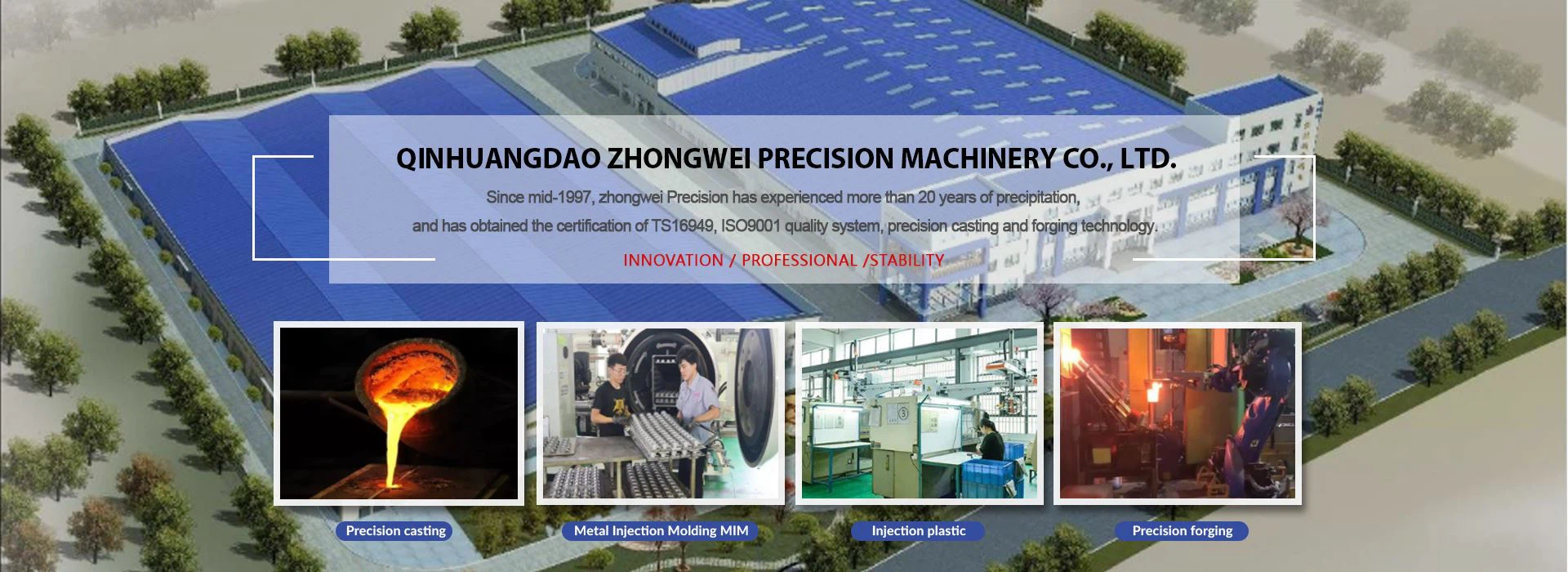
Qinhuangdao Zhongwei Precision Machinery Co., Ltd. was established in 1997.
Advantages Of Our Company's Tungsten Copper And Tungsten Rhenium Alloys
1. No sintering activation elements are added, maintaining good thermal conductivity;
2. The metallographic appearance of the product shows that there is no copper pool phenomenon;
3. Relative density ≥ 99%, low porosity, good product air tightness, helium mass spectrometer leak test ≤ 5 × 10⁻⁹Pa·m3/S can be fully passed;
4. Good size control, surface finish and flatness;
5. Good electroplating quality and heat shock resistance.
We can provide tungsten copper sheets with specifications ranging from (0.1~10.0) mm×(10~200) mm×(30~500) mm, and can also provide deeply processed tungsten copper precision parts.


Send Inquiry
