




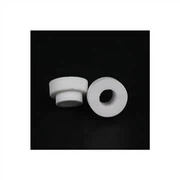
Tungsten Carbide MIM Parts
Tungsten carbide is a compound composed of tungsten and carbon, the molecular formula is WC, and the molecular weight is 195.85. It is a black hexagonal crystal with metallic luster, its hardness is similar to that of diamond, and it is a good conductor of electricity and heat.
Product Description
|
Tungsten carbide MIM Parts |
|||||
|
Item |
Material |
Production Process |
Sintering Temperature |
Mold |
Custom |
|
Tungsten carbide |
Tungsten carbide |
Metal Injection Molding |
1650°C |
To be customized |
Yes |
|
Available Materials |
Low carbon stainless steel, titanium alloy (Ti, TC4), copper alloy, tungsten alloy, hard alloy, high temperature alloy (718, 713) |
||||
Tungsten carbide is a compound composed of tungsten and carbon, the molecular formula is WC, and the molecular weight is 195.85. It is a black hexagonal crystal with metallic luster, its hardness is similar to that of diamond, and it is a good conductor of electricity and heat. Tungsten carbide is insoluble in water, hydrochloric acid and sulfuric acid, and easily soluble in the mixed acid of nitric acid-hydrofluoric acid. Pure tungsten carbide is brittle, and if a small amount of titanium, cobalt and other metals are added, the brittleness can be reduced. Tungsten carbide used as steel cutting tools is often added with titanium carbide, tantalum carbide or their mixtures to improve antiknock ability. Tungsten carbide is chemically stable. Tungsten carbide powder is used in cemented carbide production materials.
A brief history
Since 1893, German scientists have used tungsten trioxide and carbon to heat together to a high temperature in an electric furnace to produce tungsten carbide, and tried to use its high melting point, high hardness and other characteristics to produce wire drawing dies, etc., so as to replace diamond materials. . However, due to the high brittleness, easy cracking and low toughness of tungsten carbide, it has not been applied in industry. In the 1920s, German scientist Karl Schroter found that pure tungsten carbide could not adapt to the intense stress changes formed during the drawing process. Only by adding low-melting point metals to WC can the blank be made without reducing the hardness. Has a certain toughness. Schroter first proposed the method of powder metallurgy in 1923, that is, mixing tungsten carbide with a small amount of iron group metals (iron, nickel, cobalt), then pressing and sintering in hydrogen at a temperature higher than 1300 ° C to produce hardness alloys patent.
Physical and chemical properties
Physical properties
|
Microhardness |
17 300 MPa [1] |
|
Elastic Modulus |
710GPa [1] |
|
Compressive strength |
56MP [1] |
|
Thermal expansion coefficient |
6.9×10⁻⁶/K |
It is black hexagonal crystal. Soluble in mixed acid of nitric acid and hydrofluoric acid and aqua regia, insoluble in water.
|
Tungsten carbide powder particle size |
||
|
Grade |
Fsss (μm) |
O (%) Not more than |
|
WC10 |
1.01~1.40 |
0.15 |
|
WC14 |
1.41~1.80 |
0.10 |
|
WC18 |
1.81~2.40 |
0.10 |
|
WC24 |
2.41~3.00 |
0.08 |
|
WC30 |
3.01~4.00 |
0.08 |
|
WC40 |
4.01~5.00 |
0.08 |
|
WC50 |
5.01~7.00 |
0.05 |
|
WC70 |
7.01~10.00 |
0.05 |
|
WC100 |
10.01~14.00 |
0.05 |
|
WC140 |
14.01~20.00 |
0.05 |
|
WC200 |
20.01~26.00 |
0.05 |
Chemical properties

Molecular structure of tungsten carbide
Active oxidation starts at above 500°C in the air, and the anti-oxidation ability is weak.
Strong acid resistance.
Chemical reaction formula: W + C = WC Note: Reaction at 1150°C.
It does not interact with chlorine below 400°C; it can react violently with fluorine at room temperature; it is oxidized to tungsten oxide when heated in air.
Computational Data
1. Hydrophobic parameter calculation reference value (XlogP): None
2. Number of hydrogen bond donors: 0
3. Number of hydrogen bond acceptors: 1
4. Number of rotatable chemical bonds: 0
5. Number of tautomers: none
6. Polar surface area of topological molecules: 0
7. Number of heavy atoms: 2
8. Surface charge: 0
9. Complexity: 10
10. Number of isotope atoms: 0
11. Determine the number of atomic stereocenters: 0
12. Uncertain number of atomic stereocenters: 0
13. Determine the number of stereocenters of chemical bonds: 0
14. Uncertain number of chemical bond stereocenters: 0
15. Number of covalent bond units: 1
Production Method

Using metal tungsten and carbon as raw materials, dry-mix tungsten powder with an average particle size of 3-5 μm and carbon black of the same amount with a ball mill. Or heat it to 1400-1700°C in an induction furnace, preferably controlled at 1550-1650°C. In the hydrogen flow, W2C is initially formed, which continues to react at high temperature to form WC. Or first, thermally decompose tungsten hexacarbonyl at 650-1000°C in a CO atmosphere to obtain tungsten powder, and then react with carbon monoxide at 1150°C to obtain WC. W2C can be generated at a temperature higher than this temperature.
Chemical reaction formula:


Tungsten powder (average particle size 3-5 μm) is obtained by hydrogenation reduction of tungsten trioxide WO3. Then make a mixture of tungsten powder and carbon black in an equimolar ratio (dry mixing with a ball mill for about 10 hours), and pressurize it under a pressure of about 1t/cm2. Put the pressure-molded block into a graphite disc or crucible, and heat it to 1400-1700°C (preferably 1550-1650°C) in a hydrogen flow (using pure hydrogen with a dew point of -35°C) in a graphite resistance furnace or induction furnace. ℃), making it carburized will generate WC. The reaction begins around the tungsten particles, because W2C is generated at the initial stage of the reaction, and unreacted W and intermediate product W2C remain in addition to WC due to incomplete reaction (mainly because the reaction temperature is low). Therefore, it must be heated to the above-mentioned high temperature. The maximum temperature should be determined according to the particle size of the raw material tungsten. For coarse particles with an average particle size of about 150 μm, the reaction is carried out at a high temperature of 1550-1650°C.
Chemical reaction formula:


According to the requirements of cemented carbide on the grain size of tungsten carbide WC, tungsten carbide with different grain sizes is used according to different uses of cemented carbide; cemented carbide cutting tools, such as cutting machine blade V-CUT knives, etc., the finishing alloy adopts ultra-fine sub- Fine-grain tungsten carbide; medium-grain tungsten carbide is used for rough machining alloys; medium-coarse tungsten carbide is used as raw material for gravity cutting and heavy-duty cutting alloys; coarse-grain tungsten carbide is used for mining tools with high rock hardness and large impact load; small impact load for rock impact Small, use medium-grain tungsten carbide as raw material for wear-resistant parts; when emphasizing its wear resistance, compression resistance and surface finish, use ultra-fine and sub-fine medium-grain tungsten carbide as raw material; impact-resistant tools use medium-coarse tungsten carbide as raw material host.
The theoretical carbon content of tungsten carbide is 6.128% (atomic 50%). When the carbon content of tungsten carbide is greater than the theoretical carbon content, free carbon (WC+C) appears in tungsten carbide. The presence of free carbon makes the surrounding carbonization when sintering The growth of tungsten grains leads to uneven grains of cemented carbide; tungsten carbide generally requires high combined carbon (≥6.07%) and free carbon (≤0.05%), and the total carbon depends on the production process and scope of use of cemented carbide.
Under normal circumstances, the total carbon of tungsten carbide for vacuum sintering in paraffin wax process is mainly determined by the combined oxygen content in the briquette before sintering. One part of oxygen will increase 0.75 parts of carbon, that is, the total carbon of WC=6.13%+oxygen content%×0.75 (assuming sintering The furnace is a neutral atmosphere. In fact, the total carbon of tungsten carbide used in the carburizing atmosphere of most vacuum furnaces is less than the calculated value). the
The total carbon content of tungsten carbide in China is roughly divided into three types. The total carbon content of tungsten carbide for vacuum sintering in paraffin process is about 6.18±0.03% (free carbon will increase). The total carbon content of tungsten carbide for hydrogen sintering in paraffin process is 6.13±0.03. % Total carbon of tungsten carbide for hydrogen sintering in rubber process = 5.90±0.03% The above processes are sometimes interleaved, so the determination of total carbon of tungsten carbide should be based on specific conditions.
Some small adjustments can be made to the WC total carbon used in alloys with different application ranges, different cobalt contents, and different grain sizes. Low-cobalt alloys can use tungsten carbide with high total carbon, and high-cobalt alloys can use tungsten carbide with low total carbon. In short, the specific use requirements of cemented carbide have different requirements for the particle size of tungsten carbide.
Application field

It is widely used as high-speed cutting turning tools, kiln structural materials, jet engine components, cermet materials, resistance heating elements, etc.
Used in the manufacture of cutting tools, wear-resistant parts, melting crucibles for metals such as copper, cobalt, and bismuth, and wear-resistant semiconductor films.
It is used as superhard tool material and wear-resistant material. It can form solid solutions with many carbides. WC-TiC-Co cemented carbide cutting tools have been widely used. It can also be used as a modification additive for NbC-C and TaC-C ternary carbides, which can not only reduce the sintering temperature, but also maintain excellent performance, and can be used as aerospace materials.
Tungsten carbide (WC) powder is synthesized by using tungsten anhydride (WO3) and graphite at a high temperature of 1400-1600°C in a reducing atmosphere. Dense ceramic products can be obtained by hot pressing sintering or hot isostatic pressing sintering.
Precautions
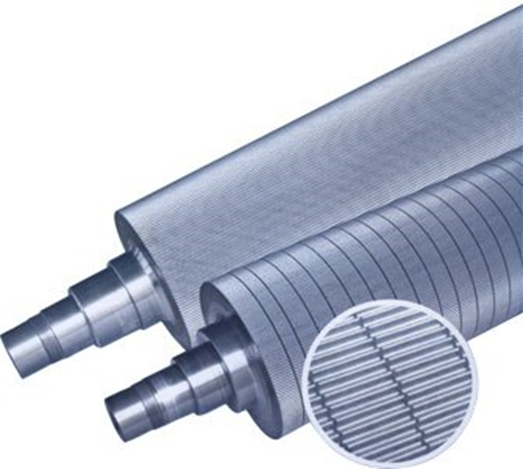
Tungsten carbide spray corrugated
Health Hazard: Tungsten dust can cause peribronchitis, peribronchiolitis, obliterative bronchiolitis and atrophic emphysema. Tungsten carbide causes a proliferative response and progressive hardening of the lymphoid tissue cells of the lung. The vessel walls are thickened and homogenized. People who are exposed to tungsten carbide dust at work have gastrointestinal dysfunction, kidney irritation, and catarrhal inflammation in the upper respiratory tract. The maximum allowable concentration of tungsten carbide is 6mg/m3. The maximum allowable concentration in the United States is 1 mg/m3 for soluble tungsten compounds (calculated as tungsten) and 5 mg/m3 for insoluble tungsten compounds (calculated as tungsten).
Safety protection: Use gas masks, dust-proof clothing, gloves, and glasses that meet the requirements. Dust leakage must be prevented at all stages of production. Workers are required to have a pre-employment physical examination, which is performed regularly once a year. When obvious symptoms appear in the upper respiratory tract, it is necessary to temporarily transfer work and break away from contact with tungsten. When pulmonary sclerosis or external respiratory dysfunction occurs, they should be transferred from work.
Storage and Transportation
Storage: It should be stored in a cool and dry warehouse, and the packaging container should be in good condition during transportation, and it should be protected from rain and sun exposure.
Packaging, storage and transportation: The product is packed in an iron drum (plastic drum) lined with a polyethylene plastic bag, and the net weight of each bag shall not exceed 50kg. There should be words such as "moisture-proof" and "upward" on the outer packaging barrel. The product should be stored in a cool and dry warehouse. During transportation, care should be taken to ensure that the packaging container is intact and protected from rain and sunlight.
Related Properties
Molybdenum-copper alloy combines the advantages of copper and molybdenum, high strength, high specific gravity, high temperature resistance, arc ablation resistance, good electrical conductivity and heating performance, and good processing performance. Using high-quality molybdenum powder and oxygen-free copper powder, using isostatic pressing (high temperature sintering-copper infiltration), to ensure product purity and accurate proportioning, fine structure, excellent performance. Good arc breaking performance, good electrical conductivity, good thermal conductivity , small thermal expansion.
Metal Injection Molding Process

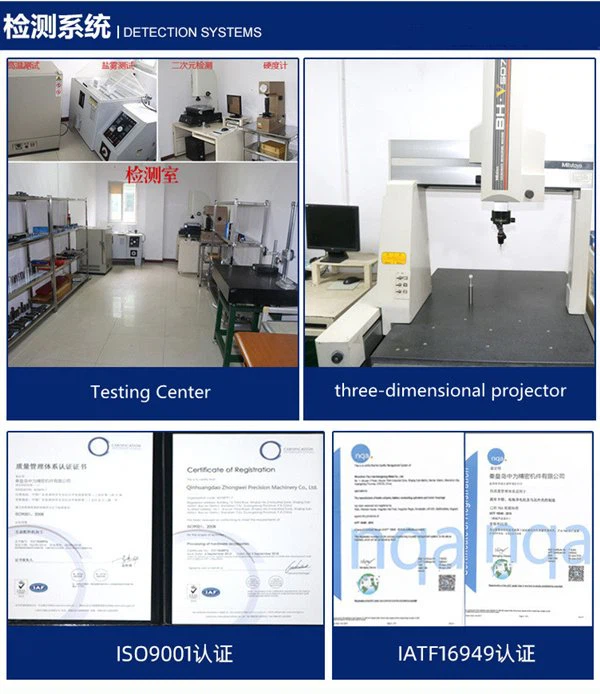
Detection Systems




Send Inquiry
