

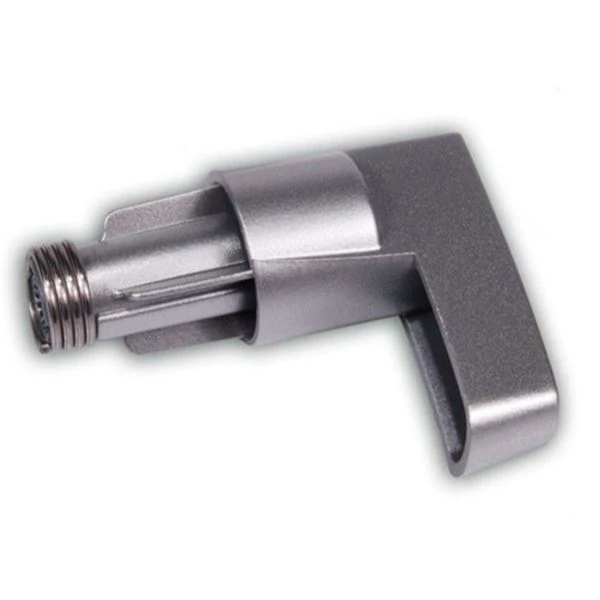


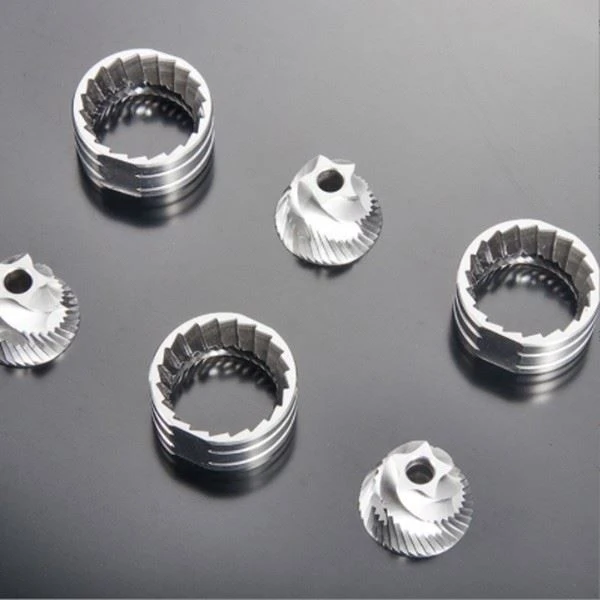


Silica Sol Investment Casting for Coffee Machine
High temperature resistance up to 800°C, good processing properties and high toughness, widely used in industrial and furniture decoration industries as well as food and medical industries.
● Name: 304 stainless steel/SUS304
● Alias: SUS304, food grade stainless steel, food grade 304 stainless steel, 18/8
● Features: Corrosion resistance (cannot be completely anti-corrosion), good toughness
● Semi-finished products: state hot-rolled sheets, cold-drawn tubes
● Magnetic: weak magnetic, after cold working such as stretching/pressing, the magnetic will become stronger (can be attracted by magnets)
● National standard: GB/T 3280-2015
304 stainless steel is a common material in stainless steel, with a density of 7.93g/cm³, also known as 18/8 stainless steel in the industry.
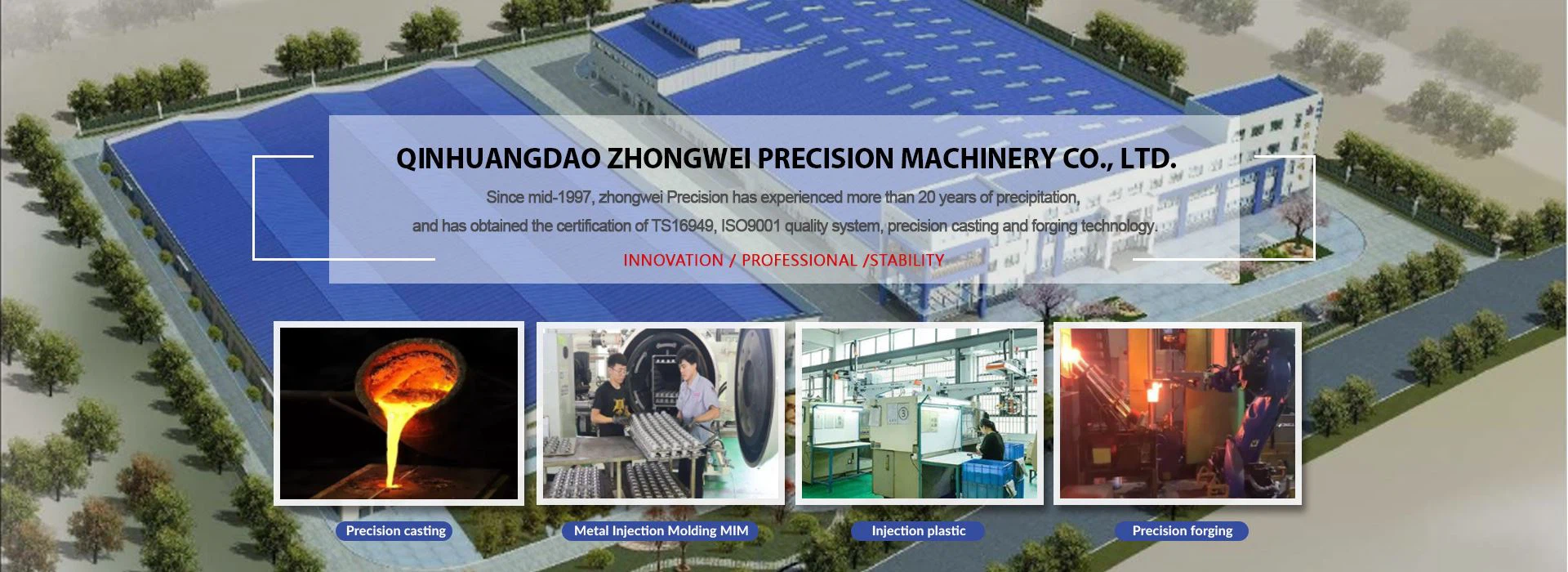
After more than ten years of precipitation, Qinhuangdao Zhongwei Precision Machinery Co., Ltd. has rich production experience in water glass lost wax precision casting, lost foam precision casting technology, silica sol precision casting technology, and shell sand casting technology. Expect manufacturers from various countries to consult Silica sol investment casting for coffee machine.
Product Description
Basic situation of Silica sol investment casting for coffee machine
1. Implementation standards: The company strictly implements ISO9001 & TS 16949 certification.
2. Product material standards: ISO, GB, ASTM, SAE, ISO, EN, DIN, JIS, BS
3. Main processes: sand casting, silica sol investment casting, water glass investment casting,shell casting,deburring, sand blasting, machining, heat treatment, leak testing, surface treatment, etc.
4. Available materials:
Titanium alloy, carbon steel, alloy steel, stainless steel, gray iron, cast iron, cast steel, cast aluminum, cast copper, etc. can be customized according to customer requirements.

Physical Properties
Silica sol investment casting for coffee machinePhysical
High temperature resistance up to 800°C, good processing properties and high toughness, widely used in industrial and furniture decoration industries as well as food and medical industries.
The common labeling methods on the market are 06Cr19Ni10 and SUS304, of which 06Cr19Ni10 is generally produced by national standard, 304 is generally produced by ASTM standard, and SUS 304 is produced by Japanese standard.
304 is a versatile stainless steel widely used in the manufacture of equipment and parts that require a good combination of properties (corrosion resistance and formability). In order to maintain the inherent corrosion resistance of stainless steel, the steel must contain more than 18% chromium and more than 8% nickel.
304 stainless steel is a stainless steel grade produced according to the American ASTM standard.
• 304 stainless steel physical properties
Tensile strength σb (MPa) ≥515-1035
Conditional yield strength σ0.2 (MPa)≥205
Elongation δ5 (%)≥40
Reduced area ψ (%) ≥?
Hardness: ≤201HBW; ≤92HRB; ≤210HV
Density (20°C, g/cm³): 7.93
Melting point (°C): 1398~1454
Specific heat capacity (0~100°C, KJ·kg -1 K -1 ): 0.50
Thermal conductivity (W m -1 K -1 ): (100°C) 16.3, (500°C) 21.5
Linear expansion coefficient (10 -6 ·K -1 ): (0~100°C) 17.2, (0~500°C ) 18.4
Resistivity (20°C, 10 -6 Ω·m 2 /m ): 0.73
Longitudinal modulus of elasticity (20°C, KN/mm 2 ): 193

For 304 stainless steel, the Ni element in its composition is very important, which directly determines the corrosion resistance and value of 304 stainless steel. The main elements in 304 are Ni and Cr, but are not limited to these two elements. Specific requirements are specified by product standards. The general judgment in the industry is that as long as the Ni content is greater than 8% and the Cr content is greater than 18%, it can be considered as 304 stainless steel. This is why the industry refers to this stainless steel as 18/8 stainless steel. In fact, the relevant product standards have very clear regulations for 304, and these product standards have certain differences for different shapes of stainless steel. Below are some common product standards and tests. To determine whether the material is 304 stainless steel, the requirements of each element in the product standard must be met. As long as it does not meet the requirements, it cannot be called 304 stainless steel.
1. ASTM A276 (Standard Specification for Stainless Steel Bars and Sections) | ||||||||
304 | C | Manganese | Phosphorus | Second | Silicon | Chromium | You | |
Claim,% | ≤0.08 | ≤2.00 | ≤0.045 | ≤0.030 | ≤1.00 | 18.0-20.0 | 8.0-11.0 | |
2. ASTM A240 (Chromium and Chromium-Nickel Stainless Steel Sheets, Sheets, and Strips for Pressure Vessels and General Applications) | ||||||||
304 | C | Manganese | Phosphorus | Second | Silicon | Chromium | You | N |
Claim,% | ≤0.07 | ≤2.00 | ≤0.045 | ≤0.030 | ≤0.75 | 17.5-19.5 | 8.0-10.5 | ≤0.10 |
3. JIS G4305 (cold rolled stainless steel sheet, sheet and strip) | ||||||||
304 | C | Manganese | Phosphorus | Second | Silicon | Chromium | You | |
Claim,% | ≤0.08 | ≤2.00 | ≤0.045 | ≤0.030 | ≤1.00 | 18.0-20.0 | 8.0-10.5 | |
4. JIS G4303 (stainless steel bar stainless steel bar) | ||||||||
304 | C | Manganese | Phosphorus | Second | Silicon | Chromium | You | |
Claim,% | ≤0.08 | ≤2.00 | ≤0.045 | ≤0.030 | ≤1.00 | 18.0-20.0 | 8.0-10.5 | |
The above four standards are just a few commonly used standards. In fact, ASTM and JIS mention 304 more than these standards. In fact, each standard has different requirements for 304, so to judge whether a material is 304, the accurate expression should be whether it meets the 304 requirements of a product standard. Material certificates generally require the following types of reports: Detailed standard specification comparison: as of 2015-12-08.
Number | Standard/S30400 | C | Manganese | Phosphorus | Second | Silicon | Chromium | You | N | Copper |
1 | ASTM A276/A276M-15 | 0.08 | 2.00 | 0.045 | 0.030 | 1.00 | 18.0-20.0 | 8.0-11.0 | ||
2 | ASTM A959-11 | 0.07 | 2.00 | 0.045 | 0.030 | 1.00 | 17.5-19.5 | 8.0-11.0 | ||
3 | ASTM A240/A240M-15a | 0.07 | 2.00 | 0.045 | 0.030 | 0.75 | 17.5-19.5 | 8.0-10.5 | ||
4 | ASTM A182/A182M-15 | 0.08 | 2.00 | 0.045 | 0.030 | 1.00 | 18.0-20.0 | 8.0-11.0 | 0.10 | |
5 | ASTM A193/A193M-15 | 0.08 | 2.00 | 0.045 | 0.030 | 1.00 | 18.0-20.0 | 8.0-11.0 | ||
6 | ASTM A269/A269M-15 | 0.08 | 2.00 | 0.045 | 0.030 | 1.00 | 18.0-20.0 | 8.0-11.0 | ||
7 | ASTM A312/A312M-15a | 0.08 | 2.00 | 0.045 | 0.030 | 1.00 | 18.0-20.0 | 8.0-11.0 | ||
8 | ASTM A320/A320M-15a | 0.08 | 2.00 | 0.045 | 0.030 | 1.00 | 18.0-20.0 | 8.0-11.0 | ||
9 | ASTM A403/A403M-15 | 0.08 | 2.00 | 0.045 | 0.030 | 1.00 | 18.0-20.0 | 8.0-11.0 | ||
10 | ASTM A493-09(2013) | 0.08 | 2.00 | 0.045 | 0.030 | 1.00 | 18.0-20.0 | 8.0-10.5 | 0.10 | 1.00 |
11 | ASTM A554-15a (MT-304) | 0.08 | 2.00 | 0.045 | 0.030 | 1.00 | 18.0-20.0 | 8.0-11.0 | ||
12 | JIS G4303:2012 | 0.08 | 2.00 | 0.045 | 0.030 | 1.00 | 18.0-20.0 | 8.0-10.5 | ||
13 | JIS G4304:2012 | 0.08 | 2.00 | 0.045 | 0.030 | 1.00 | 18.0-20.0 | 8.0-10.5 | ||
14 | JIS G4305:2012 | 0.08 | 2.00 | 0.045 | 0.030 | 1.00 | 18.0-20.0 | 8.0-10.5 | ||
15 | GB/T 20878-2007 | 0.08 | 2.00 | 0.045 | 0.030 | 1.00 | 18.0-20.0 | 8.0-11.0 |

Application
Silica sol investment casting for coffee machine
● System Description: 304 stainless steel is the most widely used chromium-nickel stainless steel.
● As a widely used steel, it has good corrosion resistance, heat resistance, low temperature strength and mechanical properties; it has good hot workability such as stamping and bending. , No heat treatment hardening phenomenon (use temperature -196 ℃ ~ 800 ℃). It is resistant to corrosion in the atmosphere.
● If it is an industrial atmosphere or a heavily polluted area, it needs to be cleaned in time to avoid corrosion. Suitable for food processing, storage and transportation. Has good processability and weldability.
● Plate heat exchangers, bellows, household items (first and second-class tableware, cabinets, indoor pipes, water heaters, boilers, bathtubs), auto parts (wipers, mufflers, molded products), medical equipment, building materials, chemicals, food industry , agriculture, ship parts, etc. 304 stainless steel is a nationally recognized food grade stainless steel.
● Most use requirements are to maintain the original appearance of the building for an extended period of time. The main considerations when determining the type of stainless steel to choose are the aesthetic criteria required, the corrosiveness of the local atmosphere, and the cleaning system to be employed. However, other applications increasingly seek structural integrity or impermeability.
● For example, roofs and side walls of industrial buildings. In these applications, the owner's construction cost may be more important than aesthetics, and the surface may not be very clean. The effect of using 304 stainless steel in a dry indoor environment is quite good.
● However, frequent cleaning is required if it is to maintain its appearance outdoors in rural and urban areas. In heavily polluted industrial and coastal areas, the surface can be very dirty and even rusted.
● However, nickel-containing stainless steel is required for aesthetics in outdoor environments.
● Therefore, 304 stainless steel is widely used in curtain wall, side wall, roof and other construction purposes. However, 316 stainless steel is best used in highly corrosive industrial or marine environments. With stainless steel sliding doors, people have fully realized the advantages of stainless steel in structural applications.
● Several design standards are available, including 304 and 316 stainless steel. Due to the "duplex" stainless steel 2205, which combines good atmospheric corrosion resistance, high tensile strength and ultimate elastic strength, this steel grade is also included in the European standard. In fact, stainless steel is manufactured in a full range of standard metal shapes and sizes, as well as many special shapes.
● The most commonly used products are sheet and strip, but plate is also used to produce special products such as hot rolled and extruded structural steel. There are also products in the form of round, oval, square, rectangular and hexagonal welded or seamless tubes, including profiles, bars, wires and castings.
Post Casting Process
1. Heat treatment: annealing, carbonization, tempering, quenching, normalizing, surface tempering
2. Processing equipment: CNC, WEDM, lathe, milling machine, drilling machine, grinder, etc.;
3. Surface treatment: powder spraying, chrome plating, painting, sandblasting, nickel plating, galvanizing, blackening, polishing, bluing, etc.

Moulds and Inspection Fixtures
1. Mold service life: usually semi-permanent. (except for lost foam).
2. Mold delivery time: 10-25 days, (according to product structure and product size).
3. Tooling and mold maintenance: Zhongwei is responsible for precision parts.
Quality Control
1. Quality control: the defective rate is less than 0.1%.
2. Samples and trial run will be 100% inspected during production and before shipment, sample inspection for mass production according to ISDO standards or customer requirements
3. Testing equipment: flaw detection, spectrum analyzer, golden image analyzer, three-coordinate measuring machine, hardness testing equipment, tensile testing machine;
4. Provide after-sales service.
5. The quality can be traced back.


Send Inquiry
