




High Nickel Alloy Castings
High-nickel cast iron is one such material, containing up to 36% nickel. Compared with gray cast iron, high nickel cast iron has superior corrosion resistance and toughness, making it an important manufacturing material for pumps, and its excellent oxidation resistance and high temperature strength is an ideal material for the production of piston ring groove inserts.
High-nickel cast iron is one such material, containing up to 36% nickel. Compared with gray cast iron, high nickel cast iron has superior corrosion resistance and toughness, making it an important manufacturing material for pumps, and its excellent oxidation resistance and high temperature strength is an ideal material for the production of piston ring groove inserts.
After more than ten years of precipitation, Qinhuangdao Zhongwei Precision Machinery Co., Ltd. has rich production experience in water glass lost wax precision casting, lost foam precision casting technology, silica sol precision casting technology, and shell sand casting technology. Expect manufacturers from various countries to consult High Nickel Alloy Castings.
Product Description
High nickel alloy castings basic facts
1.Implementation standards: The company strictly implements ISO9001 & TS 16949 certification.
2. Product material standards: ISO, GB, ASTM, SAE, ISO, EN, DIN, JIS, BS
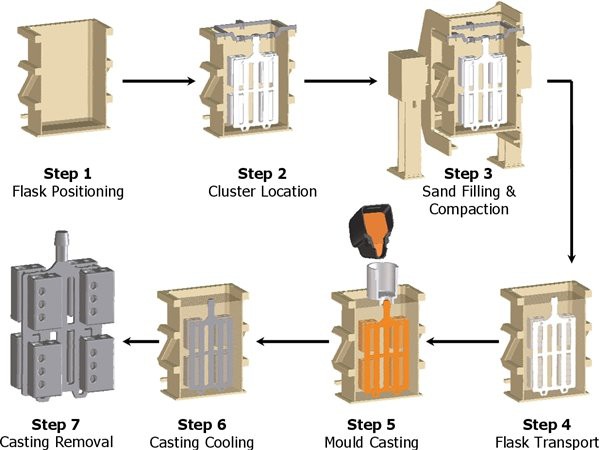
3. Main processes: sand casting, silica sol investment casting, water glass investment casting,shell casting,deburring, sand blasting, machining, heat treatment, leak testing, surface treatment, etc.
4. Available materials:
Tin bronze, silicon bronze, aluminum bronze, brass, copper, titanium alloy, high manganese steel, high chromium steel, high nickel steel, carbon steel, alloy steel, stainless steel, gray iron, cast iron, cast steel, cast aluminum, etc. Customized according to customer requirements.
Analysis Of High Temperature And Corrosion Resistant Castings Of High Nickel Alloys
Nickel alloys are widely used in industry due to their high temperature corrosion resistance properties. For example, nickel alloys are superior to iron or cobalt alloys in terms of resistance to high temperature oxidation. These alloys are inherently resistant to corrosion by carbonization and nitridation due to their low solubility for interstitial atoms. Due to the high melting point of the halogen compounds of nickel alloys, they also have good resistance in halogen-containing environments.
Nickel alloys are classified into Ni-Cr, Ni-Cr-Mo, Ni-Cr-W, Ni-Co-Cr, Ni-Cr-Fe, Ni-Fe-Cr and Ni-Mo alloys according to their main elements. They can also be differentiated according to whether they can be age hardened or not. Nickel alloys are usually hardened by the dispersion of gamma primary particles.
The gamma initial phase is a face-centered cubic A3B compound in which A is predominantly nickel and B is predominantly aluminium (sometimes occasionally accompanied by titanium). The Gamma double quenched structure is a body-centered tetragonal phase, and its composition is still A3B, but here B is mainly niobium. Obviously, the gamma-quenched structure requires a large amount of aluminum (and possibly titanium) doping, while the gamma-double-quenched structure requires a large amount of niobium doping.
Age-hardening alloys are typically only used in gas turbines, where resistance to oxidation and retention of strength at defined temperatures are the main requirements. For other high temperature applications, solution hardening nickel alloys are used because they have a wider temperature range and are easier to weld and manufacture. There are many solution-strengthened alloys that are manufactured for specific high-temperature corrosion, such as nickel alloys suitable for sulfidation environments.
Aluminum is sometimes incorporated in solution strengthened alloys because the formation of an external aluminum oxide film increases the oxidation resistance of nickel alloys such as alloy 214 (NO7214). Usually, the working temperature of such alloys must be higher than the solid solution line of the gamma quenched structure to prevent the trouble caused by dispersion hardening.
1. Corrosion mode:
The modes of high temperature corrosion include oxidation, carbonization, metal powdering, sulfidation, nitridation, halogen attack, molten salt attack, etc. This article will be limited to discussing oxidation and carbonization.
In order to resist high temperature oxidation, most nickel alloys rely on chromium doping, ranging from 8% to 48%. Some alloys are doped with a small amount of silicon or manganese to promote the formation of protective spinel-type oxides, and rare earth elements such as lanthanum and yttrium can also be added to enhance the anti-oxidative layer spalling. In many nickel alloys, aluminum is the primary dopant, promoting dispersion hardening or creating a protective layer of alumina against high temperature oxidation.
Oxidative erosion mainly includes two aspects: (1) metal loss caused by the formation of oxide skin from the main metal, (2) damage caused by intergranular erosion and the formation of isolated internal oxides.
Metal loss can be further distinguished as continuous oxide skin or oxide skin exfoliation caused by thermal cycling.
As for internal erosion, if the part is exposed to air, internal nitrides can also form along with endogenous oxides. Especially for those alloys containing Cr2O3, if a large amount of oxide skin peels off, or when the amount of aluminum is insufficient to form a continuous Al2O3 film, the internal corrosion will be more serious.
The method of measuring weight loss does not fully reflect the situation of oxidative erosion. Therefore, the amount of loss observed must be checked and measured by metallographic methods. In the next section, oxidative attack is expressed as the average amount of damaged metal consisting of metal loss plus the average of internal erosion.
2. Oxidation corrosion:
It is envisaged that the degree of oxidative attack generally tends to be more severe with increasing temperature. A high temperature oxidation test was carried out on the samples. The parts were lowered from high temperature to room temperature every 168 hours in flowing air, and the total oxidation time was 1008 hours. The formation of volatile CrO3 was observed above 980°C, while the protective effect of Cr2O3 decreased. The effect is most pronounced at 1205°C. For alloy 214, the lowest values at all 4 temperatures (980, 1095, 1150 and 1205°C) indicate that Al2O3 has the best protection.
Repeated cooling to room temperature will cause the oxide skin to peel off, so the effect on oxidative attack is most obvious. Oxidation experiments were carried out with different cycle times in flowing air at 1095°C. For two samples that were tested for exactly the same time, the sample with the shorter cycle time lost the largest amount. In high-velocity gas, samples with short cycle times are most severely corroded.
This dynamic oxidation experiment is designed to simulate the operation of an aircraft's gas turbine engine. The fuel used in the test device is a mixture of No. 1 and No. 2, the air/fuel ratio is 50:1, and the gas generation rate is Mach 0.3. The samples are loaded on a rotating carousel. The conveyor belt takes out the sample from the high temperature area every 30 minutes, blows it with air for 2 minutes, and then returns to the high temperature area again. This test is obviously more severe.
However, long-term effects cannot be judged based on short-term test results. Some materials exhibit a fracture oxidation phenomenon upon prolonged exposure. For example, X (NO6002) and HR-120 (NO8120) alloys were subjected to long-term destructive oxidation attack tests at 1205°C. The X alloy sample was completely damaged after 120 days, while the HR-120 alloy was completely damaged after 330 days. The data show that neither alloy is suitable for prolonged use above 1150°C.
3. Carbonization erosion:
Carbonization is the intrusion of carbon into metals in the presence of carbon-containing gases such as CO, CO2, CH4, or other hydrocarbons. Carbon is transported to the metal surface, diffuses in the metal and forms various carbides with alloying elements. Usually above 800°C, carbonization can be observed when the carbon activity is less than 1. At lower temperatures and carbon activity greater than 1, another attack mode, metal dusting, occurs.
Unlike other high-temperature corrosion modes, carbonization produces internal carbides that deteriorate, embrittle, and damage the metal. In this mode, there is no metal loss due to scale formation, and erosion damage cannot be expressed as the sum of metal loss plus internal corrosion.
Here, the degree of carbonization can be defined by carbon gain (mg/cm2) and carbonization depth. The kinetics of carbonation are determined by the solubility and diffusion rate of carbon at the relevant temperature.
The low solubility of carbon in nickel alloys makes nickel alloys widely used in carbonizing environments. However, all heat-resistant alloys contain alloying elements such as chromium, aluminum, and silicon. Therefore, carbonization always produces a variety of chromium carbides. Nickel alloys are generally protected from carbonization by a stable oxide skin. At a given temperature, alloys in a gas mixture are subject to oxidation or carbonization, depending on the partial pressure of oxygen (oxidative chemical potential) or the activity of carbon at that temperature.
Post Casting Process
1. Heat treatment: annealing, carbonization, tempering, quenching, normalizing, surface tempering
2. Processing equipment: CNC, WEDM, lathe, milling machine, drilling machine, grinder, etc.;
3. Surface treatment: powder spraying, chrome plating, painting, sandblasting, nickel plating, galvanizing, blackening, polishing, bluing, etc.
Moulds and Inspection Fixtures
1. Mold service life: usually semi-permanent. (except for lost foam)
2. Mold delivery time: 10-25 days, (according to product structure and product size).
3. Tooling and mold maintenance: Zhongwei is responsible for precision parts.
Quality Control
1. Quality control: the defective rate is less than 0.1%.
2. Samples and trial run will be 100% inspected during production and before shipment, sample inspection for mass production according to ISDO standards or customer requirements
3. Testing equipment: flaw detection, spectrum analyzer, golden image analyzer, three-coordinate measuring machine, hardness testing equipment, tensile testing machine;
4. Provide after-sales service.
5. The quality can be traced back.
Application
Qinhuangdao Zhongwei Precision Machinery Co., Ltd. successfully developed and produced High Nickel Alloy Castings, and passed the inspections of such materials and products by SGS testing center. In August 2008, our company passed the TUV certification company on such high nickel cast iron materials. Since then, our company has reached a new height in the field of cast iron production materials. Instead of monotonously producing ordinary ductile iron and gray cast iron, we can also produce high-nickel ductile iron, which has high performance and has High temperature resistance, corrosion resistance.
and anti-oxidation properties, its castability is the same as that of general gray cast iron and ductile iron, nickel-resistant cast iron is a member of the cast iron family, and it contains enough nickel to produce a Voss field iron base, which is similar to Voss Tiantie stainless steel. Compared with non-alloyed low-alloy gray and ductile iron, the nickel-resistant cast iron of Vostian iron structure can improve heat resistance and corrosion resistance, and its castability is also comparable to general gray and ductile iron.
The nickel content of nickel-resistant cast iron varies from 15-36%. Most grades also contain chromium to improve their strength and corrosion resistance. Types I and Ib can use low-cost copper to replace nickel and have corrosion resistance, but these copper-containing type I nickel-resistant cast irons do not. Ductile iron grades.
The stability of D-2, D-2B, D-4 and D-5B nickel-resistant ductile iron is mainly determined by the balance of nickel and silicon content. In the case of Sitian iron, there will be wave iron and horse field loose iron in the base, which will endanger the workability, corrosion resistance and oxidation resistance and is not conducive to high temperature performance.
Nickel resistant cast iron grade D-2M is suitable for low temperature service down to -320°F (-196°C), this modified Vostian iron ductile iron has excellent low temperature metallurgical and mechanical properties, and has a high quality casting sex.
This grade is suitable for all low temperature applications and has excellent castability. Produces excellent parts, some applications include pump bodies, valve bodies, compressors and piping and fittings for liquefied gases.
D-3 If thermal expansion is matched with Fe-base stainless steel, this grade is recommended to be used in thermal shock applications. In addition to excellent high temperature properties, this grade also has high erosion resistance and is suitable for water vapor and corrosive slurries.
D-4 is recommended for applications that are more resistant to corrosion and oxidation than Types D-2 and D-3, such as engine parts that come into contact with combustion gases and waste, and can be used for turbocharging up to 1500°F (815°C) It can withstand temperatures as high as 1000 degrees Fahrenheit (538 degrees Celsius) when the fuel contains 1% sulfur.
D-5 high-nickel ductile iron is used in applications requiring low temperature expansion, and can reduce thermal stress more than other nickel-resistant cast irons.
It is recommended to be used in castings that require low temperature expansion, such as cutting tool parts, glass molds and outer hubs of gas conveyors, while D-5B is used in applications where very low thermal stress is required.
At present, the high-nickel D-5S material pump body and impeller produced by Zhongwei Precision are also widely used in the field of vacuum pumps. Our factory can produce various high-performance and high-material mechanical parts at any time. Welcome new and old customers to visit and guide!


Send Inquiry
