




High Manganese Alloy Castings
High-manganese steel is a wear-resistant steel specially designed for heavy industry applications including quarrying, mining, excavation, coal industry, foundry and steel industries.
High-manganese steel is a wear-resistant steel specially designed for heavy industry applications including quarrying, mining, excavation, coal industry, foundry and steel industries.
After anti-wear technology treatment, the surface of the material can reach 500--550 Brinell hardness, continue to maintain internal flexibility, minimize surface friction, can be welded with high manganese steel or similar materials, can be cut by acetylene oxygen torch, non-magnetic Wait. After more than ten years of precipitation, Qinhuangdao Zhongwei Precision Machinery Co., Ltd. has rich production experience in water glass lost wax precision casting, lost foam precision casting technology, silica sol precision casting technology, and shell sand casting technology. Manufacturers from various countries are expected to consult High manganese alloy castings.
Product Description
Basic information of High manganese alloy castings
1.Implementation standards: The company strictly implements ISO9001 & TS 16949 certification.
2. Product material standards: ISO, GB, ASTM, SAE, ISO, EN, DIN, JIS, BS
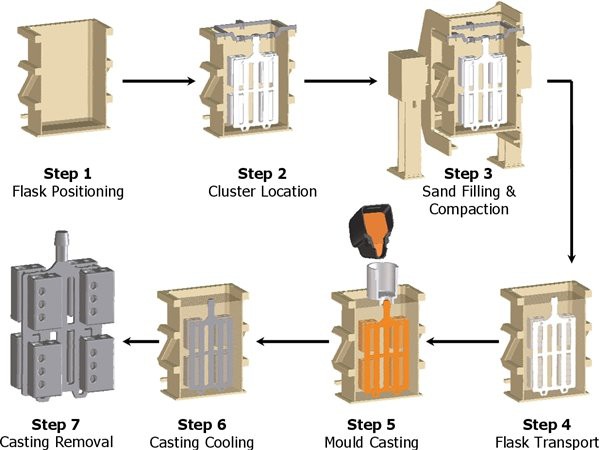
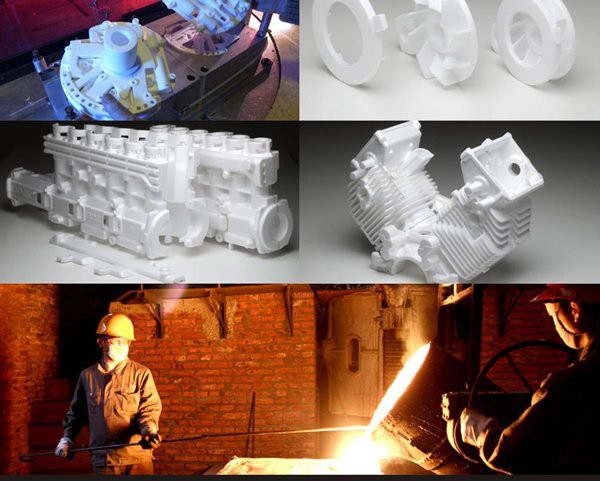
3. Main processes: sand casting, silica sol investment casting, water glass investment casting,shell casting,deburring, sand blasting, machining, heat treatment, leak testing, surface treatment, etc.
4. Available materials:
Tin bronze, silicon bronze, aluminum bronze, brass, copper, titanium alloy, high manganese steel, high chromium steel, high nickel steel, carbon steel, alloy steel, stainless steel, gray iron, cast iron, cast steel, cast aluminum, etc. Customized according to customer requirements.
Chemical Composition
High manganese alloy castings contain several chemical components:
ZGMn13-1 635 — 20 — — for low impact steel castings
ZGMn13-2 685 — 25 147 300 for ordinary steel castings
ZGMn13-3 735 — 30 147 300 for complex steel castings
ZGMn13-4 735 390 20 — 300 for special wear-resistant steel castings
ZGMn13-5 — — — — — For special wear-resistant steel castings
High manganese steel is divided into 5 grades according to national standards, the main difference is the carbon content, which ranges from 0.75% to 1.45%. High impact and low carbon content.
The manganese content is between 11.0% and 14.0%, generally not less than 13%. There is no national standard for ultra-high manganese steel, but the manganese content should be greater than 18%. The level of silicon content has a great influence on the impact toughness, so the lower limit should be taken, which is preferably not more than 0.5%.
Low phosphorus and low sulfur are the most basic requirements. Since high manganese content naturally plays a role in desulfurization, phosphorus reduction is the most important, and try to make phosphorus less than 0.07%. Chromium improves wear resistance, generally around 2.0%.
Product Performance And Features
The performance characteristics of High manganese alloy castings are high hardness and high brittleness. The most important feature of high manganese steel is that under strong impact and extrusion conditions, the surface layer can rapidly work hardening, so that it still maintains good austenite toughness and plasticity in the core, and the hardened layer has good wear resistance. . High-manganese steel is a kind of anti-wear steel specially used in heavy industry, including quarrying, mining, excavation, coal industry, foundry and steel industry.
The performance characteristics of high manganese steel are high hardness and brittleness.
Manganese steel is mainly used to withstand harsh working conditions such as impact, extrusion, and material wear. Wear is divided into three types: friction wear in which the surfaces of metal components contact and move; abrasive wear in which other metal or non-metallic materials hit the metal surface; and erosion wear caused by the contact between flowing gas or liquid and metal.
The most important feature of high manganese steel is that under strong impact and extrusion conditions, work hardening occurs rapidly on the surface layer, so that the hardened layer has good wear resistance while still maintaining good toughness and plasticity of austenite in the core. This is beyond the reach of other materials. However, the wear resistance of high manganese steel only shows its superiority under the conditions sufficient to form work hardening, and it is very poor in other cases.
The typical Mn17 wear-resistant high manganese steel increases the amount of manganese on the basis of Mn13 steel, which improves the stability of austenite and prevents the precipitation of carbides, thereby improving the strength and plasticity of the steel and improving the work hardening ability of the steel. and wear resistance. For example, the service life of ZGMn18 railway fork used in the north is 20%-25% higher than that of ZGMn13.
Charge:
Into the furnace material is determined by the chemical composition. The main charge is high-quality carbon steel (or steel ingot), high carbon ferromanganese, medium carbon ferromanganese, high carbon ferrochrome and high manganese steel return charge. The special reminder here is that as long as the chemical composition is suitable, people can use more recycled materials. This perception is harmful. This is the reason why some factories have poor product quality. Not only high-manganese steel, ultra-high manganese steel, but also all metal castings, must not use too much return material, and the return material should not exceed 25%. So, what about excess return material? As long as scrap is kept to a minimum, there will be no excess return material.
Smelting:
The order of feeding is emphasized here. Whether it is smelted in an intermediate frequency furnace or an electric arc furnace, carbon steel is always smelted first, while all kinds of ferromanganese and other precious alloy materials must be divided into several times, each time a small amount is fed into the furnace, and the precious elements are at the end. added to reduce burnout. The material block should be as small as possible, preferably 50-80mm. After melting, when the furnace temperature reaches 1580-1600 ℃, to deoxidize, dehydrogenate, and denitrify, aluminum wire, Si-Ca alloy or SiC and other materials can be used. The deoxidizer must be pressed deep into the furnace. At this time, the metal liquid surface is tightly covered with a covering agent to cut off the outside air. It is also necessary to calm down for a period of time, so that oxides and inclusions have sufficient time to float. However, many companies only sprinkle aluminum wire or even aluminum scraps on the molten metal surface without covering it. Wouldn't it be a waste! During this period, the content of manganese and carbon should be adjusted with medium carbon ferromanganese in time.
Before the molten steel is released, it is necessary to bake the ladle to above 400 °C. Using V-Fe, Ti-Fe, rare earth and other trace elements for modification treatment during the release period is a necessary means to refine the primary crystallization, and its impact on product performance is crucial.

Post Casting Process
1. Heat treatment: annealing, carbonization, tempering, quenching, normalizing, surface tempering
2. Processing equipment: CNC, WEDM, lathe, milling machine, drilling machine, grinder, etc.;
3. Surface treatment: powder spraying, chrome plating, painting, sandblasting, nickel plating, galvanizing, blackening, polishing, bluing, etc.
Moulds and Inspection Fixtures
1. Mold service life: usually semi-permanent. (except for lost foam)
2. Mold delivery time: 10-25 days, (according to product structure and product size).
3. Tooling and mold maintenance: Zhongwei is responsible for precision parts.
Quality Control
1. Quality control: the defective rate is less than 0.1%.
2. Samples and trial run will be 100% inspected during production and before shipment, sample inspection for mass production according to ISDO standards or customer requirements
3. Testing equipment: flaw detection, spectrum analyzer, golden image analyzer, three-coordinate measuring machine, hardness testing equipment, tensile testing machine;
4. Provide after-sales service.
5. The quality can be traced back.
High Manganese Alloy Castings
High-manganese steel is a kind of anti-wear steel specially designed for heavy industries, including quarrying, mining, excavation, coal industry, and steel industry. Cast superalloy is an important material that is directly used to produce key components such as guide vanes and turbine blades of aero-engines. Its quality is related to the life and safety of aero-engines. Therefore, controlling the quality of cast superalloy parts has always been highly valued by domestic and foreign production units and metallurgical workers. Due to the large number of active elements in the casting superalloy, the requirements for the impurity content are strict, so the double vacuum melting and casting process is mostly used. The master alloy ingots are then remelted and cast into castings in a vacuum induction furnace. The quality of the initial superalloy master alloy ingot has a great influence on the quality of the superalloy casting, and reliable castings cannot be produced using poor quality master alloy ingots. The performance of aircraft engines and industrial gas turbines, through their components, ultimately depends on the quality of the original superalloy master alloy ingot.


Send Inquiry
