



Sand Casting
Compared with other casting methods, Sand casting has the advantages of low cost, simple production process and short production cycle. Therefore, about 60% to 70% of the total output of castings is produced by sand casting.
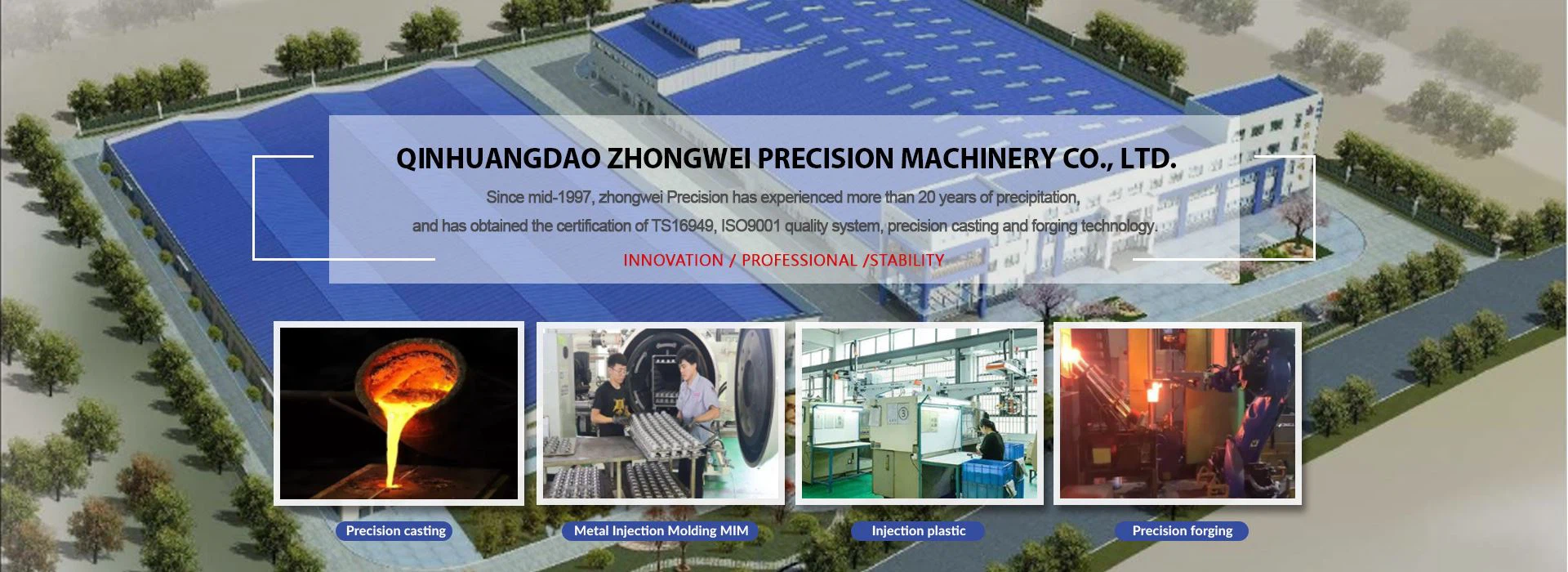
Qinhuangdao Zhongwei Precision Machinery Co., Ltd. mainly produces various grades of gray iron castings, high-quality mechanical parts such as gray iron castings, steel castings, castings of various materials and row numbers, and is a leading casting enterprise in Qinhuangdao City. Our company is equipped with advanced product manufacturing technology and testing methods, pre-furnace analyzer, post-furnace testing equipment, and spectrometer imported from Germany to more accurately analyze the chemical composition and physical properties of castings. The main products are valve castings, locomotive accessories, and various mechanical parts, which are suitable for all walks of life. Diesel engines, compressors, trains, automobiles, elevators, pumps, pump heads, valves, impellers, construction machinery, etc.
Product Description
1. Implementation standards: The company strictly implements ISO9001 & TS 16949 certification.
2. Product material standards: ISO, GB, ASTM, SAE, ISO, EN, DIN, JIS, BS
3. Main processes: sand casting, silica sol investment casting, water glass investment casting,shell casting,deburring, sand blasting, machining, heat treatment, leak testing, surface treatment, etc.
4. Available materials:
Gray iron, ductile iron, cast iron, cast steel, cast aluminum, cast copper, alloy steel, etc. are customized according to customer requirements.
Product Advantages and Disadvantages
Advantages of sand castings
1. Compared with other casting methods, Sand casting has the advantages of low cost, simple production process and short production cycle. Therefore, about 60% to 70% of the total output of castings is produced by sand casting. About 70% of sand casting is produced by clay sand. In the clay sand mold, the clay wet mold process should be the first choice (the weight of the casting can range from several kilograms to dozens of kilograms). tons) or other sand types.
Generally, for large and medium-sized castings, resin no-bake sand moulds can be used for cast iron; water glass sand moulds or resin no-bake sand moulds can be used for steel castings.
When the casting accuracy, surface quality, material density, metallographic structure, mechanical properties and other performance requirements are higher, special structure methods should be used, such as investment casting, pressure casting, low pressure casting, solid casting, etc.
2. The casting method should be adapted to the production batch
(1) Sand casting should consider the following aspects:
For mass-produced factories, technologically advanced modeling and core-making methods should be used. For small castings, a boxless high-pressure molding line is used for horizontal parting or vertical parting, with high productivity and small footprint. For medium-sized castings, various high-pressure molding lines and gas punch molding lines are used to meet the requirements of fast and high-precision molding production lines. Core making methods can be selected: cold core box, hot core box, shell core and other efficient core making methods. The old-fashioned zhenshi molding machine production line has low productivity, high labor intensity and loud noise, and does not meet the requirements of mass production, so it should be gradually transformed.
(2) For medium-volume large castings, resin no-bake sand can be used for molding and core making.
(3) Single-piece small batch production of heavy castings, manual modeling is still an important method. Manual molding can adapt to various complex requirements, and does not require a lot of process equipment. You can choose water glass sand molding, VRH water glass sand molding, organic ester water glass self-hardening sand molding, clay dry molding, resin self-setting sand molding, cement sand molding, etc. . For the important castings produced in a single piece, the pit shape is low in cost and put into production quickly. For mass-produced or long-term shaped products, it is more appropriate to use sand box modeling and split box modeling. Although the initial investment in molds and sand boxes is high, it can be compensated by saving modeling man-hours and improving product quality.
(4) Special casting includes low-pressure casting, pressure casting, centrifugal casting and other casting methods. Due to the expensive equipment and molds, it is only suitable for mass production.
3. Casting method should be suitable for factory conditions
Different enterprises have different production conditions (equipment, site, staff quality, etc.), production habits, and production experience. According to these conditions, consideration should be given to selecting a modeling method suitable for factory conditions. For example, in the production of large-scale machine tool bed castings, the pit is generally used to form the core, and the sand box and pattern are not made. Some factories use the pattern sand box.
4. To take into account the accuracy and cost of castings
The accuracy of castings obtained by various casting methods is different, the initial investment and productivity are also different, and the final economic benefits are also different. Therefore, to achieve "good, economical, more, faster", we should take into account all aspects. Preliminary cost estimation should be carried out for the selected casting method to determine the casting method with high economic benefits and guaranteeing the quality of castings.

Defects of sand castings
The defects of sand casting castings are: cold insulation, insufficient pouring, pores, sand sticking, sand inclusion, sand holes, and swelling sand.
1) Cold isolation and insufficient watering
If the liquid metal filling capacity is insufficient, or the filling conditions are poor, the liquid metal will stop flowing before the cavity is filled, which will cause insufficient pouring or cold insulation defects in the casting. When the pouring is insufficient, the casting will not be able to obtain a complete shape; during cold isolation, although the casting can obtain a complete shape, the mechanical properties of the casting are seriously damaged due to the presence of incompletely fused seams.
Prevent insufficient pouring and cold isolation: increase the pouring temperature and pouring speed.
2) Stomata
The gas does not escape in time before the metal liquid crusts, and the hole-like defects are generated in the casting. The inner walls of the pores are smooth, bright or slightly oxidized. After the pores are generated in the casting, its effective bearing area will be reduced, and stress concentration will be caused around the pores to reduce the impact resistance and fatigue resistance of the casting. Pores can also reduce the compactness of the casting, rendering some castings that require hydrostatic testing to be scrapped. In addition, porosity also adversely affects the corrosion resistance and heat resistance of the casting.
Prevent the generation of pores: reduce the air content in the molten metal, increase the air permeability of the sand mold, and add an air riser at the highest part of the cavity.
3) sticky sand
There is a layer of sand that is difficult to remove on the surface of the casting called sticky sand. Sticky sand not only affects the appearance of castings, but also increases the workload of casting cleaning and cutting, and even affects the life of the machine. For example, when there is sticky sand on the surface of the cast teeth, it is easy to be damaged. If there is sticky sand in the machine parts such as pumps or engines, it will affect the flow of fluids such as fuel oil, gas, lubricating oil and cooling water, and will stain and wear the entire machine.
Prevent sand sticking: add pulverized coal to the molding sand, and apply anti-stick sand paint on the surface of the mold.
4) Sand inclusion
The grooves and scar defects formed on the surface of the casting are very easy to produce when casting thick and large flat castings with wet molds.
Most of the parts that produce sand in the casting are in contact with the upper surface of the sand mold. The upper surface of the cavity is affected by the radiant heat of the molten metal, which is easy to arch and warp. When the warped sand layer is continuously scoured by the molten metal flow May break and shatter, remain in place or be carried to other locations. The larger the upper surface of the casting, the greater the volume expansion of the molding sand and the greater the tendency to form sand inclusions.
5) Trachoma
A hole-like defect filled with molding sand inside or on the surface of a casting.
6) Expansion sand
When pouring, under the pressure of the molten metal, the wall of the mold moves, and the casting is partially swelled to form a defect. In order to prevent sand expansion, the strength of the sand mold, the rigidity of the sand box, the pressure box force or tightening force when closing the box should be increased, and the pouring temperature should be appropriately lowered to make the surface of the molten metal crust earlier, so as to reduce the impact of the molten metal on the mold. pressure.
Casting Process
1. Heat treatment: annealing, carbonization, tempering, quenching, normalizing, surface tempering
2. Processing equipment: CNC, WEDM, lathe, milling machine, drilling machine, grinder, etc.;
3. Surface treatment: powder spraying, chrome plating, painting, sandblasting, nickel plating, galvanizing, blackening, polishing, bluing, etc.
Moulds and Inspection Fixtures
1. Mold service life: usually semi-permanent. (except for lost foam)
2. Mold delivery time: 10-25 days, (according to product structure and product size).
3. Tooling and mold maintenance: Zhongwei is responsible for precision parts.
Available Materials List:
Grey iron and ductile iron
Other materials: cast iron, cast steel, cast aluminum, cast copper, alloy steel, etc. can be customized according to customer requirements.


Quality Control
1. Quality control: the defective rate is less than 0.1%.
2. Samples and trial run will be 100% inspected during production and before shipment, sample inspection for mass production according to ISDO standards or customer requirements.
3. Testing equipment: flaw detection, spectrum analyzer, golden image analyzer, three-coordinate measuring machine, hardness testing equipment, tensile testing machine;
4. Provide after-sales service.
5. The quality can be traced back.
Scope of Application
1. Engine parts
2. Auto parts
3. Mechanical parts
4. Railway train parts
5. Truck parts
6. Tractor accessories
7. Construction equipment
8. Agricultural equipment
9. Machine tool equipment
10. Other industrial fields


Send Inquiry
