

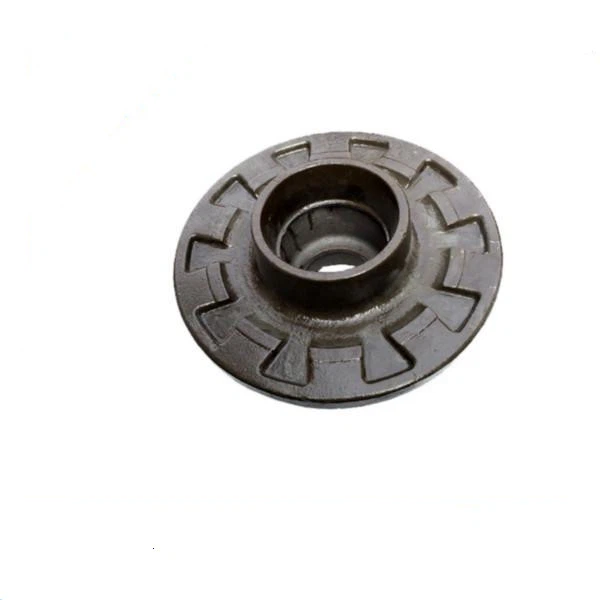

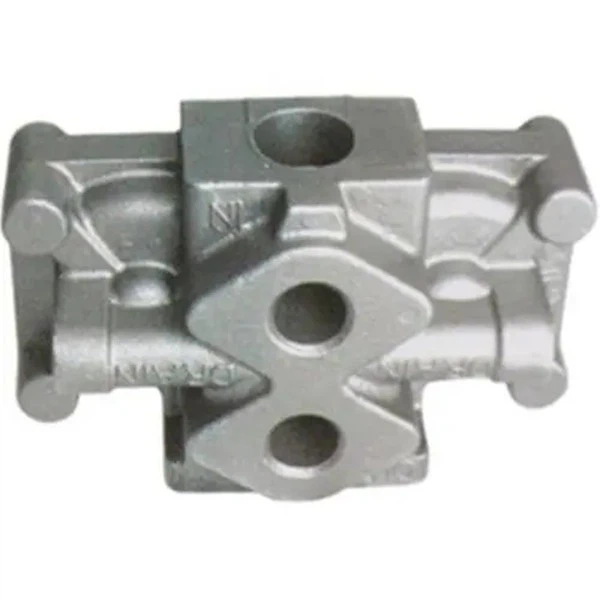
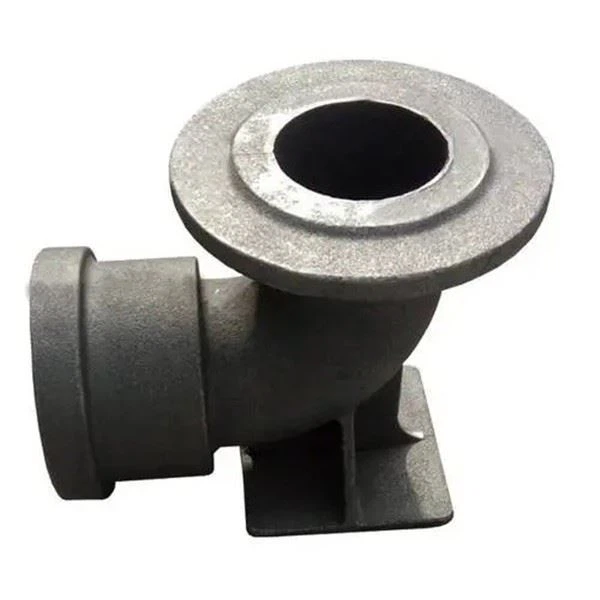
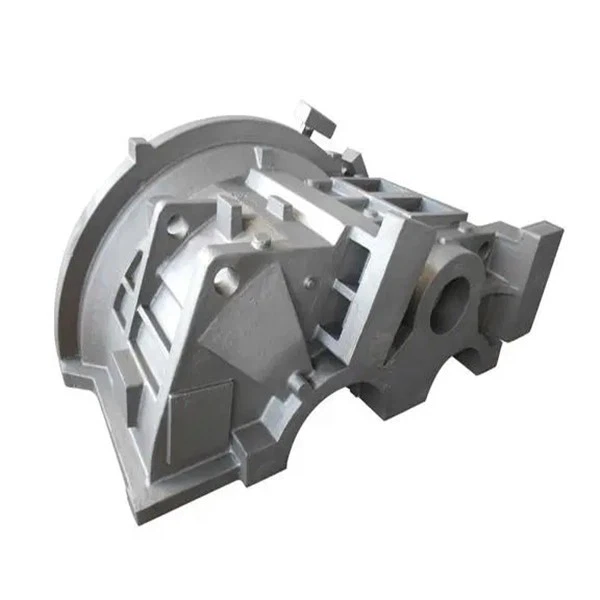
GGG40 Ductile Iron Castings
With the rapid development of high-speed rail and wind power industries, people have higher and higher requirements for the performance indicators of ductile iron low-temperature impact castings.
GGG40 corresponds to the Chinese brand QT400-18 Ductile Iron Castings, QT400-18 is the brand of ductile iron, QT is the prefix of "ductile iron", 400 means tensile strength 400MPa, 18 means elongation 18%.
German grade GGG40, American grade 60-40-18, international standard 400-18.
The following are the detailed parameters of QT400-18:
Material Name: Ductile Iron
Grade: QT400-18
Standard: GB 1348-88
● Features and scope of application:
It is a ferritic ductile iron with good weldability and machinability, and high impact toughness at room temperature. And high plasticity. The brittle transition temperature is low, and the low temperature toughness is also good. It is used as a part that can withstand dynamic and static loads such as high impact vibration and torsion, and requires high toughness and plasticity, especially for parts that require a certain impact value at low temperature
● Chemical composition:
Carbon C: 3.45~3.64
Silicon Si: 2.47~3.00
Manganese Mn: 0.45~0.57
Sulfur S: 0.012~0.026
Phosphorus P: 0.047~0.060
Magnesium Mg: 0.029~0.062
Rhenium Re: 0.032~0.047
● Mechanical properties:
Tensile strength σb (MPa): ≥400
Conditional yield strength σ0.2 (MPa): ≥250
Impact toughness value αkv (J/cm2): ≥18
Hardness: 130~180HB
● Heat treatment specification and metallographic structure:
Heat treatment specification: (determined by the supplier, the following is the heat treatment specification of a sample for reference) 920~980℃ for 2~5h, furnace cooled to 600℃ for air cooling, or furnace cooled to 700~760℃ for 3~6h, Re-furnace to 600 ℃ air cooling.
Ggg40 Ductile Iron Castings By Country
1. Implementation standards: The company strictly implements ISO9001 & TS 16949 certification.
2. Product material standards: ISO, GB, ASTM, SAE, ISO, EN, DIN, JIS, BS
3. Main processes: sand casting, investment casting, precision casting, deburring, sand blasting, machining, heat treatment, leak testing, surface treatment, etc.
4. Available materials:
GGG40 | - | GGG50 | GGG60 | GGG70 | GGG80 |
60-40-18 | 65-45-12 | 70-50-05 | 80-60-03 | 100-70-03 | 120-90-02 |
And alloy steel, gray iron, cast iron, cast steel, cast aluminum, cast copper, etc. can be customized according to customer requirements.
Country | Ductile Iron Castings | ||||||
China | QT400-18 | QT450-10 | QT500-7 | QT600-3 | QT700-2 | QT800-2 | QT900-2 |
Japan | FCD400 | FCD450 | FCD500 | FCD600 | FCD700 | FCD800 | - |
U.S. | 60-40-18 | 65-45-12 | 70-50-05 | 80-60-03 | 100-70-03 | 120-90-02 | - |
Russia | B40 | B45 | B50 | B60 | B70 | B80 | B100 |
Germany | GGG40 | - | GGG50 | GGG60 | GGG70 | GGG80 | - |
Italy | GS370-17 | GS400-12 | GS500-7 | GS600-2 | GS700-2 | GS800-2 | - |
France | FGS370-17 | FGS400-12 | FGS500-7 | FGS600-2 | FGS700-2 | FGS800-2 | - |
U.K. | 400/17 | 420/12 | 500/7 | 600/7 | 700/2 | 800/2 | 900/2 |
Poland | ZS3817 | ZS4012 | ZS4505 | ZS6002 | ZS7002 | ZS8002 | ZS9002 |
5002 | |||||||
India | SG370/17 | SG400/12 | SG500/7 | SG600/3 | SG700/2 | SG800/2 | - |
Romania | - | - | - | - | FGN70-3 | - | - |
Spain | FGE38-17 | FGE42-12 | FGE50-7 | FGE60-2 | FGE70-2 | FGE80-2 | - |
Bulgaria | FNG38-17 | FNG42-12 | FNG50-7 | FNG60-2 | FNG70-2 | FNG80-2 | - |
Australia | 300-17 | 400-12 | 500-7 | 600-3 | 700-2 | 800-2 | - |
Sweden | 0717-02 | - | 0727-02 | 0732-03 | 0737-01 | 0864-03 | - |
Hungary | GV38 | GV40 | GV50 | GV60 | GV70 | - | - |
Bulgaria | 380-17 | 400-12 | 450-5 | 600-2 | 700-2 | 800-2 | 900-2 |
500-2 | |||||||
(International Organization for Standardization) | 400-18 | 450-10 | 500-7 | 600-3 | 700-2 | 800-2 | 900-2 |
(COPANT) | - | FMNP45007 | FMNP55005 | FMNP65003 | FMNP70002 | - | - |
Finland | GRP400 | - | GRP500 | GRP600 | GRP700 | GRP800 | - |
Netherlands | GN38 | GN42 | GN50 | GN60 | GN70 | - | - |
Luxembourg | FNG38-17 | FNG42-12 | FNG50-7 | FNG60-2 | FNG70-2 | FNG80-2 | - |
Austria | SG38 | SG42 | SG50 | SG60 | SG70 | - | - |
Ggg40 Ductile Iron Castings Melting Process
QT400-18AL (-40℃) low temperature ductile iron material has also been more and more cited in product requirements in recent years, and some domestic foundries can also produce castings required by this material. With the development of products, the research and application of QT400-18AL (-50℃) low temperature ductile iron material has gradually become one of the main technical research topics in the foundry industry.
To produce QT400-18AL (-50℃) low temperature impact material, under the premise of ensuring tensile strength ≥ 400MPa, yield strength ≥ 250MPa, and elongation ≥ 18% to meet the requirements In the test, the average value of the impact absorption energy of three standard Charpy samples is required to be KV≥12J, and the impact absorption energy of a single sample is required to be KV≥9J. If you want to get a higher impact energy absorption material, you must have a suitable chemical composition, a better spheroidization grade, a larger number of graphite balls, a higher content of ferrite and elongation.
1. Selection and control of chemical components
The selection and control of chemical composition is one of the key points in the production of QT400-18AL (-50℃) low temperature impact material castings. The chemical composition directly affects the metallographic structure and physical properties of the castings. Through experiments, the appropriate range of various chemical elements corresponding to high performance indicators was found and controlled.
(1) The choice of chemical composition is determined
Combined with the function of each element, the status of raw materials at home and abroad, and the experience data of producing QT400-18AL (-40 ℃) low temperature impact castings, the chemical composition range of producing QT400-18AL (-50 ℃) low temperature impact castings is determined.
① Through the production of QT400-18AL (-40℃) low temperature impact casting physical and chemical inspection records, the important role of Si element is further verified. The level of Si content directly affects the tensile strength and impact value; To improve the impact value index, the Si content must continue to be reduced, but the reduction of Si can no longer meet the strength requirements. We solved the problem of insufficient strength caused by Si reduction by increasing the nickel content.
②Combined with the actual experience in the production of QT400-18AL (-40℃) low temperature impact castings and the situation of domestic and foreign raw materials and our company's ability to control chemical composition in the production process, control the spheroidization reaction of QT400-18AL (-50℃) low temperature impact castings during production The chemical composition is as follows: wC=3.50%~3.80%, wSi=2.05%~2.15%, wMg=0.38%~0.54%, wRE=0.005%~0.009%, wNi=0.77%~0.83%, wMn≤0.10%, wP ≤0.028%, wS≤0.015%, wTi≤0.018%, wCr≤0.023%, the lower the other trace elements, the better.

(2) Control of chemical composition
① control of raw materials ① pig iron. Select high-purity pig iron with high C, low Si, Mn, P, and S, and low enough trace elements such as Ti, Cr, Sn, Sb, and Pb. Such as South African pig iron, Benxi pig iron, Fushun Hanwang pig iron, Longfengshan pig iron, etc. ②Scrap steel. Use A3 scrap with lower alloying elements. ③ Carburizer. Select a low S and easy to absorb recarburizer, and the yield requires C ≥ 90% and S ≤ 0.3%.
②Control of chemical composition in the smelting process
a: Strictly check the weight according to the ingredient list, and the ingredients have records.
traceability.
b: Strictly follow the requirements of the chemical composition of the molten iron before it is released from the furnace. The molten iron that does not meet the requirements is not allowed to be released from the furnace.
The chemical composition requirements before producing QT400-18AL (-50℃) low temperature impact castings before spheroidization reaction: wC=3.92%~3.98%, wSi=0.68%~0.72%, wNi=0.77%~0.83%, wMn≤0.10%, wP ≤0.028%, wS≤0.015%, wTi≤0.018%, wCr≤0.023%, the lower the other trace elements, the better.
③Not only the spheroidizer and inoculant should be weighed accurately, but also the steel sheet covering the spheroidizer should be weighed ±1kg, and the tapping should be weighed ±10kg.
Reasonable determination and control of chemical composition is the primary link and necessary condition of this project. Another important condition of this project is that it must have good terraforming effect.

2. Melting control
Obtaining high-quality molten iron is the basis for good spheroidizing effect. The so-called high-quality molten iron is to ensure the original number of molten metallurgical cores as much as possible on the premise of ensuring the purity of the molten iron, so that a large number of heterogeneous cores can be maintained, and the appropriate chemical composition and molten iron temperature are guaranteed. Production of QT400-18AL (-50 ℃) low temperature impact material castings should pay attention to the following points in smelting control.
(1) Ingredients
When batching, use more virgin iron, less scrap steel and return material, and try to approximate the ideal chemical composition when calculating, leaving a small amount of fine-tuning space. The purpose of adding more primary iron is to ensure the number of original graphite cores, and at the same time reduce the amount of recarburizer added (reduce the sulfur increase of the recarburizer).
(2) Electricity melting
High current melts quickly, always pay attention to the falling situation of the charge, and do not cause partial overheating of molten iron due to the presence of shed material. The overheating of the molten iron makes the heterogeneous core disappear, reducing the number of graphite balls after the spheroidization reaction and affecting the spheroidization effect.
(3) Sampling analysis and adjustment
When the temperature of the molten iron rises to 1400-430°C, take a sample for pre-furnace carbon-silicon analysis; when the temperature of the molten iron rises to 1420-1450°C, take a sample for pre-furnace spectral analysis.
(4)The molten iron is released
High-current power transmission, rapid heating to the furnace temperature, scraping off the scum on the surface of the molten iron, and then out of the furnace. The temperature of molten iron in our company is 1525~1535℃. Unlike other companies that produce low-temperature impact ductile iron castings, the molten iron is released immediately after reaching the tapping temperature, and 5~10min purification treatment is not used. The reasons for this are as follows:
①The tapping of the electric furnace adopts the tapping slot for diversion, and the tapping slot should be cooled by 5-10 °C, and the tapping temperature should be increased by 5-10 °C to compensate for the cooling of the tapping slot.
② After the charge is melted, the gas is purified as the temperature rises. When the temperature rises above 1500 °C, the inhalation oxidation begins, the original heterogeneous core gradually disappears, and the subcooling degree of the molten iron gradually increases. In order to ensure the number of graphite balls after the spheroidization reaction, it is necessary to ensure the original number of cores in the molten iron before the spheroidization reaction.

Our company produces ductile iron castings melting equipment is a 3t electric furnace and a 1.5t electric furnace. The production of 3t electric furnace is 2 bales of iron spheroidization per furnace. When the molten iron reaches the tapping temperature, the first baler starts to be produced after a power outage. After the first spheroidization reaction of the molten iron is completed, the slag removal is completed, and the molten iron is hoisted, the power transmission continues. When the temperature reaches the requirements of the furnace, the second ladle of molten iron begins to be released. We compare the tensile strength of the test blocks poured from the first and second bags of molten iron. T500-7 material takes 200 sets of data, the average value of the first bag data is 22.6MPa higher than the second bag data average; QT400-18 The material takes 200 sets of data. The average value of the first package data is 8.2MPa higher than the average value of the second package data. Therefore, our company requires the molten iron to heat up quickly and be released quickly. The second package of molten iron in a 3t electric furnace cannot produce low temperature impact castings of ductile iron.
③ The high temperature of molten iron is conducive to the floating of the spheroidization reaction slag, which is beneficial to the purification of the molten iron after the spheroidization reaction.
Different from other companies, our company adopts the tapping groove to guide the outflowing iron: a: Prevent the molten iron from directly rushing into the nodularizing agent and ensure the stable nodularizing reaction. b: Ensure the accuracy of tapping weight and reduce composition fluctuation.

3. Spheroidization
(1) Types of nodulizers
Considering the stability of the spheroidization reaction and the characteristics of rare earth elements to reduce the low temperature impact value, we selected a special low magnesium and low rare earth spheroidizer, and the content of magnesium oxide is required to be ≤0.8%.
(2) Nodulizer particle size and addition amount
Nodulizer particle size: 3~20mm.
The amount of nodularizing agent added: 1.15% to 1.2% (add 1.2% when the molten iron content is high in S%, the temperature of the molten iron is high, and the amount of nodularized molten iron is small).
Since the spheroidizing element magnesium is an element that strongly promotes whitening, it directly affects the spheroidization grade, strength, elongation and low-temperature impact absorption energy, and the residual magnesium content (mass fraction) is controlled at 0.038% to 0.056%.
(3) Requirements for spheroidization package
The bottom of the spheroidized bag should be repaired into a pit type, the size and depth of the pit should be appropriate, and the ratio of the height to the diameter of the spheroidized bag should be ≥1.8. The first purpose is to improve the absorption rate of magnesium, and the second is to ensure the stability of the spheroidization reaction.
(4) Method for adding nodularizing agent and tapping
The spheroidizing agent is added to the pit at the bottom of the bag and flattened. In special cases, the molten iron should be tamped when the temperature of the molten iron is high. Cover the inoculant evenly on the spheroidizing agent, and then cover the thin steel sheet (or clean rust-free ductile iron foam) evenly. The thin steel sheet should be weighed. The weight of the thin steel sheet covered by the chemical bag is 18-20kg. When tapping, do not hit the nodularizing agent directly. At the beginning, the molten iron should be discharged into the nodularizing bag as quickly as possible, and the iron tapping speed should be slowed down at the end.
(5) Spheroidization reaction
①Spheroidization reaction time is 70-120s.
② Place the mold near the electric furnace as much as possible to shorten the transportation and pouring time of the molten iron after the spheroidization reaction; if the mold must be placed far away from the electric furnace, a slag removal yard can be set up near the mold, and the molten iron can be directly hoisted after the molten iron is quickly released from the furnace. Go to the slag scraper to scrape the slag. The molten iron surface and the scum along the ladle should be thoroughly cleaned before pouring. The spheroidization reaction is completed to the end of the pouring can not exceed 12min.
Application
QT400-18AL (-40℃) ultra-low temperature ductile ductile iron is suitable for ferritic ductile iron castings working in a low temperature environment of -40℃. It is the focus of research and application in the field of metal materials and ductile iron industry in recent years. Technical bottlenecks once restricted the development of high-end equipment manufacturing, construction machinery and new energy industries in China and the development of lightweight products in the alpine field. After years of independent innovation, the company has broken through the control problems of low temperature ductile iron production. By optimizing the content of Si, Mn and P, without alloying treatment, strictly controlling harmful elements and residual Mg, Re content and comprehensive technical processes, it has broken through the low temperature toughness ductile iron. The production control problem is difficult, the qualified rate of material performance is 100%, and the quality is highly stable, which removes the quality threshold for entering the field of high-end equipment products. QT400-18AL (-40 ℃) ultra-low temperature toughness ductile iron, to ensure the mechanical properties of QT400-18AL, the tensile strength of the material ≥ 400 MPa, the specified non-proportional elongation strength ≥ 240 MPa, the elongation after fracture ≥ 18%, and at -40 The minimum impact energy at ℃ is higher than 12J; the qualified rate of mechanical properties of castings is 100%. The material can ensure the normal operation of casting products at low temperature -40 ° C, and has excellent mechanical properties, wear resistance, shock absorption properties, processing properties and lightweight characteristics. This technology was first successfully applied to the high-speed train bogie axle box. The core technology "casting method of ductile iron axle box for EMU bogie at minus 40 ℃" "QT400-18AL ultra-low temperature toughness ductile iron and its application in high-speed train bogie". The application on the axle box" industry experts have reached the international advanced level.


Send Inquiry
