



Aluminum Magnesium Alloy Casting
Aluminum magnesium alloy casting is an aluminum alloy that fills the mold with molten metal to obtain blanks of various shapes. It has the advantages of low density, high specific strength, good corrosion resistance and casting manufacturability, and is less restricted by the structural design of parts.
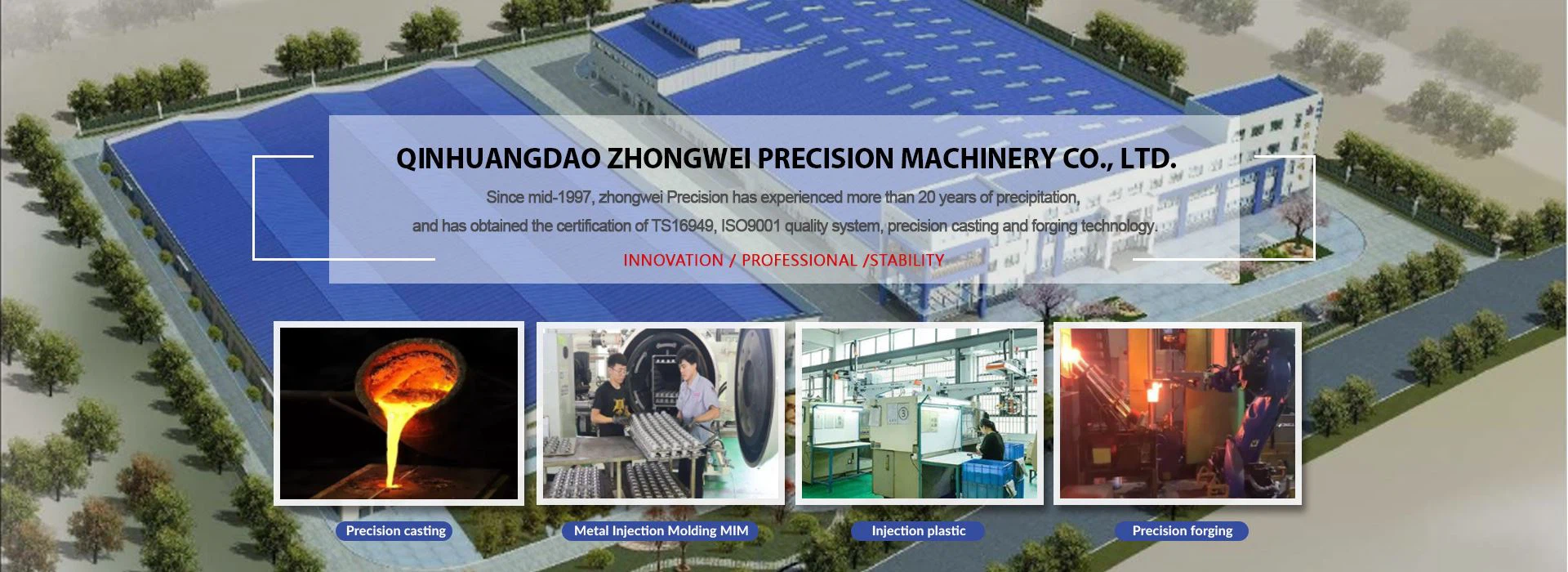
Aluminum magnesium alloy casting is an aluminum alloy that fills the mold with molten metal to obtain blanks of various shapes. It has the advantages of low density, high specific strength, good corrosion resistance and casting manufacturability, and is less restricted by the structural design of parts. Divided into Al-Si and Al-Si-Mg-Cu-based medium-strength alloys; Al-Cu-based high-strength alloys; Al-Mg-based corrosion-resistant alloys; Al-Re-based heat-strength alloys. Most require heat treatment to strengthen the alloy, eliminate internal stress in the casting, stabilize the structure and size of the parts. After more than ten years of precipitation, Qinhuangdao Zhongwei Precision Machinery Co., Ltd. has rich production experience in water glass lost wax precision casting, lost foam precision casting technology, silica sol precision casting technology, and shell sand casting technology. We expect manufacturers from all over the world to consult and negotiate business.
Product Description
Basic situation of aluminum magnesium alloy casting
1.Implementation standards: The company strictly implements ISO9001 & TS 16949 certification.
2. Product material standards: ISO, GB, ASTM, SAE, ISO, EN, DIN, JIS, BS
3. Main processes: sand casting, silica sol investment casting, water glass investment casting,shell casting,deburring, sand blasting, machining, heat treatment, leak testing, surface treatment, etc.
4. Available materials:
Aluminum alloy, aluminum magnesium alloy, tin bronze, silicon bronze, aluminum bronze, brass, red copper, titanium alloy, high manganese steel, high chromium steel, high nickel steel, carbon steel, alloy steel, stainless steel, gray iron, cast iron , cast steel, etc. according to customer requirements.

Product Category
Modern aluminum magnesium alloy casting can be divided into four series according to the main added elements, namely: aluminum-silicon series, aluminum-copper series, aluminum-magnesium series and aluminum-zinc series. For these 4 series, each country has the corresponding alloy and alloy grade mark. China adopts the ZL+3-digit marking method, the first digit represents the alloy system, among which: 1 represents the aluminum-silicon alloy system, 2 represents the aluminum-copper alloy system, 3 represents the aluminum-magnesium alloy system, 4 represents the aluminum-zinc alloy system, and the second , Three digits indicate alloy serial number. Several typical cast aluminum alloys in China are shown in the table. According to the use characteristics of the alloy, they can be divided into: heat-resistant cast aluminum alloy, airtight cast aluminum alloy, corrosion-resistant cast aluminum alloy and weldable cast aluminum alloy.
1. Aluminum-silicon alloy
Usually the silicon content is 4% to 13%, also known as "silicon aluminum bright" alloy. The casting performance is the best, the crack tendency is very small, the shrinkage rate is low, and it has good corrosion resistance and air tightness, as well as sufficient mechanical properties and welding properties. Although the industrial application of this series of alloys is later than that of aluminum-copper series alloys, it was discovered in 1920 that they could be subjected to modification treatment, which improved the structure and properties of this series of alloys, broadened the scope of use, and almost accounted for the amount of 50% of cast aluminum alloy. Al-Si alloys can be divided into eutectic, hypoeutectic, hypereutectic and complex eutectic alloys with addition of copper, magnesium and manganese. ZL102 alloy is a typical binary eutectic alloy, the eutectic temperature is 577 ℃, the eutectic composition is 12.6% Si, 1.6% Si is dissolved in the α solid solution at the eutectic temperature, and about 0.05% Si is dissolved at room temperature; the β phase is aluminum The solid solution dissolved in silicon has a very small solubility, so the eutectic structure is composed of α+Si two-phase. In the structure of the multi-component alloy, in addition to α and silicon, there are θ (CuAl2), W (AlxMg5Si4) and other phases (see the phase of aluminum alloy). Copper-containing aluminum-silicon alloys can be strengthened by heat treatment, but have poor corrosion resistance. The shape of the silicon phase in the alloy has a significant influence on the strength and plasticity. Through modification treatment (adding sodium or antimony to the melt), the silicon phase is spheroidized, and the structure and properties of the alloy are improved. Coarse primary silicon in hypereutectic alloys is detrimental to mechanical properties and cutting performance. Phosphorus is often added to form AlP compounds to refine primary silicon and reduce its harmful effects.
2. Aluminum-copper alloy
It is the earliest industrial cast aluminum alloy. This alloy has high strength and thermal stability, but poor castability and corrosion resistance. The copper content is generally lower than the solubility limit of copper in aluminum (5.85%), and there is no eutectic in the equilibrium structure. Under non-equilibrium conditions, a small amount of eutectic may appear. After solid solution treatment, the solid solution is supersaturated, and the aging strengthening effect can be obtained. . The addition of manganese and titanium to the alloy can refine the grains, supplement strengthening and improve corrosion resistance.
3. Aluminum-magnesium alloy
The alloy has high strength, best corrosion resistance, low density and good air tightness. The aluminum-magnesium binary casting alloy has a magnesium content as high as 11.5%, and the magnesium content in the multi-component alloy is generally about 5%. The structure of the alloy is composed of α+β (Mg5Al8) phase, and the strengthening effect of heat treatment is not obvious, mainly solid solution strengthening. When the β(Mg5Al8) phase precipitates in the form of a network along the grain boundary, the corrosion resistance and mechanical properties are deteriorated. In order to prevent the β (Mg5Al8) phase from precipitation along the grain boundary, it is mostly used in the solid solution state. The addition of silicon and manganese to the alloy can improve the fluidity of the alloy.
4. Aluminum-zinc alloy
This series of alloys have the characteristics of quenching structure in the as-cast state, and can obtain high strength without heat treatment, but the density of the alloy is high, which is not suitable for making aircraft parts. The alloy system is made by adding zinc on the basis of silicon-aluminum-ming alloy, so it is also called "zinc-silicon-aluminum-ming" alloy.
Post Casting Process
1. Heat treatment: annealing, carbonization, tempering, quenching, normalizing, surface tempering
2. Processing equipment: CNC, WEDM, lathe, milling machine, drilling machine, grinder, etc.;
3. Surface treatment: powder spraying, chrome plating, painting, sandblasting, nickel plating, galvanizing, blackening, polishing, bluing, etc.
Moulds and Inspection Fixtures
1. Mold service life: usually semi-permanent. (except for lost foam)
2. Mold delivery time: 10-25 days, (according to product structure and product size).
3. Tooling and mold maintenance: Zhongwei is responsible for precision parts.
Quality Control
1. Quality control: the defective rate is less than 0.1%.
2. Samples and trial run will be 100% inspected during production and before shipment, sample inspection for mass production according to ISDO standards or customer requirements
3. Testing equipment: flaw detection, spectrum analyzer, golden image analyzer, three-coordinate measuring machine, hardness testing equipment, tensile testing machine;
4. Provide after-sales service.
5. The quality can be traced back.
Application
Cast aluminum alloy has good casting properties, and can be made into parts with complex shapes; it does not require huge additional equipment; it has the advantages of saving metal, reducing costs, and reducing man-hours, and is widely used in the aviation industry and civil industry. Used in the manufacture of beams, gas turbine blades, pump bodies, pylons, hubs, air intake lips and engine casings, etc. Aluminum magnesium alloy casting is also used in the manufacture of automobile cylinder heads, gearboxes and pistons, instrument housings and supercharger pump parts.


Send Inquiry
