



Magnesium Alloy High Pressure Die Casting
Compared with other metals, magnesium alloys have a low melting point and a small specific heat, and the energy consumed during regeneration and melting is 4% of the energy consumed in the manufacture of new materials.
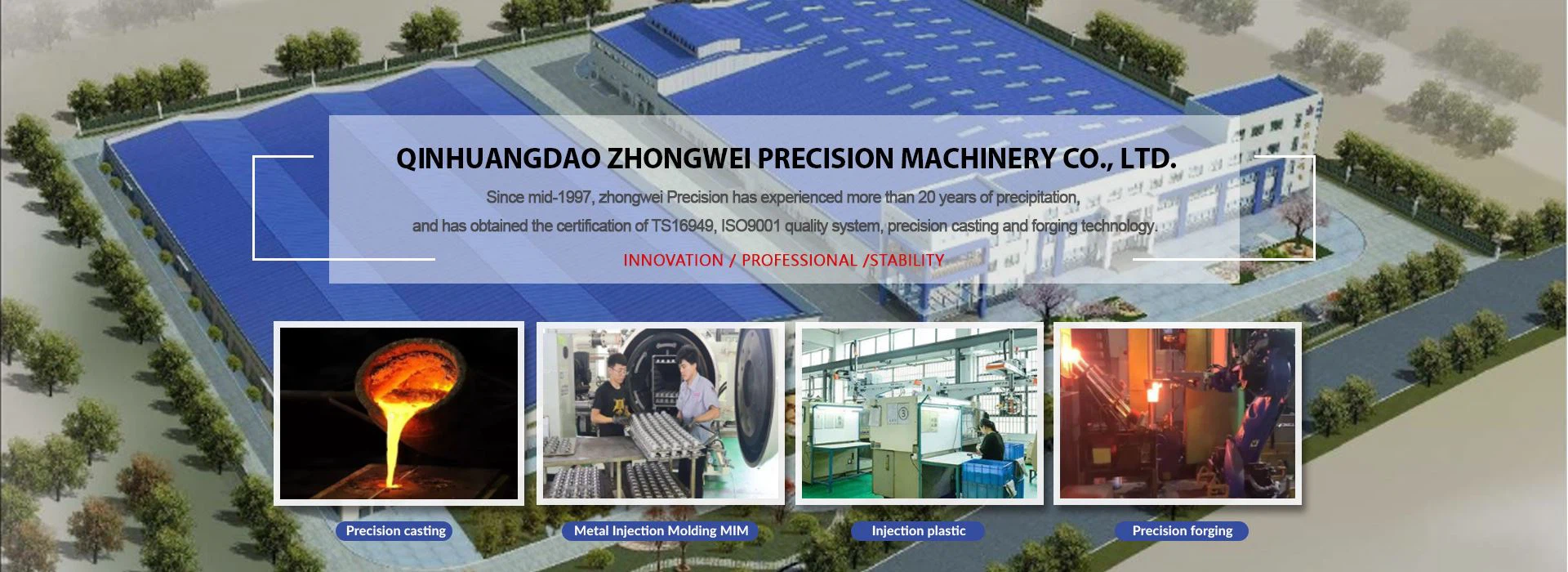
Compared with other metals, magnesium alloys have a low melting point and a small specific heat, and the energy consumed during regeneration and melting is 4% of the energy consumed in the manufacture of new materials. Recyclable to achieve the quality of the original alloy, but not other materials. In addition, Magnesium alloy high pressure die casting can produce 0.2mm products, which cannot be achieved by other materials. Easy cutting, high work efficiency, small loss to the tool and low cost. Since its establishment in 1997, Qinhuangdao Zhongwei Precision Machinery Co., Ltd. has mainly produced gravity casting, low pressure casting, high pressure casting, investment casting, etc. The company has built a reputation for gold with its excellent quality, making the other shore products quickly famous. at home and abroad. More than 70% of the products are exported to the United Kingdom, Germany, Japan, the United States, Taiwan and other countries and regions.
Product Dsecription
1. Implementation standards: the company strictly implements ISO9001, ISO14001, IATF16949 certification
The products have passed the certification of ROHS, FDA EU, etc.
2. Product material standards: ISO, GB, ASTM, SAE, ISO, EN, DIN, JIS, BS
3. Main processes: die casting process, investment casting, shell casting, deburring, sand blasting, machining, heat treatment, leak testing, surface treatment, etc.
4. Casting available materials:
Tin bronze, silicon bronze, aluminum bronze, brass, red copper, titanium alloy, high manganese steel, high chromium steel, high nickel steel, carbon steel, alloy steel, stainless steel, gray iron, cast iron, cast steel, cast aluminum, etc. Customized according to customer requirements.
Available materials for die casting:
Magnesium alloy high pressure die casting mainly includes Mg-Al-Zn-Mn, Mg-Al-Mn, Mg-Al-Si-Mn alloys.

Comparison of magnesium alloy high-pressure die-casting automobile wheels with other craft wheels
In the automotive industry, alloy wheels are aluminum or magnesium alloys from which wheels are made. Alloys are mixtures of metals and other elements. They generally offer higher strength than pure metals, which are generally softer and more ductile. Aluminum or magnesium alloys are generally lighter for the same strength, provide better thermal conductivity, and generally have a better appearance than steel wheels. Although steel is the most commonly used material in wheel production, being an alloy of iron and carbon, the term "alloy wheel" is often used for wheels made of non-ferrous alloys.
The earliest light alloy wheels were made of magnesium alloys. Despite their unpopularity on regular vehicles, they remained popular throughout the 1960s, albeit in very limited numbers. In the mid-to-late 1960s, improvements were made to aluminum castings, which resulted in safer wheels that were less brittle. Prior to this, most aluminum wheels had low ductility, typically between 2-3% elongation. Since light-alloy wheels at the time were typically made of magnesium, these early hub failures were later attributed to the low ductility of magnesium alloys, which in many cases were poor-cast aluminum alloys. Once these aluminum casting improvements were more widely adopted, aluminum wheels replaced magnesium alloys as low-cost, high-performance motorsport wheels.

Characteristics of alloy wheels
Lighter wheels can improve handling by reducing unsprung mass, allowing the suspension to follow the terrain more closely for better grip, but not all alloy wheels are lighter than their steel counterparts. Reducing overall vehicle mass can also help reduce fuel consumption.
Better thermal conductivity and a more open wheel design can help release heat from the brakes, improving braking performance in tougher driving conditions and reducing the chance of overheating that can degrade or even fail.
Alloy wheels can also be used for decorative purposes, although the cheap alloys used are generally not resistant to corrosion. Alloys allow for attractive bare metal surfaces, but these must be sealed with paint or wheel wells. Even with such protection, wheels in service will eventually start to corrode after 3 to 5 years, but refurbishment is a problem these days, but at a cost. The manufacturing process also allows for complex, bold designs. In contrast, steel wheels are typically pressed from sheet metal, then welded together (often leaving unsightly bumps) and must be painted to avoid corrosion and/or being hidden by wheel caps/hub caps.
If proper precautions are not taken, alloy wheels are susceptible to galvanic corrosion, which can lead to flat tires. Also, alloy wheels are more difficult to repair than steel wheels when bent, but their higher price generally makes repairs cheaper than replacements.
Alloy wheels are more expensive than standard steel wheels, so are usually not included in standard equipment, but sold as optional extras or as part of more expensive trim packages. However, since 2000, alloy wheels have become more common, and today economy and subcompact cars have started to use them, whereas a decade ago, alloy wheels on cheap wheels were usually not a factory option. . Alloy wheels have long been standard equipment for high-priced luxury or sports cars, while larger or "exclusive" alloy wheels are optional. The high cost of alloy wheels makes them attractive to thieves. To solve this problem, automakers and dealers often use lock nuts or bolts that require a special key to remove.
Most alloy wheels are made from castings, but some are forged. Forged wheels are generally lighter and stronger than cast wheels, but are more expensive. Forged wheels come in two types: one-piece and modular. Modular forged wheels are available in two-piece or three-piece designs. A typical multi-piece wheel consists of an inner rim base, an outer rim lip, and a wheel center piece with openings for the lug nuts. All parts of the modular wheel are bolted on. The BBS RS is one of the most famous three-piece modular forged wheels.
Magnesium alloy wheels
Magnesium alloy wheels are the earliest die-cast wheels produced, and are often referred to simply as "magnet wheels". Magnesium wheels were originally used for racing, but their popularity in the 1960s led to the development of other die-cast wheels, especially aluminum alloys. The term "magnetic wheel" became synonymous with die-cast wheels made of any material, from modern aluminum alloy wheels to plastic and composite wheels for items like bicycles, wheelchairs, and skateboards.
However, it is only found on classic cars that pure magnesium wheels are no longer produced. Pure magnesium has many problems. Older magnesium alloy rims are very prone to pitting, cracking and corrosion. Bulk magnesium is difficult to ignite, but pure magnesium wheels can ignite from burning tires or scraping on the road for a long time after a puncture. Magnesium alloys were later developed to alleviate most of these problems. In fact, over the past decade, the FAA has conducted extensive testing and concluded that potential magnesium flammability is no longer considered a concern. Modern surface treatment techniques provide corrosion protection and significantly extend the average service life of magnesium alloy rims.
Production Method
• Forging
Forging can be done by one or more steps forging from various magnesium alloys, most commonly AZ80, ZK60 (MA14 in Russia). Wheels made this way are generally more ductile and malleable than aluminum wheels, albeit at a much higher cost. [8] Forging is a complex process involving processes such as heating, rolling, applying high pressure, hammering, and/or a combination of these. As a result, the molecular structure of the alloy changes, and as a result the material becomes stronger and lighter.
• Assemble
There are two-piece and three-piece forged wheels. Each part starts out as an alloy billet and is further transformed into a wheel if it is a one-piece forged wheel, or a wheel part if it is a multi-piece wheel.
• High pressure die casting
This process uses a mold arranged in a large machine with high closing forces to clamp the closed mold. The molten magnesium is poured into a filled tube called a shot peening sleeve. The piston pushes the metal into the mold at high speed and pressure, the magnesium solidifies, the mold is opened, and the grinding wheel is released. Wheels produced by this method can reduce price and improve corrosion resistance, but due to the nature of high pressure die casting, they are less ductile and less strong.
• Low pressure die casting
This process typically uses a steel mold, which is placed over a crucible filled with molten magnesium. Most commonly, the crucible is sealed to the mold and a compressed air/cover gas mixture is used to force molten metal into the mold along a straw-like filling tube.
When machined using best practice methods, low pressure die cast wheels can provide increased ductility over magnesium wheels and any cast aluminum wheels, which are less ductile than forged magnesium.
• Gravity casting
Gravity cast magnesium wheels have been in production since the early 1920s and have good ductility, with relative performance superior to aluminum castings. Tooling costs for gravity cast wheels are the cheapest of all processes. This enables small batch production, design flexibility and short development times.
Post Casting Process
1. Heat treatment: annealing, carbonization, tempering, quenching, normalizing, surface tempering
2. Processing equipment: CNC, WEDM, lathe, milling machine, drilling machine, grinder, etc.;
3. Surface treatment: powder spraying, chrome plating, painting, sandblasting, nickel plating, galvanizing, blackening, polishing, bluing, etc.

Moulds and Inspection Fixtures
1. Mold service life: usually semi-permanent. (except for lost foam)
2. Mold delivery time: 10-25 days, (according to product structure and product size).
3. Tooling and mold maintenance: Zhongwei is responsible for precision parts.
Quality Control
1. Quality control: the defective rate is less than 0.1%.
2. Samples and trial run will be 100% inspected during production and before shipment, sample inspection for mass production according to ISDO standards or customer requirements
3. Testing equipment: flaw detection, spectrum analyzer, golden image analyzer, three-coordinate measuring machine, hardness testing equipment, tensile testing machine;
4. Provide after-sales service.
5. The quality can be traced back.
Application
Low pressure casting is the earliest anti-gravity casting technology, and it has been used in industrial production since the 1940s. Today, low-pressure casting is mainly used to produce aluminum alloy and magnesium alloy parts, such as automobile wheels in the automotive industry, cylinder blocks of internal combustion engines, cylinder heads, pistons, missile casings, impellers, wind guide wheels and other castings with complex shapes and high quality requirements . When using low pressure casting to produce cast steel, such as cast steel wheels, special refractory materials are required for the riser. Low pressure casting can also be applied to small copper alloy castings, such as pipe fittings, faucets in bathrooms, etc. This technology has been industrialized abroad.
Certicifation


Send Inquiry
