



Stainless Steel Die Casting
Steel castings are mainly martensitic castings, ferritic castings, austenitic castings, austenitic-ferritic castings, and other castings. Here we mainly talk about martensitic castings, ferritic castings, austenitic castings The properties of the three types of cast iron castings.
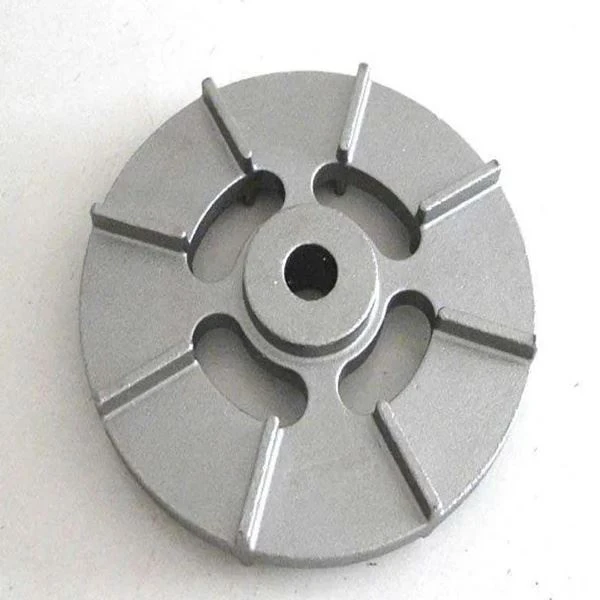
Stainless Steel Die Casting is a general term for steel castings produced from various stainless steel materials. Shell die casting is a process of casting, which is mainly used in various medium corrosive conditions.
As early as 1910, it was found that when the Cr content in steel exceeds 12%, it has good corrosion resistance and oxidation resistance. In addition to containing Cr12% or more, typical stainless steel also contains one or more other alloying elements, such as Ni, Mo, Cu, Nb, Ti and N2.
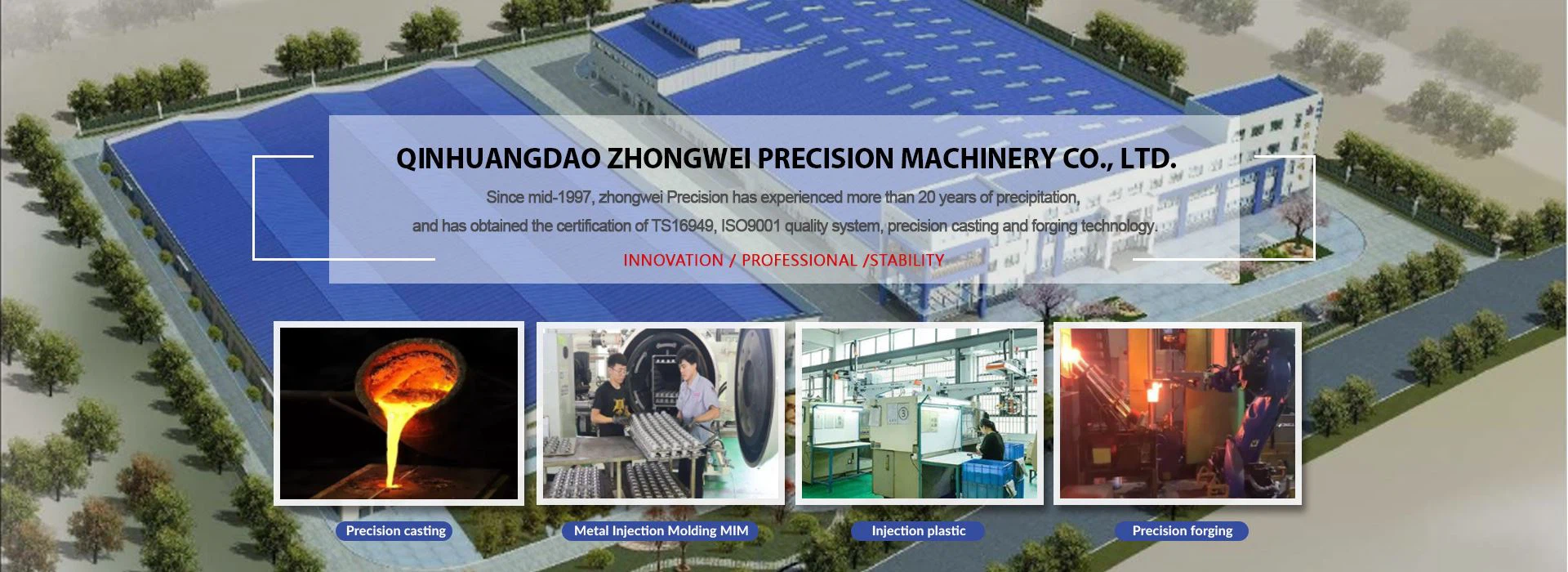
After more than ten years of precipitation, Qinhuangdao Zhongwei Precision Machinery Co., Ltd. has rich production experience in water glass lost wax precision casting, lost foam precision casting technology, silica sol precision casting technology, and shell sand casting technology. We expect manufacturers from all over the world to consult and negotiate business.
Product Description
Stainless Steel Die Casting Basics
1. Implementation standards: The company strictly implements ISO9001 & TS 16949 certification.
2. Product material standards: ISO, GB, ASTM, SAE, ISO, EN, DIN, JIS, BS
3. Main processes: sand casting, silica sol investment casting, water glass investment casting,shell casting,deburring, sand blasting, machining, heat treatment, leak testing, surface treatment, etc.
4. Available materials:
Tin bronze, silicon bronze, aluminum bronze, brass, red copper, titanium alloy, high manganese steel, high chromium steel, high nickel steel, carbon steel, alloy steel, stainless steel, gray iron, cast iron, cast steel, cast aluminum, etc. Customized according to customer requirements.
Common Problem
Stainless Steel Die Casting, also known as investment casting, because of its wide range of applications, high casting accuracy, flexible production methods and other characteristics, is moving into the casting industry with a strong momentum, attracting more and more attention from foundries. However, some casting problems are often encountered in casting. How should foundries face these problems?
1.The hammer head is stuck. In casting, if the hammer head is stuck, it will directly lead to the suspension of the casting process. Therefore, in the casting process, the foundry workers should often measure the temperature of the hammer head and the barrel to avoid the hammer head being stuck due to excessive temperature. Not only that, high-quality alloy materials without impurities are selected to prevent impurities from sticking to the hammer head, which can also effectively prevent the hammer head from being stuck.
2. The injection head is stuck in the gooseneck. When this happens, it is necessary to wait for the temperature of the equipment to drop to normal temperature, and try to rotate the hammer head. If it cannot be rotated, replace the cylinder and then take out the hammer head. However, a direct refill pot will be much faster than this method.
3. It is easy to crack when die-casting thin-walled products. When this happens, the first thing to consider is whether there is a problem with material selection, and secondly to check whether the mold opening and process parameter settings are appropriate. In casting, it is necessary to ensure that the proportion of waste does not exceed 30%, and the mold retention time should be shortened as much as possible.
4. The material is hard, and the tool is easy to wear. The casting material is hard, and the tool is easily damaged during production, which will not only damage the casting tool, but also prolong the delivery cycle of the casting. Foundry workers can use the original material ratio while working with gemstone blades with higher hardness.
5. Metal splashing. During die casting, metal spattering sometimes occurs. What is the solution to this problem? Reinstall the mold; increase the clamping force, adjust the die-casting machine to keep the moving and fixed mold mounting plates parallel to each other; add a support plate on the moving mold to increase the rigidity of the sleeve plate.

Post Casting Process
1. Heat treatment: annealing, carbonization, tempering, quenching, normalizing, surface tempering
2. Processing equipment: CNC, WEDM, lathe, milling machine, drilling machine, grinder, etc.;
3. Surface treatment: powder spraying, chrome plating, painting, sandblasting, nickel plating, galvanizing, blackening, polishing, bluing, etc.
Moulds and Inspection Fixtures
1. Mold service life: usually semi-permanent. (except for lost foam).
2. Mold delivery time: 10-25 days, (according to product structure and product size).
3. Tooling and mold maintenance: Zhongwei is responsible for precision parts.

Quality Control
1. Quality control: the defective rate is less than 0.1%.
2. Samples and trial run will be 100% inspected during production and before shipment, sample inspection for mass production according to ISDO standards or customer requirements
3. Testing equipment: flaw detection, spectrum analyzer, golden image analyzer, three-coordinate measuring machine, hardness testing equipment, tensile testing machine;
4. Provide after-sales service.
5. The quality can be traced back.
Application
Steel castings are mainly martensitic castings, ferritic castings, austenitic castings, austenitic-ferritic castings, and other castings. Here we mainly talk about martensitic castings, ferritic castings, austenitic castings The properties of the three types of cast iron castings.
1. Martensitic castings:
ZGICr13 type: good casting performance and good mechanical properties. It has good corrosion resistance in the atmosphere, water and weakly corrosive media (salt solution, dilute shale acid and some organic acids with low concentration) and low temperature. It can be used to withstand shock loads and require high toughness castings, such as pump casings, valves, impellers, turbine runners or blades, propellers, etc.
ZG2Cr13 type: The bitterness is similar to that of GlCr13. Because the carbon content is higher than that of ZGICr13, it has higher hardness. However, the corrosion resistance is low and the welding performance is poor.
2. Austenitic castings:
ZGOOCr14Ni14Si: It is an ultra-low carbon and high silicon stainless steel whose corrosion resistance is better than that of high purity aluminum in concentrated nitric acid, and has the mechanical properties of ordinary stainless steel.
The corrosion resistance is good. There is no knife edge corrosion after welding. Mainly used in national defense, chemical industry, textile, light industry, medicine and other industries to manufacture castings such as pumps, valves, pipe joints, etc.
ZGOOCr18Ni10: It has high smelting requirements for ultra-low carbon stainless steel. It has good corrosion resistance and good resistance to intergranular corrosion in oxidizing media (such as nitric acid), and no knife edge corrosion occurs after welding. Mainly used for chemical, fertilizer, chemical fiber and important corrosion-resistant castings and cast structural parts in the defense industry.
ZGOCrIHNi: It is a typical stainless acid-resistant steel. Its casting performance is better than that of the same type of stainless and acid-resistant steel containing Chin. It has good corrosion resistance in nitric acid, organic acid and other media, and has good intergranular resistance after II solution treatment. Corrosion performance, but the intergranular corrosion resistance A} in the sensitized state F decreases significantly. Good low temperature impact performance. Mainly used for nitric acid, organic acid, chemical and petroleum and other industrial pumps, valves and other castings.
3. Ferritic castings:
ZGiCr17: The casting performance is poor, the crystal powder is easy to be coarse, and the toughness is low, but it has good corrosion resistance in oxidizing acid, such as dilute nitric acid for industrial use where the temperature is not too high.
There are ten views (acetic acid, formic acid, lactic acid) and organic acid salt water solution. Not resistant to oxalic acid. The chemical equipment to be used in the manufacture of nitric acid dust f. can also be manufactured
Equipment used for food and man-made fibers, but generally used after annealing, not suitable for parts with more than 3 atmospheric shocks or shocks.
ZGICr19Mo2: Casting process properties are similar to ZGICr17, the grains are easily coarse and the toughness is low. It has good corrosion resistance in reducing media such as house acid and boiling acetic acid. To be used for non-impact vinylon in various concentrations of acetic acid medium at boiling temperature, film film and castings for papermaking bleaching section, replacing part of Cr18N 12MO2TiAIZGCr28.
ZGCr2: Poor casting performance, high tendency to hot cracking, and low toughness. However, it has good corrosion resistance in concentrated nitric acid medium, and still has good hexaoxide oxidation at high temperature of 11000C. It is mainly suitable for castings of high-temperature nitric acid concentration equipment that are not subject to impact load, such as pumps, and valve cyanide can also be used for manufacturing. Sodium hypochlorite and phosphoric acid equipment and high temperature anti-oxidation and heat-resistant parts.


Send Inquiry
