




Zinc Alloy High Pressure Die Casting
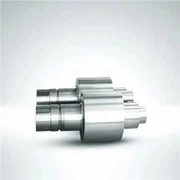
Zinc Alloy High Pressure Die Casting is a kind of pressure casting parts. It uses a pressure casting mechanical die casting machine equipped with a casting mold. The zinc or zinc alloy heated to a liquid state is poured into the feeding port of the die casting machine, and then die-casted by the die casting machine.
Zinc Alloy High Pressure Die Casting is a kind of pressure casting parts. It uses a pressure casting mechanical die casting machine equipped with a casting mold. The zinc or zinc alloy heated to a liquid state is poured into the feeding port of the die casting machine, and then die-casted by the die casting machine. Zinc parts or zinc alloy parts are cast out of the shape and size limited by the mold, such parts are often called zinc alloy die castings. Since its establishment in 1997, Qinhuangdao Zhongwei Precision Machinery Co., Ltd. has mainly produced gravity casting, low pressure casting, high pressure casting, investment casting, etc. The company has built a reputation for gold with its excellent quality, making the other shore products quickly famous. at home and abroad. More than 70% of the products are exported to the United Kingdom, Germany, Japan, the United States, Taiwan and other countries and regions.
Product Dsecription
1. Implementation standards: the company strictly implements ISO9001, ISO14001, IATF16949 certification
The products have passed the certification of ROHS, FDA EU, etc.
2. Product material standards: ISO, GB, ASTM, SAE, ISO, EN, DIN, JIS, BS
3. Main processes: die casting process, investment casting, shell casting, deburring, sand blasting, machining, heat treatment, leak testing, surface treatment, etc.
4. Casting available materials:
Magnesium alloy, aluminum alloy, zinc alloy, tin bronze, silicon bronze, aluminum bronze, brass, red copper, titanium alloy, high manganese steel, high chromium steel, high nickel steel, carbon steel, alloy steel, stainless steel, gray iron, , cast iron, cast steel, cast aluminum, etc. are customized according to customer requirements.
Available materials for die casting:
In the past, the raw materials for zinc alloy die casting mainly included No. 2, 3, 4, 5, and 7 alloys. Now, Zinc Alloy High Pressure Die Casting mostly uses No. 3 zinc alloy. Later, there were high aluminum-based alloys ZA-8, ZA-12, ZA-27, wrought zinc alloys Zn-1Cu-0.1T and Zn-22AI alloys. Zinc alloy mainly contains aluminum, copper, magnesium, cadmium, lead, titanium and other elements, among which effective alloying elements: aluminum, copper, magnesium; harmful impurity elements: lead, cadmium, tin, iron. (Zinc alloys are also known as zinc-based alloys, and are generally divided into _ element alloys, ternary alloys and multi-element alloys. Binary zinc-based alloys generally refer to zinc-aluminum alloys; ternary zinc-based alloys generally refer to zinc-aluminum-copper alloys; multi-element zinc-base alloys generally refer to zinc-aluminum-copper alloys. Alloy - generally refers to zinc, aluminum, copper and other trace metals).

Problems and Solutions of Zinc Alloy High Pressure Die Castings
The process of producing zinc alloy die castings will inevitably encounter many problems, all of which affect the quality and quality of the products. So how to solve it?
1. [Hammer stuck]
To prevent the hammer from getting stuck, you can start from two aspects:
(1) In production, the temperature is often measured to prevent the hammer head from being stuck due to the high temperature of the hammer head and the cylinder;
(2) For the use of materials, high-quality alloy materials should be selected to avoid the infiltration of impurities. When returning the material, care should be taken not to allow impurities to be mixed in, so as to avoid impurities from sticking to the hammer head and causing the hammer head to be stuck.
2. [Injection head stuck in gooseneck]
If the hammer head is stuck, first wait until the equipment is at normal temperature and try to turn the hammer head. If it does not turn, then use the method of replacing the driver to solve the problem and take out the hammer. If you want to solve the stuck problem quickly, the fastest way is to change the pot.
3. [When the die-casting machine punches the material, it often happens that dozens of molds are punched, and the material cannot be punched. It often takes a few minutes before the material can be punched]
Generally, in this kind of situation, it should be that the nozzle head or the nozzle body is blocked. At this time, observe whether there are no bright spots at the top of the blanking head. If the section is all gray, it means that the nozzle is blocked. The solution is as follows:
(1) Adjust the nozzle temperature to a higher level;
(2) The time for hitting the nozzle is reduced by 0.1 to 0.2 seconds;
(3) Turn off the cooling water of the fixed mold slightly.
4. [Easy to crack when die-casting thin-walled products]
It can be analyzed from the following points:
(1) There may be problems with the material, the use of die-casting materials, try to control the proportion of waste not to exceed 30%;
(2) The mold opening is not good. First, the ejection force is unbalanced; second, the unreasonable opening of the cooling water causes the mold temperature to be unbalanced, and the filling flow is unreasonable.
(3) Improper selection of process parameters. The main problem of process parameters is the error in the retention time and ejection delay time. The retention time should not be long, about 3s per mm of wall thickness; the ejection delay should not be long, generally 0.5-2s.
5. [When the ADC14 material is die-casting, the feedback material is too hard and the tool is easy to wear]
To solve this problem, you can see from the following points:
(1) The most important thing is that no impurities are allowed in the ingredients that come here, that is to say, the hard points should all be matched with new original materials, and recycled materials cannot be used, especially the quality of S1 element is better;
(2) Gem blades specially produced for these relatively hard alloys should be used, and the general service life is about 7 days.
6. [I wonder why some aluminum die castings have black spots when they are polished?]
There are several reasons for one: it may be that silicon oxide or aluminum oxide ingots solve the problem. But the biggest possibility comes from the release agent, spraying too much release agent or the organic content of the release agent is too high. Some of these organic substances are reduced to carbon elements and some become organic macromolecular polymers at the temperature of hot-melting aluminum. The carbon molecules mixed with the polymer are contained in the surface layer when the aluminum casting is formed and become the dark spots we see. Therefore, reduce the concentration of the spraying agent and use another spraying agent; or lengthen the blowing time after spraying.
7. [During the die-casting process, metal splashes sometimes occur]
Why do metal splashes sometimes occur? There may be several reasons: the mold clamping between the movable and fixed molds is not tight, and the gap between the two is large; or the clamping force is not enough to cause metal splashing; or the die-casting motorized, fixed mold installation It is caused by non-parallel; or the span of the support plate is large, and the injection force causes the deformation of the sleeve plate, resulting in spraying. In the case of the above reasons, the splashing situation can be solved by the following debugging: reinstall the mold; increase the clamping force: adjust the die-casting machine to keep the moving and fixed mold mounting plates parallel to each other; add a support plate on the moving mold and increase the sleeve plate stiffness.
8. [In-hole processing of aluminum die-casting, why can’t it exceed 0.25mm?]
In order to be suitable for die casting, people add a lot of silicon to the aluminum alloy used for die casting. When the aluminum alloy is condensed in the mold, the silicon will float to the surface, forming a silicon film that is very hard and wear-resistant. Some OEM designers use this feature to directly design the inner surface of the hole of the die casting as the bearing surface. . This silicon surface layer is generally only 0.2 to 0.9 mm thick. Too much machining will shorten the life of this bearing surface.
9. [What are the reasons for the pattern after anodization of die castings?]
(1) At present, the spraying and injection oil are mainly distributed unevenly, and they are locally aggregated, resulting in abnormal composition of the aluminum alloy on the surface or the appearance of cold segregation patterns, so the phenomenon of oxidized patterns appears; The texture is basically the same.
(2) Because the high-speed switching position is inappropriate, resulting in under-casting, there will be patterns after oxidation.
(3) The textbook says that the copper ion content in the oxidation tank is too high, which also produces patterns, but this situation is rare.
10. [Die-casting mold sticky material]
What should I do if the die-casting mold sticks?
(1) First check whether the mold temperature is normal, and it is suitable to reduce the pouring temperature of the alloy liquid and the temperature of the mold;
(2) Check whether the ratio of the release agent is abnormal, and try to replace the release agent;
(3) Debug the surface of the spraying position for polishing, and carefully polish the nitrided mold to prevent the nitrided layer on the surface from being damaged, resulting in a situation where the more it is thrown, the more sticky it is;
(4) Improve the design structure of the gating system to avoid the continuous erosion of the cavity wall or core by the alloy liquid;
(5) Modify the mold cooling system;
(6) Adjust the die-casting process parameters, appropriately reduce the injection speed, and shorten the second-speed stroke.
Post Casting Process
1. Heat treatment: annealing, carbonization, tempering, quenching, normalizing, surface tempering
2. Processing equipment: CNC, WEDM, lathe, milling machine, drilling machine, grinder, etc.;
3. Surface treatment: powder spraying, chrome plating, painting, sandblasting, nickel plating, galvanizing, blackening, polishing, bluing, etc.

Moulds and Inspection Fixtures
1. Mold service life: usually semi-permanent. (except for lost foam)
2. Mold delivery time: 10-25 days, (according to product structure and product size).
3. Tooling and mold maintenance: Zhongwei is responsible for precision parts.
Quality Control
1. Quality control: the defective rate is less than 0.1%.
2. Samples and trial run will be 100% inspected during production and before shipment, sample inspection for mass production according to ISDO standards or customer requirements
3. Testing equipment: flaw detection, spectrum analyzer, golden image analyzer, three-coordinate measuring machine, hardness testing equipment, tensile testing machine;
4. Provide after-sales service.
5. The quality can be traced back.
Application
Zinc and zinc alloys have high-quality heat transfer, small proportions and high processability, and zinc alloy die castings are widely used in car manufacturing, gas turbine manufacturing, motorcycle manufacturing, motor manufacturing, gasoline pump manufacturing, transmission system machinery and equipment Manufacturing, instrumentation, garden landscape cleaning, power construction engineering, architectural decoration design and other fields.
Zinc Alloy High Pressure Die Casting can be manufactured as die-casting auto parts, die-casting engine pipes, die-casting air-conditioning parts, die-casting gasoline engine cylinder heads, die-casting valve rocker arms, die-casting cylinder rubber bearings, casting power engineering parts, die-casting motor bearings End caps, die-casting casings, die-casting pump casings, die-casting construction parts, die-casting decorative parts, die-casting guardrail parts, and die-casting wheels, along with the continuous improvement of the development trend of China's manufacturing weapons and equipment industry, the development of die-casting machines The level of weapons and equipment has also been significantly improved, and the types of parts that can be manufactured have continued to expand. The precision and complexity of die-cast parts have also been greatly improved. I firmly believe that in the near future, die-casting parts will be better. Service items in everyone's production and life.
Certicifation




Send Inquiry
