

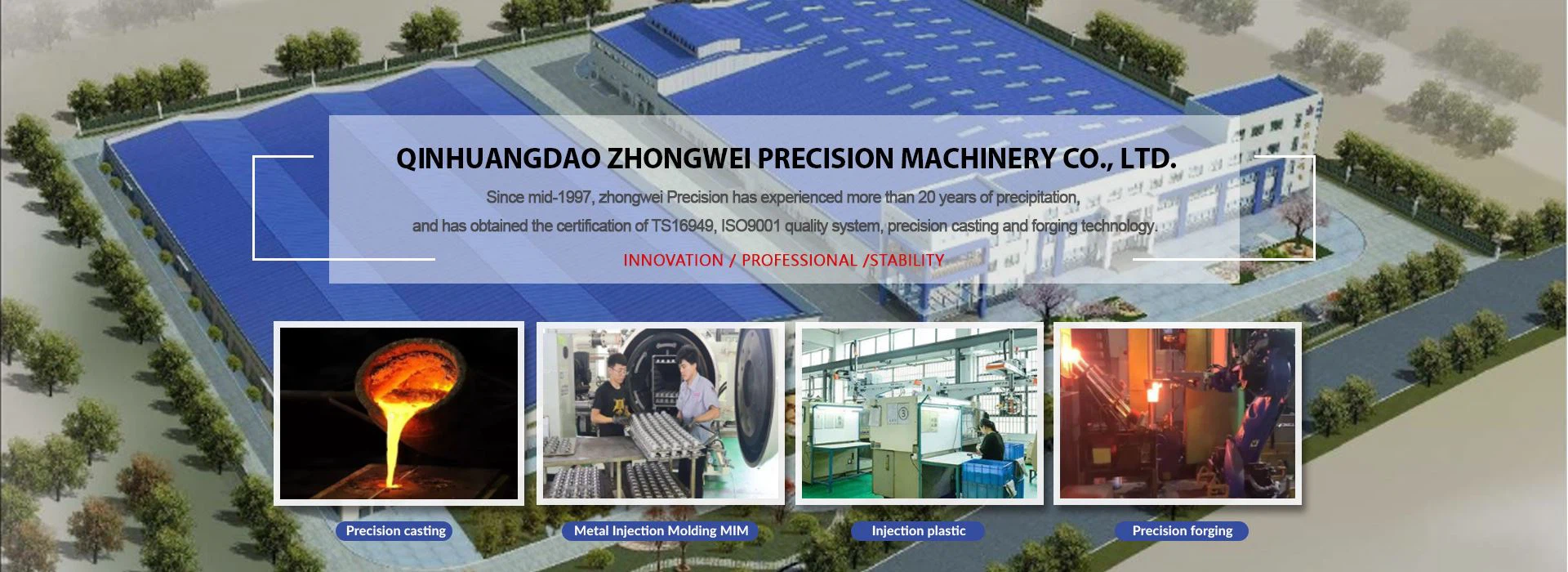


High Chromium Alloy Casting
High chromium alloy casting is the abbreviation of high chromium white anti-wear cast iron, which is an anti-wear material with excellent performance and special attention. It has much higher wear resistance than alloy steel, and much higher toughness and strength than ordinary white cast iron.
High chromium alloy casting is the abbreviation of high chromium white anti-wear cast iron, which is an anti-wear material with excellent performance and special attention. It has much higher wear resistance than alloy steel, and much higher toughness and strength than ordinary white cast iron. At the same time, it also has excellent high temperature resistance and corrosion resistance, and is fast in production and moderate in cost. Known as one of the best anti-abrasive wear materials in the world. After more than ten years of precipitation, Qinhuangdao Zhongwei Precision Machinery Co., Ltd. has rich production experience in water glass lost wax precision casting, lost foam precision casting technology, silica sol precision casting technology, and shell sand casting technology. We expect manufacturers from all over the world to consult and negotiate business.
Product Description
Basic information of high chromium alloy casting
1.Implementation standards: The company strictly implements ISO9001 & TS 16949 certification.
2. Product material standards: ISO, GB, ASTM, SAE, ISO, EN, DIN, JIS, BS
3. Main processes: sand casting, silica sol investment casting, water glass investment casting,shell casting,deburring, sand blasting, machining, heat treatment, leak testing, surface treatment, etc.
4. Available materials:
Tin bronze, silicon bronze, aluminum bronze, brass, copper, titanium alloy, high manganese steel, high chromium steel, high nickel steel, carbon steel, alloy steel, stainless steel, gray iron, cast iron, cast steel, cast aluminum, etc. Customized according to customer requirements.
Process Control
What are the key points of the production process of high chromium alloy casting?
(1) High chromium cast iron has poor casting performance, low thermal conductivity, poor plasticity, large shrinkage, and a large tendency to hot and cold cracking. In the casting process, the characteristics of cast steel and cast iron should be considered together. , We must pay full attention to the feeding problem of castings, and the principle is the same as that of steel castings (use risers and cold iron, and follow the principle of sequential solidification). Due to the high chromium content in the alloy, it is easy to form a film on the surface of the molten iron, so it seems that the molten iron has poor fluidity, but in fact it has better fluidity.
(2) The molding should be made of high-strength and air-permeable sand such as water glass silica sand, and the coating should be mixed with high-alumina powder or magnesium powder with high refractoriness and alcohol. In addition, in order to obtain fine grain structure and good surface quality, metal mold casting is also widely used when the shape of the casting is not too complicated.
(3) The shrinkage of high-chromium cast iron is similar to that of cast steel, and its linear shrinkage rate can be calculated as 1.8% to 2% in pattern making. In the production of sand molds, the size of the riser can be calculated according to the provisions of carbon steel, while the gating system is calculated according to gray cast iron, but the cross-sectional area needs to be increased by 20% to 30%. The selection of the pouring riser should pay attention to two aspects: one is to ensure the quality of the casting working belt (use part); the other is to try to improve the yield of the casting.
(4) Since the riser of the high-chromium casting is not easy to remove, the side riser or the easy-to-cut riser should be used in the form of the riser during modeling.
(5) In the casting process design of specific parts, care should be taken not to hinder the shrinkage of the casting to avoid cracking. In addition, if the unpacking temperature is too high after pouring, it is very easy to cause cracking of the casting. Slow cooling below 540 °C is very necessary. The casting should be fully cooled in the mold, and then open the box to clean the sand, or do not open the box first. Clean the sand and pile it together (casting, pouring system, etc.) to surround the dry sand and cool it slowly. The environment around the box must be kept dry, and there should be no moisture or water, otherwise it will easily cause casting cracks.
(6) The pouring temperature should be low, which is conducive to refining the dendrite and eutectic structure, and can avoid defects such as excessive shrinkage and surface sticking due to excessive temperature. The pouring temperature is generally about 55°C higher than its liquidus (1290-1350°C), the light and small parts are generally controlled at 1380-1420°C, and the thick and heavy parts with a wall thickness of more than 100mm are controlled at 1350-1400°C.
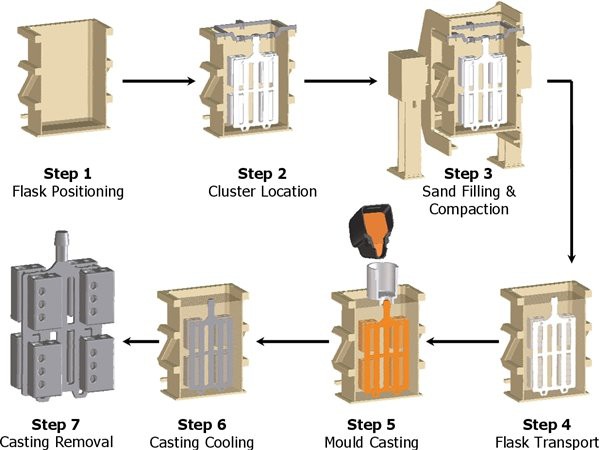
Post Casting Process
1. Heat treatment: annealing, carbonization, tempering, quenching, normalizing, surface tempering
2. Processing equipment: CNC, WEDM, lathe, milling machine, drilling machine, grinder, etc.;
3. Surface treatment: powder spraying, chrome plating, painting, sandblasting, nickel plating, galvanizing, blackening, polishing, bluing, etc.
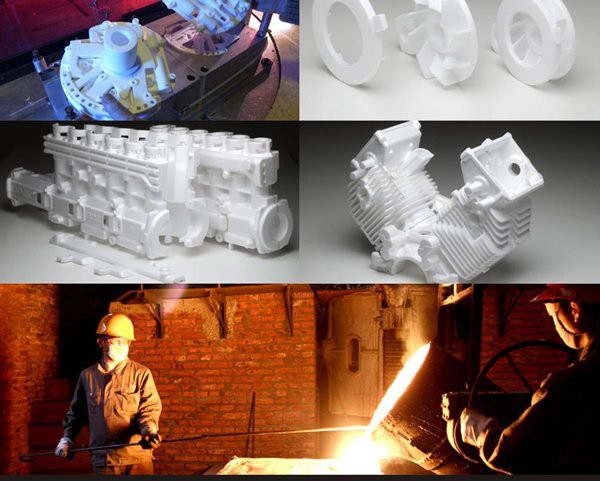
Moulds and Inspection Fixtures
1. Mold service life: usually semi-permanent. (except for lost foam)
2. Mold delivery time: 10-25 days, (according to product structure and product size).
3. Tooling and mold maintenance: Zhongwei is responsible for precision parts.
Quality Control
1. Quality control: the defective rate is less than 0.1%.
2. Samples and trial run will be 100% inspected during production and before shipment, sample inspection for mass production according to ISDO standards or customer requirements
3. Testing equipment: flaw detection, spectrum analyzer, golden image analyzer, three-coordinate measuring machine, hardness testing equipment, tensile testing machine;
4. Provide after-sales service.
5. The quality can be traced back.
Application
Mining, electric power, metallurgy, chemical industry, environmental protection, coal and other industries, the slurry concentration conveyed is relatively high, and the high-chromium slurry pump is also widely used.
Among them, the volute of the overflow part, the front and rear guard plates and the impeller are in direct contact with the slurry during the operation of the slurry pump, which has a corrosive effect on the overflow part. The overflow part has also become a common wearing part in working conditions. Damaged parts need to be replaced in time.


Send Inquiry
