



Molybdenum Copper Alloy Electronic Packaging Chip
According to the experts of molybdenum copper scrap recycling -- excellent waste, the preparation of Molybdenum copper alloy electronic packaging chip material is basically similar to that of tungsten copper material, mainly through two methods: copper infiltration method and mixture sintering method.
Product Description
|
Molybdenum copper alloy electronic packaging chip MIM Parts |
|||||
|
Item |
Material |
Production Process |
Sintering Temperature |
Mold |
Custom |
|
Molybdenum copper alloy electronic packaging chip |
Molybdenum Copper Alloy |
Metal Injection Molding |
1500°C |
To be customized |
Yes |
|
Chemical composition |
Alloy grade |
Cu |
Mo |
Total amount of impurity elements |
|
|
MoCu10 |
10+/-2 |
Moargin |
≤0.1 |
||
|
MoCu15 |
15+/-3 |
Moargin |
≤0.1 |
||
|
MoCu20 |
20+/-3 |
Moargin |
≤0.1 |
||
|
MoCu25 |
25+/-3 |
Moargin |
≤0.1 |
||
|
MoCu40 |
40+/-5 |
Moargin |
≤0.1 |
||
|
Available Materials |
Low carbon stainless steel, titanium alloy (Ti, TC4), copper alloy, tungsten alloy, hard alloy, high temperature alloy (718, 713) |
||||
Production Process
According to the experts of molybdenum copper scrap recycling -- excellent waste, the preparation of Molybdenum copper alloy electronic packaging chip material is basically similar to that of tungsten copper material, mainly through two methods: copper infiltration method and mixture sintering method.
1. Copper infiltration method
It directly presses molybdenum powder into a porous molybdenum billet in high-temperature argon, and then infiltrates the sintered porous molybdenum billet into molten copper under vacuum or inert gas. In order to obtain the molybdenum-copper material with the required copper content, it is necessary to control the porosity of the sintered molybdenum billet so that these pores can penetrate into the copper to reach the required copper content. This method is easy to produce molybdenum-copper materials containing copper ≤ 30% (mass fraction). For molybdenum-copper materials containing ≥ 30% (mass fraction) copper, molybdenum-copper mixed powder mixed with part of copper powder can be used for pressing, The method of sintering and then infiltrating copper.
2. Mixed powder sintering method
It mixes molybdenum powder and copper powder according to the required composition of molybdenum-copper materials, then presses them into shape, and sinters them into products directly. The mixed powder of molybdenum oxide and copper oxide can also be co-reduced to obtain molybdenum-copper mixed powder for pressing and sintering, and the latter can obtain a product with a denser and more uniform structure. The molybdenum-copper material with high copper content is more suitable for sintering with mixed powder, because it has a simple process and can also obtain high-density products. If necessary, further pressing can be used to increase the density. When directly mixing molybdenum-copper materials with low copper content for sintering, it is necessary to first make the molybdenum-copper mixed powder into ultra-fine powder or perform mechanical activation, so as to improve its sintering activity and ensure the compactness of the sintered product.

Application of molybdenum copper alloy
According to the characteristics of the aforementioned molybdenum-copper materials and the development situation at home and abroad, molybdenum-copper materials have been applied in the following aspects.
1. Vacuum switch electric contact
At present, foreign countries have listed molybdenum copper materials and tungsten copper materials as electrical contact materials at the same time. Domestic tungsten-copper vacuum contacts are being promoted on a large scale, but some have selected molybdenum-copper materials. Therefore, according to the different performance requirements of the vacuum switch, tungsten-copper material and molybdenum-copper material can be used in different situations to achieve the best use effect of the material.
2. Electric vacuum cooling element
High-power integrated circuits and microwave devices require materials with high electrical and thermal conductivity as conductive and heat-dissipating elements, while taking into account vacuum performance, heat resistance, and thermal expansion coefficient. Tungsten-copper and molybdenum-copper materials are the preferred materials for this application because their properties meet these requirements.
3. Materials of instrumentation components
Due to the many physical properties of molybdenum copper materials, such as non-magnetic, constant thermal expansion coefficient, high elastic modulus, high electrical and thermal conductivity, etc., it is suitable for some special requirements of instrument components, and molybdenum copper has a lower density than tungsten copper. Light weight, good plasticity, easy machining, more suitable as instrument material.
4. Aerospace and weapon materials
Molybdenum-copper materials are more resistant to ablation than molybdenum, and are more plastic and machinable. Therefore, they can be used as high-temperature components of rockets and missiles with slightly lower temperatures, and can also replace molybdenum as components in other weapons, such as range extension Cannon and so on.
Excellent waste recycles a large amount of molybdenum-copper waste, and welcomes companies that need to deal with molybdenum-copper waste to inquire!
Metal Injection Molding Process

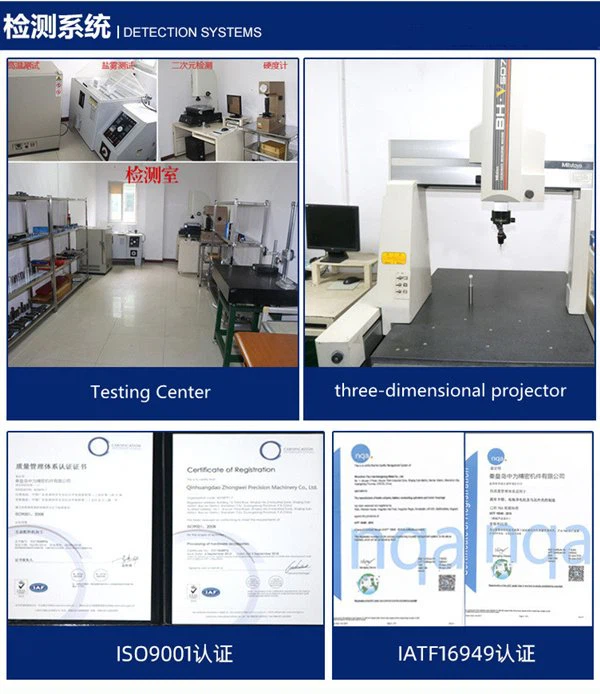
Detection Systems



Send Inquiry
