



Golf Head Metal Injection Molded Parts
Accordingly, the present application proposes a method for producing moulded parts with complex geometries, wherein one or more inserts are equipped in the mould of an injection moulding tool such that through the one or more inserts or the One or more inserts together with the mold form a cavity corresponding to the shape of the molding.
316 Golf Head Metal Injection Molding Parts
Metal Injection Molded Golf Head Parts | |||||||||
Item | Material | Production Process | Sintering Temperature | Mold | Custom | ||||
Headphone Shell | 304 stainless steel | Metal Injection Molding | 1550℃ | To be customized | Yes | ||||
Chemical Composition | Chemical Composition: | ||||||||
Hardness range | Hardness: 1010-1120 fast cooling, hbs≤187, hrb≤90 | ||||||||
Available Materials | Low carbon stainless steel, titanium alloy (Ti, TC4), copper alloy, tungsten alloy, cemented carbide, high temperature alloy (718, 713) | ||||||||
Finish | Dimensional Accuracy | Product Density | Appearance Treatment | Appropriate Weight | |||||
Roughness 1~5μm | (±0.1%~±0.5%) | 95~100% | Mirror Reflection | 0.03g~400g) | |||||
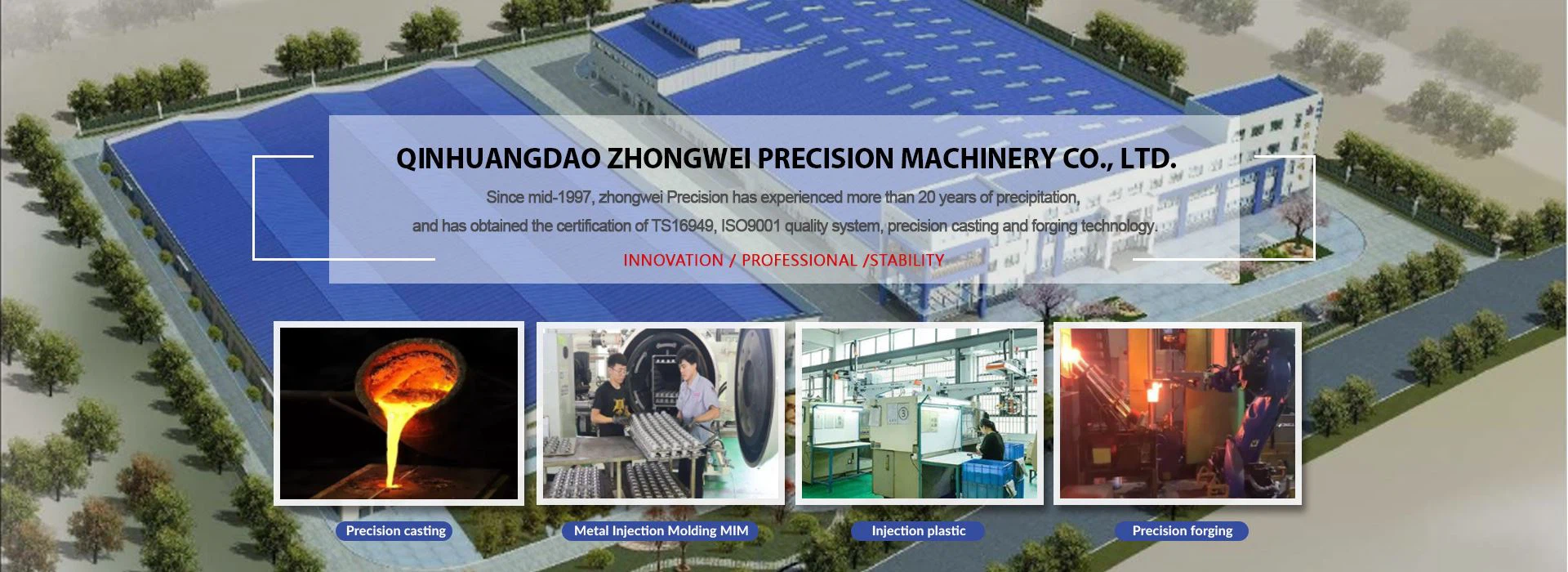
The company adopts German DOEPFER, Japan's Mitsubishi, Japan's Qinghe SWIWA, Japan's Jianto KASHIFUJI, Switzerland's MIKRON and other series of high-precision automatic processing equipment, and has CAD/CAM system, electric discharge machining method and CNC five-axis machining center and other equipment, the accuracy can be It is controlled at JIS 0-JIS 5, DIN 3-DIN 9, and solves the noise problem of gears, and the process of adjusting the virtual position of the steering gear material is also very mature. In addition, our company is also equipped with electronic height gauge 0~610㎜ (measurable range) 2+L/600μ (error), Japan TOKYO TECHNICAL gear measuring machine, electron microscope, Vickers hardness tester, Germany ZEISS three-dimensional measurement Qinhuangdao Zhongwei Precision Machinery Co., Ltd. is a collection of copper alloy metal injection molding, iron-based metal injection molding, stainless steel-based metal injection molding, and aluminum alloy metal injection molding. A comprehensive high-tech enterprise integrating R&D, production and sales of molding, nickel alloy metal injection molding, cobalt alloy metal injection molding, tungsten alloy metal injection molding, cemented carbide metal injection molding, and powder metallurgy structural parts.
Product Introduction
1. Implementation standards: the company strictly implements ISO9001, ISO14001, IATF16949 certification
Golf Head Metal Injection Molded Parts are certified by ROHS, FDA EU, etc.
2. Product material standards: ISO, GB, ASTM, SAE, EN, DIN, BS, AMS, JIS, ASME, DMS, TOCT, GB
3. Main processes: metal injection molding MIM, powder metallurgy PM, investment casting, die-casting aluminum,
4. Available materials for powder metallurgy:
Copper alloys, iron bases, titanium alloys, stainless steel bases, aluminum alloys, nickel alloys, cobalt alloys, tungsten alloys, cemented carbides, hydroxy alloys, soft magnetic materials and 3D printing can be customized according to customer requirements.

Qinhuangdao Zhongwei Precision Machinery Co., Ltd. powder metallurgy can undertake all kinds of golf heads. The materials are stainless steel, titanium alloy, tungsten alloy golf head weight, etc. It is a part of the golf club, including the golf head body and the welding port set at the bottom, which is used for the double density tungsten alloy weight plate body. welding. The dual force weight plate body is made of tungsten alloy weights arranged on the periphery, tungsten alloy weights and metal parts made of the same metal material as the golf head body. The dual force weight plate body is welded to the body of the ported golf head, and the golf head weld port formed on the ground has a portion of tungsten alloy on the bottom. When gravity and weight are evenly distributed on the golf head, there is no variation in the sole area and thickness of the golf head, so a lower and better balance can be achieved, and the present invention relates to a golf head forming process.
A method for metal injection molding for producing metal moldings with complex geometries, and a method for producing metal spirals. The inner thread of the ball screw can be made at one time.

According to the prior art, injection moulding tools are generally used in metal injection moulding or simply "mim" (metal injection moulding, mim), in which the moulding of complex mouldings is achieved by means of segmented cavities, slides or core parts. However, this technique cannot be used to achieve arbitrarily complex geometries because the molded part must be demolded by opening the tool and pulling the core.
Technical implementation elements
The complex metal moldings are produced by the metal injection molding process. For this purpose, according to the claims
1. The described method is realized. Possible embodiments are obtained from the dependent claims as well as the description and the drawings.
Accordingly, the present application proposes a method for producing moulded parts with complex geometries, wherein one or more inserts are equipped in the mould of an injection moulding tool such that through the one or more inserts or the One or more inserts together with the mold form a cavity corresponding to the shape of the molding.
For this purpose, powder-filled molding compounds are prepared, comprising binders such as organic binders and powders made of sinterable materials, to produce sintered moldings. For example, metal powders can be used to produce metal shaped parts, and especially copper powders, aluminum powders, steel powders, titanium powders and/or noble metal powders, such as platinum powders, can be used. In one embodiment, high purity copper powder may be used. For the production of shaped parts from alloy materials, powders made of metal alloys such as aluminium alloys can also be used. For the production of shaped parts from alloyed materials, pre-alloyed powders can be used, or mixtures of elemental powders can be provided. In another embodiment, a master alloy may also be used, in which one or more elemental powders are added.

The present application also relates to a method for producing a metal spiral. This method can also be used in a different way than the previous method in which one or more inserts are provided. The applicant reserves the right to also claim the method for producing a screw that differs from the remaining features of the proposed method for producing shaped parts with complex geometries, that is to say, in particular does not include the described inserts. Both methods are combined in possible embodiments.
According to the prior art, metal spirals such as coils or springs are produced by winding wires such as round or profiled wires. In industrial manufacturing, the winding process is automated, especially for simple spirals and large batches, where the winding process is carried out on special winding machines. However, automatic winding systems can only be used to a limited extent for small precision coils, coils with high filling rates, or where special stiffness is required, for example, which leads to high complexity and cost during fabrication.
In order to produce a metal spiral according to the method of the present application, a spiral cavity is provided in an injection molding tool.
The cavity is filled with a molding compound containing a powder made of a sinterable material. By curing the molding compound, a green body is prepared, which is then removed from the injection molding tool. The green body is then degreased and sintered.
By using an injection moulding process to produce the helix as a shaped body, increased flexibility can be achieved with regard to the geometry of the helix. Flexibility can be further improved through the potential use of inserts.
The helical cavity may be formed by the mold of the injection molding tool. However, it can also be formed by one or more inserts arranged in the mould, or by one or more inserts together with the mould of the injection moulding tool. These inserts may in particular be the aforementioned inserts having the properties described in this application.
To prepare the spiral, a powder-filled molding compound is prepared, including a binder such as an organic binder, and a powder made of a sinterable material to produce a sintered molding. For example, metal powders can be used to produce metal shaped parts, and especially copper powders, aluminum powders, steel powders, titanium powders and/or noble metal powders, such as platinum powders, can be used. In one embodiment, high purity copper powder may be used. For the production of shaped parts from alloy materials, powders made of metal alloys such as aluminium alloys can also be used. For the production of shaped parts from alloyed materials, pre-alloyed powders can be used, or mixtures of elemental powders can be provided. In another embodiment, a master alloy may also be used, in which one or more elemental powders are added.
Advantageously, the embodiments described below can optionally be used in conjunction with all the methods described in this application.
In one embodiment, a powder mixture made of metal powder and ceramic powder is used to prepare a cermet structure.
In one embodiment, the organic binder includes at least one thermoplastic polymer. In one embodiment, the organic binder may also include a plasticizer that can be intentionally dissolved and/or a second polymer that can be intentionally decomposed. For example, the second polymer may be thermally or catalytically decomposed.
In various embodiments, the organic binder may also contain additional components such as surfactants, phase compatibilizers, wetting agents, oligomers, short chain polymers and/or other plasticizers.
In various embodiments, the composition of the organic binder depends on the composition of the powder, in order to avoid chemical reaction of the binder with the powder, and for example to achieve adequate wetting of the powder.
Depending on the composition of the molding compound, different material properties, such as specific electrical conductivity, can be achieved.
In one embodiment, the molding compound may, for example, comprise steel powder, eg, for making steel springs. In one embodiment, the molding compound may also include copper powder, eg, made of high-conductivity copper, eg, for making copper coils.
For example, powder-filled molding compounds are mixed and then homogenized, preferably under high shear. This can be done by using shear rolls or extruders, for example by using twin screw extruders. However, the mixing and/or homogenization of the molding compound can also be carried out by kneading or by a combination of kneading and extrusion.
In one step of the method, the cavity is filled with the metal powder filled molding compound by injecting the molding compound into the cavity. In one embodiment, the temperature of the injected molding compound is at least 50°C, preferably at least 100°C, particularly preferably at least 120°C, and does not exceed 300°C, preferably does not exceed 250°C, particularly preferably does not exceed 200°C.
After that, a green body is prepared by curing of the molding compound. The curing of the molding compound usually takes place by cooling the molding compound. The green body forms an intermediate product together with one or more inserts. The intermediate product is removed from the injection molding tool.
In a subsequent step, one or more inserts are removed. Inserts are usually destroyed in the process.
In one step, the binder is removed by debinding the green body, for example by chemical, catalytic and/or thermal debinding.
In one step, the shaped part is densified by sintering, wherein the shaped part can be given the desired final shape.
In one embodiment, the one or more inserts are first removed, and then the green body is degreased and sintered. If no insert is present, in one embodiment, the green body is removed from the cavity of the injection molding tool and, if necessary, post-processed, degreased, and sintered.
In one embodiment, removal and degreasing are performed in the same step. In one embodiment, one or more of the inserts may be removed by burnout during thermal debinding.
In one embodiment, in a step downstream of removing the insert or inserts, the green body is mechanically rinsed to remove residues of the insert or inserts from the green body.
The mixing of the MIM feed is accomplished under a combination of thermal effects and shear forces. The mixing temperature should not be too high, otherwise the binder may be decomposed or the two-phase separation of powder and binder will occur due to too low viscosity. The commonly used mixing devices for MIM are twin screw extruder, Z-shaped impeller mixer, single screw extruder, plunger extruder, double planetary mixer, double cam mixer, etc. These mixing devices All are suitable for preparing mixtures with viscosity in the range of 1-1000Pa·s.
The mixing method is generally to first add high melting point components to melt, then cool down, add low melting point components, and then add metal powder in batches. This can prevent the gasification or decomposition of the low-melting-point components, and adding metal powder in batches can prevent the rapid increase of torque caused by too fast cooling, and reduce equipment losses.
For the feeding method of powders with different particle sizes, the Japanese patent introduces: first add coarse 15-40um water atomized powder into the binder, then add 5-15um powder, and then add powder ≤5um powder. Shrinkage changes in the final product are minimal. In order to evenly coat a layer of binder around the powder, the metal powder can also be directly added to the high melting point component, and then the low melting point component is added, and then the air can be removed. For example, Anwar will directly add the PMMA suspension to the stainless steel powder and mix, then add the PEG aqueous solution, dry it, and then remove the air while stirring. O'connor uses solvent mixing, first dry mix SA and powder, then add tetrahydrofuran solvent, then add polymer, after tetrahydrofuran escapes in the heat, add powder and mix, can get uniform feeding.
4. Injection molding
The purpose of injection molding is to obtain a defect-free, uniformly arranged MIM shaped body of the desired shape. First, the granular feed is heated to a certain high temperature to make it fluid, and then injected into the mold cavity to cool down to obtain a rigid body of the desired shape, and then taken out from the mold to obtain the MIM formed blank. This process is consistent with the traditional plastic injection molding process, but due to the high powder content of the MIM feed, the injection molding process has great differences in process parameters and other aspects, and improper control is prone to various defects.
5. Degreasing
Since the emergence of MIM technology, with the different binder systems, a variety of MIM process paths have been formed, and the degreasing methods have also been varied. The degreasing time was shortened from the first few days to a few hours. From the degreasing step, all degreasing methods can be roughly divided into two categories: one is the two-step degreasing method. The two-step degreasing method includes solvent degreasing + thermal degreasing, siphon degreasing - thermal degreasing, etc. The one-step degreasing method is mainly a one-step thermal degreasing method, and the advanced one is the amaetamold method. Several representative MIM degreasing methods are introduced below.
6. Sintering
Sintering is the last step in the MIM process, and sintering eliminates the pores between the powder particles. Make MIM products reach full densification or close to full densification. Due to the use of a large amount of binder in the metal injection molding technology, the shrinkage during sintering is very large, and the linear shrinkage rate generally reaches 13%-25%, so there is a problem of deformation control and dimensional accuracy control. Especially since most of the MIM products are special-shaped parts with complex shapes, this problem becomes more and more prominent, and uniform feeding is a key factor for the dimensional accuracy and deformation control of the final sintered products. High powder tap density can reduce sintering shrinkage, and is also beneficial to the sintering process and dimensional accuracy control. For products such as iron-based and stainless steel, there is also a carbon potential control problem in sintering. Due to the high price of fine powder, the study of enhanced sintering technology of coarse powder compact is an important way to reduce the production cost of powder injection molding, which is an important research aspect of metal powder injection molding research.
Due to the complex shape and large sintering shrinkage of MIM products, most products still need post-sintering treatment after sintering, including shaping, heat treatment (carburizing, nitriding, carbon-nitriding, etc.), surface treatment (finishing, ion nitrogen, etc.) chemical, electroplating, shot peening, etc.)
Our Service
Pre-sale | Evaluate according to drawings or products, calculate the price, and submit it to the buyer for confirmation |
On sale | The production process of all products is supported by the production system and delivered according to the mutually agreed time. (If the size of the drawing needs to be changed in the middle, the buyer is responsible for the inconsistency with the original drawing. If we fail to meet customer requirements during the modification process, a full refund will be given) |
After sales | After handing over the product, we will seal all the buyer's molds for safekeeping. (Problem solving) If there is a second or third revision in the production process, we will reply within 1 hour at the earliest, and we will solve customer problems within 8 hours at the latest depending on the situation of products that need to be evaluated. |
Why Choose US?
Our R&D team | Zhongwei Precision Co., Ltd. and Central South University have a R&D team of 10 people. They develop more than 400 products each year, which is more than 68% higher than the same industry, and have obtained more than 20 patent certificates. |
Our technical team | Zhongwei Precision has 5 professional engineers in the field of metal injection molding, and 15 technicians responsible for workshop management. |
Our philosophy on quality management | 1. Focus on the customer |
Device resources | The company has 10 MIM production lines, CNC and intelligent automated production workshops for production lines, which can guarantee the production of millions of MIM parts per day. |
System Certification | ISO9001, ISO14001, IATF16949 certification |
| Port | It is 200 kilometers away from Tianjin Port, and goods can arrive at the port within 24 hours. |
Process After Sintering
1. Heat treatment: annealing, carbonization, tempering, quenching, normalizing, surface tempering
2. Processing equipment: CNC, WEDM, lathe, milling machine, drilling machine, grinder, etc.;
3. Surface treatment: anodizing, powder spraying, chrome plating, painting, sandblasting, nickel plating, galvanizing, blackening, polishing, bluing, etc.
Moulds and Inspection Fixtures
1. Mold service life: usually semi-permanent. (except for lost foam)
2. Mold delivery time: 10-25 days, (according to product structure and product size).
3. Tooling and mold maintenance: Zhongwei is responsible for precision parts.
Quality Control
1. Quality control: the defective rate is less than 0.1%.
2. Samples and trial run will be 100% inspected during production and before shipment, sample inspection for mass production according to ISDO standards or customer requirements.
3. Testing equipment: flaw detection, spectrum analyzer, golden image analyzer, three-coordinate measuring machine, hardness testing equipment, tensile testing machine.


Send Inquiry
