




Molybdenum Copper Alloy Heat Sink
Molybdenum-copper alloy is used as a heat sink material due to its high thermal conductivity. The properties of the two alloys are similar, and the density of molybdenum-copper alloy is lower than that of tungsten-copper alloy.
Product Description
Molybdenum-copper alloy is used as a heat sink material due to its high thermal conductivity. The properties of the two alloys are similar, and the density of molybdenum-copper alloy is lower than that of tungsten-copper alloy. The preparation of Molybdenum copper alloy heat sink mainly adopts the immersion method, using high-quality molybdenum powder and oxygen-free copper powder, and applying isostatic pressing (high temperature sintering-copper infiltration), with fine structure, good arc breaking performance and good conductivity. Good thermal conductivity and small thermal expansion. Japan's Tokyo Tungsten Co., Ltd. has obtained a patent for the production of molybdenum-copper alloys, using a chemical activation sintering method.
|
Molybdenum copper alloy heat sink |
|||||
|
Item |
Material |
Production Process |
Sintering Temperature |
Mold |
Custom |
|
Molybdenum copper alloy heat sink |
Molybdenum Copper Alloy |
Metal Injection Molding |
1500°C |
To be customized |
Yes |
|
Chemical composition |
Alloy grade |
Cu |
Mo |
Total amount of impurity elements |
|
|
MoCu10 |
10+/-2 |
Moargin |
≤0.1 |
||
|
MoCu15 |
15+/-3 |
Moargin |
≤0.1 |
||
|
MoCu20 |
20+/-3 |
Moargin |
≤0.1 |
||
|
MoCu25 |
25+/-3 |
Moargin |
≤0.1 |
||
|
MoCu40 |
40+/-5 |
Moargin |
≤0.1 |
||
|
Available Materials |
Low carbon stainless steel, titanium alloy (Ti, TC4), copper alloy, tungsten alloy, hard alloy, high temperature alloy (718, 713) |
||||
Production Advantages
|
Alloy grade |
MoCu10 |
MoCu15 |
MoCu20 |
MoCu25 |
MoCu40 |
|
Density |
≥9.91 |
≥9.83 |
≥9.75 |
≥9.70 |
≥9.3 |
|
Alloy grade |
MoCu10 |
MoCu15 |
MoCu20 |
MoCu25 |
MoCu40 |
|
Thermal conductivity |
≥150 |
≥160 |
≥170 |
≥180 |
|
|
Thermal expansion rate |
5.6+/-1.5 |
6.7+/-1.5 |
7.4+/-1.5 |
7.9+/-2 |
8.0+/-3 |
Surface Quality
The surface of the molybdenum-copper alloy rod has been turned, and there must be no defects such as holes, cracks, delamination or inclusions. The defects and allowable deviations of the molybdenum-copper alloy rod are in accordance with the following table:
|
Diameter |
Length |
||
|
Size range |
Allowable deviation |
Size range |
Allowable deviation |
|
10<Φ≤25 |
+/-0.5 |
100<Φ≤200 |
+/-5 |
Manufacturing Method
Liquid phase sintering method: After the mixed powder of tungsten copper or molybdenum copper is pressed and formed, it is sintered in liquid phase at 1300-1500°. The uniformity of the material prepared by this method is not good, there are many closed spaces, and the density is usually lower than 98%. It can improve the sintering activity, thereby increasing the density of tungsten-copper and molybdenum-copper alloys. However, nickel activation and sintering will significantly reduce the electrical and thermal conductivity of the material, and the introduction of impurities by mechanical alloying will also reduce the conductivity of the material; the preparation of powder by oxide co-reduction method is cumbersome, the production efficiency is low, and it is difficult to mass produce.
Tungsten and molybdenum skeleton infiltration method: First, tungsten powder or molybdenum powder is pressed into shape, and sintered into a tungsten and molybdenum skeleton with a certain porosity, and then copper is infiltrated. This method is suitable for tungsten copper and molybdenum copper products with low copper content. Compared with molybdenum copper, tungsten copper has the advantages of small mass, easy processing, linear expansion coefficient, thermal conductivity and some main mechanical properties are equivalent to tungsten copper. Although the heat resistance is not as good as that of tungsten copper, it is better than some heat-resistant materials, so the application prospect is better. Because the wettability of molybdenum-copper is worse than that of tungsten-copper, especially when preparing molybdenum-copper with low copper content, the density of the material after infiltration is low, resulting in that the airtightness, electrical conductivity and thermal conductivity of the material cannot meet the requirements. Its application is limited.
Molybdenum Copper Use
This specification is applicable to the manufacture of military high-power microelectronic devices as heat sink sealing materials and aluminum oxide ceramic sealing and molybdenum-copper alloy rods for structural materials. Molybdenum copper alloy heat sink is also applicable to the manufacture of civilian high-power microelectronic devices Molybdenum-copper alloy rods for high thermal conductivity and fixed expansion sealing heat sink.
Related Properties
Molybdenum-copper alloy combines the advantages of copper and molybdenum, high strength, high specific gravity, high temperature resistance, arc ablation resistance, good electrical conductivity and heating performance, and good processing performance. Using high-quality molybdenum powder and oxygen-free copper powder, using isostatic pressing (high temperature sintering-copper infiltration), to ensure product purity and accurate proportioning, fine structure, excellent performance. Good arc breaking performance, good electrical conductivity, good thermal conductivity , small thermal expansion.
Metal Injection Molding Process

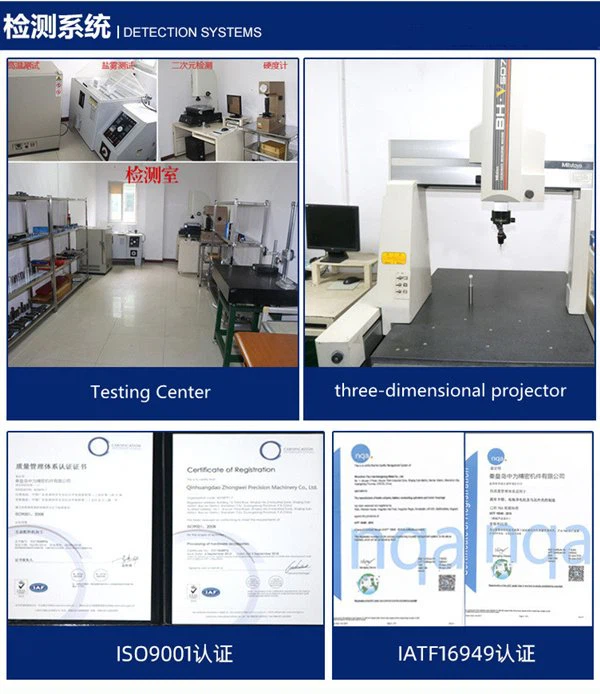
Detection Systems




Send Inquiry
