



Nylon Medical Injection Molded Parts
Nylon was developed by the outstanding American scientist Carothers and a scientific research team under his leadership. It is the first synthetic fiber that appeared in the world. Nylon is a term for polyamide fiber (nylon).
Nylon was developed by the outstanding American scientist Carothers and a scientific research team under his leadership. It is the first synthetic fiber that appeared in the world. Nylon is a term for polyamide fiber (nylon).
The appearance of nylon has brought a new look to textiles. Its synthesis is a major breakthrough in the synthetic fiber industry and a very important milestone in polymer chemistry.
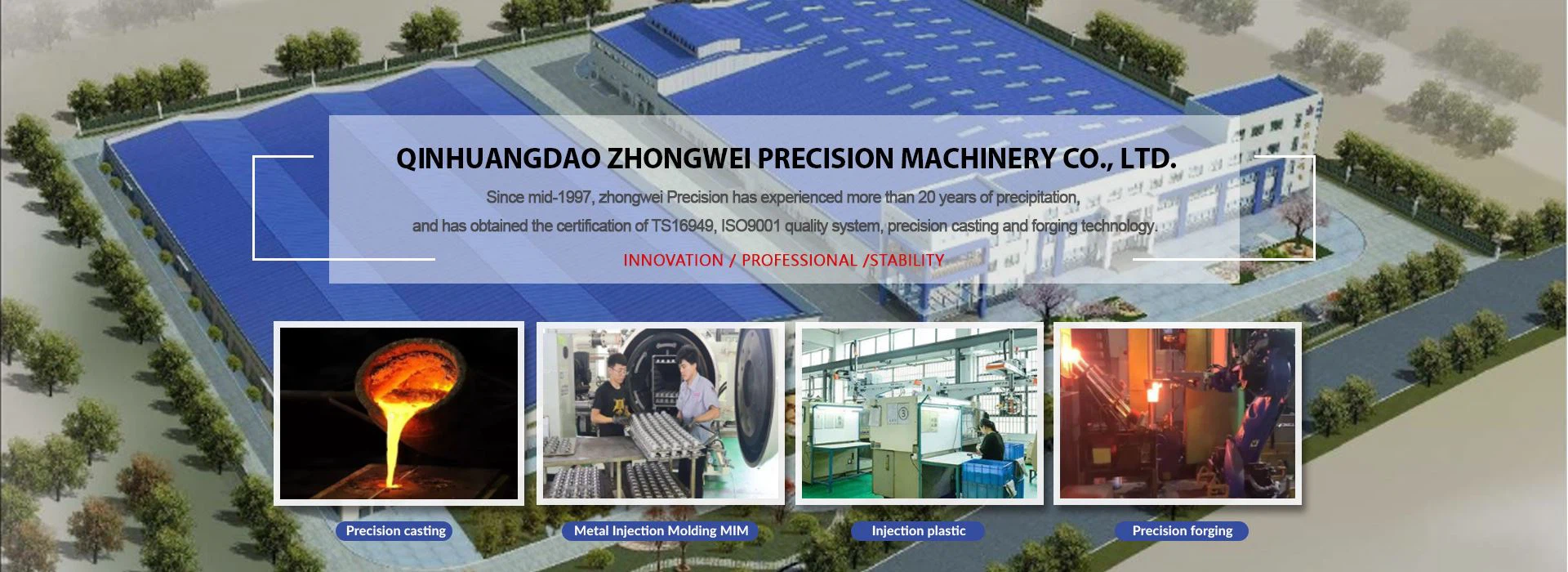
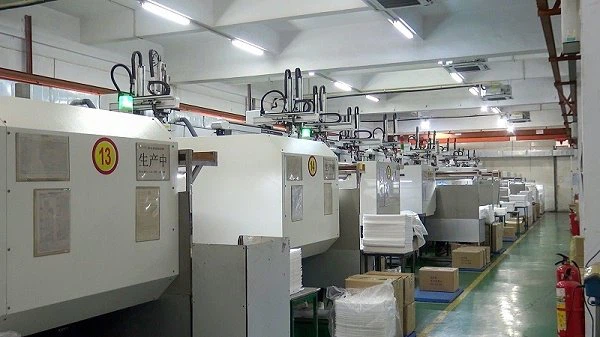
The main products of Zhongwei Precision Machinery Co., Ltd. are nylon products, plastic products, ABS series, rubber products, etc. Types of injection molding materials that can be processed: polyethylene (PE), polypropylene (PP), nylon (PA, PA6, PA66), polyoxymethylene (POM), ABS, polyurethane (TPU), polyphenylene sulfide (PPS), polystyrene Carbonate (PC), Polyetheretherketone (PEEK), etc.
Product Description
1. Implementation standards: the company strictly implements ISO9001, ISO14001, IATF16949, VDA6.3 certification, and products have passed ROHS, FDA EU certification, etc.
2. Product material standards: ISO, GB, ASTM, SAE, EN, DIN, BS, AMS, JIS, ASME, DMS, TOCT, GB
3. Main processes: plastic injection molding, metal insert injection molding, investment casting, die-casting aluminum,
4. Available materials for injection molding:
Processable nylon products, plastic products, ABS series; injection molding material types: polyethylene (PE), polypropylene (PP), nylon (PA, PA6, PA66), polyoxymethylene (POM), ABS, polyurethane (TPU), poly Phenyl sulfide (PPS), polycarbonate (PC), polyether ether ketone (PEEK) and 3D printing can be customized according to customer requirements.
Product Part Material
With the miniaturization of automobiles, the high performance of electronic and electrical equipment, and the acceleration of the lightweight process of mechanical equipment, the demand for nylon will be higher and greater. In particular, as a structural material, nylon has high requirements on its strength, heat resistance, and cold resistance. The inherent shortcomings of nylon are also an important factor limiting its application, especially for the two major varieties of PA6 and PA66, which have a strong price advantage compared with PA46, PAl2 and other varieties, although some properties cannot meet the development requirements of related industries.
Therefore, it is necessary to expand its application field by modifying and improving some of its properties for a certain application field. Due to the strong polarity of PA, it has strong hygroscopicity and poor dimensional stability, but it can be improved by modification.
• Enhanced PA
Adding 30% glass fiber to PA can significantly improve the mechanical properties, dimensional stability, heat resistance and aging resistance of PA, and the fatigue strength is 2.5 times that of the unreinforced one. The molding process of glass fiber reinforced PA is roughly the same as that of the unreinforced PA, but because the flow is worse than that before the reinforcement, the injection pressure and injection speed should be appropriately increased, and the barrel temperature should be increased by 10-40 °C. Since the glass fiber will be oriented along the flow direction during the injection molding process, the mechanical properties and shrinkage rate will be enhanced in the orientation direction, resulting in deformation and warping of the product. Therefore, when designing the mold, the position and shape of the gate should be reasonable, and the process can be improved. The temperature of the mold, after the product is taken out, put it in hot water and let it cool slowly. In addition, the greater the proportion of glass fiber added, the greater the wear on the plasticizing components of the injection molding machine, and it is best to use bimetallic screws and barrels.
• Flame retardant PA
Due to the addition of flame retardants to PA, most of the flame retardants are easily decomposed at high temperatures, releasing acidic substances, which have a corrosive effect on metals. Therefore, plasticizing components (screw, rubber head, rubber ring, rubber Gaskets, flanges, etc.) require hard chrome plating. In terms of technology, try to control the barrel temperature not too high and the injection speed not too fast to avoid the discoloration of the product and the decline of mechanical properties caused by the decomposition of the rubber material due to the high temperature.
• Transparent PA
It has good tensile strength, impact strength, rigidity, abrasion resistance, chemical resistance, surface hardness and other properties, high light transmittance, similar to optical glass, and the processing temperature is 300--315 ℃. Strictly control the barrel temperature. If the melt temperature is too high, the product will be discolored due to degradation. If the temperature is too low, the transparency of the product will be affected due to poor plasticization. The mold temperature should be as low as possible. High mold temperature will reduce the transparency of the product due to crystallization.
• Weather resistant PA
Carbon black and other UV-absorbing additives are added to PA, which greatly enhances the self-lubricating property of PA and the wear on metal, which will affect the blanking and wear parts during molding. Therefore, it is necessary to use a combination of screw, barrel, glue head, glue ring and glue washer with strong feeding ability and high wear resistance. The repeating structural unit on the polyamide molecular chain is a type of polymer of amide group.
To sum up, it is mainly modified in the following aspects:
①Improve the water absorption of nylon and improve the dimensional stability of the product.
② Improve the flame retardancy of nylon to meet the requirements of electronics, electrical, communications and other industries. ③ Improve the mechanical strength of nylon to achieve the strength of metal materials and replace metal
④ Improve the low temperature resistance of nylon and enhance its ability to withstand environmental strains.
⑤ Improve the wear resistance of nylon to adapt to the occasions with high wear resistance requirements. ⑥ Improve the antistatic properties of nylon to meet the requirements of mines and their mechanical applications.
⑦ Improve the heat resistance of nylon to adapt to the fields of high temperature conditions such as automobile engines.
⑧ Reduce the cost of nylon and improve product competitiveness.
In short, through the above improvements, the high performance and functionalization of nylon composite materials can be realized, and then the development of related industry products to the direction of high performance and high quality is promoted.
• Nano Nylon
According to Japan's Toray Chemical Company, the company has successfully developed a new technology of "nanofiber" with a nano-scale monofilament structure with a diameter smaller than that of the previous ultrafine fibers by two digits. By controlling the nanostructure technology, the limit of fiber fineness is reached. . Toray Chemical Company said that the company has developed nano-nylon fibers composed of more than 1.4 million filaments with a diameter of 10 μm using this new technology. Compared with previous products, the surface area of this fiber is about 1,000 times that of previous products, and it has high surface activity.
• Extra strong nylon
Triangle–Raleigh nylon fibers have many uses, from clothing and carpets to cords to data cables for microcomputers. Researchers at the University of North Carolina's School of Textiles are working to improve the fiber and have reportedly developed the strongest aliphatic nylon fiber.
Scientist Polymer Professor Dr. Tonelli and Assistant Professor of Textile Engineering, Chemistry and Natural Sciences Dr. Richard Cuttack are working on a way to generate higher Strength nylon fibers. They used aliphatic nylons or nylons whose carbon aids were linked by straight or open branches previously, emphasizing that the acyclic chains are not large.
Stronger aliphatic nylons can be used in ropes, handling belts, parachutes and car tires, or to create synthetic materials that can be used at high temperatures. The findings were presented at the American Chemical Science Annual Meeting in Philadelphia and published in the journal Polymers.
Such fibers are made from polymers or long-chain molecules that contain many units. When these polymer chains are neatly arranged, the polymer will be in a crystalline state.
These coiled polymers need to be stretched, and their elasticity needs to be eliminated if they are to be made into stronger fibers. Adding hydrogen to nylon chains prevents stretching, so overcoming this bonding is a key factor in producing stronger nylon fibers.
Ultra-strength fibers, such as Kevlar, are made from aramid nylon polymers and are very stiff. Long chains contain ring chains. Aromatic nylon is difficult to make and therefore very expensive.
So Prof Tonelli and Dr Cuttack used polyamide 66 (nylon 66), a commercial thermoplastic material that is easy to make but difficult to stretch and align. At the same time, it is difficult to cancel the elasticity of nylon 66.
This discovery can solve the problem that nylon 66 can be dissolved in gallium trichloride, and can effectively break the problem of hydrogen bonding. Polymer chain extension is allowed.
Post Injection Molding Process
1. Processing equipment: CNC, WEDM, lathe, milling machine, drilling machine, grinder, etc.;
2. Surface treatment: For some products that require subsequent processing, we can provide surface treatment services to achieve the special purpose of customers. At present, we can provide degreasing, polishing, electroplating (gold, silver, nickel, tin, galvanized, etc.), anodizing, electrophoresis and other surface treatment services for precision parts.

Moulds and Inspection Fixtures
1. Mold service life: usually semi-permanent. (except for lost foam)
2. Mold delivery time: 10-25 days, (according to product structure and product size).
3. Tooling and mold maintenance: Zhongwei is responsible for precision parts.
Quality Control
1. Quality control: the defective rate is less than 0.1%.
2. Samples and trial run will be 100% inspected during production and before shipment, sample inspection for mass production according to ISDO standards or customer requirements
3. Testing equipment: automated visual inspection equipment can carry out 100% inspection of products, spectrum analyzer, golden elephant analyzer, three-coordinate measuring machine, hardness testing equipment, tensile testing machine.
Application
Polyamide is mainly used for synthetic fibers, and its most prominent advantage is that its abrasion resistance is higher than that of all other fibers, which is 10 times higher than that of cotton and 20 times higher than that of wool. Greatly improve its wear resistance; when stretched to 3-6%, the elastic recovery rate can reach 100%; it can withstand tens of thousands of times of bending without breaking.
The strength of polyamide fiber is 1-2 times higher than that of cotton, 4-5 times higher than that of wool, and 3 times that of viscose fiber. However, polyamide fiber has poor heat resistance and light resistance, and poor retention, and the clothes made of it are not as stiff as polyester. In addition, both nylon-66 and nylon-6 used for clothing have the disadvantages of poor hygroscopicity and dyeing properties. For this reason, new varieties of polyamide fibers, new polyamide fibers of nylon-3 and nylon-4, have been developed. Lightweight, excellent wrinkle resistance, good breathability, and good durability, dyeability and heat-setting properties are therefore considered promising.
This type of product has a wide range of uses. It is a good material for plastics to replace steel, iron, copper and other metals, and is an important engineering plastic; cast nylon is widely used to replace wear-resistant parts of machinery and equipment, and replace copper and alloys as wear-resistant parts of equipment. . It is suitable for making wear-resistant parts, transmission structural parts, household electrical appliances parts, automobile manufacturing parts, screw protection mechanical parts, chemical machinery parts, and chemical equipment. Such as turbines, gears, bearings, impellers, cranks, instrument panels, drive shafts, valves, blades, screw rods, high-pressure washers, screws, nuts, seals, shuttles, sleeves, bushing connectors, etc.
• Replacing metals such as copper
Because polyamide has non-toxic, light weight, excellent mechanical strength, wear resistance and good corrosion resistance, it is widely used to replace copper and other metals in the manufacture of bearings, gears, Pump vanes and other parts. Polyamide has high strength after melt spinning and is mainly used as synthetic fiber and can be used as medical suture.
• Used in various medical and knitwear
For civilian use, it can be blended or spun into various Nylon Medical Injection Molded Parts. Nylon filaments are mostly used in knitting and silk industries, such as woven single stockings, elastic stockings and other wear-resistant nylon socks, nylon gauze, mosquito nets, nylon lace, elastic nylon outerwear, various nylon silk or interwoven silk products. Nylon staple fibers are mostly used for blending with wool or other chemical fiber wool products to make various wear-resistant and wear-resistant clothing.
Nylon is widely used in industry to manufacture cords, industrial fabrics, cables, conveyor belts, tents, fishing nets, etc. It is mainly used for parachutes and other military fabrics in national defense.


Send Inquiry
