




PMMA Injection Molding Parts
Plexiglass, English: (Polymethyl methacrylate), abbreviated as: PMMA; the chemical name of plexiglass is polymethyl methacrylate, which is a polymer compound composed of methacrylate. Smooth surface, bright colors, small specific gravity, high strength, corrosion resistance, moisture resistance, light resistance, good insulation performance, good sound insulation.
Plexiglass, English: (Polymethyl methacrylate), abbreviated as: PMMA; the chemical name of plexiglass is polymethyl methacrylate, which is a polymer compound composed of methacrylate. Smooth surface, bright colors, small specific gravity, high strength, corrosion resistance, moisture resistance, light resistance, good insulation performance, good sound insulation. It can be divided into three types: tube-shaped material, rod-shaped material and plate-shaped material. The main products of Zhongwei Precision Machinery Co., Ltd. are nylon products, plastic products, ABS series, rubber products, etc. Types of injection molding materials that can be processed: polyethylene (PE), polypropylene (PP), nylon (PA, PA6, PA66), polyoxymethylene (POM), ABS, polyurethane (TPU), polyphenylene sulfide (PPS), polystyrene Carbonate (PC), Polyetheretherketone (PEEK), etc.
Product Description
1. Implementation standard of PMMA injection molding parts: the company strictly implements ISO9001, ISO14001, IATF16949, VDA6.3 certification, and the products have passed ROHS, FDA EU certification, etc.
2. Product material standards: ISO, GB, ASTM, SAE, EN, DIN, BS, AMS, JIS, ASME, DMS, TOCT, GB
3. Main processes: plastic injection molding, metal insert injection molding, investment casting, die-casting aluminum,
4. Available materials for injection molding:
Processable nylon products, plastic products, ABS series; injection molding material types: polyethylene (PE), polypropylene (PP), nylon (PA, PA6, PA66), polyoxymethylene (POM), ABS, polyurethane (TPU), poly Phenyl sulfide (PPS), polycarbonate (PC), polyether ether ketone (PEEK) and 3D printing can be customized according to customer requirements.
Product structure and use
●PMMA injection molding parts structure
1. Plexiglass is made of polymethyl methacrylate. Polymethyl methacrylate contains polar side methyl groups and has strong hygroscopic properties. Generally, the water absorption rate must be kept dry on acrylic sheets, and the required drying conditions are 78 Dry at ℃-80℃ for 5-6h. 2. Plexiglass is an invisible polymer, and its shrinkage range is decreasing, generally 0.45%-0.9, so it provides good conditions for the molding accuracy of acrylic production. is very precise.
3. The adaptation range of polymethyl methacrylate to ambient temperature is not ordinary fluidity, but non-Newtonian fluidity. Therefore, in the case of high temperature, the viscosity of plexiglass will be reduced, which is plexiglass. Very temperature sensitive performance.
4. The temperature of plexiglass in the process of flowing is generally around 150 °C, but when the plexiglass begins to decompose, the temperature is higher than 270 °C, so it is very flexible in terms of temperature changes and will not be affected. Produced under the influence of temperature, high temperature resistance is the characteristic of plexiglass.
5. Plexiglass also has good cutting performance. It can be processed by laser cutting under the condition of good size , consumers do not have to worry about the temperature during the production process.
●PMMA injection molding parts application
1. Machinery
Plexiglass has the above excellent properties, making it extremely versatile. In addition to being used as canopies, windshields and chord windows in aircraft, it is also used as windshields and windows for jeeps, sunroofs for large buildings (which can be broken), TV and radar screens, protective covers for instruments and equipment, and telecommunication instrument housings , optical lenses on telescopes and cameras.
There are many kinds of daily necessities made of plexiglass, such as buttons made of pearlescent plexiglass, various toys and lamps are also very beautiful because of the decorative effect of colored plexiglass.
2. Medical
There is also a wonderful medical use of plexiglass, that is, the manufacture of artificial corneas. If the transparent cornea of the human eye is covered with opaque material, light cannot enter the eye. This is the blindness caused by pan-leukoplakia, and the disease cannot be treated with medication.
Therefore, medical scientists envisage replacing the cornea with leukoplakia with an artificial cornea. The so-called artificial cornea is made of a transparent material into a mirror column with a diameter of only a few millimeters, and then a small hole is drilled in the cornea of the human eye, the mirror column is fixed on the cornea, and the light enters the eye through the mirror column. The human eye can see light again.
As early as 1771, an ophthalmologist made a mirror column with optical glass and implanted it in the cornea, but it was not successful. Later, the use of crystal instead of optical glass failed after only half a year. During World War II, some planes crashed in which the plexiglass canopy was blown off, leaving the pilot's eye with plexiglass shards embedded in it. After many years, the fragments were not removed, but they did not cause further inflammation or other adverse reactions in the human eye. This accidental occurrence shows that plexiglass has good compatibility with human tissue. At the same time, it also inspired ophthalmologists to use plexiglass to make artificial corneas, which have good light transmittance, stable chemical properties, non-toxic to the human body, easy to process into the desired shape, and long-term compatibility with the human eye. Artificial corneas made of plexiglass have been widely used in clinical practice.
3. Architecture
In terms of architecture, plexiglass is mainly used in lighting bodies, roofs, canopies, stairs and interior wall panels. The application of plexiglass in lighting covers and automotive lamps for highways and advanced roads is also quite fast. With the construction of hotels, hotels and high-end residences in big cities, the lighting body has developed rapidly. The lighting body made of plexiglass extruded plate has the characteristics of high overall structural strength, light weight, high light transmittance and good safety performance. Compared with inorganic glass lighting devices, it has great advantages.
In sanitary ware, plexiglass can be used to make bathtubs, washbasins, dressing tables and other products. The plexiglass bathtub has been widely used because of its luxurious appearance, deep sense, easy cleaning, high strength, light weight and comfortable use.
The United States and Japan have made mandatory provisions in the law that primary and secondary schools and kindergarten buildings must use plexiglass. With the continuous improvement of our country's laws, it is expected that corresponding regulations will be made in the near future. At the same time, all parts of our country have accelerated the pace of urban construction, and street signs, advertising light boxes and telephone booths made of plexiglass will also appear in large numbers. Therefore, there is a lot of development space for plexiglass, and the market prospect is very broad!
Post Injection Molding Process
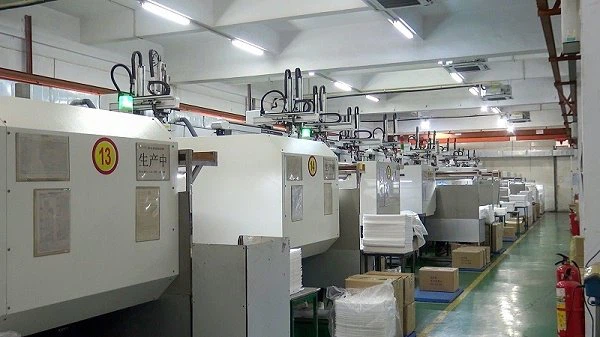
1. Processing equipment: CNC, WEDM, lathe, milling machine, drilling machine, grinder, etc.;
2. Surface treatment: For some products that require subsequent processing, we can provide surface treatment services to achieve the special purpose of customers. At present, we can provide degreasing, polishing, electroplating (gold, silver, nickel, tin, galvanized, etc.), anodizing, electrophoresis and other surface treatment services for precision parts.

Moulds and Inspection Fixtures
1. Mold service life: usually semi-permanent. (except for lost foam)
2. Mold delivery time: 10-25 days, (according to product structure and product size).
3. Tooling and mold maintenance: Zhongwei is responsible for precision parts.
Quality Control
1. Quality control: the defective rate is less than 0.1%.
2. Samples and trial run will be 100% inspected during production and before shipment, sample inspection for mass production according to ISDO standards or customer requirements
3. Testing equipment: automated visual inspection equipment can carry out 100% inspection of products, spectrum analyzer, golden elephant analyzer, three-coordinate measuring machine, hardness testing equipment, tensile testing machine.
Application
PMMA injection molding parts are widely used, not only in business, light industry, construction, chemical industry and so on. Moreover, plexiglass production is widely used in advertising decoration and sand table models, such as: signs, billboards, light box panels and Chinese and English alphabet panels.
The selection of materials depends on the shape design, what kind of shape, what kind of plexiglass, color and variety should be tested repeatedly to achieve the best effect. With a good shape design, it is necessary to rely on careful processing to become a beautiful handicraft.
1. Architectural applications: shop windows, soundproof doors and windows, lighting covers, telephone booths, etc.
2. Advertising applications: light boxes, signs, signs, display stands, etc.
3. Transportation applications: doors and windows of trains, cars and other vehicles, etc.
4. Medical applications: baby incubators, various surgical medical instruments, civilian products: sanitary facilities, handicrafts, cosmetics, brackets, aquariums, etc.
5. Industrial application: instrument panel and cover, etc.
6. Lighting applications: fluorescent lamps, chandeliers, street lampshades, etc.
7. Household application: fruit plate, tissue box, acrylic art painting and other household daily necessities.


Send Inquiry
