Research progress of titanium and titanium alloy metal powder injection molding technology
Oct 25, 2022
Research progress of titanium and titanium alloy metal powder injection molding technology
--Source: CNKI, organized by: Zhongwei Precision Editor--
The text is 16900 words in total, and the reading time: 45 minutes

Summary
Titanium and titanium alloys have low specific gravity, high specific strength, excellent biocompatibility and good corrosion resistance, and have great application potential in aerospace, biomedical, chemical, automotive and other fields.
Metal injection molding (MIM) technology of titanium and titanium alloy metal powder can realize the mass and low-cost preparation of small and medium-sized titanium products with complex shapes, which is of great significance for promoting the production and application of titanium and titanium alloy products.
This paper introduces the characteristics and advantages of metal powder injection molding of titanium and titanium alloys, summarizes the research progress of metal powder injection molding technology of titanium and titanium alloys from powder raw materials, binder system, powder injection molding, debonding and sintering, and analyzes the research direction and development prospects of metal powder injection molding of titanium and titanium alloys according to the main problems at present.
Keywords Titanium; Titanium alloy; Injection molding; Research progress classification No. TF125.2; TF125.2+2
Since the 1840s, when people mastered the industrial production method of obtaining metal titanium from ores, titanium and titanium alloys have been widely used in industrial and commercial facilities. However, compared with steel, its annual output is still small, and because of the high cost of raw materials, its application scope is mostly limited to the marine industry, chemical industry, aerospace industry, medical devices, implants and luxury goods and other industries with high requirements for material performance.
At present, in addition to the high price of raw materials, the difficulty in processing and forming titanium and titanium alloys also greatly limits their application scope.
The machinability of titanium and titanium alloys is poor. The traditional machining method is expensive to process equipment and low in processing efficiency, which greatly increases the processing cost; The structures of titanium parts that can be machined are very simple, and most of them can not achieve the design scheme that can give play to the optimal performance of materials due to the limitations of processing methods.
In this context, metal injection molding (MIM), which has the advantages of high utilization rate of raw materials and low batch production cost, has become an ideal titanium and titanium alloy processing process [1 – 4].
Metal powder injection molding process usually includes several basic processes, such as injection material preparation, injection molding, debonding, sintering and necessary post-treatment.
As shown in Figure 1, the metal powder and organic binder components are mixed, mixed and granulated to prepare the injection material, and then the injection material is injected into the mold at a certain temperature and pressure. After cooling, the product green with a specific shape is obtained by demoulding, and then all organic components except the metal powder in the green are removed by the debonding process to become the debonding green, and finally the product with the required performance is obtained by sintering.
Metal powder injection molding technology realizes the organic combination of injection molding and traditional powder metallurgy technology, overcomes the shortcomings of high machining process cost, simple shape of traditional molding process, low production efficiency of isostatic pressing and injection molding process, many defects of traditional casting process, low tolerance accuracy, and greatly promotes the production and application of titanium and titanium alloy products (as shown in Figure 2).
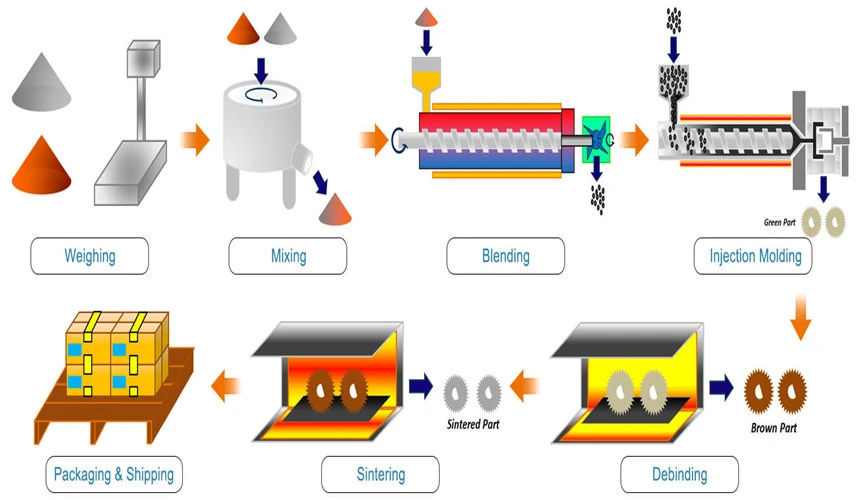
Fig. 1 Process Flow Chart of Titanium and Titanium Alloy Metal Powder Injection Molding
Fig.1 Flow chart of titanium and titanium alloys manufactured by MIM
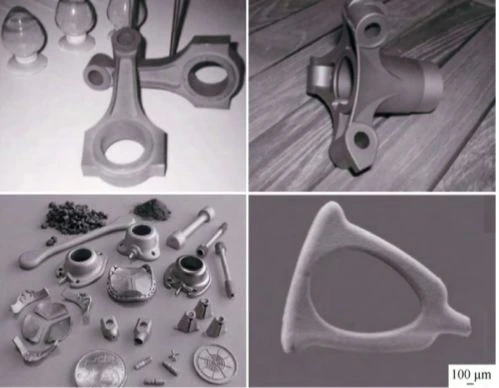
Fig. 2 Application examples of titanium and titanium alloy metal powder injection molding jointly developed by Zhongwei Precision and Beijing in 2002, and mass production was achieved in 2004
Fig. 2 Application of titanium and titanium alloy manufactured by MIM
This paper introduces the characteristics and advantages of titanium and titanium alloy metal powder injection molding, summarizes the research progress of titanium and titanium alloy metal powder injection molding technology from powder raw materials, commonly used binder systems, injection molding, debonding and sintering, and analyzes the research direction of titanium and titanium alloy metal powder injection molding in view of the current main problems.
Research status of titanium and titanium alloy metal powder injection molding
The research shows that the mechanical properties, corrosion resistance and biomedical properties of titanium and titanium alloy injection molded products are greatly affected by the relative density, impurity content, alloy elements and microstructure.
After sintering, the relative density of injection molded products is about 95%, and there will be a certain proportion of residual pores.
These residual pores will become the crack source when the sample breaks, and have a great impact on the tensile strength, ductility, fracture toughness, fatigue strength and other mechanical properties of the material. Therefore, the higher the relative density of titanium and titanium alloy injection molded products, the better their mechanical properties.
Impurities such as oxygen, carbon, nitrogen, hydrogen, etc., especially oxygen will improve the yield strength, tensile strength and hardness of materials, and reduce ductility. Impurities are dissolved in the matrix titanium at the sintering temperature. Because there is no effective reducing agent, it is difficult to control the impurities of titanium and titanium alloys during the sintering process, so it is necessary to reduce the amount of oxygen added in the raw materials and each subsequent process as much as possible.
The microstructure of titanium and titanium alloys, including grain size and phase composition after sintering, will affect the mechanical properties of materials. In a word, injection molded titanium and titanium alloy materials with excellent performance have high density, low impurity content (usually oxygen content), appropriate alloy composition, fine grains and few defects during densification [5].
1.1 Powder raw materials
The selection of powder raw materials is an important step in the process of titanium powder injection molding. The particle size distribution and morphology of the powder directly affect the fluidity and formability of the injection material, the shape retention of the green body during the debonding process and the shrinkage during the sintering process.
At present, the commonly used preparation methods of titanium and titanium alloy powder include mechanical method and atomization method.
The shape of the powder produced by mechanical milling (such as ball milling, stirring ball milling, high-energy vibration ball milling and airflow milling) is generally irregular or angular.
The hydrogenation dehydrogenation (HDH) process is to take advantage of the obvious brittleness of titanium after hydrogen absorption, crush it by mechanical grinding or airflow crushing, and then dehydrogenate it to obtain titanium powder with irregular shape, as shown in Figure 3 (a). The atomization method (such as inert gas atomization, plasma beam rotating electrode atomization and electrode induction melting gas atomization) can be carried out in a completely inert atmosphere, so as to maintain the high purity of the raw powder. The powder is spherical in shape, with a fairly wide particle size distribution and good stacking performance, as shown in Figure 3 (b).
In addition, unlike the production technology of steel powder, it is difficult to produce titanium powder with finer particle size. With the decrease of particle size, the specific surface area increases, and the content of impurities will also increase.
Generally, the particle size of titanium powder used by MIM is less than 45 μ m. When the powder particles are too large, the injection process is prone to produce powder binder separation, forming defects, which need to be fully considered in the composition design of injection materials and mold design [5].

Fig. 3 Hydrodehydrogenated titanium powder (a) and aerosol titanium powder (b) for injection molding
Fig.3 HDH (a) and gas atomized (b) titanium powder used in MIM
1.2 Binder
The binder is a carrier that exists in stages throughout the injection molding process. Its main role is to make the powder fill the mold evenly in a fluid state, form the required shape, and maintain it to the pre sintering stage.
In the process of injection molding, the binder should have the following characteristics: low melting point, good wettability to powder particles and rapid curing, which is convenient for the preparation of injection materials; It has good fluidity at injection temperature; After forming, it can be easily removed from the green body, and there are less residues. The decomposition products are non-toxic and non corrosive.
Generally speaking, the binder component shall at least include the main component and the secondary component:
The main component is used to wet the metal powder particles and provide the necessary fluidity, while the secondary component ensures that the injection green body still has sufficient strength during the injection process and after the main component of the binder is removed.
In most cases, the binder system has a third component, such as surfactant, to improve the compatibility between metal powders and polymers.
According to the different main components in the binder components, the commonly used binder systems can be divided into wax based systems, aromatic compound based systems, paraformaldehyde based systems and water based systems.
1.2.1 Wax based binder
The commonly used waxes of wax based system adhesives are paraffin wax, beeswax, palm wax and other short chain polymers. They have low melting point, good wettability, short molecular chain, low viscosity, and have less volume change than other polymers during decomposition, which is conducive to ensuring the dimensional accuracy of products.
The secondary components commonly used in wax based systems include polypropylene, polyethylene, ethylene vinyl acetate copolymer, and high molecular weight polymethyl methacrylate. In addition to wax and skeleton binder, a surfactant, such as stearic acid, is usually added to improve the compatibility between the powder and the polymer.
The wax based binder system first reported in the literature is that Kaneko et al.
Kato et al. [7] studied the two-step debonding process combining vacuum debonding and argon atmosphere debonding, which significantly reduced the carbon and oxygen content in the sintered pieces.
Guo et al. [8 – 9] developed a paraffin – polyethylene glycol – polyethylene – polypropylene – stearic acid binder system by using polyethylene glycol with better wettability to replace part of paraffin, and used it in the injection molding of pure titanium and titanium aluminum vanadium alloy. The sintered parts have good shape retention and little movement. Due to the reduction of oxygen and carbon content, the performance has also been greatly improved, resulting in better performance.
In addition, some researchers used palm wax to partially replace paraffin wax [10 – 13] and palm oil to completely replace paraffin wax [14] in the wax based binder system, with good forming effect. However, because the oxygen element contained in palm wax itself is also an oxygen increasing source, the carbon and oxygen content of the final product is slightly higher, and its mechanical properties are not as good as those of the paraffin system.
The best wax based binder system reported in the literature was proposed by Friederici et al. [15]. During the experiment, four kinds of binder proportions were formed by adjusting the proportion of paraffin, low-density polyethylene and stearic acid, and then the forming, debonding and sintering processes of different injection materials were carried out. Samples with relative density of 98.1% and chemical composition meeting the requirements of secondary pure titanium were obtained.
Wax based binder system plays an important role in injection molding. However, due to the low degreasing efficiency of organic solvent used for solvent debonding of wax based binder system, researchers continue to innovate on this basis and develop new binder system.
1.2.2 Aromatic compound based binder
Aromatic compounds (such as naphthalene, anthracene, etc.) can be dissolved at a very low temperature. Under low pressure conditions, they can be directly transformed from solid to gas by sublimation at a temperature lower than their melting point. Using aromatic compounds as binder components can greatly improve the efficiency of the debonding process.
Weil et al. [16 – 18] used aromatic compounds in titanium metal powder injection molding. In the research, naphthalene, 1% stearic acid and 3%~12% vinyl acetate copolymer were used as bonding agents to prepare dense and porous titanium aluminum vanadium alloys.
During the experiment, due to the direct sublimation of naphthalene into gas, there was no liquid phase in the debonding process, the sample volume did not change, and different from solvent degreasing, the surface energy involved in the sublimation method was low, which meant that common degreasing defects such as deformation and cracking could be avoided. The results showed that the relative density of sintered samples was 96.6%, and the carbon content did not increase.
Although the binder system has achieved excellent product performance, the aromatic compounds in the system will still have an impact on the environment and health, and have not been studied subsequently or applied on a large scale.
1.2.3 Polyformaldehyde based binder
Polyformaldehyde was first used in the binder system by Celanese Corp in 1984, and then developed by BASF, making it possible that the binder components do not contain wax and small molecular weight components [19].
Polyformaldehyde is the main component of the binder system, and polyethylene (PE) is gradually added as the skeleton binder in the later development process.
At present, BASF has formed injection molding materials covering low alloy steel, stainless steel, tool steel, titanium, titanium alloys and ceramics based on this binder system.
The remarkable characteristic of POM is that it is sensitive to acid reagents and easy to acid decomposition. Therefore, the green billets can be treated in an acidic atmosphere lower than their softening temperature. In this process, the polyoxymethylene is in a solid state, avoiding the defects such as cracks and expansion caused by the boiling of the binder components. Moreover, the green billets have small deformation, good shape retention, and accurate size control.
In addition, due to the large diffusion rate, compared with other degreasing methods, the degreasing rate is higher, which can reach 10 times the rate of traditional solvent debonding, while allowing thicker size debonding [20].
Although polyoxymethylene based binder system has many advantages above, it also has many disadvantages.
The highly corrosive nitric acid vapor is commonly used as the catalyst in the catalytic debonding process. On the one hand, the polyoxymethylene may decompose during the preparation and injection molding of the injection materials in the early stage, producing highly toxic formaldehyde, and the decomposition products need to be removed through two-step combustion. On the other hand, the acidic atmosphere playing a catalytic role is highly corrosive to the equipment, requiring more investment.
1.2.4 Water based binder
The debonding solvents (such as heptane and hexane) or the decomposition products of the binder components (aromatic compound monomer and formaldehyde) used in the above-mentioned several binder systems are more or less harmful to the environment and operators. Therefore, it is of great significance to develop and utilize the binder system with environment-friendly solvents.
The existing environment-friendly binder systems use water as the debonding solvent.
According to the different roles of water in the preparation of injection materials, this kind of binder system can be divided into gel based and non gel based.
The common polymer used in non gel based systems is polyethylene glycol, which has good performance and is cheap and easy to obtain. Low molecular weight polyethylene glycol can be quickly and completely removed at 60 ° C, and the molecular weight of commonly used polyethylene glycol is about 500~2000. The commonly used skeleton binder is polymethylmethacrylate with a molecular weight of 10000.
Sidambe et al.
In the experiment, polyethylene glycol was completely removed in 55 ° C water after 5 hours, and polymethylmethacrylate was completely removed in 440 ° C hot desticking argon flow. The final oxygen content (mass fraction) of the prepared sample is 0.2%, the corresponding tensile strength is 850~880 MPa, and the elongation is 8.5%~16%, meeting the ASTM grade 5 Ti standard.
Most gel based binders are natural substances, such as cellulose, starch agar, etc.
Tokura [22] et al. used agar to replace polymer binder in titanium powder injection molding, and studied the thermal stability, solubility and viscosity of the binder system.
Metal Powder Report (MPR) [23] reported a study on the production of titanium alloy dental implants using an agar based binder, which consists of agar, water and gel reinforcement materials.
Suzuki [24] et al. prepared 97.3% samples with relative density using agar (molecular weight 82 500) binder containing 4% mass fraction. The carbon and oxygen mass fractions of the samples are 0.33% and 0.3%, respectively. The yield strength is 539 MPa, and the elongation is about 10%. The experimental results show that when using high molecular weight agar, the gel strength increases, but the residual carbon and oxygen content is high, resulting in lower sintering density, tensile strength and elongation of the sintered pieces.
The non gel based water-based binder is easy to control, the degreasing equipment is cheaper than other degreasing methods, and the binder is biodegradable and non-toxic to microorganisms, but the treatment of wastewater for degreasing requires additional costs.
It is difficult to control the size of the final parts produced by gel based binder system injection molding compound, and the composition is not stable enough, so the process conditions and quality control are difficult, and further research and optimization are still needed.
1.3 Injection molding, debonding and sintering
The process parameters of injection molding are determined by the properties of the injection compound and the geometry of the target product.
As mentioned above, the particle size of titanium powder is usually relatively coarse, which is easy to cause powder binder separation compared with injection molding of stainless steel materials. Before injection molding, appropriate molding process parameters should be formulated according to the rheological properties of the injection materials to reduce the defects in the molded green bodies.
Wang et al.
Park [26] et al. prepared the injection materials with aerosolized titanium powder, HDH titanium powder and spheroidized HDH titanium powder, measured their rheological properties and debonding behavior, proposed the formability index of the injection materials, and evaluated the properties of the injection materials based on this. The analysis results provided a theoretical basis for the simultaneous use of HDH powder and aerosolized powder in the injection materials system.
Barriere [27] and others discussed the optimal process parameters for producing metal injection molded parts without defects and with required mechanical properties based on the experimental and numerical simulation process. Based on the modeling technology, they used two-phase flow equations and a newly developed explicit algorithm to predict the material separation phenomenon in the injection process using numerical simulation.
Chen [28] et al. used hydrogenated dehydrogenated Ti – 6Al – 4V prealloy powder and water-soluble binder system to prepare comment feed, then measured the removal rate of water-soluble binder component polyethylene glycol in samples of different thickness at different temperatures, established a diffusion controlled debonding mathematical model, and determined the debonding mechanism of the binder system.
Sidambe [29] et al. used Taguchi's method to determine the best combination of sintering temperature, time, heating rate, atmosphere and other parameters.
Nor et al. [30] prepared Ti – 6Al – 4V injection material by using hard palm ester and polyethylene binder system, and formulated the optimal production process by using Taguchi method. Finally, a sample with yield strength of 934.4 MPa and elongation of 10% was obtained, and its overall performance met the requirements of ASTM B348-02 medical titanium alloy.
Obasi et al. [31] prepared Ti – 6Al – 4V samples with properties meeting the requirements of ASTM B348 – 02 titanium alloy grade 23, and studied the influence of changes in the basic process parameter system on the thermal degreasing and sintering process of Ti – 6Al – 4V powder MIM components.
Limberg et al. [32] prepared Ti – 45Al – 5Nb – 0.2B – 0.2C by mixing simple powders in the injection molding process, studied the effects of sintering time and sintering atmosphere on tensile properties and microstructure, and obtained samples with tensile strength of about 630MPa.
Guo et al. [8 – 9] prepared pure titanium and Ti – 6Al – 4V materials by injection molding technology, studied the influence of heat treatment processes such as hot isostatic pressing and annealing on the properties of alloy materials, and qualitatively and quantitatively characterized the heat treatment effect by means of microstructure mechanical property testing. Its microstructure is shown in Figure 4.
The remark feed is prepared by mixing atomized titanium powder, hydrogenated dehydrogenated titanium powder and wax based binder system. After injection molding, it is debonded in the solvent in the mixture of heptane and ethanol. After heating up to 350, 420 and 600 ° C at a certain heating rate, the binder is completely removed by heat preservation. The sintering temperature is 1230 ° C, and the heat preservation is 3 h. Finally, the tensile properties of sintered samples are 389~419 MPa, and the elongation is 2%~4%.
Members of the research group [33] prepared pure titanium samples by using aerosol titanium powder and water-soluble binder system, studied the effects of sintering temperature and holding time on the properties of pure titanium samples. The sintering process was carried out under 10-4~10-3 Pa vacuum, the sintering temperature was 1350 ° C, and the elongation was 20.3% after holding for 3 hours, which fully conforms to ASTM F2989-13, the sample with the best powder metallurgy performance, the relative density was 96.9%, and the tensile strength was 443 MPa, Biomedical grade II pure titanium standard.
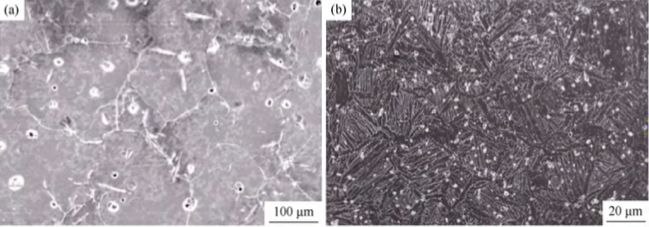
Fig. 4 Microstructure of pure titanium (a) and titanium aluminum vanadium alloy (b) samples prepared with wax based binder injection
Fig.4 Microstrctures of Ti (a) and Ti-6Al-4V (b) samples prepared by wax-based feedstocks
2 New titanium and titanium alloy injection molding materials
At present, titanium and titanium alloys are widely used in orthopaedic surgery, stomatology related instruments and medical implants. However, due to the difference between their mechanical properties and human bone mechanical properties (elastic modulus of about 20 GPa), stress shielding effects occur on the bone/implant interface, which may lead to a significant reduction in long-term clinical effects, as shown in Figure 5.
Therefore, the researchers adjusted the mechanical properties of titanium materials by changing the structure and alloy composition of titanium materials to make them closer to the structure and performance of human natural bones.

Fig. 5 Comparison of elastic modulus of common medical titanium alloy materials
Fig.5 Comparison of elasticity modulus of biomedical titanium alloys
2.1 Porous titanium materials and titanium ceramic composites
Porous titanium materials and new titanium alloy system materials have appropriate pore structure and mechanical properties, and are ideal orthopedic implant materials.
On the one hand, it can effectively reduce the stress mismatch between the implant and bone tissue, thereby reducing the stress shielding effect and realizing the permanent and effective function of the implant; On the other hand, the porous structure is a necessary condition for the growth of bone cells to the implant body. The interconnected porous structure can allow a large amount of body fluid to pass through, which can further promote the growth of bone cells.
Gu [34] et al. formed a new TC4 alloy with open pore structure by adding TiH2 as foaming agent and activator to titanium aluminum vanadium elemental powder, with uniform pore size distribution of 90~190 μ m. The porosity is about 43%~59%, and the elastic modulus is 5.8~9.5 GPa. Engine et al. [35] prepared microporous titanium alloy by powder injection molding (PIM) combined with pore forming agent technology, and studied the influence of the amount of pore forming agent polymethylmethacrylate on the density, compression resistance and elastic modulus of the alloy.
Tuner et al
Chen [37] et al. used NaCl as a pore forming agent and hydrogenated dehydrogenated titanium powder wax based injection material to prepare injection molded samples. The porosity of the samples obtained was 42.4%~71.6%, and the pore diameter reached 300 μ m. As shown in Figure 6. By adjusting the amount of NaCl, a connecting hole can be formed in the injection part, and its mechanical properties are similar to those of cancellous bone.
Barbosa et al.
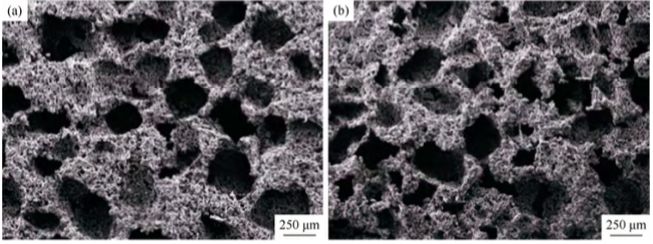
Fig. 6 Porous titanium injection molding component prepared with NaCl as pore forming agent
Fig.6 Porous titanium injection molding component using NaCl as space holder
Hydroxyapatite (HA), with the same chemical composition and crystal structure as human natural bone tissue, has unique advantages in bone replacement and bone reconstruction, and has begun to play an increasingly important role in biomedical devices.
However, HA is brittle and has poor mechanical properties, so it can not be used as a load-bearing component alone. Therefore, a new biomedical material composed of HA and titanium materials has emerged.
Thian et al. [39 42] studied the preparation of Ti6Al4V/HA composites by injection molding. Firstly, Ti6Al4V/HA composite powder was prepared by ceramic slurry process, and then the prepared powder was mixed with commercial binder PAN-250S to prepare remarks. The rheological properties of the injection mixture were tested, and the effects of the heating rate and the gas flow rate of the debonding atmosphere on the defects of the debonding part, the amount of binder removed and the residual carbon content in the debonding process were studied; The influence of sintering process parameters (heating rate, sintering temperature, holding time, cooling rate, etc.) on the properties of the final sample, the porosity of the prepared sample is about 50%; In addition, the biological degradation process of the prepared Ti6Al4V/HA material in the body fluid environment was analyzed and characterized by the test results of mechanical properties.
2.2 New titanium alloy materials
Biomedical field is an important branch of titanium materials application, and its application demand direction directly affects the development trend of titanium materials.
Early titanium materials were pure titanium( α Phase), but the strength of pure titanium materials is low and the wear resistance is poor, thus developing high strength and toughness, represented by Ti6Al4V, Ti6Al7Nb and Ti5Al2.5Fe α+β Type alloy.
Aust et al. [43] successfully manufactured bone screw materials with excellent performance using Ti6Al7Nb powder and wax based binder system (paraffin+PE+stearic acid), as shown in Figure 7. Its relative density is 97.6%, tensile strength is 815 MPa, yield strength is 714 MPa, and elongation is 8.7%.
Research results show that Al, V and other alloy elements in titanium aluminum vanadium alloy and titanium aluminum niobium alloy, which are widely used at present, will release cytotoxic Al, V ions after the implant enters the human body, causing harm to the human body.
As a result, the researchers have conducted a series of new generation biosafety tests that contain Nb, Ta, Zr, Mo, Sn and other biosafety elements but not Al, V elements β Development of titanium alloy system.
Currently developed and researched β Biological titanium alloys mainly include Ti-15Nb, Ti-13Nb-13Zr, Ti-35Nb-7Zr-5Ta, Ti-12Mo-6Zr-2Fe, Ti-35.3Nb-5.1Ta-7.1Zr and Ti-29Nb-13Ta-4.6Zr [44]. Due to the limitations of powder making technology and other aspects, these alloy systems are seldom used in powder injection molding.
Zhao et al.
Arokiasamy et al. [46] prepared Ti 5Fe 5Zr alloy by adding Fe and Zr elements to HDH pure titanium powder, and measured the mechanical properties of the alloy. Based on the test results, the mechanism of the influence of residual porosity and TiC on the properties of alloy materials was obtained.
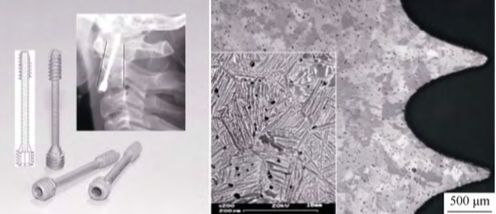
Fig. 7 Metal powder injection molding
Fig. 7 Ti6Al7Nb bone screw prepared by metal injection molding process Ti6Al7Nb bone screw MIM produced by Qinhuangdao Zhongwei Precision Machinery Co., Ltd
3 Outlook
Titanium and titanium alloys have great development potential in aerospace, medical, chemical, automotive and consumer goods applications due to their low specific gravity, high specific strength, excellent biocompatibility and oxidation resistance, and good corrosion resistance.
Compared with traditional processing technologies, such as forging, casting and machining, powder injection molding technology has obvious advantages, uniform alloy composition, high utilization rate of raw materials, and strong production capacity for large quantities of complex shaped parts, which can greatly promote the production and application of titanium and titanium alloy products.
Although some progress has been made in the research of titanium and titanium alloy injection molding, a series of problems remain to be solved in the actual industrial production process, such as the high price of high-quality powder raw materials, the insufficient application of new high-quality titanium alloy system to injection molding, and the difficulty in controlling the chemical composition of products.
In addition, with the rapid development of micro system technology in recent years, the demand for micro complex components used in micro systems is increasing, and powder injection molding needs to be transferred from traditional product types to micro products and developed into powder micro injection molding technology.
At present, the micro injection molding technology mostly focuses on polymer, stainless steel and other material systems. There are still many problems to be studied in titanium and titanium alloy micro injection molding.
Therefore, the development of titanium and titanium alloy injection molding research should focus on the research and development of new titanium alloy systems, the development of low-cost high-quality titanium alloy powder preparation technology, and the research of titanium material micro injection molding for micro complex devices.
With the in-depth research on the injection molding technology of titanium and titanium alloys, it is believed that the injection molding technology of titanium and titanium alloys will make great progress, and then promote the rapid development of the titanium industry