



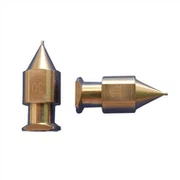
Tungsten Copper Alloy MIM Parts
Tungsten copper alloy is an alloy composed of tungsten and copper. Commonly used alloys contain 10% to 50% copper. The alloy is prepared by powder metallurgy, which has good electrical and thermal conductivity, good high temperature strength and certain plasticity. At a very high temperature, such as above 3000°C, the copper in the alloy is liquefied and evaporated, absorbing a large amount of heat and reducing the surface temperature of the material.
Product Description
|
Tungsten Copper Alloy MIM Parts |
|||||
|
Item |
Material |
Production Process |
Sintering Temperature |
Mold |
Custom |
|
Tungsten copper alloy |
Tungsten copper alloy |
Metal Injection Molding |
1650°C |
To be customized |
Yes |
|
Available Materials |
Low carbon stainless steel, titanium alloy (Ti, TC4), copper alloy, tungsten alloy, hard alloy, high temperature alloy (718, 713) |
||||
Alloy of tungsten and copper
Tungsten copper alloy is an alloy composed of tungsten and copper. Commonly used alloys contain 10% to 50% copper. The alloy is prepared by powder metallurgy, which has good electrical and thermal conductivity, good high temperature strength and certain plasticity. At a very high temperature, such as above 3000°C, the copper in the alloy is liquefied and evaporated, absorbing a large amount of heat and reducing the surface temperature of the material. So this kind of material is also called metal sweating material. Can be made into Tungsten Copper Alloy MIM Parts.
Tungsten copper alloy process and function
1. Classification
Because tungsten and copper are incompatible with each other, tungsten copper alloy has low expansion, wear resistance, corrosion resistance of tungsten and high electrical and thermal conductivity of copper, and is suitable for various mechanical processing. Tungsten-copper alloy can be produced and sized according to user requirements. Tungsten-copper alloy generally adopts the process of powder metallurgy, first powder making-batching mixing-press molding-sintering infiltration.
• Tungsten copper electrodes
Welding electrode
Tungsten copper alloy has high temperature resistance, arc ablation resistance, high specific gravity and high electrical and thermal conductivity, and is easy to machine and suitable for welding electrodes.
• Tungsten copper alloy rod
Tungsten copper is a composite material refined by the process of static pressure forming, high temperature sintering and copper infiltration, taking advantage of the excellent metal properties of high-purity tungsten powder and the plasticity and high conductivity of high-purity copper powder. Good arc breaking performance, good electrical and thermal conductivity, small thermal expansion, no softening at high temperature, high strength, high density, and high hardness.
• Tungsten copper electronic package
Tungsten copper electronic packaging material: It has both the low expansion characteristics of tungsten and the high thermal conductivity of copper. Its thermal expansion coefficient and electrical and thermal conductivity can be changed by adjusting the composition of the material, thus providing convenience for the use of the material.
• Tungsten copper tube
Tungsten-copper alloy tubes are widely used in hard alloys and insoluble metals. Because tungsten-copper alloy is easy to machine, the use of tungsten-copper tubes plays a big role when the surface needs to be easy to machine and the inner diameter is small.
• Tungsten copper alloy wire
Precautions for use:
(1) Colloidal graphite cannot be placed on the surface of tungsten-copper wire. When the temperature is above 1000 degrees, avoid putting tungsten-copper wire together with iron, nickel, and carbon. Tungsten copper wire must be placed in a dry place, and the relative humidity should not exceed 65% of the room temperature. Avoid putting it together with acid or alkaline things.
(2) After cleaning the tungsten copper wire, it should be placed in a dry container to avoid direct contact with air to prevent oxidation.
2. Performance purpose
Tungsten-copper composite material is a two-phase structure pseudo-alloy mainly composed of tungsten and copper elements. It is a metal-based composite material. Due to the large difference in physical properties between metal copper and tungsten, it cannot be produced by melting and casting. Generally, powder alloys are used. technology for production.
Tungsten copper alloy has a wide range of uses, most of which are used in aerospace, aviation, electronics, electric power, metallurgy, machinery, sports equipment and other industries. Secondly, it is also used to manufacture contacts of high-voltage electrical switches resistant to arc ablation, rocket nozzle throat linings, tail rudders and other high-temperature components, as well as electrodes for electrical processing, high-temperature molds, and other electrical and thermal conductivity and high-temperature applications. occasion.
3. Process introduction
The technological process of producing tungsten-copper alloy by powder metallurgy method is powder making-ingredient mixing-compression molding-sintering infiltration-cold working.
Tungsten-copper or molybdenum-copper mixed powder is sintered in liquid phase at 1300-1500° after compression molding. The uniformity of the material prepared by this method is not good, there are many closed spaces, and the density is usually lower than 98%. It can improve the sintering activity, thereby increasing the density of tungsten-copper and molybdenum-copper alloys. However, nickel activation and sintering will significantly reduce the electrical and thermal conductivity of the material, and the introduction of impurities by mechanical alloying will also reduce the conductivity of the material; the preparation of powder by oxide co-reduction method is cumbersome, the production efficiency is low, and it is difficult to mass produce.
• Injection molding
Injection molding made high density tungsten alloy. Its manufacturing method is to mix nickel powder, copper tungsten powder or iron powder with a uniform particle size of 1-5 microns, tungsten powder with a particle size of 0.5-2 microns and tungsten powder with a particle size of 5-15 microns, and then mix in 25%-30 % organic binder (such as paraffin or polymethacrylate) injection molding, steam cleaning and irradiation to remove the binder, sintering in hydrogen to obtain high-density tungsten alloy.
• Copper oxide powder method
Copper oxide powder (mixed and ground to reduce to copper) instead of metallic copper powder, copper forms a continuous matrix in the sintered compact and tungsten acts as a strengthening framework. The high expansion component is constrained by the surrounding second component, and the powder is sintered in moist hydrogen at a lower temperature. According to reports, the use of very fine powder can improve the sintering performance and densification, making it more than 99%.
• Tungsten and molybdenum skeleton infiltration method
First, tungsten powder or molybdenum powder is pressed into shape, and sintered into a tungsten and molybdenum skeleton with a certain porosity, and then infiltrated with copper. This method is suitable for tungsten copper and molybdenum copper products with low copper content. Compared with tungsten copper, molybdenum copper has the advantages of small mass, easy processing, linear expansion coefficient, thermal conductivity and some main mechanical properties are equivalent to tungsten copper.
Although the heat resistance is not as good as that of tungsten copper, it is better than some heat-resistant materials, so the application prospect is better. Because the wettability of molybdenum-copper is worse than that of tungsten-copper, especially when preparing molybdenum-copper with low copper content, the density of the material after infiltration is low, resulting in that the airtightness, electrical conductivity and thermal conductivity of the material cannot meet the requirements. Its application is limited.
4. Physical indicators
|
Alloy grade |
Specific gravity |
Thermal conductivity |
Thermal expansion coefficient |
|
WCu7 |
17.5 |
150 |
5.5 |
|
WCu10 |
17.0 |
160 |
6.2 |
|
WCu15 |
16.2 |
170 |
6.9 |
|
WCu20 |
15.4 |
180 |
7.4 |
|
WCu25 |
14.7 |
200 |
8.0 |
|
WCu30 |
14.1 |
220 |
8.8 |
5. Material properties
Tungsten-copper alloy combines the advantages of copper and tungsten, high strength, high specific gravity, high temperature resistance, arc ablation resistance, good electrical conductivity and heating performance, and good processing performance. Tungsten Copper Alloy MIM Parts uses high-quality tungsten powder and oxygen-free copper powder, and isostatically pressed (high temperature sintering-copper infiltration) to ensure product purity and accurate proportioning, fine structure and excellent performance. Good arc breaking performance, good electrical conductivity, good thermal conductivity, and small thermal expansion.
6. Surface quality
The surface of the tungsten-copper alloy rod has been turned, and there must be no defects such as holes, cracks, delamination or inclusions. The defects and allowable deviations of the tungsten-copper alloy rod are in accordance with the following table:
|
Diameter |
Length |
||
|
Size range |
Allowable deviation |
Size range |
Allowable deviation |
|
10<Φ≤25 |
+/-0.5 |
100<Φ≤200 |
+/-5 |
7. Main application
Tungsten-copper alloy combines the advantages of metal tungsten and copper, among which tungsten has a high melting point (tungsten melting point is 3410°C, copper melting point is 1080°C) and high density (tungsten density is 19.34g/cm3, copper density is 8.89 g/cm3) Copper has excellent electrical and thermal conductivity, tungsten-copper alloy (the general composition range is WCu7~WCu50) has uniform microstructure, high temperature resistance, high strength, arc ablation resistance, and high density; moderate electrical and thermal conductivity, widely used in military high-temperature resistant materials , Electrical alloys for high-voltage switches, electrical processing electrodes, and microelectronic materials are widely used in aerospace, aviation, electronics, electric power, metallurgy, machinery, sports equipment and other industries as parts and components.
(1) military high temperature resistant materials
Tungsten-copper alloys are used in aerospace as missiles, rocket engine nozzles, gas rudders, air rudders, and nose cones. The main requirements are high temperature resistance (3000K~5000K) and high temperature airflow resistance. The sweating and cooling effect formed by volatilization (copper melting point is 1083°C) reduces the surface temperature of tungsten copper and ensures the use under extreme conditions of high temperature.
(2) Electrical alloys for high voltage switches
Tungsten-copper alloy is widely used in high-voltage switch 128kV SF6 circuit breaker WCu/CuCr, high-voltage vacuum load switch (12kV 40.5KV 1000A), and lightning arrester. High-voltage vacuum switch is small in size, easy to maintain, and has a wide range of applications. Use in flammable, explosive and corrosive environments. The main performance requirements are arc ablation resistance, fusion welding resistance, small cut-off current, low gas content, and low thermal electron emission capability. In addition to the conventional macro performance requirements, porosity and microstructure properties are also required, so special processes are required, such as vacuum degassing, vacuum infiltration and other complex processes.
(3) EDM electrode
Copper or graphite electrodes were used in the early days of EDM electrodes, which are cheap but not resistant to ablation, and have basically been replaced by tungsten copper electrodes. The advantages of tungsten copper electrodes are high temperature resistance, high temperature strength, arc ablation resistance, good electrical and thermal conductivity, and fast heat dissipation. Applications focus on EDM electrodes, resistance welding electrodes and high voltage discharge tube electrodes.
Electrode processing electrodes are characterized by a wide variety of specifications, small batches and large quantities. The tungsten copper material used as the electrode for electromachining should have the highest possible density and uniformity of structure, especially the slender rod-shaped, tubular and shaped electrodes.
(4) Microelectronic materials
Tungsten copper electronic packaging and heat sink materials have both the low expansion characteristics of tungsten and the high thermal conductivity of copper. Wide range of applications. Because tungsten copper material has high heat resistance and good thermal conductivity, and at the same time has a thermal expansion coefficient that matches silicon wafers, gallium arsenide and ceramic materials, it is widely used in semiconductor materials. It is suitable for high-power device packaging materials, heat sink materials, heat dissipation components, ceramics and gallium arsenide bases, etc.
Metal Injection Molding Process

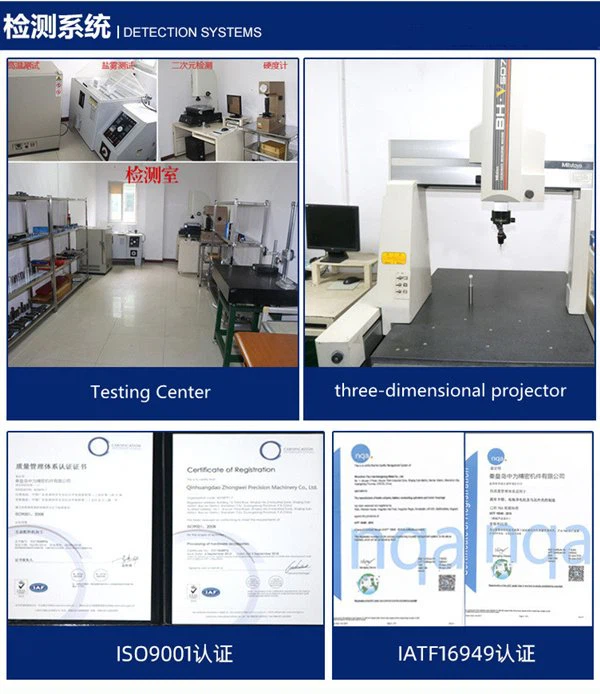
Detection Systems





Send Inquiry
