




Tungsten-cobalt Alloy Eight-tooth Blade
WC-Co hard alloy, tungsten-cobalt alloy is also called tungsten carbide-cobalt cemented carbide. A cemented carbide composed of tungsten carbide and cobalt metal.
Product Description
|
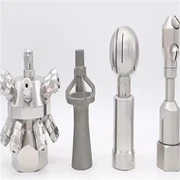
Tungsten-cobalt alloy eight-tooth blade |
|||||
|
Item |
Material |
Production Process |
Sintering Temperature |
Mold |
Custom |
|
Eight-tooth blade |
Tungsten-cobalt alloy |
Metal Injection Molding |
1500°C |
To be customized |
Yes |
|
Chemical composition |
Alloy grade |
Cu |
Mo |
Total amount of impurity elements |
|
|
MoCu10 |
10+/-2 |
Moargin |
≤0.1 |
||
|
MoCu15 |
15+/-3 |
Moargin |
≤0.1 |
||
|
MoCu20 |
20+/-3 |
Moargin |
≤0.1 |
||
|
MoCu25 |
25+/-3 |
Moargin |
≤0.1 |
||
|
MoCu40 |
40+/-5 |
Moargin |
≤0.1 |
||
|
Available Materials |
Low carbon stainless steel, titanium alloy (Ti, TC4), copper alloy, tungsten alloy, hard alloy, high temperature alloy (718, 713) |
||||
WC-Co hard alloy, tungsten-cobalt alloy is also called tungsten carbide-cobalt cemented carbide. A cemented carbide composed of tungsten carbide and cobalt metal. According to the cobalt content, it can be divided into three types: high cobalt (20% ~ 30%), medium cobalt (10% ~ 15%) and low cobalt (3% ~ 8%); according to its WC grain size, it can be divided into microcrystalline There are four types of alloys: grain, fine grain, medium grain and coarse grain; according to their use, they can be divided into three categories: tungsten cutting tools, mining tools and wear-resistant tools.
The performance of tungsten-cobalt alloy is related to alloy composition, structure and manufacturing process. Among the most important factors are: the composition and content of the bonding metal. Tungsten-cobalt alloy is a high-hardness, refractory metal compound powder, which is compacted and sintered with metals such as cobalt or nickel as a binder. The carbides in it are harder and more resistant to high temperatures. In industry, high-speed steel cutting tools are difficult to cut high-hardness materials, such as hardened steel or materials with higher hardness. High-speed steel tools cut general ferrous metals. Due to the limitation of heat resistance, their cutting speed and production efficiency are still at a low level. Therefore, the advent of tungsten-cobalt alloy cutting tool materials has brought a leap in cutting production efficiency.
Because of its high bending strength, compressive strength, impact toughness, elastic modulus and small thermal expansion coefficient, tungsten-cobalt alloy is the largest and most widely used type of cemented carbide. Usually the flexural strength and fracture toughness of Tungsten-cobalt alloy eight-tooth blade increase with the increase of cobalt content, while the hardness decreases. The appearance of the tungsten-cobalt alloy coating is close to that of the chromium coating, and the dispersion and coverage of the plating solution are good. Through the test, the influence of sodium tungstate, cobalt sulfate, additives, current density and pH value on the tungsten content and performance of the coating, it is found that the tungsten-cobalt alloy has good corrosion resistance, heat resistance and wear resistance, and can be used as a cutting tool. Process cast iron, non-ferrous metals, non-metals, heat-resistant alloys, titanium alloys and stainless steel, etc., and can also be used as extension dies, wear-resistant parts, stamping dies and drills.
Physical Properties
Tungsten-cobalt alloy is one of the commonly used grades of cemented carbide, and its physical properties mainly include:
1. Coercivity
The coercive force of tungsten-cobalt alloy is because the binder phase in cemented carbide is a ferromagnetic substance, so the alloy has certain magnetic properties. The coercive force can be used to control the structure of the alloy, which is an internal control index for tungsten steel manufacturers. . The coercive force of WC-Co alloy is mainly related to cobalt content and its dispersion, and increases with the decrease of cobalt content. When the amount of cobalt is constant, since the degree of dispersion of the cobalt phase increases with the finer tungsten carbide grains, the coercive force also increases. On the contrary, the coercivity decreases. Therefore, under the same conditions, the coercive force can be used as an indirect parameter to measure the grain size of tungsten carbide in the alloy: in the alloy with normal structure, as the carbon content decreases, the tungsten content in the drilling phase increases, The cobalt phase is greatly strengthened, and the coercive force will increase accordingly. Therefore, the greater the cooling rate during sintering of Tungsten-cobalt alloy eight-tooth blade, the greater the coercive force.
2. Magnetic saturation
When the alloy sample is in the collision field, with the increase of the external magnetic field, the magnetic induction intensity of the alloy also increases. When the magnetic field intensity reaches a certain value, the magnetic induction intensity no longer increases, that is, the alloy has reached magnetic saturation. The magnetic saturation value of the alloy is only related to the cobalt content of the alloy, but has nothing to do with the grain size of the tungsten carbide phase in the alloy. Therefore, the magnetic saturator can be used for non-destructive composition inspection of alloys, or to identify whether non-magnetic ηl phase exists in alloys of known composition.
3. Modulus of elasticity
Since tungsten carbide has a high elastic modulus value, WC-Co alloy also has high elastic wear. With the increase of cobalt content in the alloy, the elastic modulus decreases; the grain size of tungsten carbide in the alloy has no obvious effect on the elastic modulus. The modulus of elasticity of the alloy decreases as the temperature increases.
4. Thermal conductivity
In order to avoid tool damage due to overheating during use, it is generally desirable for the alloy to have a high thermal conductivity. WC-Co alloys have a relatively high thermal conductivity, about 0.14-0.21 cal/cm·degree·s. The thermal conductivity is generally only related to the cobalt content of the alloy, and increases with the decrease of the cobalt content.
5. Coefficient of thermal expansion
The linear expansion coefficient of WC-Co alloy increases with the increase of cobalt content. However, the expansion coefficient of the alloy is much lower than the linear expansion coefficient of the steel, which causes a large welding pressure when the alloy tool is welded. If the slow cooling measures are not taken, the alloy cracks will often be caused. For alloys with low strength, it is more prominent.
6. Hardness
Hardness is a major mechanical performance index of cemented carbide. With the increase of cobalt content in the alloy or the increase of carbide grain size, the hardness of the alloy decreases. For example, when the cobalt content of the industrial WC-Co alloy increases from 2% to 25%, the hardness HRA of the alloy decreases from 93 to about 86. About every 3% increase in cobalt, the alloy hardness decreases by 1 degree, and the tungsten carbide crystals are refined. Grain size can effectively increase the hardness of the alloy.
7. Bending strength
Like hardness, flexural strength is a major property of cemented carbide. There are many and complex factors that affect the flexural strength of alloys. All factors that affect alloy composition, structure and sample state can lead to changes in the value of flexural strength. In general, the flexural strength of the alloy increases with the increase of cobalt content. However, when the cobalt content exceeds 25%, the flexural strength decreases with the increase of the cobalt content. As far as the industrially produced WC-Co alloy is concerned, the flexural strength of the alloy always increases with the increase of the cobalt content in the range of 0-25% cobalt content.
8. Compressive strength
The compressive strength of cemented carbide is the ability to resist compressive loads. The compressive strength of WC-Co alloy decreases with the increase of cobalt content in the alloy, and increases with the finer grains of tungsten carbide phase in the alloy. Therefore, fine-grained alloys with lower cobalt content have higher compressive strength.
9. Impact toughness
Impact toughness is an important technical index of mining alloys, and it also has practical significance for intermittent cutting tools under harsh conditions. The impact toughness of WC-Co alloy increases with the increase of cobalt content, and increases with the increase of tungsten carbide grain size. Therefore, most of the mining alloys are coarse-grained alloys with high cobalt content, such as YGllC, YG8C, etc.
Of course, the relevant physical properties of cemented carbide are not limited to analysis and research, and the properties of materials with different formulations selected for specific purposes will also be different.
Metal Injection Molding Process

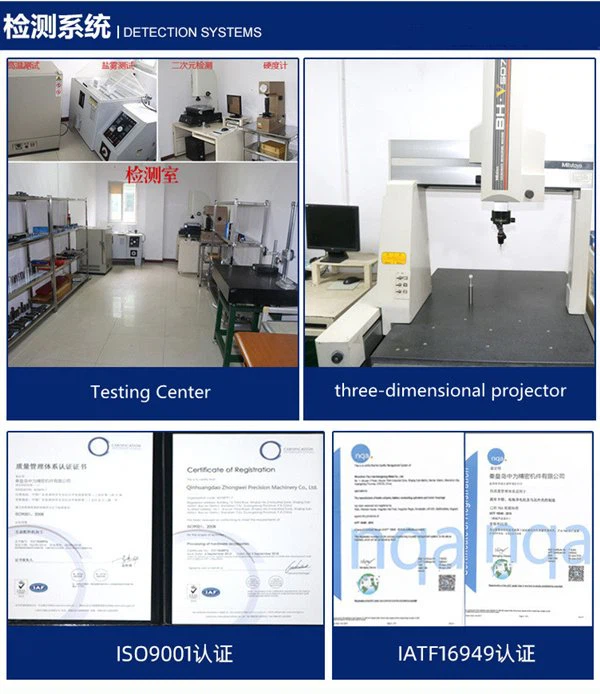
Detection Systems





Send Inquiry
